Satellite Roof Estimates: Are They Accurate for Austin Homes?
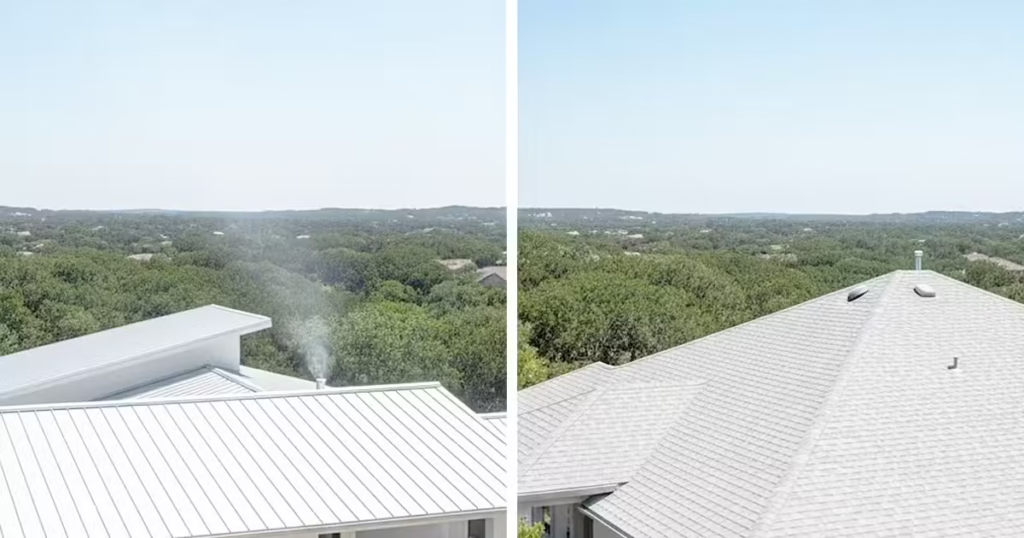
What Counts as a Cool Roof in Texas
- Solar Reflectance (SR): the fraction of sunlight bounced back, on a 0 to 1 scale.
- Thermal Emittance (TE): how readily the surface releases the heat it does absorb.
- ENERGY STAR rated asphalt shingles with reflective granules
- Standing-seam metal in light or “cool pigment” colors
- Concrete and clay tile in lighter glazes
- Reflective TPO, PVC, or coated flat-roof membranes
- Cool-pigment dark shingles that reflect infrared even while staying visually dark
How Much Hotter Does a Standard Roof Get in Austin Heat
On a 100°F July afternoon in Cedar Park, surface temperatures on a dark asphalt roof commonly hit 150 to 170°F. A reflective metal or cool-shingle surface on the same house, same orientation, typically reads 110 to 130°F.
That 30 to 50°F gap matters because it changes:
- Attic air temperature, often by 20 to 40°F
- Ceiling drywall temperature, which radiates heat into living spaces
- HVAC runtime, especially between 2 p.m. and 7 p.m.
- Shingle aging, since asphalt cures and embrittles faster above 160°F
For most Central Texas homes built in the last 20 years, the attic is where most cooling load originates. Reducing peak roof temperature lowers radiant load before the HVAC ever sees it.
Why It Matters More in the Texas Hail Belt
Cedar Park, Round Rock, Pflugerville, and Lakeway sit inside the Central Texas hail corridor. Insurance companies care about impact ratings; homeowners care about heat. A modern Class 4 impact-rated cool shingle does both jobs at once. For tile homes that need targeted heat-aged repairs, see our tile roof repair in Austin TX page.
Cool Roof vs Standard Roof: 10-Year Energy Cost Comparison
The table below models a 2,200 sq ft single-story Austin home with a 2,800 sq ft roof, 3.5-ton HVAC, R-30 attic insulation, and a typical July to September peak cooling pattern. Electricity is modeled at $0.13/kWh, escalating 2% annually.
| Metric | Standard Architectural Shingle (SRI ~20) | Cool Shingle (SRI 25 to 32) | Light Metal / Tile (SRI 60+) |
|---|---|---|---|
| Average summer attic temp | 130 to 145°F | 110 to 125°F | 95 to 110°F |
| Estimated annual cooling cost | $1,950 to $2,200 | $1,750 to $2,000 | $1,650 to $1,900 |
| Annual energy savings vs standard | baseline | $120 to $250 | $250 to $350 |
| 10-year energy savings (cumulative) | baseline | $1,300 to $2,700 | $2,700 to $3,800 |
| Typical install cost premium vs standard | baseline | +$400 to $900 | +$1,400 to $1,800 (cool shingle) / +$8,000 to $22,000 (metal) |
| Simple payback (energy only) | n/a | 2 to 6 years | 4 to 7 years (cool shingle) |
| Expected service life | 20 to 25 years | 20 to 30 years | 30 to 50+ years |
A cool shingle roof in Texas is the fastest payback path for most homeowners. Light-colored metal pays back over a longer horizon, but it stacks energy savings with much longer service life and hail performance.
Hidden Savings People Forget to Count
- HVAC sizing: new construction or full HVAC replacement can sometimes drop a half-ton with a cool roof in place.
- Shingle replacement timing: standard shingles in Austin commonly fail at 14 to 17 years. Cool shingles often reach 19 to 24 years.
- Insurance: Class 4 impact-rated cool shingles often qualify for 15% to 35% wind/hail premium discounts in Texas.
Cool Roof Options That Actually Work in Central Texas
- GAF Timberline CS or HDZ RS reflective shingles. Familiar architectural look, ENERGY STAR rated, available in colors that match HOA palettes.
- Cool-color standing seam metal (Galvalume or Kynar 500 coated). SRI 40 to 70 depending on color. Excellent hail performance with proper gauge.
- Concrete or clay tile in lighter glazes. SRI 50 to 80, very long service life, heavy enough to need a structural check.
- Reflective TPO or PVC membranes on low-slope sections. Mandatory for flat patios or modern flat-roof homes; SRI usually 75+.
Rebates, Insurance Discounts, and Code Considerations
- Insurance: Most Texas carriers offer 15 to 35% wind/hail discounts for Class 4 impact-rated products. Many cool shingles are Class 4.
- Utility rebates: Austin Energy, Pedernales Electric Cooperative, and CPS Energy run periodic cool roof or shade tree rebate programs. Amounts and timing vary year to year.
- Federal tax credits: Reflective metal and asphalt roofs may qualify for residential energy efficiency credits in certain tax years; confirm with a CPA.
- 2021 IRC and Austin energy code: Low-slope sections in new construction often require minimum SRI values, so cool products are becoming the default rather than the upgrade.
Is a Cool Roof Worth It for Your Austin Home
- Is your existing roof under 5 years old? If yes, wait. Pull-and-replace early rarely pencils out.
- Is your electric bill above $250/month in summer? Cool roof savings scale with cooling load, so high bills mean faster payback.
- Are you within 3 to 5 years of a planned reroof anyway? If yes, the install cost premium drops to just the material difference, and payback compresses to 3 to 5 years.
- Do you live in a hail-exposed neighborhood? A Class 4 cool shingle combines hail resistance, insurance discounts, and energy savings into one product.
FAQ: Cool Roof Texas
Does a cool roof actually lower my electric bill in Texas?
Yes, but the savings range is wide. Most Austin homeowners see 7% to 15% off summer cooling costs after a cool shingle install, more with light metal or tile.
Will a cool roof make my house too cold in winter?
No. Texas winters are short and mild relative to summer. The small winter heating penalty is dwarfed by the summer cooling savings on net annual cost.
Do cool roofs cost a lot more than regular roofs?
Cool shingles typically add $400 to $1,800 over a standard architectural shingle install on an average Austin home. Metal and tile cost substantially more, but pay back over a longer service life.
How long does a cool roof last in Central Texas?
Quality cool shingles typically last 20 to 30 years here. Standing-seam metal lasts 40 to 60 years. Tile often exceeds 50 years with periodic maintenance.
Can I get a cool roof discount on my homeowner’s insurance?
Most cool-shingle products are available in Class 4 impact ratings, which qualify for wind/hail discounts of 15% to 35% with most Texas carriers. Confirm with your agent.
If you are weighing a cool roof for your Austin or Cedar Park home, our team is happy to walk through a roof-specific energy estimate and a 10-year cost comparison. Reach us through the contact us page, or read more about our local approach on the Austin roofing company page.

Author: Driftwood Builders Roofing
Driftwood Builders Roofing is a family-owned residential roofing company headquartered in Manchaca, Texas, serving Austin and the surrounding Hill Country since 2005. The company has delivered 3,700 full roof replacements and 783 repairs across 3,559 different customers over 20 years in business, with 97 years of combined construction experience across the leadership team and 74 years specifically inside Driftwood Builders. The company holds the highest contractor certifications offered by the major shingle manufacturers, including GAF Master Elite Contractor (the top 3% of GAF contractors nationally), GAF Certified Green Roofer, Owens Corning certified, TAMKO Pro Certified Contractor, and a Berridge Roof Installation Seminar Certificate for standing-seam metal roofs. Driftwood is an NRCA member, holds an Angie's List Super Service Award, is BBB Accredited, and is a GuildQuality member for verified customer satisfaction data. James Hardie certification covers the siding side of the business. Services include residential roof replacement, leak and storm-damage repair, tile roof repair, metal roofing, TPO commercial roofing, roof inspections, hail and storm damage inspections with insurance claim assistance, gutter work, and James Hardie siding. The customer-protection policy is straightforward: Only Pay Upon Completion. The company serves 22 cities across the Hill Country and Greater Austin and holds a 5-star rating across Google, GuildQuality, Angi, Nextdoor, Facebook, Thumbtack, and Yelp.
