Satellite Roof Estimates: Are They Accurate for Austin Homes?
What Satellite Roof Measurement Actually Does
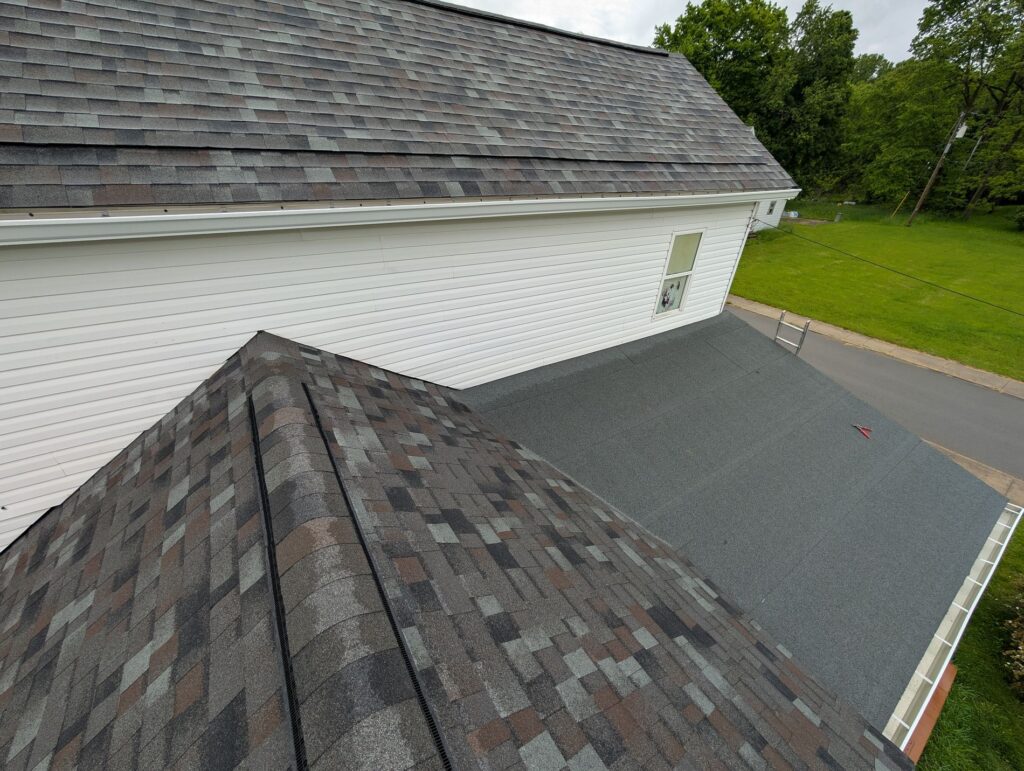
Satellite roof measurement uses high-resolution aerial imagery (companies like EagleView, GAF QuickMeasure, or Hover stitch in airplane and drone passes) to generate a 3D model of your roof. From that model, software pulls out total area, predominant pitch, ridge length, hip length, valley length, eave length, and the number of penetrations. A standard report for a 2,400-square-foot Austin home returns in under 24 hours and costs the contractor between $20 and $90 depending on the level of detail requested.
For a roofing company quoting a job, that data is gold. Instead of climbing a roof on day one, the estimator can produce a line-itemed proposal with accurate squares, ridge cap quantities, and starter strip needs before the homeowner even signs anything. The downside is that everything the software returns is geometry. It says nothing about condition.
How Accurate Are Satellite Estimates for Austin Homes
Independent comparisons against tape-measured roofs put satellite roof measurement within 2-5% on total square footage and within roughly 1-3% on linear measurements for simple gable-and-hip homes. That margin is small enough that material orders rarely need adjustment after a physical inspection confirms the report.
For Austin homes built between 1990 and 2015, which dominate Cedar Park, Round Rock, and Pflugerville subdivisions, accuracy tends to land at the better end of that range. Roofs are uniform, pitches are predictable (4/12 to 8/12), and tree canopy is moderate.
-
- Heavy tree cover. West Lake Hills and parts of Westlake have oak canopies that block 30 to 50% of the aerial view, forcing the software to interpolate.
-
- Complex custom homes. Hill Country builds with multiple dormers, turrets, or low-slope sections introduce edges the algorithm has to guess at.
- Recent additions. If your home was modified in the past 18 months, the imagery may predate the change by a season or more.
Where the Technology Falls Short
Geometry is one thing. Condition is everything else. A satellite report cannot tell you:
- Whether shingles have lost granules and entered the back half of their service life
- If hail strikes from the April 2024 or March 2025 Central Texas storms left bruises in the mat
- Whether flashing around chimneys and skylights has separated or rusted
- Soffit condition, fascia rot, or attic ventilation status
- Underlayment exposure at edges
- Decking deflection or sagging between rafters
That list matters because most roof failures in Austin start at the details, not the field. A 22-square roof with perfect square-footage data and torn step flashing around a brick chimney is still a leak. Photos from above can hint at some of these issues, but they cannot replace a hand on the shingle.
There is a second category of detail satellite reports miss: anything below the surface. Decking that has rotted from prior leaks, attic insulation that has been compressed by foot traffic, and gable vents that have lost their screens are all invisible from any aerial angle. On Austin homes built before 2005, where decking is often original OSB and ventilation may not meet current code, these hidden issues show up on roughly 1 in 5 inspections. That is why a thorough roofer will always pair satellite data with a quick attic inspection before quoting a tear-off.
Satellite vs Drone vs Walk On Inspection
Three measurement methods dominate the Austin market in 2026. Here is how they compare on cost, accuracy, condition data, and turnaround: Try a size-based estimate first if you just want a budgeting range.
Method | Sq Ft Accuracy | Condition Visibility | Avg Cost to Homeowner | Turnaround |
Satellite report | 95-98% | None | Free with quote | 1-24 hours |
Drone fly-over | 97-99% | High-resolution photos, no touch | Free to $250 | Same day |
Walk-on inspection | 99-100% | Hands-on, lifts shingles | Free with quote | 1-2 hours on-site |
Hail, Insurance, and Why Aerial Data Is Not Enough
Central Texas sits in what insurance underwriters call the secondary hail belt. Travis, Williamson, and Hays counties recorded 14 separate hail events in 2025 with stones of one inch or larger. Insurance carriers in Austin have responded by tightening claim documentation requirements.
Here is the practical reality: most major carriers (State Farm, Allstate, USAA, Farmers) now require:
- Aerial measurement OR sketched diagram with square footage
- Photo documentation of each slope showing test squares
- Evidence of physical hail strikes at the granule level
- Date-stamped imagery for storm correlation
Satellite roof measurement satisfies the first item. It cannot satisfy items 2 through 4. Adjusters who only get a satellite report back from a contractor will usually deny the claim or send their own field adjuster, which adds 2 to 4 weeks to the process. For homeowners filing post-storm, the satellite estimate should be paired with a chalked test-square inspection on day one.
When a Satellite Estimate Is Good Enough
There are real cases where a satellite-only number is the right tool. A few:
- Pre-listing roof age check. A real estate agent asking whether to plan for a roof in this contract needs a ballpark, not a forensic report.
- Refinance escrow questions. Lenders sometimes ask for a written replacement cost figure.
- Phase-one budgeting. A homeowner planning a five-year capital reserve can plug a satellite estimate into a spreadsheet and move on.
- Commercial portfolio scoping. Property managers of 5 to 50 buildings often need uniform numbers across properties. See commercial roofing for how this scales.
In each of those cases, you are using the number for planning, not pricing a contract. That is the right use of satellite roof measurement.
How Driftwood Uses Satellite Data in Austin
At Driftwood, satellite reports run on every estimate. We use them to pre-build line items, confirm geometry, and shorten the on-site visit from 90 minutes to about 40. Our roof techs still climb every accessible roof, photograph every penetration, and inspect every valley before any contract is signed. That hybrid approach is how we keep change orders under 3% across the services we offer.
For Cedar Park and North Austin in particular, where the housing stock is 15 to 25 years old and approaching shingle end-of-life, the combination matters. A satellite measurement might tell you the home has 28 squares of composition shingle. A walk-on inspection tells you that 8 of those squares face west into prevailing hail patterns and need to be the first ones documented for the carrier.
If you live in a tile-roofed neighborhood (parts of Cedar Park, Steiner Ranch, and some Hill Country builds), satellite data is even more limited because broken tiles are invisible from above. For those homes, see tile roof repair in Austin TX for how the inspection process differs from standard composition work.
FAQ: Satellite Roof Estimates in Austin
How accurate is satellite roof measurement compared to a manual measurement?
For typical Austin gable-and-hip homes, satellite roof measurement is within 2% to 5% of tape-measured square footage. Complex roofs with heavy canopy can swing wider, sometimes 5% to 8%.
Can a roofer give me a final price from a satellite report alone?
They can give you a number, but it should be marked as preliminary. Final pricing depends on flashing condition, ventilation needs, decking, and code upgrades that a satellite report cannot see.
Does my insurance company accept satellite measurements for hail claims?
Most carriers accept satellite reports for measurement but require physical photo documentation of damage. The two work together; neither replaces the other.
How recent is the satellite imagery for Austin neighborhoods?
Imagery for Travis and Williamson counties is typically refreshed every 12 to 18 months. For storm claims, ask your contractor when the underlying imagery was captured.
Are satellite estimates free for homeowners?
The report itself is paid for by the contractor. Most Austin roofers, including Driftwood, bundle it into a free estimate at no cost to you.
Satellite roof measurement is one of the most useful tools to enter residential roofing in the last 15 years, but it is not a substitute for someone standing on your roof. If you want a measured number paired with an honest condition assessment, contact us for a Driftwood inspection. We will show you the satellite report alongside the field photos so you can compare them yourself.

Author: Driftwood Builders Roofing
Driftwood Builders Roofing is a family-owned residential roofing company headquartered in Manchaca, Texas, serving Austin and the surrounding Hill Country since 2005. The company has delivered 3,700 full roof replacements and 783 repairs across 3,559 different customers over 20 years in business, with 97 years of combined construction experience across the leadership team and 74 years specifically inside Driftwood Builders. The company holds the highest contractor certifications offered by the major shingle manufacturers, including GAF Master Elite Contractor (the top 3% of GAF contractors nationally), GAF Certified Green Roofer, Owens Corning certified, TAMKO Pro Certified Contractor, and a Berridge Roof Installation Seminar Certificate for standing-seam metal roofs. Driftwood is an NRCA member, holds an Angie's List Super Service Award, is BBB Accredited, and is a GuildQuality member for verified customer satisfaction data. James Hardie certification covers the siding side of the business. Services include residential roof replacement, leak and storm-damage repair, tile roof repair, metal roofing, TPO commercial roofing, roof inspections, hail and storm damage inspections with insurance claim assistance, gutter work, and James Hardie siding. The customer-protection policy is straightforward: Only Pay Upon Completion. The company serves 22 cities across the Hill Country and Greater Austin and holds a 5-star rating across Google, GuildQuality, Angi, Nextdoor, Facebook, Thumbtack, and Yelp.
