How are Asphalt Roof Shingles Made?
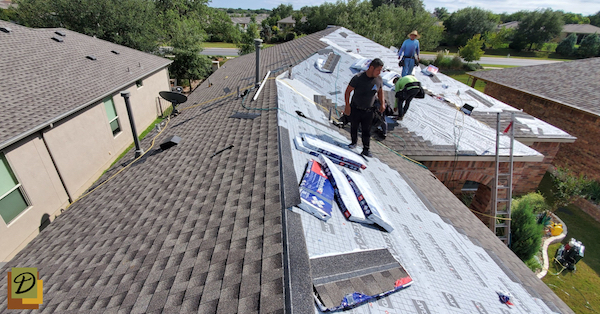
How are asphalt roof shingles made, step by step?
Understanding how asphalt roof shingles are made helps Austin homeowners see why this material holds up so well against Central Texas heat and storms. Manufacturing starts with a continuous mat that travels through a production line where each protective layer is added in sequence.
The core stages look like this:
- Mat feed. A roll of fiberglass or polyester mat is unwound to serve as the structural base of the shingle.
- Asphalt saturation. Refined asphalt blended with a fire retardant is applied to fully soak the mat and seal it against moisture.
- Granule coating. Crushed stone granules are pressed into the hot asphalt to create the weather-facing surface.
- Cooling and sealing. The layers are fused and bonded with heavy-duty sealant, then cut into finished shingle sections.
The result is a durable yet relatively thin covering that pairs with countless colors and styles. A trusted Austin roofing company can help you choose a shingle line built for the local climate.
What are asphalt roofing shingles made of?
Despite their tough performance, asphalt shingles are built from just a handful of materials. Each one plays a specific role in protecting your home.
- Fiberglass or polyester mat: the base layer that gives the shingle its shape and strength. Older felt mats have largely been replaced by fiberglass.
- Asphalt: refined and blended with a fire retardant, it saturates the mat to provide waterproofing and durability.
- Stone granules: the colored ceramic-coated layer that shields the asphalt from UV rays, heat, moisture, and hail impact.
- Sealant: heavy-duty adhesive strips that bond shingles together so they resist wind uplift during storms.
In the Austin area, the granule layer matters most. Our intense summer sun and spring hail put constant stress on a roof, and quality granules are what keep the asphalt underneath from drying out and cracking prematurely.
How thick are asphalt shingles?
A single asphalt shingle averages only about 3/16 of an inch thick, yet it packs a lot of protection into that small profile. You can also choose thicker dimensional or heavy-duty shingles when you want a richer look or extra durability.
The shingle is only one part of the system. When you add underlayment and wood sheathing, the full assembly stays just a couple of inches thick while still standing up to decades of weather. Here is how a typical asphalt roof layers up:
| Component | Approximate thickness | Main job |
|---|---|---|
| Stone granules | Top surface layer | UV, heat, and hail protection |
| Asphalt-saturated mat | About 3/16 inch | Waterproofing and structure |
| Underlayment | Thin membrane | Secondary moisture barrier |
| Wood sheathing (decking) | Roughly 1/2 inch or more | Structural deck |
Standard three-tab shingles are thinner and flatter, while architectural shingles use multiple bonded layers for a dimensional appearance and longer life.
How long do asphalt shingles last in the Austin climate?
Quality architectural asphalt shingles are commonly rated to last 25 to 30 years, while basic three-tab shingles often last closer to 15 to 20 years. In Central Texas, real-world lifespan depends heavily on heat exposure and storm history.
Two local factors shorten that timeline:
- Summer heat: sustained high temperatures and UV exposure slowly dry out the asphalt, which is why the protective granules are so important.
- Spring hail and straight-line winds: impact can knock granules loose or crack shingles, exposing the mat to water.
Regular maintenance and a periodic roof inspection help you catch granule loss or damaged shingles early, before a small problem becomes a leak. After a major storm, an inspection is the smartest way to document any hail damage.
Why choose asphalt shingles, and how do you get started in Austin?
Asphalt shingles remain one of the most popular roofing choices in Austin because they balance cost, durability, and curb appeal. They install quickly, come in a wide range of colors and profiles, and perform reliably across most Texas weather.
Key advantages include:
- Lower upfront cost than metal or tile roofing.
- Many styles, from flat three-tab to dimensional architectural looks.
- Strong fire and wind resistance built into the manufacturing.
- Straightforward repairs when individual shingles are damaged.
If you are weighing a repair against a full roof replacement, the right choice depends on your roof’s age and condition. As a GAF Master Elite roofer serving Cedar Park, Round Rock, Leander, Georgetown, and the wider Austin area, Driftwood Builders Roofing installs top-grade shingles and never asks for a deposit. To compare options for your home, request a free estimate and we will recommend the best shingle for your roof and budget.
Frequently Asked Questions
What are asphalt shingles made of?
Asphalt shingles are made of a fiberglass or polyester mat saturated with fire-retardant asphalt, topped with crushed stone granules, and bonded with heavy-duty sealant. Each layer adds waterproofing, fire resistance, or UV protection.
How thick is a single asphalt shingle?
A standard asphalt shingle is about 3/16 of an inch thick. Thicker architectural or heavy-duty shingles are available when you want a more dimensional look or added durability.
Are asphalt shingles fire resistant?
Yes. A fire retardant is blended into the asphalt during manufacturing, and most quality asphalt shingles carry a Class A fire rating, the highest available for roofing materials.
How long do asphalt shingles last in Texas?
Architectural asphalt shingles typically last 25 to 30 years, while three-tab shingles last about 15 to 20 years. Intense Austin heat and spring hail can shorten that lifespan, so regular inspections help protect your investment.
Do stone granules really protect the roof?
Yes. The stone granules shield the asphalt below from sunlight, heat, moisture, and hail impact. When granules wear away, the exposed asphalt dries out faster, which is a common early sign that a shingle roof is aging.

Author: Driftwood Builders Roofing
Driftwood Builders Roofing is a family-owned residential roofing company headquartered in Manchaca, Texas, serving Austin and the surrounding Hill Country since 2005. The company has delivered 3,700 full roof replacements and 783 repairs across 3,559 different customers over 20 years in business, with 97 years of combined construction experience across the leadership team and 74 years specifically inside Driftwood Builders. The company holds the highest contractor certifications offered by the major shingle manufacturers, including GAF Master Elite Contractor (the top 3% of GAF contractors nationally), GAF Certified Green Roofer, Owens Corning certified, TAMKO Pro Certified Contractor, and a Berridge Roof Installation Seminar Certificate for standing-seam metal roofs. Driftwood is an NRCA member, holds an Angie's List Super Service Award, is BBB Accredited, and is a GuildQuality member for verified customer satisfaction data. James Hardie certification covers the siding side of the business. Services include residential roof replacement, leak and storm-damage repair, tile roof repair, metal roofing, TPO commercial roofing, roof inspections, hail and storm damage inspections with insurance claim assistance, gutter work, and James Hardie siding. The customer-protection policy is straightforward: Only Pay Upon Completion. The company serves 22 cities across the Hill Country and Greater Austin and holds a 5-star rating across Google, GuildQuality, Angi, Nextdoor, Facebook, Thumbtack, and Yelp.
