
This page focuses on the metal roofing decision specifically in Austin's climate — UV tolerance, color choice for hill country aesthetics, HOA considerations, and how the Austin-area permitting process handles metal conversions from existing asphalt. For material systems and technical specifications, see metal roofing Austin.
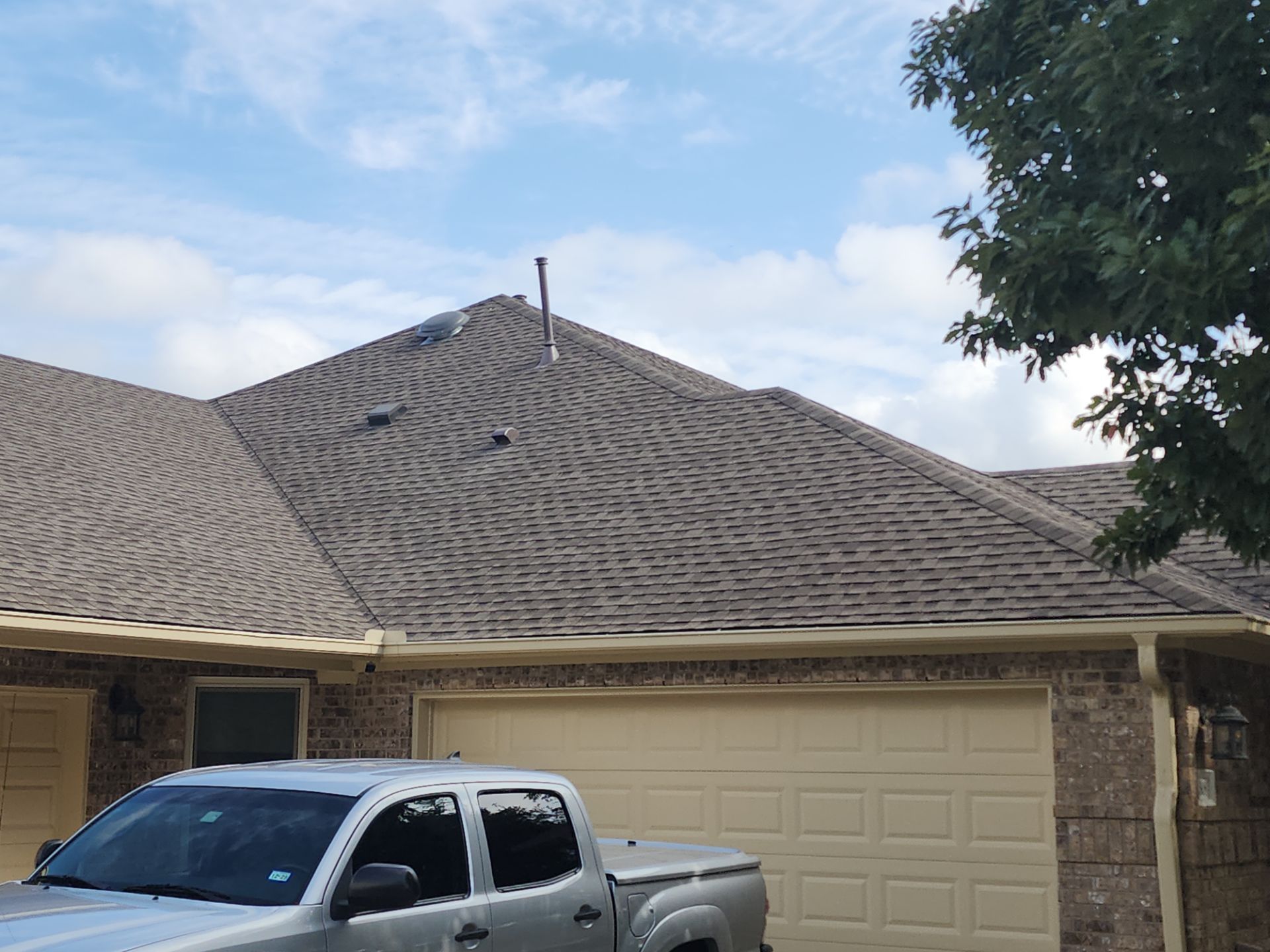
Watch a standing seam metal roof go on
How our crew installs a durable, hail-rated standing seam metal roof for homeowners in the Austin area.
 ▶ Watch on YouTube
- Standing seam panel layout and fastening
- High-temp underlayment and ice & water shield
- Custom flashing at valleys and penetrations
- A 40+ year, hail-rated finished system
Most homeowners come to austin metal roofing with one of three triggers: a visible leak, a recent hailstorm, or a roof that's simply reached its Central Texas service life. In Austin, each trigger plays out a little differently because of austin sits along the southern edge of hail alley, and the february 2021 winter storm generated widespread roof-related damage across travis county.
The specific phrase austin metal roofing shows up in our inbox year-round, with volume spikes after major storm events in Travis, Hays, and Williamson counties. Below is how we frame the work for new homeowners asking about it.
Typical Austin Homes and Roof Systems
Austin housing profile: Mix of 1920s bungalows in central neighborhoods to 2020s new builds on the outskirts. The common roof systems we see here are asphalt composition shingle, standing seam metal, clay tile in newer developments. That mix is important because it drives realistic expectations: in a neighborhood dominated by asphalt composition shingle, HOA approval for a material change often requires a separate submittal and sample review.
Tree canopy also matters: heavy live oak, pecan, and cedar — creates shade but drops debris and limbs during storms. Heavy canopy means more debris in valleys and requires more frequent gutter and roof inspections to prevent ponding or damming.
Our Inspection and Estimate Process
The first step is an on-site inspection. We document the current roof condition with photos and measurements, note any structural concerns at the decking level, and review the attic ventilation. We produce a written estimate that specifies manufacturer, product line, color, underlayment type, flashing details, and warranty tier. No hidden fees, no pressure tactics.
Once approved, installation typically takes 1-3 days depending on roof complexity. Full cleanup with magnetic sweep is included.
HOA Submittal and Architectural Approval
HOA density in Austin is high in newer subdivisions, low in central/east neighborhoods. When a subdivision requires architectural review, we prepare and submit the full package: material manufacturer data sheets, color samples, shingle class rating, and wind/impact certifications. In most cases the homeowner signs a single form and we handle the back-and-forth with the architectural committee.
Approval timelines vary from 5 business days to 6 weeks depending on the subdivision. We schedule installation only after written approval to avoid re-work disputes.
Material Options Available in Austin
The common systems we install in Austin are asphalt composition shingle, standing seam metal, clay tile in newer developments. Each has a different life expectancy in Central Texas conditions:
- Architectural asphalt: 18-25 years in Central Texas (vs. 25-30 national average — UV accelerates aging)
- Standing seam metal: 40-70 years (Galvalume or Kynar-500 painted steel)
- Concrete tile: 50+ years (tile itself); underlayment needs replacement at 25-30 years
- Clay tile: 75-100+ years for tile; underlayment at 30-40 years
Why Austin Homeowners Choose Driftwood Builders Roofing
Our GAF Master Elite certification, paired with 4.9 stars across 265+ verified reviews from verified customers, reflects two decades of local Central Texas work.
- GAF Master Elite: the top 3% of roofers nationally earn this certification
- GAF President's Club — volume and quality recognition
- A+ rating since 2009 — continuously accredited
- Permit handling with the City of Austin, Travis County, and Williamson County
- Written estimates with manufacturer part numbers, wind rating, and warranty terms
- Bilingual (English/Spanish) project coordination
Hail Performance Specifics for Austin
Given Austin's annual hail exposure, homeowners benefit most from upgrading to Class 3 or Class 4 impact-rated shingles. GAF Timberline AS II (Class 4), CertainTeed NorthGate (Class 4), and Malarkey Vista (Class 4) are the three systems we install most often in this hail profile. Insurer discounts typically offset the upgrade cost within 5-8 years.
Related Resources for Austin Homeowners
Context from our recent history: October 2013 — Halloween flood event caused severe Onion Creek flooding in South Austin, damaging roofs and homes along the creek corridor. Projects installed after major events like this should be documented thoroughly for future insurance reference.
Call us at (512) 894-0129 or send a project inquiry — response within one business day.
Our Full Project Walkthrough
From the first call to warranty close-out, here's the complete process for a typical Austin-metro roofing project with Driftwood Builders Roofing:
- Initial contact and scheduling — 10-15 minute phone call to understand the situation and book an inspection slot. No pressure, no upsell. For emergency situations, we dispatch for tarp service same-day.
- On-site inspection — one of our certified inspectors walks the roof, checks the attic, and photographs every relevant detail. A full residential inspection takes 45-90 minutes. No fee, no obligation.
- Written estimate — you receive a detailed proposal specifying manufacturer, product line, color, underlayment, flashing details, and warranty tier. Line-item pricing with no hidden extras.
- HOA submittal (if needed) — we prepare the architectural review package, submit it on your behalf, and follow up until approval. Typically 5 business days to 6 weeks depending on subdivision.
- Permit and material ordering — pulled from the applicable jurisdiction (City of Austin, Travis/Hays/Williamson County). Material arrives at the project 1-3 days before installation.
- Installation — 1-3 days on-site for standard residential projects. Full daily cleanup with magnetic sweep for stray nails. Interior attic protection where tear-off generates dust.
- Final municipal inspection — scheduled and attended on your behalf. Permit closed out with the county.
- Warranty paperwork — manufacturer warranty registered in your name. Workmanship warranty delivered in writing with direct contact information.
Detailed Questions Homeowners Ask
How do I know if I'm getting a fair price? Get 2-3 written estimates that specify exact products at the part-number level. Compare like-for-like: a $12,000 quote for standard GAF Timberline HDZ is not the same as a $14,500 quote for GAF Timberline AS II with Class 4 impact resistance and upgraded underlayment. Product tier, warranty level, and accessory spec matter more than headline price.
What warranties actually matter? Two warranty types: manufacturer warranty covers product defects (typically 30-50 years on asphalt, 50+ on metal, lifetime on premium tile). Workmanship warranty covers installation errors. The strongest combined coverage on residential asphalt is the GAF Golden Pledge — 50-year material, 25-year workmanship — available only from GAF Master Elite contractors.
Will a new roof lower my insurance? In Texas, yes — when the new roof meets UL 2218 Class 3 or Class 4 impact-resistance rating. The Texas Department of Insurance mandates a discount of 10-35% off the wind/hail portion of the premium. On a $3,000/year policy, that's roughly $250-$800 annually. Keep the receipts and certifications for your insurer.
What if you find damage during tear-off that wasn't in the estimate? Common discoveries at tear-off: rotten roof decking, failed flashing beyond what was visible, or old multi-layer roofs that weren't disclosed. These are handled as written change orders with clear pricing before any additional work happens. For insurance-covered projects, we document and submit them as supplements directly to the adjuster.
How do you handle weather delays? We monitor NOAA forecasts daily during active projects. If rain is forecast within 24 hours, we either accelerate to dry-in (waterproof underlayment fully installed) before weather arrives, or delay start to avoid leaving the deck exposed. Tarps are on-site for every project as backup.
Metal Roofing Options We Install in Central Texas
| System | Typical Gauge / Profile | Paint System | Where We Install It Most |
|---|---|---|---|
| Standing seam (snap-lock) | 24-gauge Galvalume | Kynar-500 (PVDF) | Premium residential, hill country custom homes |
| Standing seam (mechanical lock) | 24-gauge Galvalume | Kynar-500 | Exposed or steep-pitch homes |
| Corrugated (R-panel) | 26-gauge steel | SMP or Kynar | Rural homes, agricultural, workshops |
| Stone-coated steel (tile-look) | 26-gauge | Ceramic stone coating | HOA-restricted neighborhoods needing metal durability with tile appearance |
| Aluminum | 0.032" | Kynar-500 | Lake and coastal-exposure homes — no rust risk |
Panel width, seam height, and fastener system all affect final cost and performance. Our standard residential spec uses 16-inch-wide standing seam panels with 1.5-inch seam height and concealed clips — that combination performs best across the thermal cycling range of Central Texas.
What Central Texas homeowners say
Just wanted to say that we're very pleased with the roof work done by Driftwood Builders. Our estimator was very professional and provided very detailed information on all the different options available to us. He was also very diligent in working with our insurance company.
Driftwood Builders did an excellent job. The new roof is gorgeous. They asked if we had called the insurance company to look at the roof, something we had not even considered, and then said that they would be there when the adjuster came to look the roof over.
Austin-Specific Metal Roofing Considerations
- HOA approval: required in most central Austin and suburban subdivisions — samples and specifications submitted before order
- Historic district overlay: additional review in Hyde Park, Travis Heights, and other Austin-designated historic zones
- Color choice for hill country: matte galvalume, medium-tone browns, and dark grays dominate; bright white is rare due to glare complaints
- Tear-off requirement: Austin permits generally require full tear-off for metal-over-asphalt conversions; some jurisdictions allow overlay with structural verification
Additional Context for Homeowners
National Weather Service Austin-San Antonio serves all 30+ counties in our service area from its forecast office in New Braunfels, issuing the watches and warnings that trigger claim-filing windows.
Per IBHS 2024 hail research, Central Texas roofing decisions benefit from cross-referencing authoritative industry data. IBHS (ibhs.org) maintains a research facility where roofing systems are tested against simulated hail impacts under controlled conditions.
How to choose the best roofer in Austin, TX
The best roofer in Austin is one that is manufacturer-certified, locally established, fully licensed and insured, and backed by verifiable reviews and a real warranty. Here is how to evaluate any Austin roofing company, including us, against those standards.
Manufacturer certification
The strongest signal of quality is a top manufacturer certification, which requires proven training, insurance, and a clean track record. Only about 3% of U.S. roofers hold GAF Master Elite status.
Driftwood: Driftwood Builders Roofing is GAF Master Elite certified, one of the few in Central Texas, which also lets us offer the GAF Golden Pledge warranty.
A real local track record
Choose a roofer that has weathered several Central Texas hail seasons and can point to local projects, not an out-of-town storm-chaser that appears after a storm and disappears.
Driftwood: We've been based in Manchaca since 2005 and have completed 3,559 projects across the Austin metro.
License, insurance, and BBB standing
Texas does not license roofers, so verify liability insurance and workers' compensation yourself, and check the Better Business Bureau. This protects you if someone is hurt or the work is defective.
Driftwood: We carry full liability and workers' comp on every job, and we're a BBB-accredited business with an A+ rating since 2009.
Written, itemized estimates
A trustworthy roofer gives a written estimate that specifies manufacturer, product line, underlayment, flashing, and warranty, with no high-pressure 'sign today' tactics.
Driftwood: Every Driftwood estimate is written, itemized, and no-pressure, and our price matches the final invoice.
Verifiable, recent reviews
Look for a consistent rating above 4.5 stars across multiple platforms, with recent reviews, not a handful of five-star ratings posted the same week.
Driftwood: Driftwood holds 4.9 stars across 265+ verified reviews across Google, Facebook, Guild Quality, Angi, and Yelp.
A strong warranty and insurance help
The best roofers stand behind the work with a real workmanship warranty and, for storm claims, will document the damage and work directly with your adjuster.
Driftwood: We back installs with a 10-year workmanship warranty (up to the GAF Golden Pledge) and handle insurance claims end to end.
Austin roofing questions, answered
How much does a roof replacement cost in Austin, TX?
A full roof replacement in Austin typically costs $9,500 to $17,500 for architectural asphalt shingles, or $22,000 to $45,000 for a standing seam metal roof (2025 pricing). The final price depends on your roof's size, pitch, and whether the decking needs repair. If a covered storm caused the damage, you usually pay only your insurance deductible.
Is a metal roof worth it in Texas?
For most Austin homeowners, yes. A standing seam metal roof lasts 40 to 70 years, resists hail, and reflects solar heat to cut summer cooling costs in the Texas sun. It costs more up front than asphalt ($22,000 to $45,000 versus $9,500 to $17,500) but often outlasts two shingle roofs.
Do metal roofs make a house hotter?
No, the opposite. A properly installed metal roof reflects solar radiation, and with the right underlayment and attic ventilation it typically keeps a home cooler than asphalt shingles in the Central Texas heat, which can lower summer cooling bills.
What warranty comes with a new roof?
A complete roof carries two warranties: the manufacturer warranty on the materials and the workmanship warranty on the installation. As a GAF Master Elite contractor, we can offer the GAF Golden Pledge, the strongest in residential roofing, with up to 50-year material and 25-year workmanship coverage. Our standard workmanship warranty is 10 years.
When is the best time to replace a roof in Austin?
You can re-roof year-round in Austin, but late fall through early spring avoids peak summer heat and the spring hail season, and scheduling is usually faster. If you have active leaks or storm damage, though, replace it right away, waiting risks interior damage and complicates an insurance claim.
How much does commercial roofing cost in Austin?
Commercial flat-roof replacement in the Austin area runs about $7 to $12 per square foot installed, depending on the system (TPO, modified bitumen, or PVC) and the condition of the existing roof. We provide detailed written proposals for property managers and building owners.
Which Austin neighborhoods do you serve?
We roof homes throughout Austin, including Hyde Park, Travis Heights, Mueller, Tarrytown, Zilker, and the surrounding Travis County area. Because we're based in Manchaca and run our own crews rather than subcontractors, we respond quickly across Austin for both scheduled inspections and post-storm emergency service.