Protecting your Roof from Freezing Temperatures and Ice Dams
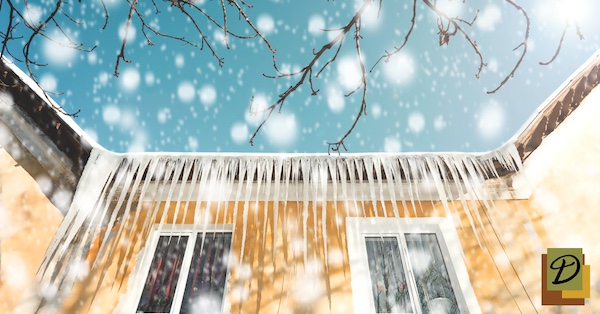
How do you protect your roof from ice dams and freezing temperatures?
Learning how to protect your roof from ice dams comes down to one idea: keep the roof surface cold and uniform so snow and ice cannot repeatedly melt and refreeze. When warm air escapes into a poorly insulated, poorly ventilated attic, it heats the roof deck. Snow on the upper roof melts, runs down to the colder eaves, and refreezes into a ridge of ice called an ice dam.
That ice traps more meltwater behind it. The trapped water works under the shingles, where it can lift them, tear them, and cause leaks into the attic and ceilings below.
Central Texas does not see deep snow every year, but our hard freezes and ice storms prove the threat is real. A trusted Austin roofing company can confirm whether your roof and attic are ready before the next cold snap.
Why do ice dams form on a roof in the first place?
Ice dams are an insulation and ventilation problem far more than a weather problem. Three conditions have to line up for one to form:
- Heat loss into the attic. Air leaks around can lights, wiring, plumbing stacks, and ductwork let warm indoor air rise into the attic.
- An uneven roof temperature. The heated upper roof melts snow while the overhanging eaves stay below freezing.
- A freeze, thaw, freeze cycle. Meltwater refreezes at the cold edge and the ridge of ice grows over hours or days.
Because the root cause is escaping heat, chipping ice off the edge each winter never solves it. The lasting fix is to stop the heat loss and even out the roof temperature.
What are the warning signs of ice dam roof damage?
Catching trouble early keeps a minor issue from becoming a torn-up roof and a soaked ceiling. Watch for these signs during and after a freeze:
- Thick ridges of ice or large icicles hanging along the gutters and eaves.
- Water stains or brown spots on ceilings and upper walls.
- Peeling paint, damp insulation, or a musty smell in the attic.
- Shingles that look lifted, curled, or loose after the ice melts.
- Gutters pulling away from the fascia under the weight of ice.
If you spot active dripping or staining, treat it as an urgent issue. Prompt roof and leak repair after a freeze stops water from spreading through insulation, drywall, and framing.
What steps prevent ice dams before winter arrives?
Prevention is the most reliable and affordable way to protect a roof. The work happens inside the attic and along the roof edge, and most of it can be done well before the first cold front.
Seal attic air leaks. Close gaps around wiring, plumbing, recessed lights, and ductwork so warm air stays in the living space instead of heating the roof deck.
Add insulation. Bring attic insulation up to the recommended R-38 to R-60 range for our region. Even, correct insulation keeps the roof deck cold and lowers energy bills too.
Ventilate the attic. Balanced intake and exhaust ventilation keeps the whole roof a consistent temperature. Ask a roofing professional whether your vents are adequate or blocked.
Keep gutters and downspouts clear. Remove leaves, debris, snow, and ice so meltwater can drain instead of refreezing at the edge.
| Prevention step | What it does | Best timing |
|---|---|---|
| Seal attic air leaks | Stops warm air from heating the roof deck | Fall, before first freeze |
| Add insulation (R-38 to R-60) | Keeps the roof cold and even | Fall |
| Balance attic ventilation | Maintains uniform roof temperature | Fall |
| Clear gutters and downspouts | Lets meltwater drain freely | Before each freeze |
Why does a professional roof inspection matter before a freeze?
An expert eye finds the weak points you cannot see from the ground. A professional reviews the condition of your shingles, vents, chimney flashing, gutters, and fascia, then points out the spots most likely to trap ice and moisture. That is far cheaper than discovering the problem through a winter leak.
A pre-winter roof inspection also catches the everyday issues that turn dangerous under ice, such as loose shingles, worn flashing, and clogged drainage. Driftwood Builders Roofing has been GAF Master Elite certified since 2005 and serves Austin and Central Texas communities including Cedar Park, Round Rock, Leander, Lakeway, Georgetown, Pflugerville, Buda, and Kyle.
When should you call a roofing professional for winter protection?
The best time to act is in the fall, while the weather is mild. Year-round attention pays off too: addressing small problems as they appear keeps a roof watertight and helps it last its full service life of 20 to 30 years or more.
Driftwood Builders Roofing offers free estimates and inspections, never asks for a deposit on labor or materials, and handles both residential and commercial roofs. We can also assist with storm and insurance claims if a freeze or ice storm has already caused damage. To get your roof ready for the cold, request a free estimate today.
Frequently Asked Questions
How do I stop ice dams from forming on my roof?
Stop ice dams by keeping the roof deck cold and even. Seal attic air leaks, add insulation to R-38 through R-60, and balance attic ventilation so escaping heat cannot melt snow that refreezes at the eaves. Clear gutters so meltwater can drain.
Do ice dams really happen in Austin and Central Texas?
Yes. While deep snow is rare here, our hard freezes and periodic ice storms are enough to create ice dams and freeze damage on poorly insulated roofs, so winterizing is worthwhile even in a mild climate.
What level of attic insulation prevents ice dams?
For our region, attic insulation in the R-38 to R-60 range is recommended. Evenly distributed insulation at the correct R-value keeps the roof deck cold and lowers heating costs at the same time.
Can I remove an ice dam myself?
You can gently clear snow from the edge with a roof rake from the ground, but chipping or chopping ice can damage shingles and is dangerous. Because the real cause is heat loss, the lasting fix is better attic insulation and ventilation, not removing ice each winter.
When is the best time to winterize my roof?
Schedule an inspection and any insulation, ventilation, or gutter work in the fall, before the first hard freeze. Acting early means your roof is protected when cold weather arrives.

Author: Driftwood Builders Roofing
Driftwood Builders Roofing is a family-owned residential roofing company headquartered in Manchaca, Texas, serving Austin and the surrounding Hill Country since 2005. The company has delivered 3,700 full roof replacements and 783 repairs across 3,559 different customers over 20 years in business, with 97 years of combined construction experience across the leadership team and 74 years specifically inside Driftwood Builders. The company holds the highest contractor certifications offered by the major shingle manufacturers, including GAF Master Elite Contractor (the top 3% of GAF contractors nationally), GAF Certified Green Roofer, Owens Corning certified, TAMKO Pro Certified Contractor, and a Berridge Roof Installation Seminar Certificate for standing-seam metal roofs. Driftwood is an NRCA member, holds an Angie's List Super Service Award, is BBB Accredited, and is a GuildQuality member for verified customer satisfaction data. James Hardie certification covers the siding side of the business. Services include residential roof replacement, leak and storm-damage repair, tile roof repair, metal roofing, TPO commercial roofing, roof inspections, hail and storm damage inspections with insurance claim assistance, gutter work, and James Hardie siding. The customer-protection policy is straightforward: Only Pay Upon Completion. The company serves 22 cities across the Hill Country and Greater Austin and holds a 5-star rating across Google, GuildQuality, Angi, Nextdoor, Facebook, Thumbtack, and Yelp.
