Roof Granule Loss: When to Worry and When to Wait
What Are Shingle Granules and Why Do They Matter?
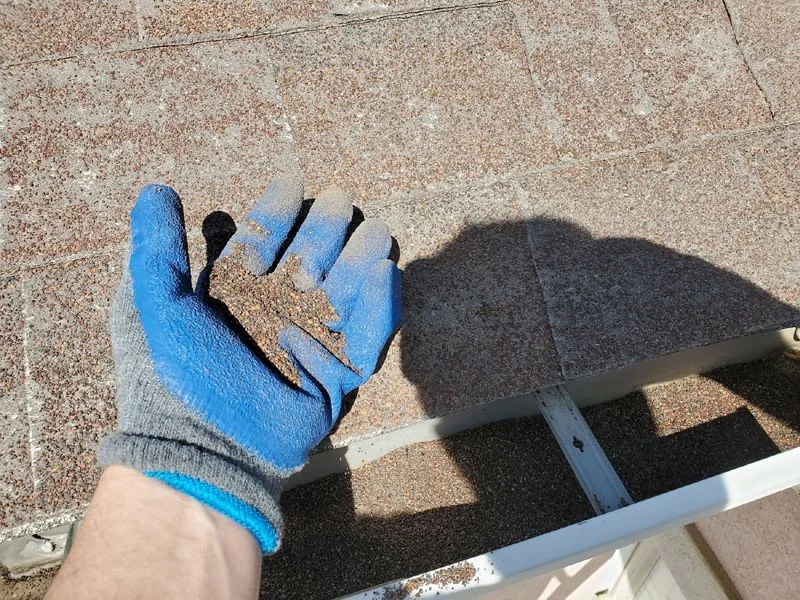
The colored grit covering an asphalt shingle is not decoration. Those mineral granules are the shingle’s sunscreen. They shield the asphalt layer underneath from ultraviolet light, which is the single biggest reason asphalt dries out, cracks, and fails. Granules also add fire resistance, help shed water, and give your roof its color.
When granule loss on shingles starts to expose the black asphalt mat beneath, the clock on that shingle speeds up dramatically. A shingle with full granule coverage might have 8 to 12 years of life left. The same shingle with quarter-sized bald spots can degrade in a fraction of that time because the asphalt is now baking in direct sun. Understanding the difference between cosmetic shedding and structural failure is what keeps a small problem from becoming a full roof replacement.
Normal Granule Loss vs. Problem Granule Loss
Not all granule loss is bad news. A brand-new roof will release loose granules left over from manufacturing for the first 60 to 90 days. You may see a cup or two of grit in your gutters after the first heavy rain, and that is completely expected.
The table below shows what is typical at each stage of a roof’s life and what should raise an eyebrow.
Roof age | Expected granule loss | Cause for concern |
0–1 year | Loose manufacturing granules in gutters | Bare asphalt spots already showing |
2–10 years | Light, even shedding over time | Piles of granules, exposed mat, post-storm loss |
11–18 years | Gradual thinning, some color fade | Widespread bald patches, cracking |
19–25 years | Heavy loss expected near end of life | Leaks, curling, soft decking underneath |
The pattern matters as much as the amount. Even, gradual thinning across the whole roof is aging. Sudden loss concentrated in streaks or patches usually points to a specific cause like impact damage or a manufacturing defect.
What Causes Granule Loss on Shingles?
Several forces strip granules from shingles, and they often work together:
- Normal weathering. Sun, rain, and thermal cycling slowly loosen the adhesive holding granules to the asphalt.
- Hail and wind-driven debris. Impact knocks granules off in concentrated spots, often leaving round bruises.
- Foot traffic. Walking on shingles, especially in hot weather when asphalt is soft, grinds granules loose. This is one reason careful inspection technique matters.
- Poor attic ventilation. Trapped heat cooks shingles from below, accelerating granule loss shingles experience across the whole field.
- Manufacturing defects. Rare, but some shingle batches shed prematurely and may be covered under warranty.
Knowing the cause changes the response. Granule loss from a single hailstorm may be an insurance claim. Granule loss from age is a replacement-planning conversation with an Austin roofing company.
How Central Texas Weather Accelerates Granule Loss
Homeowners in Cedar Park, Lakeway, and the greater Austin area face conditions that wear shingles faster than the national average. Central Texas sits inside a recognized hail belt, and a single spring storm can drop hail large enough to bruise an entire roof slope in minutes.
Add to that long stretches of intense summer sun, with roof surface temperatures that can exceed 150 degrees, and the asphalt binder softens daily. Each heat cycle loosens the grip on the granules a little more. The region’s rapid swings between dry heat and sudden downpours then wash the loosened granules straight into the gutters.
This combination is why a roof in Cedar Park may show meaningful granule loss shingles wear a few years sooner than the same roof in a milder climate. It is also why a post-storm inspection in this region is rarely wasted effort.
When to Worry: Warning Signs That Need a Pro
Call a roofer promptly if you see any of these:
- Exposed black asphalt. Bald patches where the mat shows through mean that section has lost its UV protection and is failing.
- Granule piles after a storm. A sudden surge of grit in gutters or at downspout splash blocks following hail or high wind suggests impact damage.
- Loss on a young roof. Significant granule loss on a roof under 10 years old is abnormal and may be a defect or storm-related claim.
- Shiny or dark streaks on the shingles. That sheen is exposed asphalt, a sign granules are gone in that area.
- Granule loss plus leaks, curling, or soft spots. When loss pairs with other symptoms, the roof system is compromised, not just worn.
In these cases, a professional inspection protects both your home and any insurance or warranty claim you may be entitled to. Documentation from a certified contractor carries weight with adjusters. Reach out through our contact page to get on the schedule before a small issue spreads.
When to Wait: Situations That Are Usually Fine
Just as important is knowing when not to panic:
- A new roof shedding loose granules in its first few months is normal break-in behavior.
- A light dusting of granules in gutters once or twice a year on a mid-life roof reflects ordinary aging.
- Even, gradual color fade across the whole roof without bare spots is cosmetic, not structural.
- A 20-plus-year-old roof with steady loss but no leaks can often be monitored while you plan a replacement rather than rushed.
Waiting does not mean ignoring. It means scheduling a routine check, keeping photos for comparison, and revisiting after the next major storm. If your roof is commercial rather than residential, the same logic applies, though flat and low-slope systems have their own rules covered under commercial roofing.
How to Check Your Roof for Granule Loss Safely
You can learn a lot without ever climbing a ladder onto the roof itself, which is the safest approach:
- Check the gutters and downspouts. Scoop out what collects at the bottom. A handful of grit is fine; a sediment layer is not.
- Look from the ground with binoculars. Scan for color inconsistencies, shiny streaks, or patches that look darker than the rest.
- Inspect after storms. Note any sudden change following hail or high wind.
- Photograph annually. A dated photo library makes gradual loss easy to spot and is useful evidence later.
Avoid walking on the roof. Foot traffic causes the very granule loss you are trying to measure, and Texas heat makes shingles fragile midday. For anything above the gutter line, a trained inspector with the right footwear and technique is the right call. Tile and specialty roofs add further complexity, which is why tile roof repair in Austin is handled differently from standard asphalt work.
FAQ: Roof Granule Loss
Is it normal to find granules in my gutters?
Yes, in small amounts. A new roof sheds loose granules for a few months, and a healthy older roof loses a little each year. Piles of granules, especially after a storm, are the warning sign.
Does granule loss always mean I need a new roof?
No. Light, even loss is aging and can be monitored. You typically need replacement only when bare asphalt is widely exposed or when loss comes with leaks, curling, or storm damage.
Can granule loss be covered by insurance?
Sometimes. If a documented hail or wind event caused concentrated granule loss shingles damage, it may qualify as a claim. A certified roofer’s inspection report strengthens your case with the adjuster.
How long does a shingle last once granules are gone?
Once the black asphalt mat is exposed, that section can deteriorate within a few years because it has lost its UV protection. Coverage matters more than total roof age.
Should I pressure wash granules back into place?
Never. Pressure washing strips even more granules and forces water under shingles. If your roof looks dirty or streaked, ask a professional about safe cleaning options instead.
Granule loss on shingles is one of the most misread roofing symptoms: sometimes it is harmless aging, and sometimes it is the first sign your roof is on borrowed time. The deciding factors are roof age, the pattern of loss, and whether other damage is present. If you are unsure which camp your roof falls into, a quick professional look removes the guesswork. Explore our roofing services or reach out for a no-pressure inspection through our contact page, and get a clear answer before the next Central Texas storm rolls through.

Author: Driftwood Builders Roofing
Driftwood Builders Roofing is a family-owned residential roofing company headquartered in Manchaca, Texas, serving Austin and the surrounding Hill Country since 2005. The company has delivered 2,776 full roof replacements and 783 repairs across 3,559 different customers over 20 years in business, with 97 years of combined construction experience across the leadership team and 74 years specifically inside Driftwood Builders. The company holds the highest contractor certifications offered by the major shingle manufacturers, including GAF Master Elite Contractor (the top 2% of GAF contractors nationally), GAF Certified Green Roofer, Owens Corning certified, TAMKO Pro Certified Contractor, and a Berridge Roof Installation Seminar Certificate for standing-seam metal roofs. Driftwood is an NRCA member, holds an Angie's List Super Service Award, is BBB Accredited, and is a GuildQuality member for verified customer satisfaction data. James Hardie certification covers the siding side of the business. Services include residential roof replacement, leak and storm-damage repair, tile roof repair, metal roofing, TPO commercial roofing, roof inspections, hail and storm damage inspections with insurance claim assistance, gutter work, and James Hardie siding. The customer-protection policy is straightforward: Only Pay Upon Completion. The company serves 22 cities across the Hill Country and Greater Austin and holds a 5-star rating across Google, GuildQuality, Angi, Nextdoor, Facebook, Thumbtack, and Yelp.