Pressure Washing Your Roof: Why It's Risky in Texas
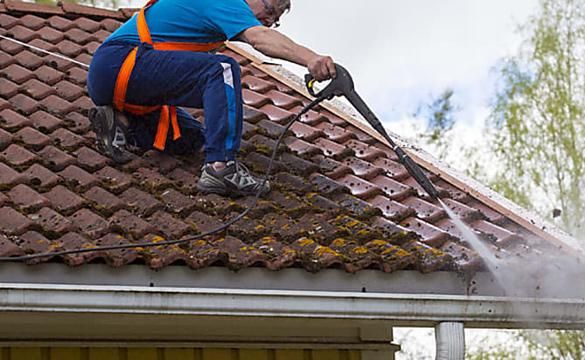
What Pressure Washing Actually Does to a Roof
The dark streaks you see on a Central Texas roof are usually a blue-green algae called Gleocapsa magma, sometimes mixed with moss in shaded valleys. It looks like dirt, so the instinct is to blast it off the way you would a driveway. That instinct is what damages the roof.
Asphalt shingles get their color, fire resistance, and UV protection from a layer of mineral granules bonded to the asphalt mat. A pressure washer rated at 2,500 to 4,000 PSI does not just remove algae. It tears that granule layer off in sheets. Once the granules are gone, the asphalt underneath is exposed to direct sun, dries out, cracks, and curls.
When you pressure wash a roof, water is also driven up and under the shingle edges. Shingles are designed to shed water flowing downhill, not water forced sideways and uphill at 40 miles per hour. That intrusion soaks the underlayment and decking, which is how a cosmetic cleaning turns into a hidden leak six months later.
Why Texas Roofs Are Especially Vulnerable
Central Texas combines several conditions that make a pressure wash roof job riskier here than in cooler, drier climates.
- Heat aging. Roof surface temperatures in Austin summers regularly hit 150 to 160 degrees Fahrenheit. Shingles that have baked for years are already brittle, so granules release far more easily under pressure.
- Hail history. The I-35 hail belt means many roofs already have impact bruising that loosened granules. Pressure washing finishes the job the hail started.
- Humidity swings. Spring storms followed by dry heat create the freeze-thaw and wet-dry cycling that algae thrives on, so homeowners feel pressure to clean often.
- Tile and metal mix. Many Hill Country homes use clay or concrete tile, which cracks under foot traffic and high pressure even though it looks tougher than asphalt.
If your home has clay or concrete tile, the risk profile is different but not lower. Cracked tiles from a pressure washer often go unnoticed until water stains appear on a ceiling. Our tile roof repair in Austin TX work frequently traces back to a cleaning that cracked tiles no one inspected afterward.
Pressure Washing vs Soft Washing: A Comparison
The safe alternative is soft washing, which uses a cleaning solution and water pressure no stronger than a garden hose. Here is how the two methods compare on the factors that matter.
Factor | Pressure Washing | Soft Washing |
Water pressure | 2,500–4,000 PSI | 60–100 PSI |
Removes algae roots | No, regrows in months | Yes, kills at the root |
Granule loss | Severe | Minimal to none |
Warranty impact | Often voids coverage | Manufacturer-approved |
Lasts | 6–12 months | 2–4 years |
Typical cost | $0.20–$0.40 / sq ft | $0.30–$0.60 / sq ft |
Safe for tile | No | Yes |
Soft washing costs slightly more per square foot, but it removes the algae at the root so streaks do not return in a few months, and it does not gamble with your shingles. The math favors soft washing in almost every case.
The Real Cost of a Pressure-Washed Roof
The price of the cleaning itself is the smallest number in this story. The expensive part is what comes after.
- Shortened roof life. Stripping granules can cut 5 to 10 years off a roof’s service life. On a roof with 12 years left, that is potentially half its remaining lifespan gone in an afternoon.
- Voided warranty. Most asphalt manufacturers, including GAF, specify approved cleaning methods. A pressure wash roof job that strips granules gives the manufacturer grounds to deny a future claim.
- Premature replacement. A full roof replacement in the Austin area runs roughly $9,000 to $25,000 depending on size and material. Trading a $300 cleaning for an early replacement is a poor exchange.
- Hidden water damage. Forced water intrusion can rot decking and grow attic mold, repairs that often run $2,000 to $8,000 and are rarely covered once the cause is traced to pressure washing.
As a GAF Master Elite contractor certified since 2005, we see the warranty side of this constantly. A homeowner files a granule-loss claim, the manufacturer asks how the roof was maintained, and an improper cleaning ends the conversation. Our Austin roofing company reviews maintenance history on every inspection for exactly this reason.
Safer Ways to Clean a Texas Roof
You do not have to live with algae streaks. You just have to clean the roof in a way that preserves it.
- Hire a soft wash specialist. Look for a roofer or cleaner who uses a sodium hypochlorite or sodium percarbonate solution applied at low pressure, then rinsed gently.
- Install zinc or copper strips. A strip near the ridge releases trace metal ions every time it rains, which suppresses algae growth across the slope below for years.
- Choose algae-resistant shingles at replacement. GAF and other makers offer shingles with copper-infused granules and a 10 to 25 year algae warranty.
- Keep the roof clear. Trim overhanging branches to reduce shade and moisture, and clean gutters so water drains instead of pooling along the eaves.
- Schedule a professional inspection first. Before any cleaning, have the roof inspected so an existing problem is not washed over and hidden.
If you are weighing a cleaning against deeper maintenance, our roofing services page outlines inspection, repair, and preventive options for Central Texas homes.
When Cleaning Is Not Enough: Signs You Need Repair
Sometimes what looks like a dirty roof is actually a failing one. Cleaning a roof that needs repair just postpones the inevitable and wastes money. Watch for these signs.
- Granules collecting in gutters or at downspout splash blocks
- Shingles that are curling, cupping, or missing entirely
- Soft or spongy spots when walking the roof (a job for a pro, not the homeowner)
- Daylight visible through the attic boards
- Water stains on ceilings or along interior walls after rain
If you see any of these alongside algae streaks, cleaning is not the answer. Homeowners in Cedar Park and Lakeway often call about streaks and discover during inspection that hail or age has already compromised the roof, which changes the plan entirely.
FAQ: Pressure Washing Roofs in Texas
Can I pressure wash my roof on a low setting?
Even a low setting on a pressure washer exceeds what shingles tolerate, and the nozzle distance is hard to control on a slope. The safer choice is soft washing, which is purpose-built for roofs and stays under 100 PSI.
Will pressure washing void my roof warranty?
In most cases, yes. Major manufacturers specify approved cleaning methods, and granule loss from high pressure is a common reason claims get denied. Always check your warranty language before cleaning.
How often should a Texas roof be cleaned?
With soft washing and zinc strips, most Central Texas roofs need cleaning every 2 to 4 years. Heavily shaded roofs may need it more often because algae and moss hold moisture longer.
Is roof algae actually harmful or just ugly?
Algae itself is mostly cosmetic, but it holds moisture against the shingle surface and can shelter moss, which lifts shingles and traps water. Left for years, it does shorten roof life, so it is worth addressing the right way.
Does soft washing really remove black streaks?
Yes. A proper soft wash solution kills the algae at the root, so streaks lift within hours and stay gone far longer than a pressure rinse that only blasts off the surface layer.
A roof is the most expensive surface on your house to replace, so the cleaning method matters more than the cleaning itself. Skip the pressure washer, choose soft washing, and inspect before you clean. If you want a professional opinion on whether your roof needs cleaning, repair, or both, contact us for an honest inspection before you make a costly mistake.
Author: Driftwood Builders Roofing
Driftwood Builders Roofing is a family-owned residential roofing company headquartered in Manchaca, Texas, serving Austin and the surrounding Hill Country since 2005. The company has delivered 3,700 full roof replacements and 783 repairs across 3,559 different customers over 20 years in business, with 97 years of combined construction experience across the leadership team and 74 years specifically inside Driftwood Builders. The company holds the highest contractor certifications offered by the major shingle manufacturers, including GAF Master Elite Contractor (the top 3% of GAF contractors nationally), GAF Certified Green Roofer, Owens Corning certified, TAMKO Pro Certified Contractor, and a Berridge Roof Installation Seminar Certificate for standing-seam metal roofs. Driftwood is an NRCA member, holds an Angie's List Super Service Award, is BBB Accredited, and is a GuildQuality member for verified customer satisfaction data. James Hardie certification covers the siding side of the business. Services include residential roof replacement, leak and storm-damage repair, tile roof repair, metal roofing, TPO commercial roofing, roof inspections, hail and storm damage inspections with insurance claim assistance, gutter work, and James Hardie siding. The customer-protection policy is straightforward: Only Pay Upon Completion. The company serves 22 cities across the Hill Country and Greater Austin and holds a 5-star rating across Google, GuildQuality, Angi, Nextdoor, Facebook, Thumbtack, and Yelp.
