Class 3 vs Class 4 Impact-Resistant Shingles: Hail Coverage Compared
What Are Impact-Resistant Shingles?
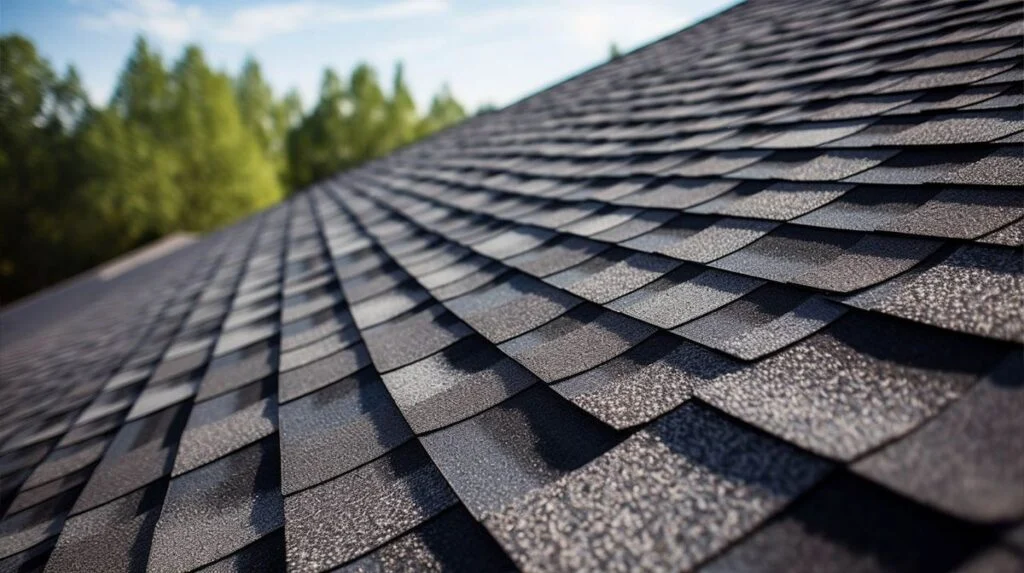
Central Texas sits squarely in the hail belt, and Williamson and Travis counties log damaging hail nearly every spring. That is the entire reason impact-resistant shingles exist. These shingles use a reinforced asphalt mat, a modified polymer (often SBS rubberized asphalt), or a tougher fiberglass backing so the shingle flexes under a hailstone strike instead of cracking and shedding granules.
A standard architectural shingle can lose granules and develop hidden fractures from a single moderate hailstorm. Those fractures expose the asphalt to UV, accelerate aging, and eventually leak. Impact-resistant products are engineered to absorb that energy. They are not hail-proof, but they dramatically raise the threshold of stone size and speed that causes real damage.
For homeowners weighing a full roof replacement, this is the single most consequential material decision in our climate.Before you compare brands or colors, you should decide whether you are buying a Class 3 or a Class 4 roof, because that choice drives both your storm protection and your insurance premium.
How the Class Ratings Work: UL 2218 Explained
Impact resistance is measured by a test called UL 2218, developed by Underwriters Laboratories. The test is simple and brutal: a steel ball is dropped from a set height onto the shingle, and the back of the shingle is inspected for cracks, splits, or rupture. If the shingle passes without fracturing, it earns that class.
There are four classes, and the steel ball gets bigger and falls farther as the class rises:
UL 2218 Class | Steel ball diameter | Approximate drop height | Energy absorbed |
Class 1 | 1.25 inch | ~12 feet | Lowest |
Class 2 | 1.5 inch | ~15 feet | Low |
Class 3 | 1.75 inch | ~17 feet | High |
Class 4 | 2.0 inch | ~20 feet | Highest |
Class 4 is the top tier available for residential asphalt shingles. A separate test, FM 4473, uses actual ice balls fired from a launcher and is more common for commercial systems, which is one reason commercial roofing projects often spec different products than homes.
The key thing to understand: the rating reflects lab performance, not a guarantee against every storm. A 2.5-inch hailstone driven by 60 mph wind can still damage a Class 4 roof. The class tells you the relative toughness, and in the field that difference is meaningful.
Class 3 vs Class 4: The Real Differences
On a roof, the gap between Class 3 and Class 4 shows up in three places.
Material construction. Most Class 4 shingles use an SBS-modified (“rubberized”) asphalt that stays flexible in cold and rebounds after impact. Class 3 products often rely on a heavier fiberglass mat without the polymer. The polymer is what lets a Class 4 shingle take a direct hit and spring back.
Field survival rate. After a moderate Central Texas hailstorm (1.25 to 1.75 inch stones),On the Central Texas roofs our crews inspect after a storm, Class 3 shingles more often show the bruising and granule loss an adjuster flags, and Class 4 roofs of a similar age and exposure more often come through intact. That is what we see in the field, not a manufacturer guarantee. No shingle is hail proof, and a large enough stone will damage any roof.
Insurance recognition. This is the decisive one. In Texas, most carriers extend their hail-resistance premium discount only to Class 4. A Class 3 roof gives you better protection than standard shingles but usually no premium credit.
Here is the practical comparison:
- Class 3: Better than standard, no SBS polymer in many lines, rarely earns an insurance discount, modest price bump.
- Class 4: Top UL 2218 rating, usually SBS-modified, qualifies for Texas hail discounts, manufacturer warranties often include impact coverage.
If you want a deeper walkthrough of materials and installation for your specific roof, our roofing services page lays out the options we install across the Austin metro.
Hail Coverage and Insurance Discounts in Texas
Texas is one of the best states in the country to own a Class 4 roof, specifically because of how insurers treat it. The Texas Department of Insurance has long encouraged impact-resistant roofing, and most major carriers respond with premium credits.These are ranges we see across Central Texas carriers. Discounts vary by carrier, by policy and by the year the roof was installed, so confirm yours with your agent before you decide. Ask specifically whether the credit applies to the whole premium or only to the wind and hail portion, because carriers handle that differently.
Typical discount ranges we see for verified Class 4 installations:
Carrier behavior | Typical annual premium discount |
Standard hail-resistance credit | 15% to 20% |
Aggressive impact-roof program | 20% to 30% |
No qualifying program | 0% (Class 3 usually here) |
To claim the discount, you generally need a manufacturer certificate showing the product’s UL 2218 Class 4 rating, plus a paid invoice or a roofing certificate confirming what was installed. Keep both documents. We provide them with every qualifying install, and homeowners in Cedar Park and Lakeway routinely use them to lock in the lower premium at renewal.
A word of caution on claims: a Class 4 roof does not mean your deductible disappears. Most Texas policies now carry a separate, percentage-based wind/hail deductible (often 1% to 2% of the dwelling value). The discount lowers your ongoing premium; it does not change how a future claim is paid. If a storm does hit, our hail damage and insurance claim help in Austin covers documenting the loss and working with your adjuster.
Cost vs Payback: Are Class 4 Shingles Worth It?
The upgrade from a standard or Class 3 shingle to a class 4 impact resistant shingles system usually adds $1 to $4 per square foot of roof area, depending on the manufacturer and line. On a typical 2,200 square foot Austin home with a moderately complex roof, that is often a few thousand dollars over a standard tear-off and replacement.This is an illustration, not a quote. The numbers below are examples so you can see how the math works. Your actual upgrade cost depends on roof size, pitch and material, and your actual credit depends on your carrier and policy. We give you both in writing after a free inspection.
Run the math the way an owner should:
- Premium savings. If your annual home premium is $3,500 and you earn a 20% hail-roof discount, that is roughly $700 per year back in your pocket.
- Payback window. An upgrade premium of $4,000 divided by $700 per year pays back in under 6 years, and Class 4 roofs commonly last 25 to 30 years.
- Avoided claims. Every storm you ride out without filing protects your claims history and helps you avoid deductible hits and possible non-renewal.
For most Central Texas homeowners, the discount alone justifies the upgrade within the first decade, and the storm resilience is a bonus on top. The economics are weaker only if you carry no hail discount or plan to sell within a year or two.
Which Should Central Texas Homeowners Choose?
For the vast majority of homes from Austin to Cedar Park to Lakeway, Class 4 is the right call. You get the top impact rating, the insurance discount that Class 3 rarely earns, and a shingle built with the polymer that actually survives our hail seasons.
Class 3 makes sense in narrow cases: a tight budget where the upgrade simply will not fit, a carrier with no impact discount, or a detached structure you do not insure for hail. Even then, weigh it carefully, because the price gap between the two classes is often smaller than people expect.
The smartest move is to get a roof evaluation that includes your insurer’s specific discount and a quote for both classes side by side. An experienced Austin roofing company can pull those numbers so you decide on facts, not guesses.
FAQ: Impact-Resistant Shingles
Do Class 4 shingles guarantee my roof will never be damaged by hail?
No. Class 4 is the highest UL 2218 rating, but very large or wind-driven hail can still cause damage. The rating reflects strong lab performance and real-world resilience, not immunity.
Will every Texas insurer give me a discount for Class 4?
Most major carriers do, typically 15% to 30%, but it is not universal. Ask your agent for the exact credit before you buy, and keep the manufacturer’s Class 4 certificate to claim it.
How much more do Class 4 shingles cost than standard shingles?
Usually $1 to $4 per square foot of roof area. On an average Austin-area home that is often a few thousand dollars over a standard replacement, frequently recovered through premium savings within 5 to 8 years.
Can I tell the class just by looking at my current shingles?
Not reliably. The class is printed on the product wrapper and the manufacturer’s data sheet, not stamped on the installed shingle. Your roofing invoice or certificate should state the UL 2218 class.
Are impact-resistant shingles worth it if I have a tile roof?
Tile and asphalt behave differently under hail, and tile has its own repair considerations. If you have tile, see our notes on tile roof repair in Austin TX before assuming a shingle rating applies.Choosing between Class 3 and Class 4 is one of the highest-leverage decisions you will make on a Central Texas roof.
If you want a no-pressure comparison quote that includes your insurer’s discount, contact us and we will walk you through the numbers for your specific home.

Author: Driftwood Builders Roofing
Driftwood Builders Roofing is a family-owned residential roofing company headquartered in Manchaca, Texas, serving Austin and the surrounding Hill Country since 2005. The company has delivered 3,700 full roof replacements and 783 repairs across 3,559 different customers over 20 years in business, with 97 years of combined construction experience across the leadership team and 74 years specifically inside Driftwood Builders. The company holds the highest contractor certifications offered by the major shingle manufacturers, including GAF Master Elite Contractor (the top 3% of GAF contractors nationally), GAF Certified Green Roofer, Owens Corning certified, TAMKO Pro Certified Contractor, and a Berridge Roof Installation Seminar Certificate for standing-seam metal roofs. Driftwood is an NRCA member, holds an Angie's List Super Service Award, is BBB Accredited, and is a GuildQuality member for verified customer satisfaction data. James Hardie certification covers the siding side of the business. Services include residential roof replacement, leak and storm-damage repair, tile roof repair, metal roofing, TPO commercial roofing, roof inspections, hail and storm damage inspections with insurance claim assistance, gutter work, and James Hardie siding. The customer-protection policy is straightforward: Only Pay Upon Completion. The company serves 22 cities across the Hill Country and Greater Austin and holds a 5-star rating across Google, GuildQuality, Angi, Nextdoor, Facebook, Thumbtack, and Yelp.
