Hail Damage Roof Repair in Round Rock, Georgetown & Cedar Park
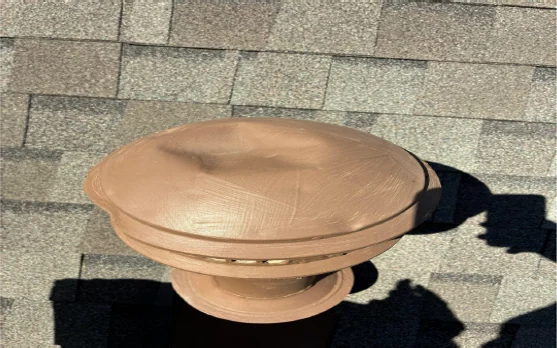
Most hail damage never shows from the driveway. Here is what to check and what to do next.
Hail damage on a Round Rock or Georgetown roof is usually invisible from the ground. Quarter-sized hail is already past the point where asphalt shingles begin to fail, and the damage it leaves tends to surface as a leak months later rather than the same week. The I-35 corridor running from north of Georgetown south through Round Rock, Cedar Park and into South Austin sees repeat hail events, most recently the storm of April 18, 2026 documented in full below.
In that storm, Round Rock police reported significant property damage and isolated power outages, and photos from Georgetown showed hail blanketing parking lots. The rule of thumb holds for any hail event: if it was bad enough to break glass on the ground, it was bad enough to damage the shingles and flashing on your roof, even if you cannot see it from the driveway.
This guide covers what hail actually does to a Central Texas roof, which neighborhoods along the corridor get hit hardest, how to document damage properly, how insurance claim deadlines actually work in Texas, and how to avoid the storm-chaser crews that follow every hail event into the area.
Central Texas Hail History: The April 2026 Storm
Here’s what the National Weather Service, local news crews, and our own field reports confirm about the April 18, 2026 storm, the most recent major hail event in this corridor:
- Date: Saturday, April 18, 2026
- Peak impact time: Approximately 7:30 p.m.
- Primary hail size: 1.00″ (quarter-sized) across most of the affected area
- Maximum hail size reported: Up to baseball-sized in isolated cells
- Storm track: 30+ mile swath, north of Georgetown through Cedar Park, Round Rock, and into South Austin
- Confirmed impacts: Shattered windshields, dented vehicles, hail-covered parking lots, isolated power outages, broken window screens
- Preceding conditions: A strong cold front moved through Central Texas that morning, dropping temperatures into the 40s and setting up the severe weather that evening
Quarter-sized hail is well above the threshold at which hail damages asphalt shingles. And when individual stones reach baseball-size, the damage extends beyond shingles to gutters, siding, vents, skylights, and HVAC condenser fins.
Neighborhoods Hit Hardest
These are the areas along the corridor that take the heaviest hail, and the ones hit hardest in April 2026. If you live in one of them, assume your roof has taken impacts at some point, whether or not you can see damage from the ground:
Georgetown: Hail blanketed parking lots along the IH-35 corridor and through subdivisions near Sun City, Berry Creek, and the downtown square. Georgetown is the northern anchor of most storm tracks through this corridor.
Round Rock: Round Rock police confirmed significant property damage and isolated power outages. Neighborhoods from Forest Creek to Teravista to Brushy Creek saw the heaviest hail. Multiple reports of broken windshields throughout the city.
Cedar Park: The core of the storm tracked directly over Cedar Park neighborhoods including Buttercup Creek, Brushy Creek, Anderson Mill West, and the Cypress Creek area.
Leander: Western edge of the storm track. Travisso, Crystal Falls, and Savanna Ranch all saw quarter-sized hail.
Pflugerville and North Austin: Smaller hail, but enough to cause damage to older or aged shingle systems.
South Austin: The southern tail of the 30-mile swath reached into neighborhoods south of downtown. Lighter hail volume, but damage is still possible on vulnerable roofs.
Even if your own street escapes the worst of a given storm, hail patterns are notoriously patchy. One block can be hammered while the next block over looks untouched. The only way to know is to have a trained hail damage inspector on the roof.
Driftwood Builders: finding hail damage on an Austin-area roof that the weather reports had not flagged.
Why “My Roof Looks Fine” Is the Costliest Mistake
Here is the trap: you walk outside the morning after a storm, look at your roof from the driveway, and it looks unchanged. No missing shingles. No obvious dents. You make coffee and get on with your week.
That is exactly how Central Texas homeowners end up paying out of pocket for a roof replacement a year or two later that their insurance might have covered, had the damage been documented and reported at the time.
Quarter-sized hail damages asphalt shingles in ways you can’t see from the ground:
- Granule loss: Each impact knocks protective mineral granules off the shingle surface. The exposed fiberglass mat underneath starts baking in the sun, and Austin’s summer sun accelerates the deterioration dramatically (see our guide on how summer heat affects your roof).
- Mat bruising: The fiberglass mat underneath the shingle can be fractured by impact even when the surface looks intact. These bruises feel spongy to a trained inspector’s touch but are undetectable from the ground.
- Seal strip failures: The adhesive strips that bond shingles together can be broken by impact. Your shingles look fine… until the next windstorm lifts them like playing cards.
- Metal component damage: Pipe boots, ridge vents, and flashings often take the worst of the impact. Cracked flashing is a future leak point, not a current one.
None of this causes a leak this week. It causes a leak six to eighteen months from now, by which point tying it back to a specific storm without dated documentation is very difficult.
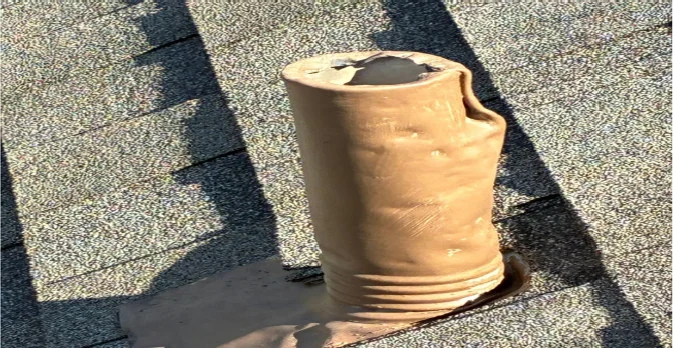
Driftwood Builders checking roof vents for hail damage on a job in Westminster Glen, Austin.
Your 30-Day Action Plan
The insurance claim process is easier, cleaner, and faster when the evidence is fresh. Here is the order to work through:
1. Document everything at ground level. Take photos and video of every dent, ding, and broken thing on your property: your car, AC unit, mailbox, fence, window screens, and siding. This ground-level evidence proves a hail event occurred on your property, even if the roof damage is invisible from below.
2. Check your ceilings and attic. Look for any new water stains, especially around skylights, chimneys, and in the attic. If you see active dripping, read our guide on what to do when your roof starts leaking.
3. Schedule a free storm damage inspection. Soon, while the evidence is fresh. A trained Austin roof inspector walks your roof, documents every impact with photographs and measurements, checks the attic, and provides a written report, all at no cost.
4. File your insurance claim with the inspection report in hand. Claims filed with professional documentation move faster and settle higher than claims you try to document yourself.
5. Ask your roofer to attend the adjuster’s inspection. Your roofer can be on the roof while the adjuster is there to point out and explain the damage they documented. Texas law does not allow a contractor who is also doing the work to act as your public insurance adjuster, so they cannot negotiate the claim or interpret your policy for you. What they can do is make sure the physical evidence actually gets looked at. See our guide to avoiding insurance claim disputes for why.
6. Don’t climb on your roof yourself. Ever. Hail-damaged shingles are slippery and their structural integrity is compromised.
7. Don’t sign anything with a door-knocker. More on this below.
Insurance Claim Deadlines in Texas
Most Texas homeowners policies require you to give your insurer prompt notice of a loss. Some policies carry a one-year deadline to file, and the Texas Department of Insurance notes that such a deadline generally applies unless you can show good cause for the delay. Windstorm policies written through TWIA have their own one-year rule. There is no single statewide deadline covering every policy, so the only reliable answer is the one in your own policy documents.
What matters in practice is that the clock usually starts on the date of the storm, not the date you discover the damage. A leak that appears eighteen months after a hail event is hard to tie back to that event without documentation from the time.
That is why an inspection soon after a storm matters. A dated inspection report records the condition of your roof at that point, even if the full consequences (leaks, interior damage, structural issues) do not surface until months later.
If the inspection finds damage, you have documentation to support a timely claim. If it does not, you have a dated record showing your roof was intact. Either way it costs you nothing. Learn more about filing insurance claims in Texas and how to negotiate with your insurance company.
Storm Chasers Show Up After Every Hail Event
Within a day of any significant hail event, out-of-state crews start rolling into the affected neighborhoods with magnetic signs, clipboards, and rehearsed scripts. After a storm of any size, expect them knocking on doors in Round Rock, Georgetown, and Cedar Park.
Red flags to watch for:
- Out-of-state license plates in the driveway
- No local office or physical address you can drive to
- “Free inspection” offers with immediate pressure to sign a contract on the spot
- Requests to sign an Assignment of Benefits (AOB): this transfers your insurance rights to the contractor and leaves you with limited control of your own claim
- Prices that seem dramatically lower than local quotes (the work will be subcontracted to temp crews)
- Warranties from companies you can’t verify have been operating in Texas for 5+ years
When problems surface in six months (a leak, a wind-lifted shingle, a failed seal), these crews are gone. The workmanship warranty they handed you is worth the paper it’s printed on. You’re left paying a local Austin roofing company to fix their work out of your own pocket.
Driftwood Builders has been serving Central Texas since 2005. We’re GAF Master Elite certified (top 2% of roofers nationally), we are rated 5 stars based on 500+ displayed customer reviews across multiple third-party review platforms, and when the job is done, we are still here. That matters when a warranty issue comes up three years from now.
How Driftwood Documents Your Hail Damage
Our storm damage claim assistance after a hail event is straightforward and free. Here is what we do, and what we are not permitted to do:
1. Free roof inspection: We walk the roof, document every impact with photos and measurements, and write a professional report you can hand to your insurance company.
2. Documentation you can file with: You get the photographs, measurements and written report. You file the claim; the evidence is ready to go with it.
3. The adjuster’s inspection: Our estimator can be on the roof during the adjuster’s visit to point out and explain each impact we documented.
4. A written scope of work: If the approved scope does not cover work the roof actually needs, we put our construction scope and the supporting photographs in writing so you can take it back to your carrier. Under Texas law a contractor doing the work cannot negotiate a claim on your behalf, so that conversation stays yours.
5. Installation: Once the claim is approved, most roof replacements are completed in 1 to 3 days by our trained, in-house crews (never subcontracted).
6. Additional damage found during tear-off: If we uncover rotted decking, code upgrades or structural issues once the old roof is off, we document and price that work so it can be submitted to your carrier as a supplement.
All of this is included. Where work proceeds through an approved claim, your cost is your insurance deductible. If you’d like to understand the overall timing, see how long a roof replacement actually takes. If you’re thinking ahead to prevention for the next storm, consider Class 4 impact-resistant shingles or metal roofing on the replacement. Both qualify for Texas insurance discounts. And for full context on the rest of the 2026 hail season still ahead, read our Austin Hail Season 2026 guide.
Frequently Asked Questions
How big does hail have to be to damage a roof?
Damage to asphalt shingles generally starts around one inch, which is quarter size. The April 18, 2026 storm through this corridor was primarily quarter-sized with isolated baseball-sized stones. Smaller hail can still damage older or already weathered shingles, soft metal vents and flashing.
My roof looks fine from the ground. Do I still need an inspection?
Yes. Most quarter-sized hail damage is invisible from the ground. Granule loss, mat bruising, and broken seal strips all require a trained inspector on the roof to identify. See our guide on spotting hail damage.
How long do I have to file a hail damage claim in Texas?
Check your policy. There is no single statewide deadline. Most policies require prompt notice of a loss, and some carry a one-year deadline that the Texas Department of Insurance says generally applies unless you can show good cause for the delay. TWIA windstorm policies have their own one-year rule. Getting an inspection soon after a storm makes the process easier whatever your deadline turns out to be.
How much does the inspection cost?
Nothing. Storm damage inspections are free. If we find damage, you get the documentation to file with, and we can carry out the repair or replacement. If we don’t find damage, you have documentation showing your roof was intact at that date, which is also valuable.
Will my insurance premium go up if I file a claim?
In Texas, a single weather-related claim generally does not increase your premium. Insurers differentiate between weather claims (outside your control) and other claim types. Your rate impact will depend on your carrier and claim history, but the cost of not filing (paying for a roof out of pocket later) almost always exceeds any premium adjustment.
Is my neighborhood in the hail corridor?
If you live in Georgetown, Round Rock, Cedar Park, Leander, Pflugerville, or anywhere along the I-35 corridor through Austin, you are in the corridor. Storm tracks here regularly run more than 30 miles, and hail patterns are patchy, so one street can be hammered while the next appears fine.
What if a storm chaser already inspected my roof?
Don’t sign anything until a local, verified contractor takes a look. If you’ve already signed an Assignment of Benefits (AOB), you may still have a short cancellation window. Call us and we’ll help you understand your options.
What’s the difference between hail damage and wind damage?
Hail leaves random impact patterns across the whole roof; wind damage concentrates on one side with lifted or missing shingles. Both are typically covered by Texas homeowner policies. See our full breakdown of hail damage vs. wind damage.
How do I schedule an inspection?
Call (512) 894-0129 or request your free inspection online. We serve Round Rock, Georgetown, Cedar Park and the surrounding I-35 corridor.
Think Your Roof Took Hail? Get a Free Inspection.
Driftwood Builders Roofing is currently prioritizing homeowners in Georgetown, Round Rock, Cedar Park, and Leander. We document the damage in writing and can be on the roof during the adjuster's inspection to explain what we found, at no cost to you. Your policy sets the deadline for reporting a loss, so do not leave it.
Call (512) 894-0129 or request your free storm damage inspection
GAF Master Elite certified. Rated 5 stars based on 500+ displayed customer reviews across multiple third-party review platforms. Serving Central Texas since 2005.

Author: Driftwood Builders Roofing
Driftwood Builders Roofing is a family-owned residential roofing company headquartered in Manchaca, Texas, serving Austin and the surrounding Hill Country since 2005. The company has delivered 3,700 full roof replacements and 783 repairs across 3,559 different customers over 20 years in business, with 97 years of combined construction experience across the leadership team and 74 years specifically inside Driftwood Builders. The company holds the highest contractor certifications offered by the major shingle manufacturers, including GAF Master Elite Contractor (the top 3% of GAF contractors nationally), GAF Certified Green Roofer, Owens Corning certified, TAMKO Pro Certified Contractor, and a Berridge Roof Installation Seminar Certificate for standing-seam metal roofs. Driftwood is an NRCA member, holds an Angie's List Super Service Award, is BBB Accredited, and is a GuildQuality member for verified customer satisfaction data. James Hardie certification covers the siding side of the business. Services include residential roof replacement, leak and storm-damage repair, tile roof repair, metal roofing, TPO commercial roofing, roof inspections, hail and storm damage inspections with insurance claim assistance, gutter work, and James Hardie siding. The customer-protection policy is straightforward: Only Pay Upon Completion. The company serves 22 cities across the Hill Country and Greater Austin and holds a 5-star rating across Google, GuildQuality, Angi, Nextdoor, Facebook, Thumbtack, and Yelp.
