How Much Does a Roof Replacement Cost in Austin, TX? (2026 Guide)
TLDR: A full roof replacement in Austin, TX typically costs between $8,500 and $30,000+ in 2026, depending on roof size, pitch, materials, and complexity. Asphalt shingles average $10,000 to $18,000 for most homes, while metal roofing runs $18,000 to $30,000+. Most storm-related replacements are covered by insurance. Driftwood Builders Roofing provides free inspections and transparent estimates. Call (512) 894-0129 or request a free estimate.
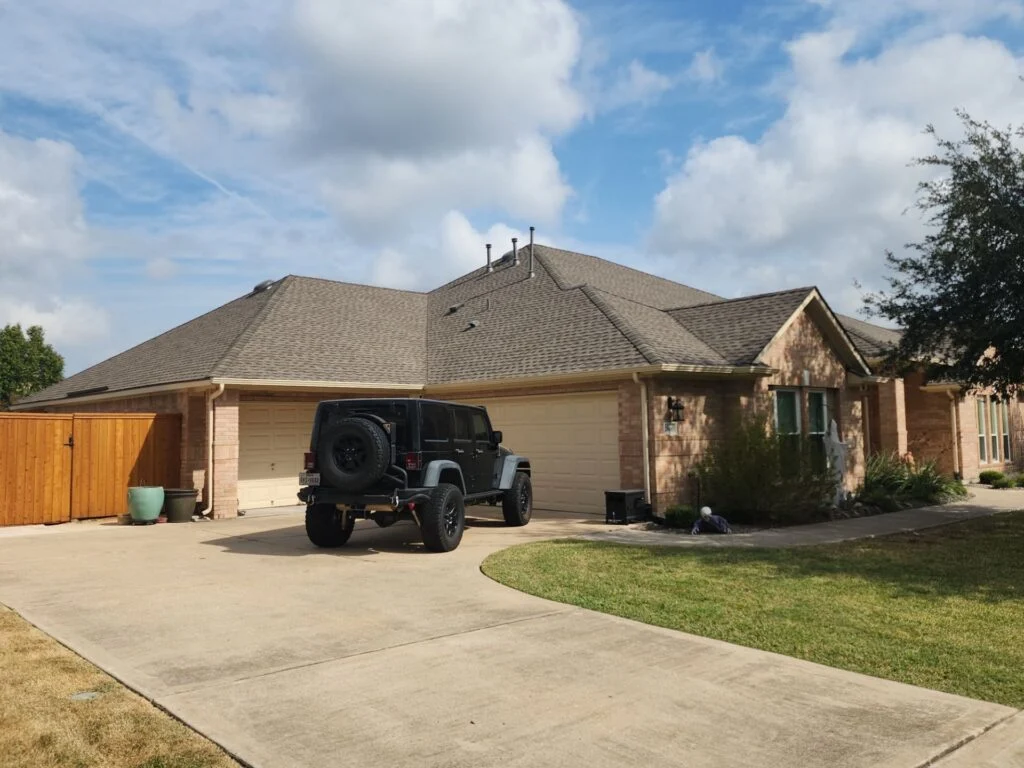
What a new roof costs in Austin in 2026, and what moves the price.
If you’re a homeowner in Austin, Round Rock, Cedar Park, or anywhere in Central Texas, the question isn’t if you’ll need a roof replacement; it’s when. Between the relentless summer heat, annual hail storms, and the occasional ice event, Texas roofs take a beating that shortens lifespans well below the national average.
But when you start looking into roof replacement cost in Austin, the numbers can feel all over the place. One estimate says $9,000. Another says $25,000. What’s the real answer?
This guide breaks down actual 2026 pricing for the Austin market (by material, by home size, by complexity) so you can plan with confidence instead of guessing.
What your roof would actually cost
The ranges above are guide figures for Austin in 2026. Your price depends on the measured square footage, pitch, number of layers to tear off, decking condition and the material you choose.
We measure the roof, photograph what we find, and give you a written, itemised estimate with no obligation.
If the roof has storm damage, we will document it. Whether any of the cost is covered is determined by your policy and your insurer, not by us.
What’s the Average Roof Replacement Cost in Austin?
For a standard single-family home in Austin (1,500 to 2,500 sq ft of roof area), the average roof replacement cost in 2026 ranges from $10,000 to $18,000 using architectural asphalt shingles, the most common choice in Central Texas.
But that’s just the average. Actual pricing depends on several factors specific to your home:
Key price drivers:
- Roof size: measured in “squares” (1 square = 100 sq ft)
- Pitch/steepness: steeper roofs require more labor and safety equipment
- Material choice: asphalt, metal, tile, or flat/TPO
- Layers to remove: tear-off of existing shingles adds cost
- Decking condition: rotted or damaged decking must be replaced
- Complexity: number of valleys, dormers, skylights, chimneys, and penetrations
- Permit fees: required in most Austin-area municipalities
A straightforward ranch-style home with a moderate pitch in Buda or Kyle will cost significantly less than a multi-story home with steep pitches and dormers in Lakeway or WestLake.
How Roof Size and the Waste Factor Affect Your Price
Roofers price a replacement with a simple framework: roof size in squares, plus a waste factor for the roof’s difficulty, times the material, plus any repairs found once the old roof is off. One square = 100 square feet, so a 3,000-square-foot roof is about 30 squares.
The waste factor is a percentage added to your measured roof area to account primarily for cuts, overlaps, valleys, hips, and overall roof complexity. The industry-standard default is about 10%. For example, a roof measured at 30 squares with a 10% waste factor needs roughly 33 squares of material. Steeper, more complex roofs push the waste factor above 10%; simple roof designs may require a lower waste percentage.
This is why detailed measurements matter. A proper measurement report shows the roof’s size and its complexity, including how many squares fall on steeper pitches. Ask each contractor for the measurements they used; a professional roof inspection confirms the numbers before any price is set.
What Does That Work Out to Per Square and Per Square Foot?
Because roofers price in squares, you can convert any real quote into a per-square and per-square-foot figure and compare bids on the same basis. Here is that arithmetic run on one documented Driftwood project: the Circle C & Shady Hollow replacement detailed further down this page.
| Figure | Value |
|---|---|
| Roof replacement scope | $31,660 |
| Roof size | 59.58 squares (5,958 sq ft) |
| Cost per roofing square | about $531 |
| Cost per square foot | about $5.31 |
| All-in, including $400 decking, $120 fascia and $200 gutter removal | $32,380 (about $5.43 per sq ft) |
Read this as one real project, not an Austin average. It is a single GAF Timberline HDZ replacement on a large, multi-structure roof, and it is the project on this page whose size and price are both published. Steeper roofs, smaller roofs, premium materials and heavier repair scopes all move the per-square number, so use this as a worked example of the method rather than a rate card.

A completed architectural asphalt shingle replacement in Austin, TX: the finished result behind a per-square roofing price.
When you compare quotes, ask each contractor for the square count they measured and divide their price by it. Two bids that look far apart often turn out to be pricing different roof areas, different waste factors, or different scopes, not different rates.
Roof Replacement Cost by Material
Asphalt shingles are the most common roofing material on Austin-area homes, the default and most affordable option.
| Material | Cost vs. asphalt | What to know |
|---|---|---|
| Asphalt shingle | Baseline (most affordable) | The most common roofing material on Austin-area homes; ranges from 3-tab to architectural (e.g., GAF Timberline HDZ) |
| Metal | Typically higher than asphalt | Longer service life; growing in popularity |
| Clay tile | Typically higher than asphalt | Distinctive look and long lifespan |
The material you choose is the single biggest factor in your total cost. Here’s what Austin homeowners are paying in 2026:
3-Tab Asphalt Shingles: $7,500 to $12,000
The most affordable option, but with a shorter lifespan (15 to 20 years). Common on budget-conscious replacements and rental properties. Not recommended for Austin’s hail exposure.
Architectural (Dimensional) Shingles: $10,000 to $18,000
The most popular choice in Central Texas. Architectural shingles offer better wind resistance (up to 130 mph), improved hail performance, and a 25 to 30 year lifespan. Brands like GAF Timberline and Tamko Heritage are the go-to for this market.
Standing Seam Metal Roofing: $18,000 to $30,000+
Premium option with a 40 to 70 year lifespan. Metal roofing offers Class 4 hail resistance and increases resale value. Reflective metal roofing can reduce solar heat absorption, but actual energy savings depend on the complete roof assembly, insulation, ventilation, home, and utility rates. Higher upfront cost, but the lowest lifetime cost per year.
Stone-Coated Steel: $15,000 to $25,000
Combines the look of traditional shingles or tile with the durability of steel. Popular in Hill Country homes in Dripping Springs and Bee Cave where HOAs require a specific aesthetic.
TPO/Flat Roofing: $8,000 to $16,000
For homes with flat or low-slope sections, TPO and modified bitumen are the standard. Also common for commercial properties across Austin.
Cost by Home Size: What to Expect for Your Square Footage
Here’s a quick reference based on roof area (not floor area; roof area is typically 1.2 to 1.5x your floor plan depending on pitch):
1,000 to 1,500 sq ft roof: $8,500 to $14,000 (asphalt) | $16,000 to $24,000
1,500 to 2,500 sq ft roof: $10,000 to $18,000 (asphalt) | $20,000 to $30,000
2,500 to 3,500 sq ft roof: $15,000 to $24,000 (asphalt) | $28,000 to $42,000
3,500+ sq ft roof: $20,000+ (asphalt) | $35,000+
These ranges assume a standard tear-off, new underlayment, and clean decking. Additional costs for roofing components like ridge vents, drip edge, and flashing are typically included in a professional estimate.
Want an instant ballpark?
Driftwood Builders Roofing offers an online roof quote tool that gives you a preliminary number in minutes.
Real Austin Roof Replacement Examples
Recent Driftwood Builders Roofing projects with published details, so you can see how size, material, and site-specific factors shape a real Austin roof price.
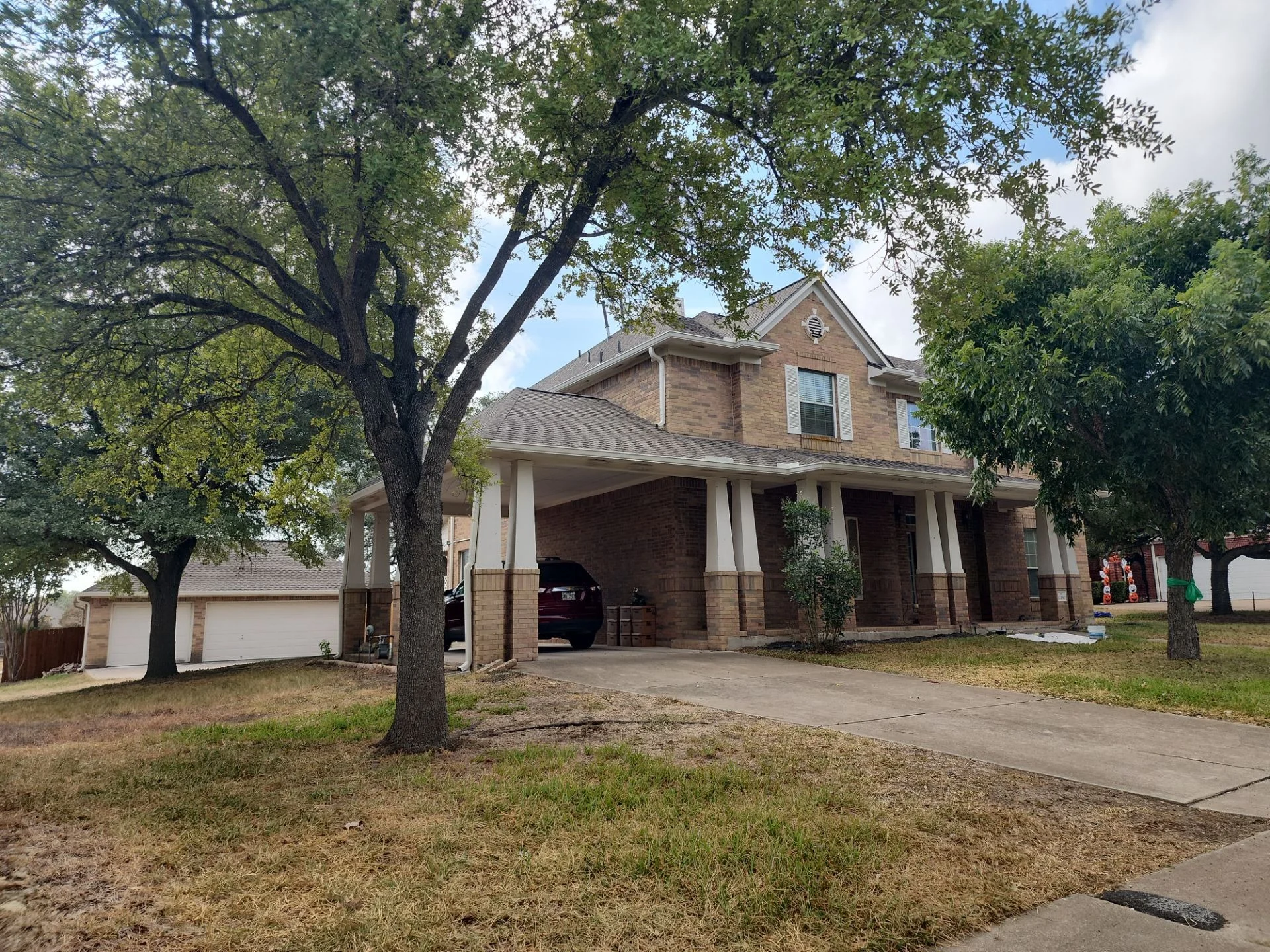
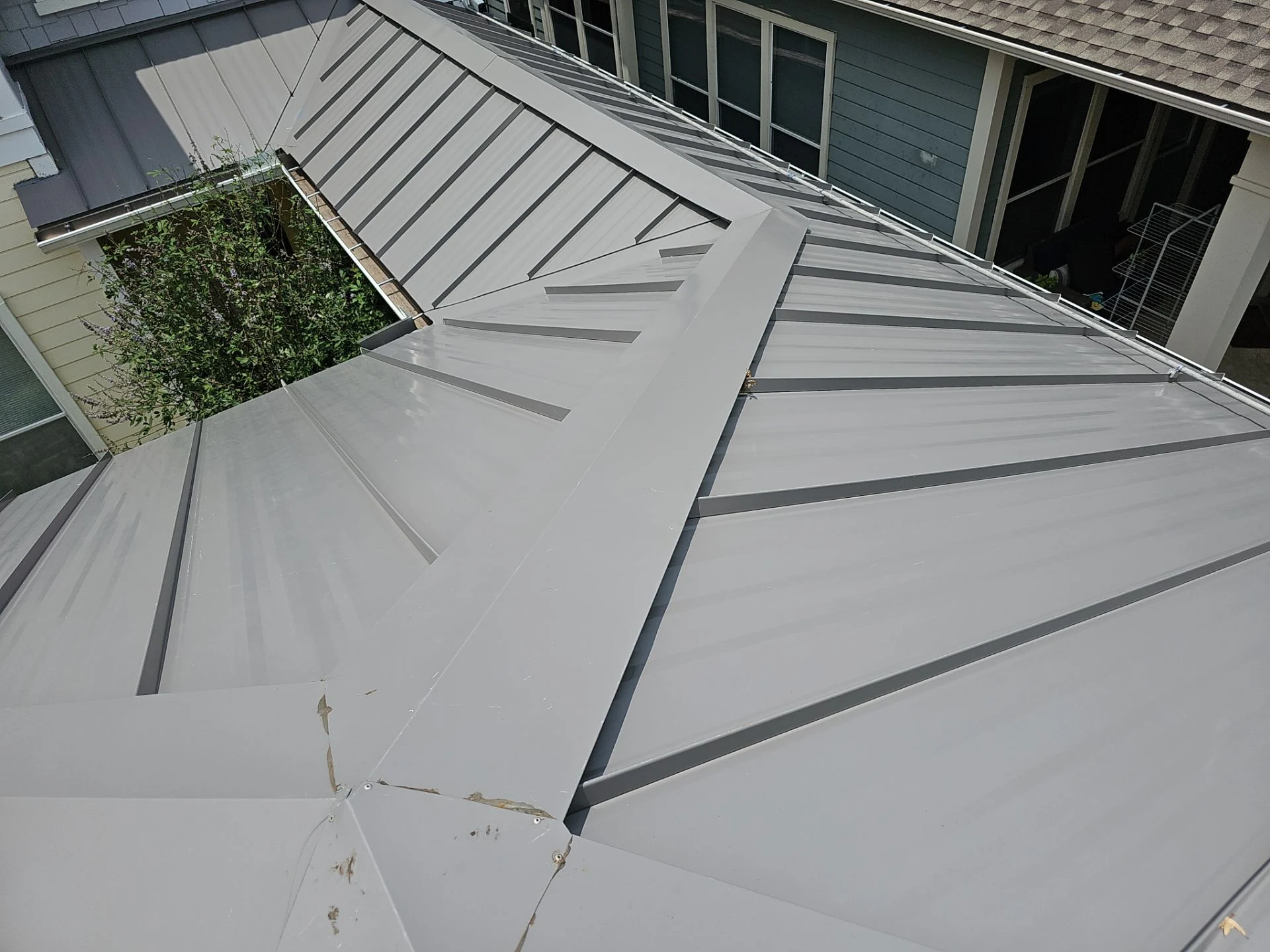
Want a number like these for your roof?
Every price above came from a real Driftwood estimate, itemised line by line. We’ll measure your roof, document its condition, and show you exactly how your number is built. It’s free, with no obligation.
Hidden Costs That Can Change Your Estimate
The base price of materials and labor is just part of the picture. These factors can add $1,000 to $5,000+ to your total:
Decking replacement ($100 per sheet): If the plywood under your shingles is rotted, water-damaged, or soft, it must be replaced before the new roof goes on. This is the most common “surprise” cost and isn’t visible until the old shingles come off.
Multiple layers ($1,000 to $3,000): If your home has two layers of shingles (common in older Austin homes), both must be removed. Double tear-off means double the labor and disposal fees.
Steep pitch premium (15 to 25% more): Roofs steeper than 6:12 require specialized equipment and safety measures. Many Hill Country homes in Spicewood and Marble Falls have steep, complex rooflines.
Skylights, chimneys, and penetrations ($200 to $500 each): Each penetration requires custom flashing work to prevent future leaks.
Code upgrades ($500 to $2,000): Older homes may require updated ventilation, ice-and-water shield in valleys, or drip edge to meet current Texas building codes.
Permit fees ($150 to $500): Required in Austin, Round Rock, Georgetown, and most Central Texas municipalities.
A trustworthy contractor identifies these during the initial inspection, not after work has started. That’s why transparent pricing matters.
Some costs can’t be confirmed until the old roof is removed:
- Underlayment and legacy felt layers. Older roofs sometimes hide extra legacy felt layers that must be removed, which can add labor. As part of a proper installation, your new roof system may include a synthetic underlayment and an ice-and-water membrane in the appropriate areas (valleys, eaves, and penetrations).
- Damaged decking. Any damaged decking discovered after tear-off is replaced at $100 per sheet. Because the decking is hidden beneath the existing roofing materials, the exact quantity cannot always be confirmed before work begins.
Extra layers of felt underlayment ($200 to $600): A roof should have exactly one layer of felt underlayment. Some previous installers leave the old felt in place and add a new layer on top; if a tear-off reveals multiple felt layers, removing them down to one adds labor. Like rotted decking, it is only discovered once the old shingles come off.
Drainage corrections (varies): On large or low-slope roofs, water can overwhelm too few downspouts and cause interior leaks. Adding downspouts or correcting drainage is an occasional add-on that fixes the root cause rather than just patching the symptom.
Watch: how extra felt layers, rotted decking, and drainage issues can change a roof-replacement estimate, and why we photograph what we find so there are no surprises.
Does Insurance Cover Roof Replacement in Texas?
In many cases, yes. Most Texas homeowner insurance policies cover roof damage caused by hail, wind, fallen trees, and other “acts of God.” This is a big deal for Austin homeowners because Central Texas experiences frequent hail and severe thunderstorms.
Key things to know about roof insurance claims in Texas:
- Roof-claim reporting deadlines vary by carrier and policy. Many policies impose relatively short deadlines after the date of loss, so review your policy and notify your insurer promptly.
- Deductible: Most policies have a 1 to 2% deductible based on home value. On a $400,000 home, that’s $4,000 to $8,000 out of pocket.
- Depreciation vs. replacement cost: Replacement cost policies pay the full amount. Actual cash value policies deduct depreciation. Know which you have.
- Documentation is everything: A professional inspection with detailed photos and a damage report is the foundation of a successful claim.
Driftwood Builders Roofing provides storm damage inspection and insurance claim assistance at no cost. We document the damage, prepare the construction estimate, and can meet with your adjuster on site. Learn more about filing insurance claims and negotiating with your insurance company.

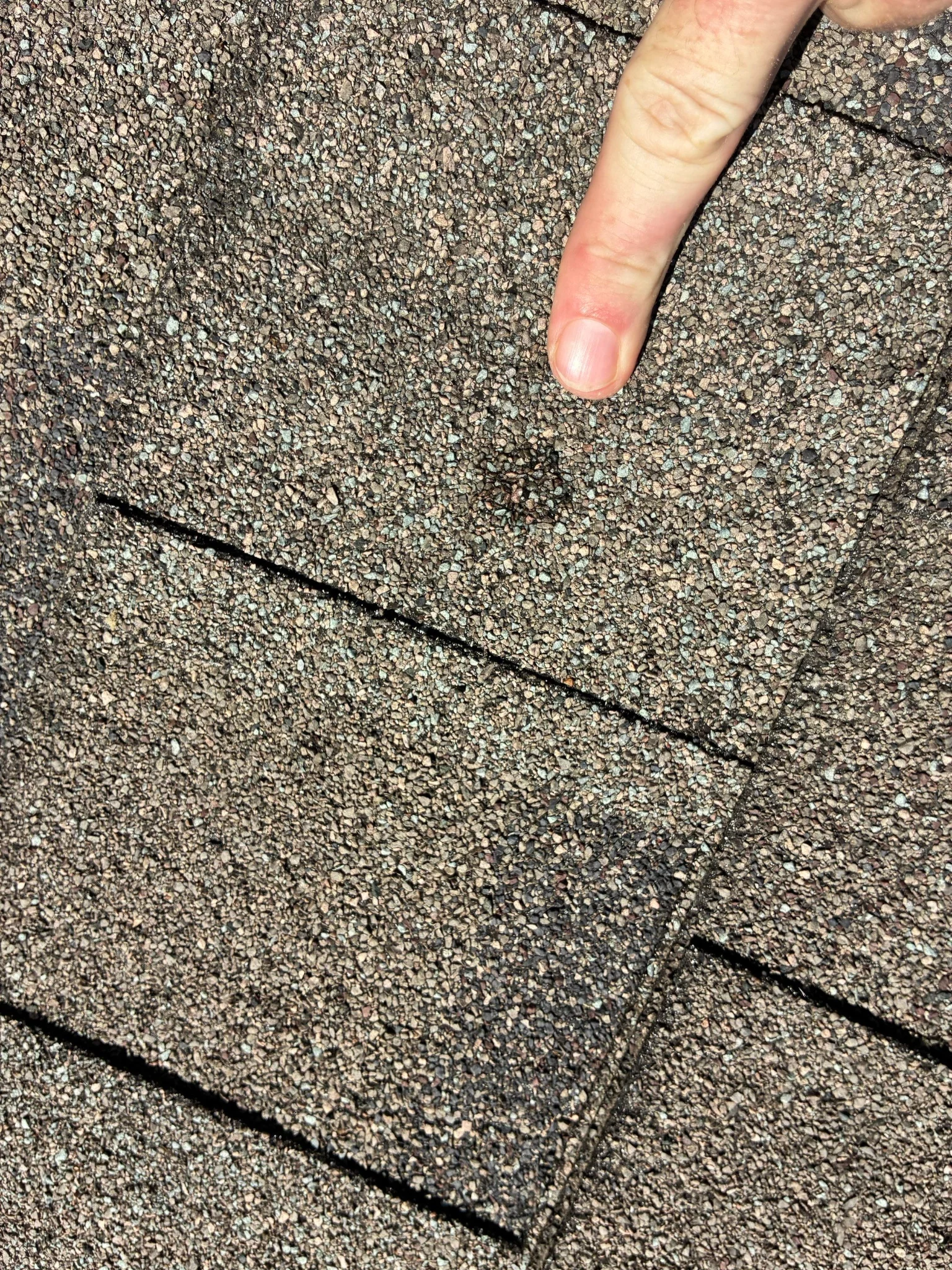
Hail impact marked in chalk during a Driftwood Builders Roofing inspection in Austin, TX. Documentation like this is what an insurance adjuster reviews.
Think your roof damage is a claim?
Driftwood provides storm-damage inspections and insurance-claim assistance at no cost. We document the damage, prepare the estimate, and can meet your adjuster.
Roof Financing Options for Austin Homeowners
Not every roof replacement is covered by insurance, and even when it is, you’re still responsible for the deductible. Here are the most common ways Austin homeowners pay for a new roof:
Insurance claim: If your roof was damaged by storm, hail, or wind, insurance typically covers the full replacement minus your deductible. This is by far the most common path for Austin homeowners.
Contractor financing: Many reputable roofing companies offer financing plans with monthly payments. Driftwood Builders Roofing works with lending partners to provide flexible payment options so you can move forward without waiting.
Home equity loan or HELOC: Borrow against your home’s equity at typically lower interest rates than personal loans. HELOC interest may be tax-deductible in some situations. Consult a qualified tax professional about your circumstances.
Personal loan: Unsecured loans from banks or online lenders. Higher rates but no home equity required.
Cash: Paying upfront avoids interest entirely. Some contractors offer a small discount for cash payment.
Whatever your situation, don’t let cost anxiety prevent you from addressing a damaged roof. The cost of waiting is almost always higher than the cost of acting. A small leak today becomes a $15,000 interior damage problem in six months.
Not sure which payment route fits?
Tell us your situation and we’ll walk you through the options that actually apply to your roof (insurance, financing, or straight retail) before you commit to anything.
Is a New Roof Worth It? ROI and Home Value Impact
According to Remodeling Magazine’s 2025 Cost vs. Value Report, a new asphalt shingle roof in the South Central region recovers approximately 61 to 65% of its cost at resale. On a $15,000 replacement, that’s roughly $9,000 to $10,000 in added home value.
But the real ROI goes beyond the resale number:
- Buyer confidence: A new roof removes the #1 inspection flag that kills deals. Homes with new roofs sell faster and with fewer concessions.
- Energy savings: Reflective roofing and properly designed attic ventilation may improve energy efficiency and indoor comfort, but results vary by home.
- Insurance savings: Some insurers offer discounts for qualifying impact-resistant roofing. Availability and amounts vary by carrier and policy, so confirm eligibility with your insurance agent before selecting a product.
- Peace of mind: No more worrying about the next storm, no more bucket-under-the-leak emergencies.
Read more about how a roof replacement affects home value and insurance.
Signs It’s Time to Replace (Not Just Repair)
A roof repair makes sense when the damage is isolated and the rest of the roof is in good shape. But these signs point toward a full roof replacement:
- Age: Asphalt shingle roofs in Austin typically last 15 to 25 years (shorter than the national average due to heat and hail exposure). If yours is 20+, replacement is likely more cost-effective than repeated repairs. Read more about roof lifespan.
- Widespread granule loss: Check your gutters. Heavy granule accumulation means your shingles are breaking down.
- Multiple leaks: One leak is a repair. Three leaks in different areas suggest systemic failure.
- Sagging or soft spots: This indicates decking damage and possible structural issues.
- Daylight through the attic: If you can see light, water can get in.
- Repeated repairs: If you’ve called a roofer 3+ times in 2 years, the math favors replacement. Read our comparison of repair vs. replacement.
Not sure which you need? A free roof inspection will give you a clear answer with documentation and photos.
How to Choose a Contractor Without Overpaying
The cheapest estimate is rarely the best value. And the most expensive doesn’t guarantee quality either. Here’s what actually matters:
Get 2 to 3 written estimates: Compare apples to apples. Make sure each estimate specifies the same scope: materials, underlayment type, number of layers to remove, warranty terms, and cleanup.
Verify certifications: A GAF Master Elite certification means the contractor has been factory-trained, carries proper insurance, and is authorized to offer extended warranties.
Check reviews and track record: Look for a strong rating, a substantial history of detailed reviews, and professional responses to customer concerns. Driftwood Builders Roofing has earned hundreds of customer reviews across multiple platforms.
Ask about warranty: There’s the manufacturer’s material warranty and the contractor’s workmanship warranty. You want both. As a GAF Master Elite contractor, Driftwood can offer eligible homeowners enhanced GAF warranty options. Available coverage depends on the installed roofing system and selected warranty.
Beware storm chasers: After every major Austin hail storm, out-of-town crews flood the market with suspiciously low bids. They do the work, leave town, and you’re on your own when problems surface. Choose a local roofing company that’s been here for years and will be here for years more.
How to Compare Roofing Quotes and Read an Estimate
Get a few quotes and compare them on scope, not just the final price. A lower number often hides a thinner scope of work. Here’s what a complete estimate should include, and the red flags to watch for.
A complete estimate should include:
- Total square footage of roof area
- Specific material brand and product line (e.g., “GAF Timberline HDZ, Charcoal”)
- Underlayment type, plus ice-and-water membrane in the appropriate areas
- Tear-off and disposal included
- New drip edge, flashing, ridge vent, and pipe boots
- Adequate ventilation
- A per-sheet decking unit price built in
- Workmanship warranty duration and manufacturer warranty registration
- Permit fees
- Timeline and crew size
- A magnetic sweep of the property at completion
Red flags:
- “Materials TBD” or no brand specified
- No mention of tear-off (they may be going over existing layers)
- Verbal-only quotes with no written documentation
- Pressure to sign immediately or “price expires today”
- Requests for large upfront deposits (10 to 20% is normal; 50%+ upfront is not)
Learn more in our guides on what to look for in a roofing estimate and understanding the roofing bid process.
Ready to compare a Driftwood estimate?
Get a written, itemised estimate you can put side by side with any other bid: measurements, materials, and scope all shown.
Related Videos



Frequently Asked Questions
How much does a roof replacement cost in Austin in 2026?
What is the cheapest roofing material in Texas?
Does insurance pay for a new roof in Texas?
How long does a roof replacement take?
Is a metal roof worth the extra cost in Austin?
Can I replace my roof myself to save money?
What’s the best time of year to replace a roof in Austin?
How do I get a free roof replacement estimate in Austin?
How is the price of a new roof calculated?
What is a waste factor on a roof?
Why did my roof cost change after the old roof was removed?
How many quotes should I get for a roof replacement?
Get Your Free Roof Replacement Estimate
Ready for a real number? We provide free estimates and insurance-claim assistance, and we’ll show you exactly how we reached your price, line by line.