Flat Roofs vs. Pitched Roofs: Understanding the Differences
What is the difference between a flat roof and a pitched roof?
The core of any flat roof vs pitched roof decision comes down to slope and how the roof handles water. A flat roof sits at a very low angle, with just enough slant to drain, while a pitched roof rises at a clear angle so rain and debris run off on their own. That single difference shapes everything else: appearance, cost, drainage, and maintenance.
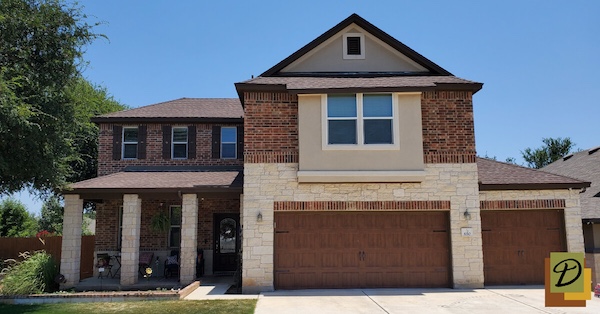
Around Austin and Central Texas, flat roofs appear most often on commercial buildings, modern homes, and porch or patio covers. Pitched roofs dominate most other architectural styles, which is why they are the most common roofline on local homes.
- Flat roofs: low profile, usable rooftop space, common on modern and commercial buildings.
- Pitched roofs: sloped lines, natural runoff, common on traditional and suburban homes.
To identify which system fits your property, an experienced Austin roofing company can walk your roof and explain the trade-offs.
How do flat and pitched roofs compare on cost, lifespan, and maintenance?
Each roofline carries a different mix of upfront cost and ongoing care. Flat roofs are usually less expensive to install because they use less material and are quicker to cover. Pitched roofs cost more to build but tend to last longer and ask less of you over time.
| Factor | Flat Roof | Pitched Roof |
|---|---|---|
| Install cost | Generally lower | Generally higher |
| Typical lifespan | 10 to 20 years | 20 to 30 years or more |
| Drainage | Relies on slight slope and open drains | Sheds water naturally |
| Maintenance frequency | Several checks per year | About once a year, plus after storms |
| Usable space | Rooftop access, equipment, patios | Attic and ventilation space |
Pitched roofs also create attic volume that improves ventilation, which matters during intense Central Texas summer heat. Flat roofs trade that for accessible rooftop space but need diligent moisture control to reach their full lifespan.
Why do most Austin homes have pitched roofs?
Drainage is the main reason pitched roofs are so common across Austin, Cedar Park, Round Rock, Leander, and Georgetown. Central Texas sees sudden heavy downpours, spring hail, and straight-line winds, and a sloped roof moves that water off quickly before it can pool and work its way under the roofing layers.
A pitched roof also handles debris well, since leaves and branches slide off on their own, while a flat roof can collect debris and clog drains after a storm. Standing water and blocked drains are common causes of leaks on low-slope roofs, so flat roof owners should stay ahead of roof repair.
- Heavy summer storms and spring hail favor fast runoff.
- Sloped roofs reduce standing water and ice-related stress in rare cold snaps.
- Local building styles and codes lean toward proven pitched systems.
How often should each roof type be inspected in Central Texas?
Both flat and pitched roofs should be inspected after any major storm, but their routine schedules differ. A pitched roof generally needs a thorough review about once a year to confirm shingles, flashing, and seals are intact. A flat roof asks for more frequent attention because water has nowhere to go on its own.
- Pitched roof: annual check plus a look after hail or high winds.
- Flat roof: several checks per year to confirm drains are open and no water is backing up.
- Both: always inspect after a Central Texas hailstorm or windstorm.
Catching a small problem early is far cheaper than repairing water damage later. A documented roof inspection also helps if you ever need to file a storm-related insurance claim.
Which roof type should you choose for your home?
For most homeowners, the choice comes down to architecture and how you want to use the roof. Ask whether the roofline blends with the rest of your home and whether you value rooftop access or a longer, lower-maintenance lifespan. Keep in mind that changing the roofline of an existing home is a full construction project, not a simple swap.
If you are buying a home, understanding the cost and care of each roof type helps you budget. Driftwood Builders Roofing has served Austin and Central Texas as a GAF Master Elite contractor since 2005, handling residential and commercial work, free estimates, and insurance claims, and we never ask for a deposit.
Whether you have a flat roof, a pitched roof, or a home with both, we will help you choose the right components, drainage, and ventilation. When you are ready, request a free estimate and we will review your options with you.
Frequently Asked Questions
Is a flat roof or a pitched roof cheaper?
A flat roof is usually cheaper to install because it uses less material and goes on faster. However, flat roofs often cost more over their lifetime due to more frequent maintenance and shorter lifespans, so the total cost can even out.
How long does a flat roof last compared to a pitched roof?
A flat roof typically lasts 10 to 20 years depending on the membrane and upkeep, while a pitched roof commonly lasts 20 to 30 years or more. Regular maintenance and prompt repairs extend the life of both.
Do flat roofs leak more than pitched roofs?
Flat roofs are more prone to leaks because water can pool and debris can clog drains, especially after Central Texas storms. With proper slope, open drains, and regular inspections, a flat roof can stay watertight for many years.
Can you put a pitched roof on a home with a flat roof?
Yes, but converting a flat roof to a pitched roof is a major construction project that changes the structure and roofline, not a simple reroof. It usually requires a general contractor and updated permits, so plan for added cost and time.
Which roof type is better for Austin weather?
Pitched roofs handle Austin’s heavy rain, spring hail, and high winds well because they shed water and debris naturally. Flat roofs can work here too, but they need more frequent drainage maintenance to perform reliably in Central Texas storms.

Author: Driftwood Builders Roofing
Driftwood Builders Roofing is a family-owned residential roofing company headquartered in Manchaca, Texas, serving Austin and the surrounding Hill Country since 2005. The company has delivered 3,700 full roof replacements and 783 repairs across 3,559 different customers over 20 years in business, with 97 years of combined construction experience across the leadership team and 74 years specifically inside Driftwood Builders. The company holds the highest contractor certifications offered by the major shingle manufacturers, including GAF Master Elite Contractor (the top 3% of GAF contractors nationally), GAF Certified Green Roofer, Owens Corning certified, TAMKO Pro Certified Contractor, and a Berridge Roof Installation Seminar Certificate for standing-seam metal roofs. Driftwood is an NRCA member, holds an Angie's List Super Service Award, is BBB Accredited, and is a GuildQuality member for verified customer satisfaction data. James Hardie certification covers the siding side of the business. Services include residential roof replacement, leak and storm-damage repair, tile roof repair, metal roofing, TPO commercial roofing, roof inspections, hail and storm damage inspections with insurance claim assistance, gutter work, and James Hardie siding. The customer-protection policy is straightforward: Only Pay Upon Completion. The company serves 22 cities across the Hill Country and Greater Austin and holds a 5-star rating across Google, GuildQuality, Angi, Nextdoor, Facebook, Thumbtack, and Yelp.
