Roof Leak Repair in Austin: How to Spot, Stop & Fix Water Damage Fast
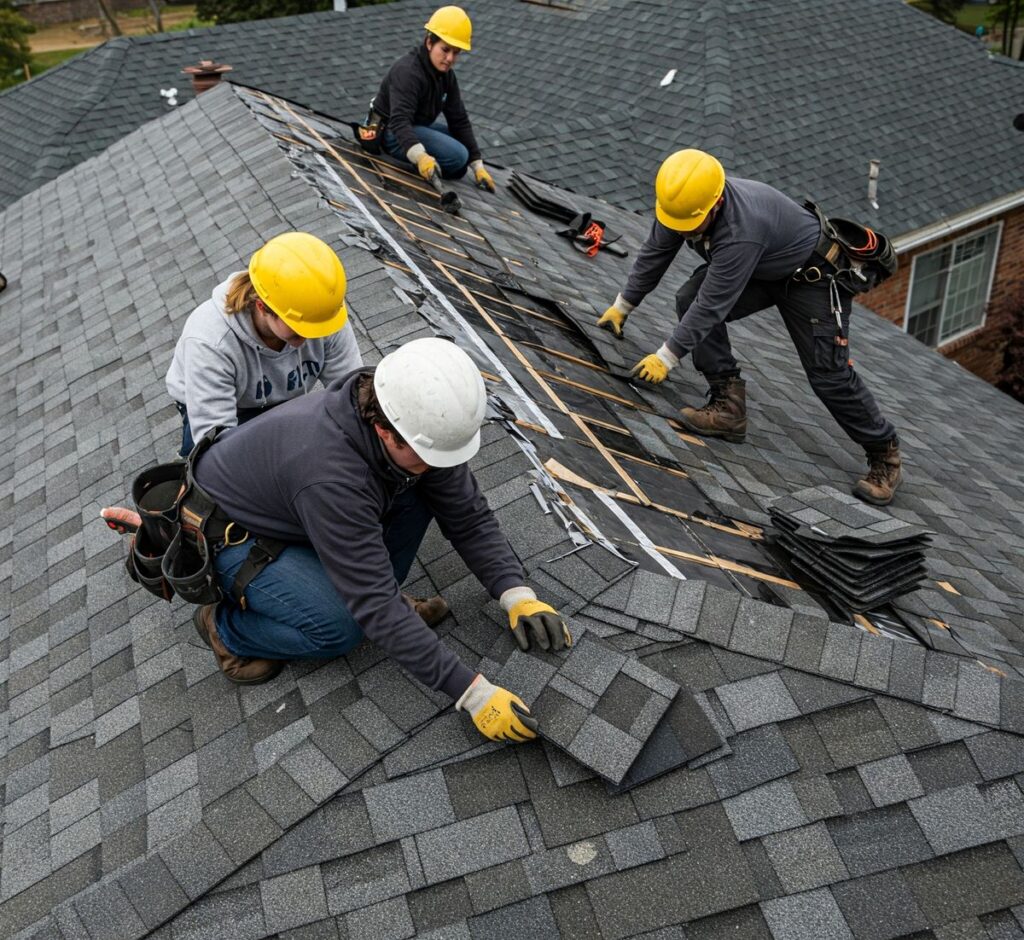
Quick Answers: The 3 Things Austin Homeowners Ask About Roof Leaks
If you only read one section, read this one. These are the direct, no-fluff answers to the questions people search most before calling a roofer, expanded in full further down the page.
Why is my roof leaking?
Most Austin roof leaks come from failed flashing around chimneys, walls, and skylights; cracked or dried-out pipe boots (the rubber seals around plumbing vents, which degrade fast in Texas heat); clogged or improperly built valleys where two roof planes meet; and simple age: shingles past 15 to 20 years lose their weatherproofing. Storm and hail damage accelerates all four.
What do I do right now?
Move valuables and electronics out from under the leak, then relieve the pressure: if the ceiling is bulging, poke a small drainage hole over a bucket so trapped water doesn’t collapse the drywall. Contain the water, photograph everything for insurance, and do not climb onto a wet roof. Call a pro for tarping. Emergency help: (512) 894-0129.
How much does it cost: repair or replace?
Most single-source roof leak repairs in Austin run $400 to $1,500; complex flashing, valley, or decking work runs $1,500 to $4,000+. Repair makes sense when the roof is under ~15 years old and the damage is localized. Replace when leaks are widespread, the roof is 20+ years old, or rot has reached the decking.
Why Is My Roof Leaking? The Top Causes (Flashing, Boots, Valleys, Age)
A roof doesn’t usually fail across its whole surface at once. It fails at its weak points: the spots where the flat field of shingles gets interrupted by something. In twenty years of roof and leak repair across Austin, the same handful of culprits show up again and again. Here’s what’s actually behind most leaks, in rough order of how often we find them.
1. Failed Flashing (The #1 Cause)
Flashing is the metal that seals the joints where your roof meets a vertical surface: chimneys, dormers, skylights, and walls. When flashing lifts, rusts, or was installed poorly, water slips behind the shingles and straight into the decking.
Chimneys are the classic offender: if your ceiling stain is near one, bad flashing repair is the prime suspect. Problems with roof flashing account for a disproportionate share of the leaks we diagnose.
2. Cracked or Dried-Out Pipe Boots
The rubber boots that seal around plumbing vent pipes have a shorter lifespan than the roof itself, typically 10 to 15 years, and less in Austin. Our UV and 100°F-plus summers bake the rubber until it splits.
A cracked boot is one of the most common sources of a “mysterious” attic or ceiling leak, and it’s also one of the cheapest to fix if you catch it early. Sealant is only a temporary patch. Once the boot itself has cracked, it needs replacement.
3. Clogged or Poorly Built Valleys
A valley is the channel where two roof planes meet, and it carries the most water of any part of your roof. When valleys fill with leaves, granules, and debris, water backs up and gets forced under the shingles.
Improperly woven or under-flashed valleys leak even without debris. If your leak shows up only during heavy, driving rain, a valley is a likely source.
4. Age & Worn Shingles
So-called “30-year” shingles realistically last 15 to 20 years in Austin’s heat. As they age, they lose the protective granules, curl at the edges, and go brittle, and once the mat is exposed, water works through.
Missing, cracked, or lifting shingles after a windstorm are an open invitation. If your roof is pushing 20 years and leaking in more than one place, you’re likely past the point where spot repairs are worth it (more on that in the cost section).
5. Storm, Hail & Wind Damage
Central Texas sits in a hail corridor, and a single storm can bruise or crack shingles across an entire slope. Hail knocks granules loose and fractures the mat; wind lifts and creases shingles so they no longer seal.
The damage often isn’t visible from the ground, which is why a professional roof inspection after any major storm is worth the hour. If a storm caused your leak, you may have a valid insurance claim.
6. Skylights, Vents & Other Penetrations
Every hole cut into a roof is a potential leak point. Skylights leak when their perimeter flashing fails; ridge, turbine, and box vents leak when their seals or housings degrade.
Even solar-panel mounts and satellite-dish anchors create paths for water if they weren’t flashed correctly. Wildlife counts too: we’ve traced real Austin leaks to raccoons tearing open ridge lines.
Quick Reference: Where leaks come from and what it usually means.
| Where You See It | Most Likely Cause | Repair Urgency |
|---|---|---|
| Stain near a chimney or wall | Failed step / counter flashing | High |
| Stain in the middle of a ceiling | Cracked pipe boot or nail pop | Medium to High |
| Leak only in heavy, driving rain | Clogged or under-flashed valley | Medium |
| Multiple stains, roof 20+ yrs | General shingle age / wear | Replace Territory |
| Leak after a hailstorm | Storm damage (possible claim) | High |
| Drip under a skylight | Skylight perimeter flashing | High |
How to Spot a Roof Leak & Water Damage Early
The homeowners who spend the least on repairs are the ones who catch water early. By the time a ceiling is dripping, water has usually been inside the structure for a while. Here are the early warning signs worth checking for after every big storm, and a couple of times a year regardless.
- Ceiling & Wall Stains: Brown or yellow rings, or paint that’s bubbling, blistering, or peeling. Stains often appear away from the actual leak because water travels along framing before it drops.
- A Musty, Damp Smell: Persistent mustiness in a room, closet, or hallway often means moisture is trapped in insulation or drywall you can’t see.
- Attic Clues: With a flashlight, look for dark streaks on the underside of the decking, wet or matted insulation, rusted nail tips, or actual daylight coming through.
- Sagging or Soft Spots: A ceiling that bulges or feels spongy is holding water and can fail suddenly. Treat this as urgent.
- Granules in the Gutters: Piles of sand-like shingle granules signal an aging roof that’s losing its waterproof layer.
- Higher Energy Bills: Wet insulation loses its R-value, so a roof that’s quietly leaking can push up heating and cooling costs.
What to Do Right Now to Stop Water Damage Before a Pro Arrives
You can’t permanently fix a roof from inside during a storm, but you can stop the leak from turning a $600 repair into a $6,000 one. Work through these steps in order. They’re the same first moves our team coaches Austin homeowners through on emergency calls.
1. Protect Your Stuff First
Move furniture, electronics, and valuables out from under the leak, and lay down towels or a tarp over anything you can’t move.
2. Contain the Water
Put buckets or bins under active drips. A little dish soap in the bucket helps reduce splashing.
3. Relieve a Bulging Ceiling
If drywall is sagging with trapped water, place a bucket underneath and carefully poke a small hole at the lowest point with a screwdriver to let it drain in a controlled way. A single hole is much cheaper to repair than an entire collapsed ceiling.
4. Document Everything
Take photos and videos of the stains, active leaks, and any damaged belongings before you begin cleaning up. This documentation is important if you need to file an insurance claim.
5. Dry the Area Out
Once the dripping slows, use fans and a dehumidifier to remove moisture and reduce the risk of mold growth, which can begin within 24 to 48 hours.
6. Call for Professional Tarping
The safest way to stop water at the source is to have a professional install a temporary tarp over the affected roof section. Call Driftwood Builders Roofing at (512) 894-0129 for emergency roof leak repair.
How to Find Where a Roof Leak Is Actually Coming From
Finding a leak is harder than fixing one because water rarely enters where it drips. It runs downhill along the decking and rafters, then falls at the first low point, which can be several feet, or several rooms, from the entry hole. Here’s the logic a roofer uses to trace it:
- Start Inside, in the Attic: Follow the water stains uphill along the framing to find the highest wet point. That’s usually closest to the actual entry point.
- Look Above That Point on the Roof: The entry is almost always up-slope of the interior stain. Check the nearest penetration first, such as a pipe boot, vent, chimney, or skylight.
- Inspect the Usual Suspects: Flashing, valleys, and pipe boots typically fail long before the main field of shingles. Examine these areas before anything else.
- Use a Controlled Water Test: Have one person run a garden hose over one roof section at a time while another watches from the attic. This helps isolate the exact leak source instead of relying on guesswork.
This is also where a professional roof inspection earns its keep. We document the source with photos, check for hidden decking rot around it, and give you a straightforward repair-or-replace recommendation, free, with no deposit and no obligation.
Why Does My Roof Only Leak Sometimes?
A roof that leaks in one storm and stays dry in the next is one of the most common, and most frustrating, problems homeowners bring us. It almost always points to a directional or volume-dependent flaw rather than an obvious hole.
- Wind-Driven Rain: A flashing or shingle gap may only allow water in when rain is pushed sideways from a particular direction.
- Volume-Dependent Valleys: A roof valley may handle light rain without issues but overflow and force water beneath the shingles during heavy downpours.
- Thermal Movement: Metal flashing and fasteners expand and contract with Austin’s large temperature swings, creating tiny seasonal gaps that allow water to enter.
- Debris Damming: Leaves and shingle granules can shift over time, sometimes blocking water flow and other times allowing water to back up under the roofing materials.
Because the conditions have to line up, these leaks are best diagnosed with a controlled hose test rather than waiting for the next storm. If you’ve been chasing a leak that “comes and goes,” that’s exactly the kind of issue our roof leak repair team is equipped to identify and fix.
Roof Leak Repair Cost in Austin, and When It's Repair vs. Replace
Let’s start with the number that matters. Most roof leak repairs in Austin fall between $400 and $4,000 depending on the source, how much water has already gotten in, and whether the decking underneath survived. Here’s an honest, real-world breakdown by repair type: the same ranges a legitimate roofer would quote after actually getting on the roof.
| Type of Leak Repair | Typical Austin Cost | What Drives the Price |
|---|---|---|
| Pipe boot replacement | $150 to $500 | Number of boots, roof access |
| Flashing repair (chimney/wall) | $300 to $1,200 | Length, height, chimney work |
| Valley repair / re-flash | $400 to $1,500 | Valley length, tear-back needed |
| Skylight re-flash / reseal | $400 to $1,400 | Size, curb condition |
| Shingle patch / small section | $300 to $1,000 | Match availability, slope |
| Decking replacement (rot) | +$70 to $150 / sheet | Extent of hidden water damage |
| Emergency tarping | $200 to $600 | Slope size, temporary vs. staged |
If a quote comes in dramatically below these ranges, ask exactly what’s being done and what materials are being used. A cut-rate “repair” that only smears sealant over the problem may leak again by the next season. For full transparency on how we price our work, see our pricing and transparency page.
Repair vs. Replace: How to Decide
Rule of thumb: Repair a young roof with a localized leak. Replace an old roof with widespread leaks or decking rot. In Austin, the tipping point is usually around the 15 to 20 year mark for asphalt shingles.
A Repair Usually Makes Sense When:
- The roof is under approximately 15 years old and otherwise in good condition.
- The leak has one clear, identifiable source (such as one pipe boot, one flashing issue, or one valley).
- The decking underneath is still solid and free from major rot.
- You are not seeing leaks in multiple unrelated areas of the roof.
A Full Replacement Usually Makes More Sense When:
- The roof is 20+ years old and shingles are curling, cracking, or losing large amounts of granules.
- You have leaks in several locations or keep needing new repairs.
- Water has reached and damaged the decking across a large area.
- Storm damage is extensive enough that insurance may cover a replacement.
There’s no single right answer. It’s a math problem based on how much repair money you would spend on a roof that’s already approaching the end of its useful life. Our estimators provide a straightforward recommendation after inspecting your roof, including whether a complete roof replacement or targeted repair is the smarter investment.
If a storm caused the damage, our insurance claim assistance team helps make sure the scope of work is properly documented and not undervalued.
Leak Repair by Roof Type: Shingle, Tile, Metal & Flat
Asphalt Shingle Leaks
The most common roof type in Austin, and usually the most straightforward to repair. Leaks often trace back to lifted, cracked, or missing shingles, popped nails, or failed flashing and pipe boots around roof penetrations. Matching aged shingles can be the most challenging part. A skilled roofer maintains supplier relationships to find the closest possible color and texture match.
Tile Roof Leaks
On a tile roof, the tiles act as the protective sunscreen, but the underlayment beneath them is what actually keeps water out. In Central Texas heat, that underlayment can deteriorate after 20 to 25 years even when the tiles still appear to be in excellent condition.
Cracked tiles and failed flashing are the other major sources of tile roof leaks. Tile repairs also require a crew experienced with proper roof access to avoid cracking otherwise good tiles while working. See tile roof repair in Austin, TX for more specifics.
Metal Roof Leaks
Metal roofs typically leak less often, but when problems occur, they usually start at fasteners, seams, or flashing rather than the metal panels themselves. Exposed screws with worn rubber washers are a common failure point. Standing-seam metal systems hide their fasteners and generally reduce this type of leakage. Learn more on our metal roofing page.
Flat & Low-Slope Leaks
Low-slope and flat roof sections are common over porches, additions, and some commercial buildings. Because they do not shed water as quickly as steep-slope roofs, they depend on a continuous waterproof membrane system.
Common leak sources include failed seams, standing water (ponding), and deteriorated seals around roof penetrations. See flat roofing solutions for more information on how these systems are repaired.
Emergency Roof Leak Repair: When to Call Immediately
Some leaks can wait for a scheduled visit. Others cannot. Call for emergency roof repair in Austin right away if any of these situations are happening:
- Water Is Actively Pouring In During a Storm: A continuous flow of water can quickly damage ceilings, insulation, drywall, and belongings.
- A Ceiling Is Sagging, Bulging, or Has Already Given Way: A water-filled ceiling can collapse without warning and should be treated as urgent.
- Water Is Near Light Fixtures, Outlets, or Your Electrical Panel: Moisture around electrical components creates a serious safety risk.
- A Tree Limb or Storm Debris Has Punctured the Roof: Open roof damage allows continued water entry until it is properly covered.
- The Leak Is Spreading Quickly Across the Ceiling: Fast-spreading water usually indicates an active source that needs immediate attention.
For active storm leaks, Driftwood Builders Roofing prioritizes emergencies, provides temporary tarping to help stop water intrusion, and schedules permanent repairs as soon as conditions are safe. Call (512) 894-0129, and if the damage is storm-related, we’ll document the damage for your insurance claim at the same time.
How a Real Austin Roofer Finds & Fixes a Leak the Right Way
Not every leak call is handled the same way. A proper roof leak repair isn’t just a dab of caulk. It starts with an accurate diagnosis followed by a lasting solution. Here’s what the right process looks like and what you can expect from us:
- Full Inspection, Not a Quick Glance: We trace the leak back to its actual source and inspect the surrounding decking for hidden rot, the type of damage a rushed repair often misses.
- Photo Documentation: You receive photos of the actual issue on your roof, so you can clearly understand the problem instead of relying only on someone’s explanation.
- A Written Scope and Estimate: Every repair component and cost is clearly outlined. No vague “miscellaneous repairs” that turn into unexpected charges halfway through the project.
- A Permanent Repair: We properly replace failed flashing, pipe boots, shingles, or other damaged components while fixing the underlying cause, not just covering up the symptom.
- No Deposit: Payment is due when the work is completed to your satisfaction. This policy has been part of our approach throughout our 20 years in business.
Driftwood Builders Roofing is a GAF Master Elite contractor (a designation held by fewer than 3% of U.S. roofing contractors) serving Austin and the surrounding Hill Country, including areas from Tarrytown and Circle C Ranch to Bastrop and Dripping Springs.
If you have a roof leak, the first step costs you nothing: schedule a free inspection.
Frequently Asked Questions
How Much Does Roof Leak Repair Cost in Austin, TX?
Most single-source leak repairs run $400 to $1,500, while complex flashing, valley, or decking work can reach $1,500 to $4,000 or more. Simple fixes like a cracked pipe boot can be as low as $150. The final number depends on the source of the leak, roof access, and how much hidden water damage is found underneath.
Why Is My Roof Leaking When It Only Rains Hard?
A leak that only appears in heavy or wind-driven rain usually points to a flashing gap or a valley that overflows under volume, rather than an open hole in the shingles. The gap is always there. It only takes on water when the storm lines up with it. A controlled hose test is the reliable way to find it.
What Should I Do the Moment I Notice a Roof Leak?
Move valuables out of the way, put a bucket under the drip, and if the ceiling is bulging, poke a small drainage hole over the bucket so trapped water doesn’t collapse the drywall. Photograph everything for insurance, run fans to dry the area, and call a roofer for professional tarping. Don’t climb onto a wet roof.
Should I Repair or Replace My Leaking Roof?
Repair a roof that’s under about 15 years old with a single, localized leak and solid decking. Replace a roof that’s 20+ years old, leaking in multiple places, or has widespread decking rot. If storm damage is extensive, insurance may cover a full replacement. A professional inspection gives you the honest call.
Can You Repair Just One Section of a Roof?
Yes. If the rest of the roof is in good condition and the shingles can be reasonably matched, a targeted section repair is often the right, cost-effective choice. On older roofs where matching is difficult or leaks are appearing in several spots, a full replacement usually makes more financial sense.
Is a Roof Leak Inspection Free?
At Driftwood Builders Roofing, yes. We provide free, no-pressure roof inspections in Austin with no deposit and no obligation, including documented photos of the leak source and a straight repair-or-replace recommendation.
Will Insurance Cover My Roof Leak?
If the leak was caused by a covered event like a storm or hail, it often qualifies. Age-related wear and long-neglected maintenance typically don’t. Document the damage with photos before cleanup, and have a roofer inspect before you file so the claim scope isn’t undervalued.
How Fast Can Water Damage a Home?
Fast. Mold can begin growing within 24 to 48 hours of water intrusion, and trapped water can sag or collapse drywall in a single heavy storm. That’s why the first few hours (containing the water and getting a tarp up) matter so much for keeping the repair small.
About Driftwood Builders Roofing

Author: Driftwood Builders Roofing
Driftwood Builders Roofing is a family-owned residential roofing company headquartered in Manchaca, Texas, serving Austin and the surrounding Hill Country since 2005. The company has delivered 3,700 full roof replacements and 783 repairs across 3,559 different customers over 20 years in business, with 97 years of combined construction experience across the leadership team and 74 years specifically inside Driftwood Builders. The company holds the highest contractor certifications offered by the major shingle manufacturers, including GAF Master Elite Contractor (the top 3% of GAF contractors nationally), GAF Certified Green Roofer, Owens Corning certified, TAMKO Pro Certified Contractor, and a Berridge Roof Installation Seminar Certificate for standing-seam metal roofs. Driftwood is an NRCA member, holds an Angie's List Super Service Award, is BBB Accredited, and is a GuildQuality member for verified customer satisfaction data. James Hardie certification covers the siding side of the business. Services include residential roof replacement, leak and storm-damage repair, tile roof repair, metal roofing, TPO commercial roofing, roof inspections, hail and storm damage inspections with insurance claim assistance, gutter work, and James Hardie siding. The customer-protection policy is straightforward: Only Pay Upon Completion. The company serves 22 cities across the Hill Country and Greater Austin and holds a 5-star rating across Google, GuildQuality, Angi, Nextdoor, Facebook, Thumbtack, and Yelp.
