What are the Parts of a Roof?
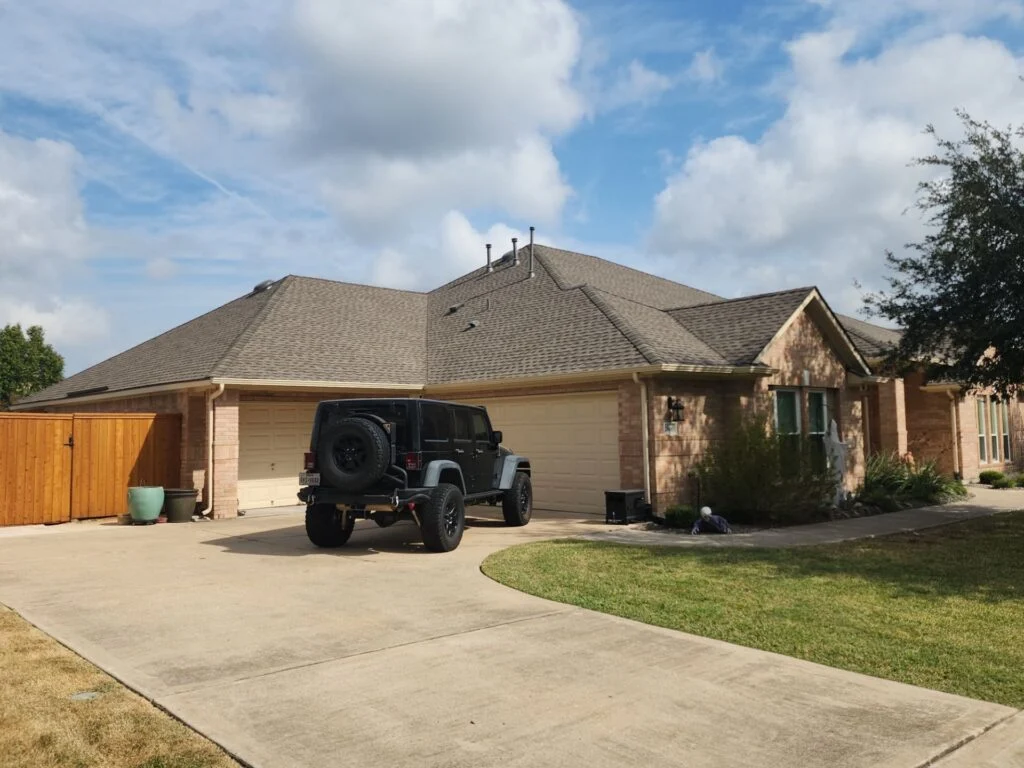
What are the parts of a roof, from deck to ridge?
The parts of a roof work as one connected system, starting at the structure and building up to the surface you see from the street. From the bottom layer to the top, the core parts of a roof are the decking, the underlayment, the shingles or panels, the flashing, and the venting and trim that finish the edges. Each layer has one job, and a weakness in any single part can let water reach the wood and ceilings below.
In Central Texas, that system takes a beating. Intense summer heat bakes the surface, spring hail bruises shingles, and straight-line winds lift edges and ridges. Understanding the components makes it easier to follow what your roofer points out during an inspection. Below is a quick reference to the layers from the inside out.
| Part | Where it sits | What it does |
|---|---|---|
| Decking (plywood sheathing) | On top of the rafters | Structural base everything else attaches to |
| Underlayment | Over the decking | Secondary moisture barrier |
| Shingles or panels | Top surface | Primary weather protection |
| Flashing | Joints and penetrations | Channels water away from seams |
| Ventilation | Eaves and ridge | Releases attic heat and moisture |
If you want a full walkthrough on your own home, a trusted Austin roofing company can name each part and show you its condition.
What is roof decking and why does it matter?
Roof decking, also called sheathing, is the layer where your roof truly starts after the rafters of your home. Most roofs in the Austin area use large sheets of plywood, typically half-inch to five-eighths-inch thick, fastened across the rafters to create a solid base. Everything above it, including underlayment and shingles, is adhered to this surface.
Decking quietly carries the whole load, so its condition is critical. If you have a leak, the sheathing underneath often needs replacement too when it shows water staining, soft spots, or sagging between rafters. Catching damaged decking early during a roof inspection keeps a small repair from turning into a structural one.
- Healthy decking: firm, flat, no daylight visible from the attic.
- Warning signs: sagging, soft or spongy areas, dark water stains.
- Common cause in Texas: long-term leaks from hail-bruised shingles or failed flashing.
How do underlayment, shingles, and flashing protect your home?
These three parts of a roof form the waterproofing team that keeps your living space dry. Underlayment is a moisture barrier rolled over the decking before the surface goes on, giving you a second line of defense if water ever sneaks past the top layer. Shingles or metal panels sit on top as the primary weather protection, taking the direct hits from sun, rain, and hail.
Flashing is one of the most important and most overlooked components. Often made of aluminum or galvanized metal, flashing funnels water away from the seams and joints where the roof meets other parts of the home, including vents, chimneys, skylights, and the valleys where two roof planes meet. In Central Texas, most leaks trace back to failed flashing rather than the field of the roof itself.
- Underlayment: backup moisture barrier under the surface layer.
- Shingles or panels: first defense against heat, rain, and spring hail.
- Flashing: metal seals at chimneys, valleys, and edges where leaks usually begin.
If you suspect water is getting in, prompt roof repair at the flashing often costs far less than waiting for the leak to spread.
Why is roof ventilation important in the Austin heat?
Ventilation is the part of a roof that controls airflow through the attic, and it matters more in Central Texas than almost anywhere. A balanced system pulls cooler air in at the eaves through intake vents and pushes hot, humid air out near the peak through exhaust vents.
A ridge vent is a modern exhaust device that runs along the top edge of the roof, blending into the ridge line. Static vents are individual units placed in a straight horizontal row near the top, centered between the rafters at regular intervals. Older homes often vented through the gables instead. During brutal Austin summers, good ventilation lowers attic temperatures, eases the load on your air conditioner, and helps the decking and shingles last their full service life.
- Intake vents: usually at the soffit or eaves, drawing cool air in.
- Exhaust vents: ridge or static vents near the peak, letting hot air escape.
- Texas payoff: cooler attic, lower energy bills, longer roof lifespan.
What are the eaves, fascia, soffit, and other roof edge parts?
The edges of a roof have their own set of named parts, and these are the ones a roofer will point to from the ground. The eaves are the lower edges that overhang the walls. The fascia is the board running along that eave edge, and it is where your gutters attach. The soffit is the underside of the overhang, which often holds intake vents. The ridge is the highest peak where two roof planes meet at the top, and valleys are the channels where two planes meet at an inward angle.
The drip edge is a strip of metal flashing along the eaves and rakes that directs runoff into the gutters instead of behind the fascia. These edge components take the brunt of Central Texas wind and wind-driven rain, so loose fascia, damaged soffit panels, or missing drip edge are common things to check after a storm.
How do the parts of a roof work together for a quality roof?
All of the roofing parts work hand in hand to give you a safe, moisture-free home. The decking holds the structure, underlayment and shingles shed water, flashing seals the joints, ventilation manages heat, and the edge components tie it all together. Decades of improvement in roofing materials mean a properly installed system holds up well to Austin heat, spring hail, and high winds.
Driftwood Builders Roofing has been GAF Master Elite certified since 2005 and serves Austin and Central Texas, including Cedar Park, Round Rock, Leander, Lakeway, Georgetown, Pflugerville, Buda, and Kyle. We offer free estimates, never ask for a deposit on labor or materials, and handle both residential and commercial roofs along with insurance claims. We are happy to walk you through every part of your roof and explain exactly what your project needs. When you are ready, request a free estimate and we will come review your roof in person.
Frequently Asked Questions
What are the main parts of a roof?
The main parts of a roof are the decking, underlayment, shingles or panels, flashing, ridge, eaves, valleys, fascia, soffit, and ventilation. Each part has a specific job, from holding the structure to shedding water and releasing attic heat.
What is the difference between roof decking and underlayment?
Decking is the structural plywood base fastened over the rafters that everything else attaches to. Underlayment is a thin moisture barrier rolled over the decking to provide backup protection if water gets past the shingles.
What part of a roof causes the most leaks?
Flashing is the most common source of roof leaks, especially around chimneys, vents, skylights, and valleys. In Central Texas, failed or improperly installed flashing causes far more leaks than the open field of shingles.
Why does my roof need ventilation?
Ventilation lets hot, humid air escape the attic while drawing cooler air in, which is essential during Austin summers. Good airflow lowers attic temperatures, reduces cooling costs, and helps your decking and shingles reach their full lifespan.
What is the fascia on a roof?
The fascia is the board that runs along the lower edge of the roof, where the eaves overhang the walls. It is where gutters attach, and it helps protect the roof edge and the structure behind it from wind-driven rain.

Author: Driftwood Builders Roofing
Driftwood Builders Roofing is a family-owned residential roofing company headquartered in Manchaca, Texas, serving Austin and the surrounding Hill Country since 2005. The company has delivered 3,700 full roof replacements and 783 repairs across 3,559 different customers over 20 years in business, with 97 years of combined construction experience across the leadership team and 74 years specifically inside Driftwood Builders. The company holds the highest contractor certifications offered by the major shingle manufacturers, including GAF Master Elite Contractor (the top 3% of GAF contractors nationally), GAF Certified Green Roofer, Owens Corning certified, TAMKO Pro Certified Contractor, and a Berridge Roof Installation Seminar Certificate for standing-seam metal roofs. Driftwood is an NRCA member, holds an Angie's List Super Service Award, is BBB Accredited, and is a GuildQuality member for verified customer satisfaction data. James Hardie certification covers the siding side of the business. Services include residential roof replacement, leak and storm-damage repair, tile roof repair, metal roofing, TPO commercial roofing, roof inspections, hail and storm damage inspections with insurance claim assistance, gutter work, and James Hardie siding. The customer-protection policy is straightforward: Only Pay Upon Completion. The company serves 22 cities across the Hill Country and Greater Austin and holds a 5-star rating across Google, GuildQuality, Angi, Nextdoor, Facebook, Thumbtack, and Yelp.
