






South Austin Roofing
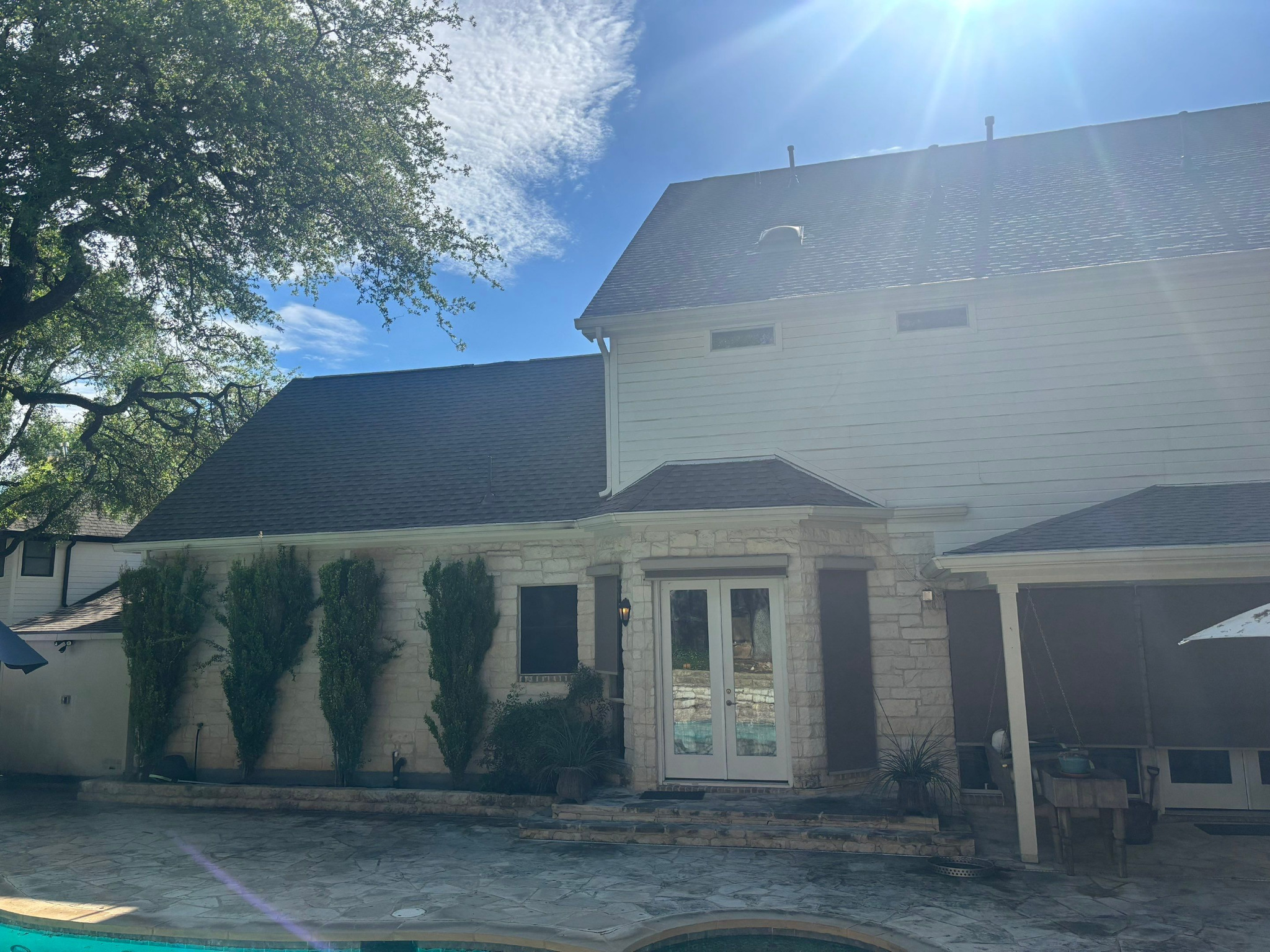
Trusted South Austin roofing contractor serving Zilker, Bouldin, Travis Heights & 78704 since 2005. GAF Master Elite certified, 4.9 stars, free inspections, no deposit required.
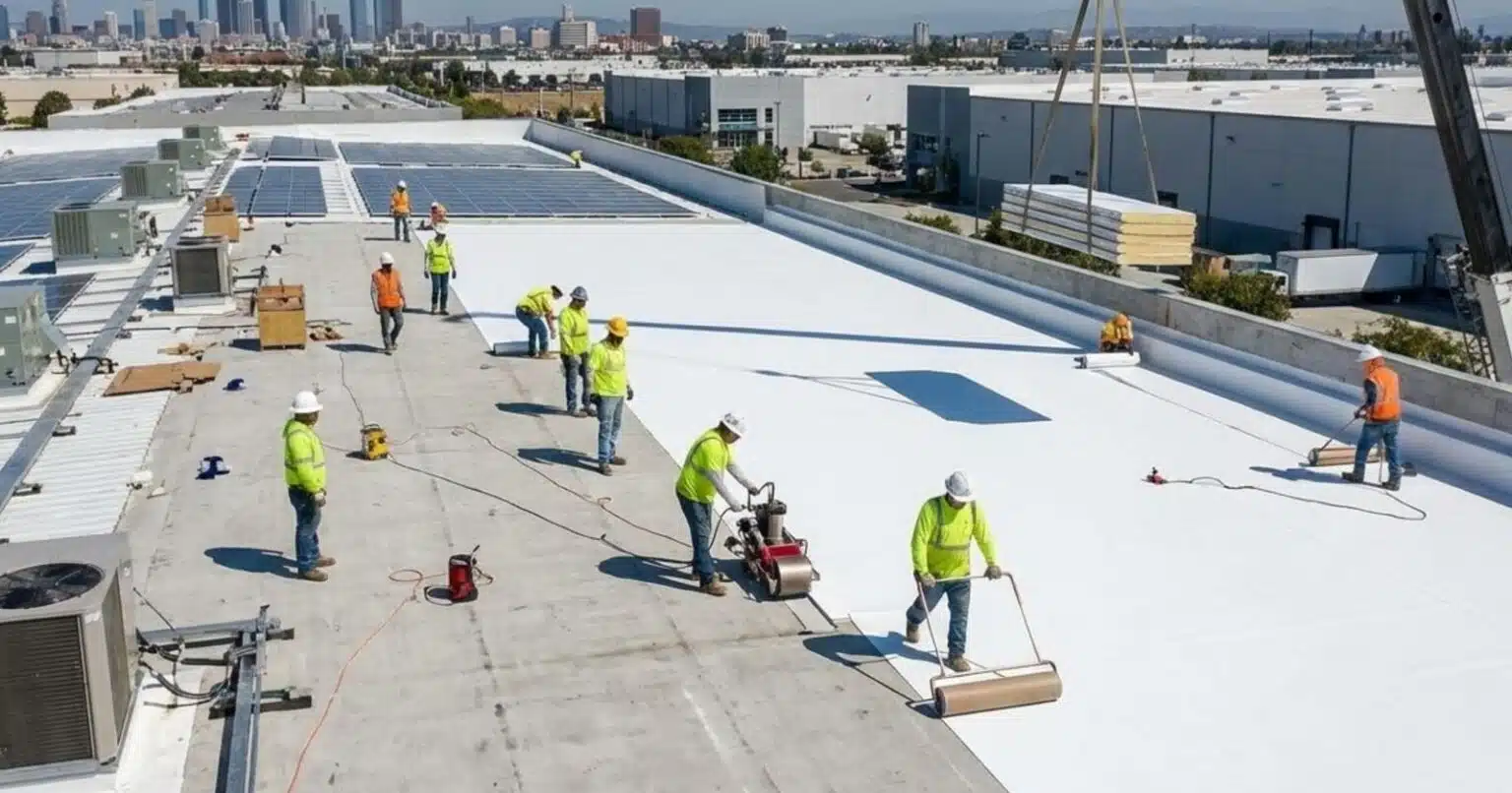
Austin Commercial Roofing
Commercial roofing for Austin businesses: metal, TPO, and flat roof systems built to last. Free photo-documented inspections with remaining roof life reported in writing.
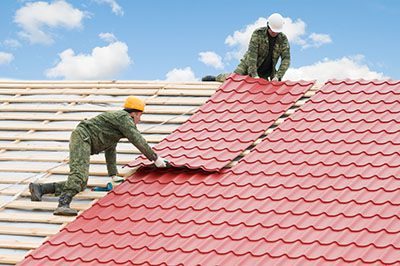
Austin Metal Roofing
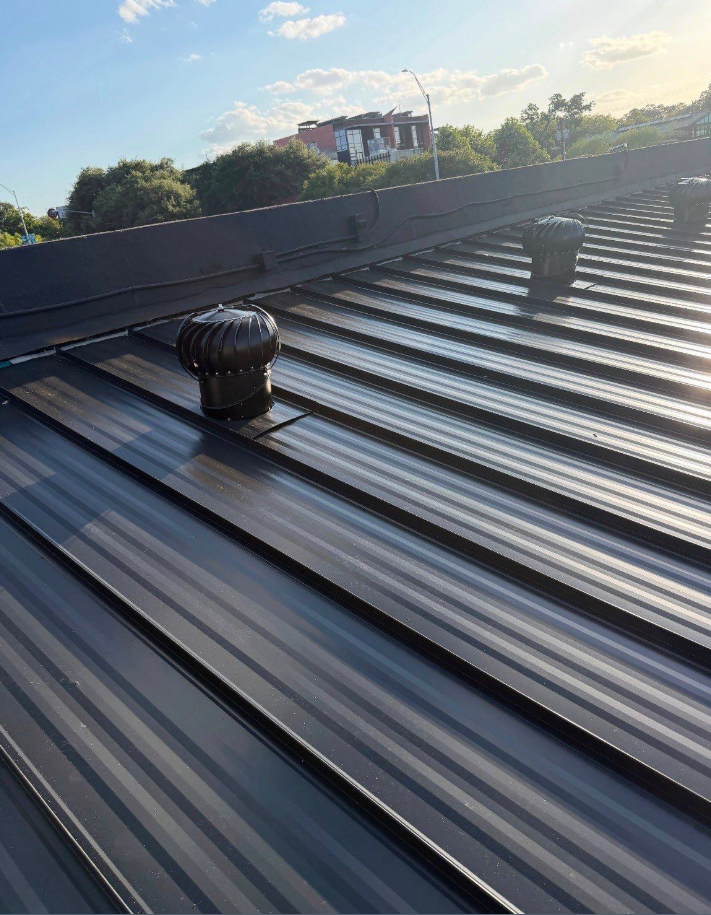
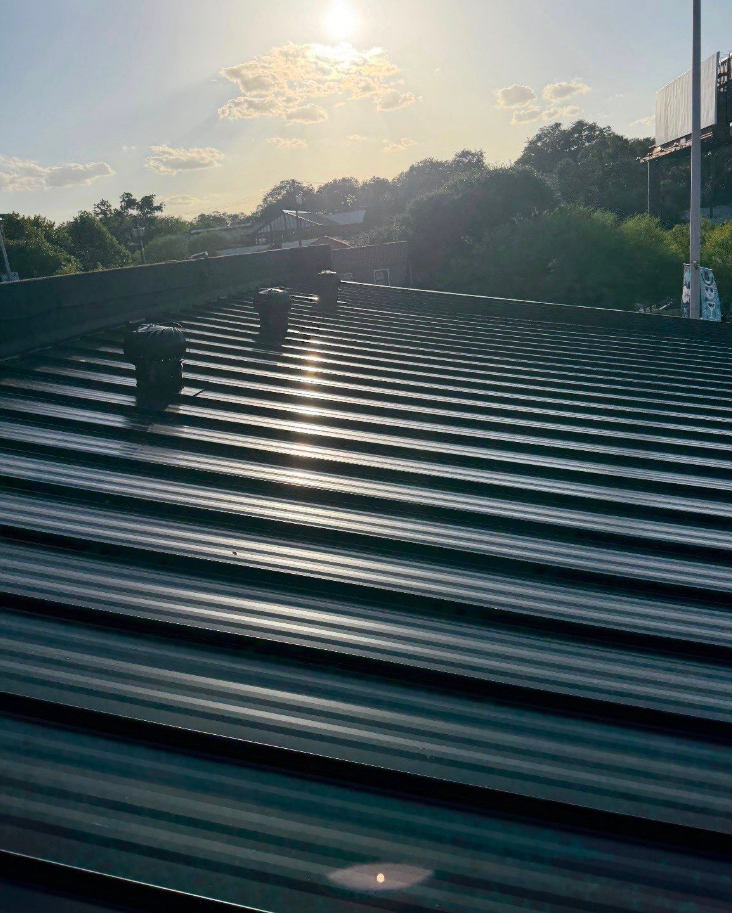
Standing seam and exposed-fastener metal roofing installed across Austin, lasting 40 to 70 years. Reflects heat, cuts cooling costs, and holds up to Central Texas hail and storms.
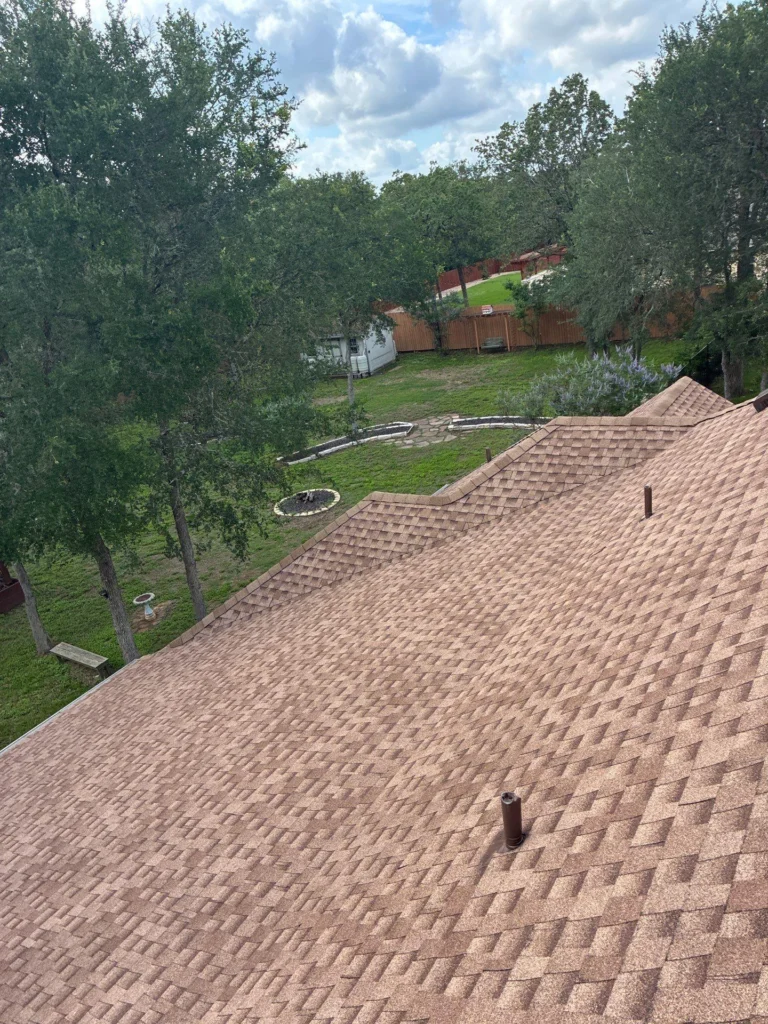
TPO Roofing in Austin
Heat-welded TPO membrane roofing for flat and low-slope commercial buildings in Austin. UV, chemical, and puncture resistant with a fully sealed, leak-proof seam system.

Flat Roof Repair & Replacement
Flat and low-slope roof repair and replacement for Austin homes and businesses. Free inspection identifies leaks, ponding, and membrane damage before they spread.
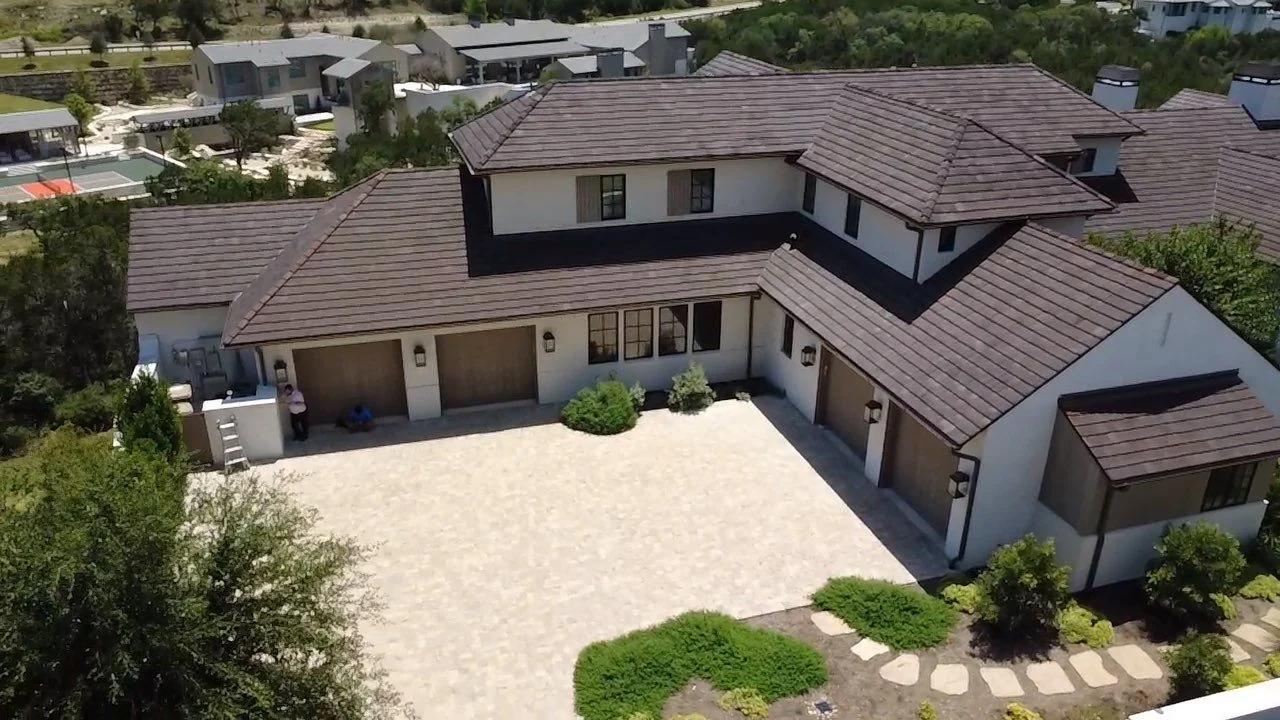
Commercial Roof Replacement
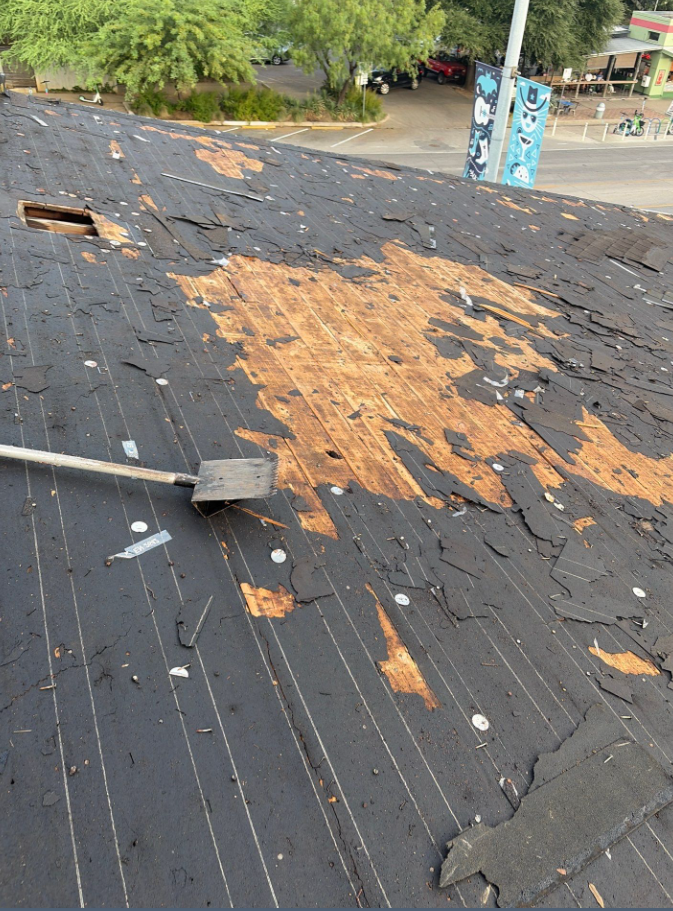
Full tear-off commercial roof replacements with a complete decking inspection included. No deposit required: you pay only after the finished roof passes inspection.
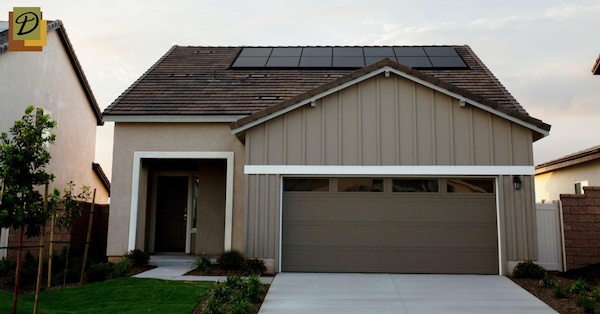
Roof Decking Repair
Rotted or damaged roof decking replaced sheet-by-sheet at a rate agreed upfront. Every tear-off includes a full decking inspection before new materials go down.

What Does Hail Damage Look Like? 3 Easy Ways to Spot Roof Hail Damage | Austin, TX
Wondering what hail damage actually looks like on a roof? In this video, Nick Riley from Driftwood Builders Roofing walks through a real hail-damaged home in the Westminster neighborhood of Austin, TX and demonstrates the most common signs professional roof inspectors look for.
Learn the top three ways to identify hail damage on asphalt shingles, metal roof components, and gutters. Nick also explains how to tell the difference between actual hail damage and damage caused by foot traffic or other impacts, helping homeowners avoid common misconceptions.
You'll also discover how to spot potential hail damage from the ground by checking downspouts and window screens, without climbing onto your roof. If you've recently experienced a hailstorm in the Austin area, this video will help you understand what to look for before scheduling a professional inspection.
🌐 https://driftwoodbuildersroofing.com/
#AustinTX #HailDamage #RoofInspection #RoofRepair #DriftwoodBuildersRoofing

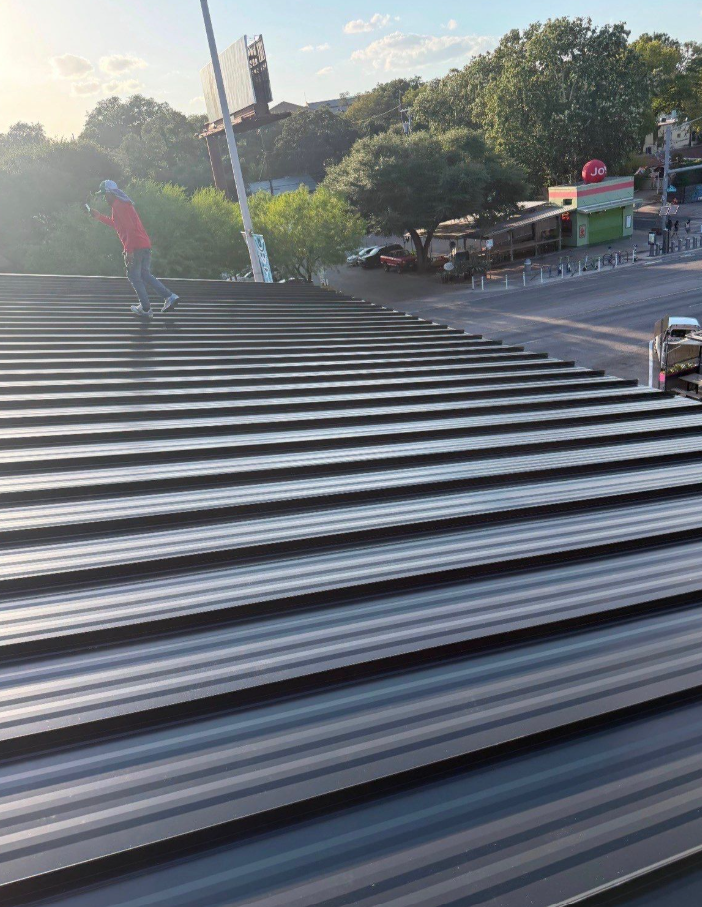
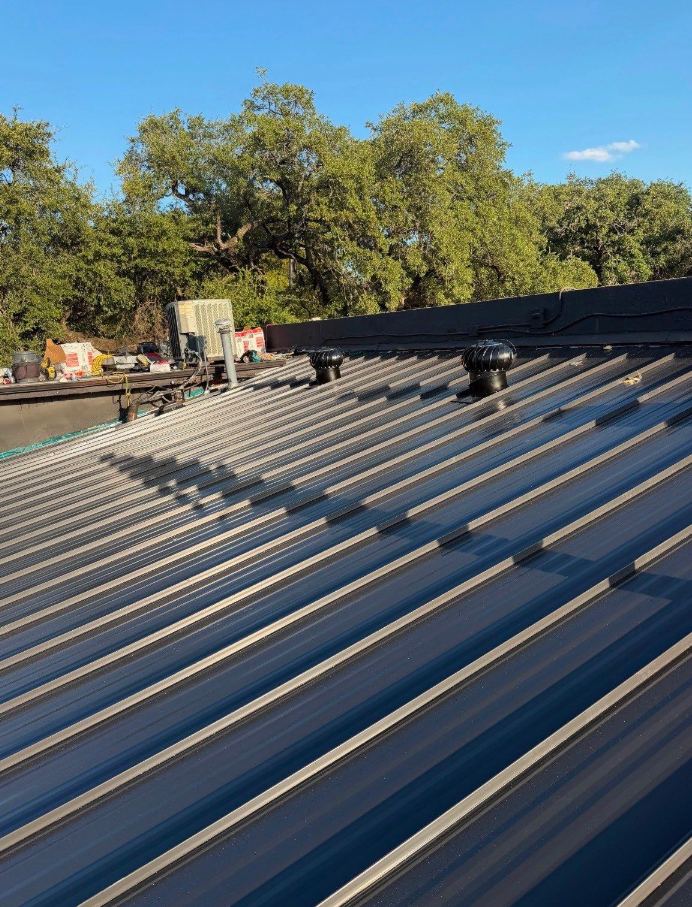
Metal Roof Installation in Austin, TX | Standing Seam Roofing Project
Looking for a durable roofing option that can stand up to the Texas weather? In this video, our team at Driftwood Builders Roofing showcases a standing seam metal roof installation on a residential property in Austin, TX.
Metal roofs are known for their exceptional durability, energy efficiency, low maintenance requirements, and modern appearance. When installed correctly, they can provide decades of reliable protection against heat, heavy rain, wind, and other harsh weather conditions common in Central Texas.
In this project, you'll get a behind-the-scenes look at the installation process and see the attention to detail that goes into delivering a high-quality metal roofing system. Whether you're considering replacing your current roof or planning a new construction project, this video highlights why professional installation matters.
If you're thinking about upgrading to a metal roof, our team is here to help with honest advice, quality workmanship, and reliable service throughout the Austin area.
🌐 https://driftwoodbuildersroofing.com/
#austintx #metalroof #standingseamroof #roofinstallation #driftwoodbuildersroofing #metalroofinstallation #standingseammetalroof #austinroofing #roofingcontractor #roofreplacement #metalroofingaustin #roofingcompany #texasroofing #residentialroofing #commercialroofing #metalroofing #newroof #roofingexperts #roofingproject #constructionvideo

How to Fix a Leaking Skylight Without Replacing It | South Austin Roof Repair
Is your skylight leaking every time it rains? A leaking skylight doesn't always mean you need a full roof replacement or even a brand-new skylight. In many cases, a professional roof repair can solve the problem quickly and save you thousands of dollars.
In this video, Jorge Pacheco with Driftwood Builders Roofing visits a home in South Austin, TX where the homeowner noticed water leaking into the living room around the skylight. After inspecting the roof, Jorge identified the source of the leak and performed a straightforward repair by resealing the skylight with high-quality roofing silicone.
Properly sealed skylights are designed to keep water out, but over time, exposure to intense Texas sun, heavy rain, temperature changes, and aging materials can cause sealants to crack, shrink, or fail. Once that happens, water can work its way around the skylight and into your home, leading to ceiling stains, drywall damage, mold growth, and expensive repairs if left untreated.
Rather than recommending an unnecessary skylight replacement, our goal is always to provide the most practical and cost-effective solution. If a repair will safely solve the problem, we'll recommend the repair. If replacement is the better long-term investment, we'll explain why and show you the evidence.
At Driftwood Builders Roofing, we believe homeowners deserve honest advice backed by professional inspections. That's why we carefully diagnose every roof leak before recommending any work.
If your home has a leaking skylight, roof leak, or water stains on the ceiling, we're here to help with expert roof inspections and quality repairs throughout the Austin area.
Need a roof inspection or skylight repair?
🌐 https://driftwoodbuildersroofing.com/
If you found this video helpful, please Like, Comment, and Subscribe for more roofing tips, roof repair advice, and homeowner education from the Driftwood Builders Roofing team.
#RoofRepair #SkylightRepair #RoofLeak #SouthAustin #AustinTX #DriftwoodBuildersRoofing #RoofInspection #RoofMaintenance #HomeMaintenance #TexasRoofing

Why Does My Roof Look Shiny? A Warning Sign Your Roof Needs Replacing
Does your roof look unusually shiny? While it may not seem like a problem at first, a shiny roof is often one of the clearest signs that your asphalt shingles have reached the end of their lifespan.
In this video, Nathan with Driftwood Builders Roofing explains what causes an aging roof to develop a shiny appearance and why homeowners should take it seriously. During this roof inspection, Nathan points out that the protective granules on the shingles have worn away over time. Once those granules are gone, the asphalt layer beneath begins to deteriorate, eventually exposing the fiberglass mat inside the shingle.
When your roof reaches this stage, it's no longer providing the level of protection your home needs. Exposed fiberglass means the shingles have lost much of their weather resistance, leaving your home more vulnerable to leaks, UV damage, wind damage, and future roofing problems.
Many homeowners don't realize their roof is failing because the signs develop gradually. A shiny appearance, widespread granule loss, and exposed fiberglass are all indicators that it's time to have your roof professionally inspected.
In this video, you'll learn:
✔ Why an old roof starts to look shiny
✔ What shingle granule loss means
✔ How exposed fiberglass affects roof performance
✔ Signs your asphalt shingle roof may need replacement
✔ When it's time to schedule a professional roof inspection
At Driftwood Builders Roofing, we provide honest roof inspections throughout Austin, TX, helping homeowners understand the true condition of their roofing system. Whether your roof needs a minor repair or a complete replacement, we'll explain your options clearly without unnecessary upselling.
If your roof is showing signs of age or you're unsure whether it still has years of life remaining, contact our team for a professional inspection.
🌐 https://driftwoodbuildersroofing.com/
Serving homeowners throughout Austin, TX and surrounding communities.
#RoofInspection #RoofReplacement #AustinTX #AsphaltShingles #DriftwoodBuildersRoofing

How Long Should a Roof Last? Here's What a Healthy 10-Year-Old Roof Looks Like
What should a 10-year-old roof actually look like? In this video, Tom Baker with Driftwood Builders Roofing walks you through a real roof that's been protecting a home for a decade and explains why it's still in excellent condition.
One of the biggest factors that determines the lifespan of a roof isn't just its age: it's the quality of the materials and the installation. This roof is a great example of how premium roofing products and proper installation can help an asphalt shingle roof perform well for many years.
During the inspection, Tom points out that this roof has very little granule loss, no noticeable fraying, and continues to provide reliable protection for the home. These are all positive signs that the roofing system is aging as expected and still has plenty of useful life remaining.
Many homeowners assume a roof automatically needs replacing once it reaches a certain age. In reality, the condition of the shingles, the quality of the installation, local weather conditions, ventilation, and regular maintenance all play major roles in determining how long a roof will last.
In this video, you'll learn:
✔ What a healthy 10-year-old asphalt shingle roof should look like
✔ Why minimal granule loss is a good sign
✔ How quality roofing materials improve roof lifespan
✔ Why professional installation matters just as much as the shingles themselves
✔ When a roof may still have many years of service left
At Driftwood Builders Roofing, we believe every homeowner deserves an honest roof inspection. If your roof is 10, 15, or even 20 years old, we'll evaluate its actual condition and let you know whether it needs repairs, replacement, or simply routine maintenance.
If you're wondering how much life is left in your roof, schedule a professional inspection with our experienced roofing team.
🌐 https://driftwoodbuildersroofing.com/
Serving homeowners throughout Austin, TX and surrounding communities.
#RoofInspection #RoofLifespan #AustinTX #RoofingContractor #DriftwoodBuildersRoofing

Why Are My Roof Shingles Lifting? A Warning Sign You Shouldn't Ignore
Can you lift your roof shingles with your hand? If so, your roof may be trying to tell you something.
In this video, we demonstrate a common warning sign homeowners should watch for: shingles that can be easily lifted by hand. Properly installed asphalt shingles should seal tightly together over time. When shingles begin lifting, it may indicate that the adhesive strip has failed, the shingles have aged beyond their useful life, or the roof was not installed correctly.
Loose or lifting shingles are more vulnerable to wind damage, water intrusion, and leaks. During strong storms, these shingles can catch the wind, break their seal, or even blow completely off the roof, exposing your home to costly damage.
While some newly installed shingles may need warm weather to fully seal, older roofs with shingles that lift easily should be professionally inspected to determine the cause.
In this video, you'll learn:
✔ Why roof shingles should stay sealed down
✔ What causes shingles to lift or become loose
✔ How lifting shingles can lead to roof leaks and wind damage
✔ Signs your roof may need repairs or replacement
✔ When it's time to schedule a professional roof inspection
At Driftwood Builders Roofing, we provide honest roof inspections throughout Austin, TX, helping homeowners identify roofing issues before they become expensive repairs. Whether you need a simple repair or a complete roof replacement, our team will explain your options clearly and never recommend work you don't need.
If you've noticed loose, curling, or lifting shingles on your roof, don't wait until the next storm. Schedule a professional roof inspection today.
🌐 https://driftwoodbuildersroofing.com/
Serving homeowners throughout Austin, TX and surrounding communities.
#RoofInspection #RoofRepair #AustinTX #AsphaltShingles #DriftwoodBuildersRoofing
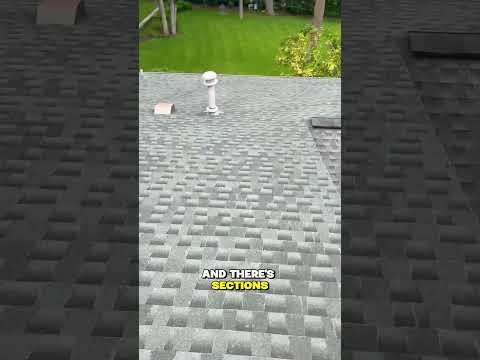
Why Complex Roofs Cost More | Austin Roofing Contractor Explains
How much does a new roof cost? The answer depends on several factors, but one of the biggest is your roof's complexity. In this video, Nick Riley with Driftwood Builders Roofing explains why some roof replacements cost significantly more than others by showcasing a beautiful multi-story home on Windsor Road in Austin, TX.
While many homeowners focus on the size of their roof, the design and complexity of the roofing system can have an equally important impact on the final price. A simple roof with few slopes and penetrations is generally faster and easier to replace. On the other hand, a roof with multiple stories, numerous roof sections, steep pitches, dormers, valleys, and transitions requires more labor, materials, safety equipment, and installation time.
Every additional roof section must be measured carefully, and more complex roofing systems often generate more material waste due to extra cuts and intricate installation details. That's why two homes with similar square footage can have very different roof replacement costs.
In this video, you'll learn:
✔ Why roof complexity affects the cost of a roof replacement
✔ How multiple stories increase labor and installation time
✔ Why roof slopes and transitions matter when estimating a project
✔ How professional roof measurements improve estimate accuracy
✔ What homeowners should understand before comparing roofing quotes
At Driftwood Builders Roofing, we provide detailed roof inspections and transparent estimates so homeowners understand exactly what they're paying for. Every roof is unique, and our goal is to deliver high-quality workmanship while explaining the factors that influence your roofing investment.
If you're considering a roof replacement in Austin or the surrounding areas, we'd be happy to provide a professional inspection and detailed estimate.
🌐 https://driftwoodbuildersroofing.com/
Serving homeowners throughout Austin, TX, including the Windsor Road neighborhood and surrounding communities.
#RoofReplacement #RoofCost #AustinTX #RoofingContractor #DriftwoodBuildersRoofing

How to Tell If Your Roof Needs to Be Replaced | South Austin Roofing Tips
How do you know when it's time to replace your roof? Many homeowners in South Austin wait until they have a leak before thinking about a roof replacement, but there are often warning signs visible long before water starts entering the home.
In this video, Nick Riley with Driftwood Builders Roofing explains one of the easiest ways homeowners can identify an aging roof. Filmed during a roof replacement project in the Meridian community of South Austin, this video highlights a common sign that a roof may be reaching the end of its useful life: shingle discoloration and granule loss.
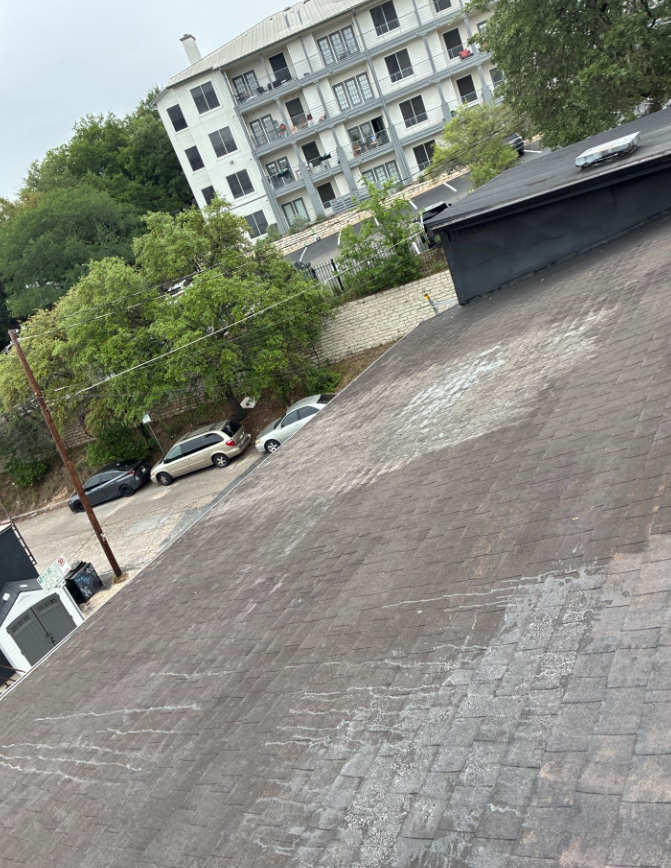
As asphalt shingles age, the protective granules on the surface begin to wear away. These granules help shield the roof from harmful UV rays, heat, and weather exposure. Over time, especially in the harsh Central Texas climate, shingles can start losing granules, leaving behind lighter-colored spots and creating a shiny or uneven appearance across the roof.
In this project, the existing roof showed significant signs of aging. From ground level, you could easily see white spots scattered across the roof surface where granules had worn away. This type of discoloration is often a warning sign that the shingles are deteriorating and may no longer be providing the level of protection your home needs.
Austin-area roofs face unique challenges that can accelerate aging, including:
• Intense Texas heat and UV exposure
• Severe thunderstorms and high winds
• Hail damage
• Heavy rain events
• Natural wear and tear over time
When granule loss becomes severe, shingles become more vulnerable to cracking, curling, moisture intrusion, and storm damage. While discoloration alone does not automatically mean a roof needs immediate replacement, it is often a strong indicator that a professional roof inspection is warranted.
At Driftwood Builders Roofing, we help homeowners throughout South Austin, Meridian, Circle C Ranch, Dripping Springs, Westlake, Lakeway, Buda, Kyle, and surrounding communities determine whether their roof can be repaired or if replacement is the more cost-effective long-term solution.
In this video, you'll learn:
• How to identify roof discoloration
• What granule loss looks like
• Why shingles develop white spots
• Signs your asphalt shingle roof may be aging
• When to schedule a professional roof inspection
• How Austin weather affects roof lifespan
If you're concerned about the condition of your roof, our team provides honest inspections and straightforward recommendations to help homeowners make informed decisions.
Website:
https://driftwoodbuildersroofing.com/
Watch more roofing videos:
https://www.youtube.com/@DriftwoodBuildersRoofing
#RoofReplacement #SouthAustinRoofing #MeridianAustin #RoofInspection #DriftwoodBuildersRoofing
Why Are My Shingles Sliding Out of Place? Common Roofing Installation Mistake Explained
Have you noticed shingles slipping out of place on your roof? While many homeowners assume this is simply a sign of an aging roof, the real cause is often improper installation. In this video, Nathan with Driftwood Builders Roofing explains one of the most common roofing mistakes that can lead to loose, slipping, or displaced shingles over time.
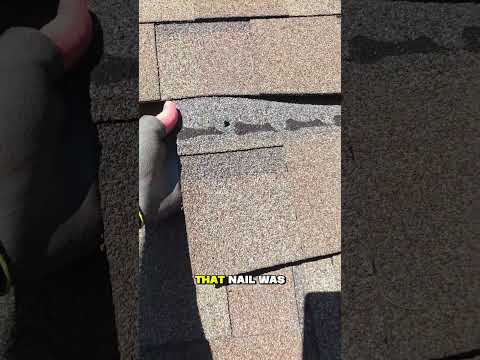
During this roof inspection, Nathan identifies shingles that have begun sliding out of position and investigates the root cause. Upon closer inspection, the problem becomes clear: improperly driven nails. When roofing nails are installed with excessive pressure from an over-pressurized nail gun, the nail can be driven too deeply into the shingle. This is commonly referred to as an "overdriven nail."
An overdriven nail can actually tear through the shingle material instead of securely fastening it to the roof deck. When this happens, the shingle loses much of its holding power and becomes vulnerable to movement during high winds, storms, and normal weather exposure. Over time, these improperly fastened shingles can begin to slip, creating potential pathways for water intrusion and roof damage.
In this video, Nathan shows real-world examples of overdriven nails and explains how they affect the long-term performance of a roofing system. He points out visible nail holes and demonstrates how certain shingles are no longer being properly secured because the nail has blown through the shingle rather than holding it firmly in place.
For homeowners in Austin, South Austin, Tarrytown, Westlake, Lakeway, Dripping Springs, Buda, Kyle, Bastrop, and surrounding Central Texas communities, understanding installation quality is critical. Even the highest-quality roofing materials can fail prematurely if they are not installed correctly.
This is why proper nail placement, correct nail depth, manufacturer installation guidelines, and experienced roofing crews are so important during a roof replacement. Small installation mistakes may not be immediately visible, but they can create significant problems years later.
In this video you'll learn:
• Why shingles can slide out of place
• What an overdriven roofing nail looks like
• How improper nail gun pressure affects shingles
• Common roofing installation mistakes
• Why installation quality matters more than many homeowners realize
• How roof inspections can identify hidden issues
• Signs your roof may have been installed incorrectly
At Driftwood Builders Roofing, we believe that proper installation is the foundation of a long-lasting roofing system. That's why we focus on craftsmanship, attention to detail, and following manufacturer specifications on every project.
Website:
https://driftwoodbuildersroofing.com/
Watch more roofing videos:
https://www.youtube.com/@DriftwoodBuildersRoofing
#RoofInspection #RoofingMistakes #AustinRoofing #ShingleDamage #DriftwoodBuildersRoofing

Did Your Roofer Skip This Critical Step? Hidden Roofing Mistake Revealed
Have you ever wondered what’s really underneath your roof shingles? During this roof inspection, Nathan with Driftwood Builders Roofing uncovers a common roofing shortcut that many homeowners never see until major problems develop.
While inspecting this roof, Nathan discovered multiple layers of old felt paper (tar paper) hidden beneath the current roofing system. This is often a sign that a previous roofing contractor failed to completely remove the old underlayment during a roof replacement. Skipping this critical step can prevent proper inspection of the roof decking and may allow hidden damage, moisture issues, or deteriorated plywood to go unnoticed.
A proper roof replacement should include a full tear-off of old roofing materials so the decking can be thoroughly inspected before installing new underlayment and shingles. When old felt paper is left behind, homeowners may end up paying for roofing work that doesn't fully address underlying issues.
In this video, you'll learn:
✔ Why multiple layers of felt paper can be a problem
✔ What roofers should inspect during a roof replacement
✔ How hidden decking damage can go unnoticed
✔ Why a complete tear-off is important for long-term roof performance
✔ Common roofing shortcuts homeowners should watch for
At Driftwood Builders Roofing, we believe every homeowner deserves transparency, detailed inspections, and quality workmanship. Whether you need a roof inspection, roof repair, or full roof replacement, our team helps homeowners make informed decisions about their roofing systems.
If you're concerned about the condition of your roof or want a second opinion on previous roofing work, our team is happy to help.
🌐 https://driftwoodbuildersroofing.com/
Serving homeowners throughout Austin, TX and surrounding communities.
#RoofInspection #RoofReplacement #RoofingContractor #AustinTX #DriftwoodBuildersRoofing

What Happens During a Full Roof Replacement? Step-by-Step Roofing Process in South Austin, TX
Have you ever wondered what actually happens during a full roof replacement? Many homeowners know they need a new roof, but few get to see what takes place once the roofing crew arrives. In this video, Nick Riley from Driftwood Builders Roofing takes you behind the scenes of a real roof replacement project in the Meridian neighbourhood of South Austin, TX and explains the first critical steps of the roofing process.
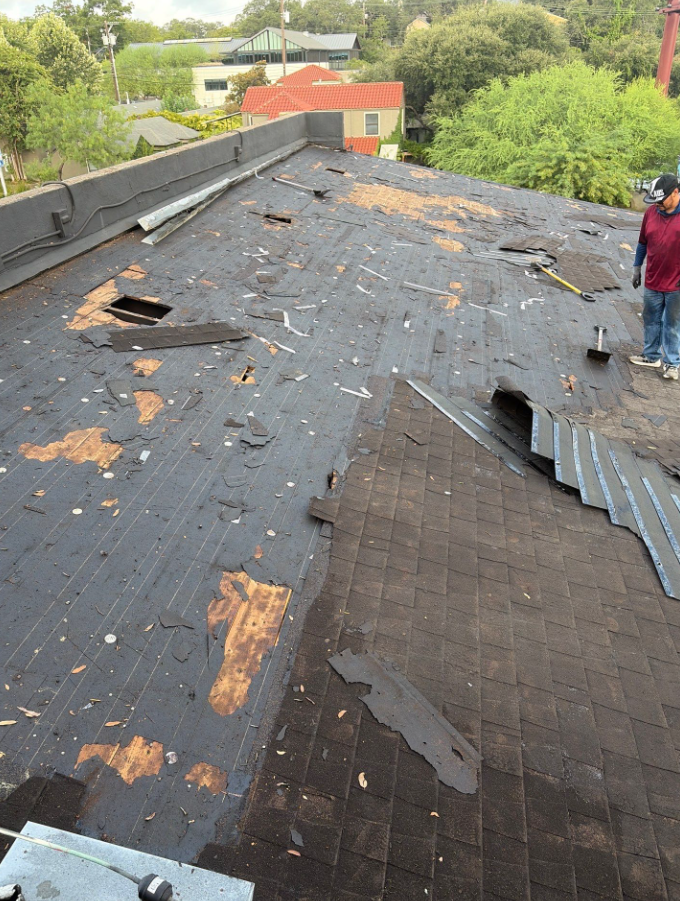
This particular project is a large 55-square roof replacement expected to take two days to complete. The first step in any roof replacement is removing the existing roofing materials. Our crew carefully tears off the old asphalt shingles to expose the layers underneath. Once the shingles are removed, the next step is to remove the old underlayment and inspect the roof decking for any signs of damage, deterioration, or moisture issues.
During this project, we discovered that the roof only had a single layer of underlayment, which is good news because multiple layers can make the tear-off process more difficult and may hide underlying problems. After the old materials are removed, our team thoroughly inspects the roof deck to ensure it is ready for the new roofing system.
Next, we install a new synthetic underlayment across the roof surface. High-quality synthetic underlayment provides an additional layer of protection against water intrusion and helps improve the long-term performance of the roofing system. In the valleys of the roof, where water naturally concentrates during rainstorms, we install ice and water shield protection. This extra waterproof barrier helps prevent leaks in one of the most vulnerable areas of any roof.
Safety is also a major priority during every roof replacement project. In this video, you'll see our crew using specialized roof cushions and safety equipment designed to improve stability and reduce the risk of slips while working on steep roof slopes.
If you're considering a roof replacement in South Austin, Meridian, Circle C Ranch, Buda, Kyle, Dripping Springs, Westlake, Lakeway, or anywhere in the Austin area, understanding the roofing process can help you make informed decisions and choose the right roofing contractor.
At Driftwood Builders Roofing, we believe in transparency, quality workmanship, and educating homeowners throughout every step of the roofing process. Whether you need a roof inspection, roof repair, storm damage assessment, or full roof replacement, we're here to help.
In this video you'll learn:
• What happens during a full roof replacement
• How old shingles and underlayment are removed
• Why roof deck inspections are important
• The role of synthetic underlayment
• Why ice and water shield is installed in roof valleys
• Roofing safety practices during installation
• What homeowners can expect on the first day of a roof replacement
Need a roof inspection or roof replacement in Austin, TX?
Visit: https://driftwoodbuildersroofing.com/
Watch more roofing videos:
https://www.youtube.com/@DriftwoodBuildersRoofing
#RoofReplacement #AustinRoofing #SouthAustinRoofing #MeridianTX #RoofingContractor

Metal Flashing in Valleys: Everything You Need to Know
In this video, we're breaking down one of the most important (and most overlooked) parts of any roofing job: *metal flashing in valleys*.
Valley flashing is the metal that runs along the internal angles where two roof slopes meet. Done right, it keeps water channeled off your roof and away from your home. Done wrong? You're looking at leaks, rot, and expensive repairs down the line.
Here's what we cover:
🔩 What valley flashing is and why it matters
🔩 Types of metal used (galvanized steel, aluminum, copper)
🔩 Step-by-step installation process
🔩 Common mistakes to avoid
🔩 When to replace old or failing flashing
Whether you're a DIYer or just want to know what your roofer should be doing: this one's for you.
---
👍 Like the video if it helped
🔔 Subscribe for more roofing tips
💬 Drop your questions in the comments
#Roofing #MetalFlashing #ValleyFlashing #RoofRepair #HomeImprovement #DriftwoodBuildersRoofing

How Do Roofers Find Rotten Roof Decking? Signs of Hidden Roof Damage in Austin, TX
How do roofing contractors know if there is rotten roof decking underneath your shingles? It's one of the most common questions homeowners ask during roof inspections and roof replacement projects.
In this video, Nick Riley from Driftwood Builders Roofing explains how roofers identify signs of rotted roof decking and hidden structural damage before and during a roof replacement project in Austin, TX.
The reality is that most of the time, roofing contractors cannot see the condition of the roof decking until the old roofing materials are removed. Roof decking sits underneath the shingles and underlayment, which means it is hidden from view during a standard inspection. In many cases, the only way to fully evaluate the decking is to perform a complete tear-off of the existing roofing system.
However, experienced roofers can often identify warning signs before the roof is removed.
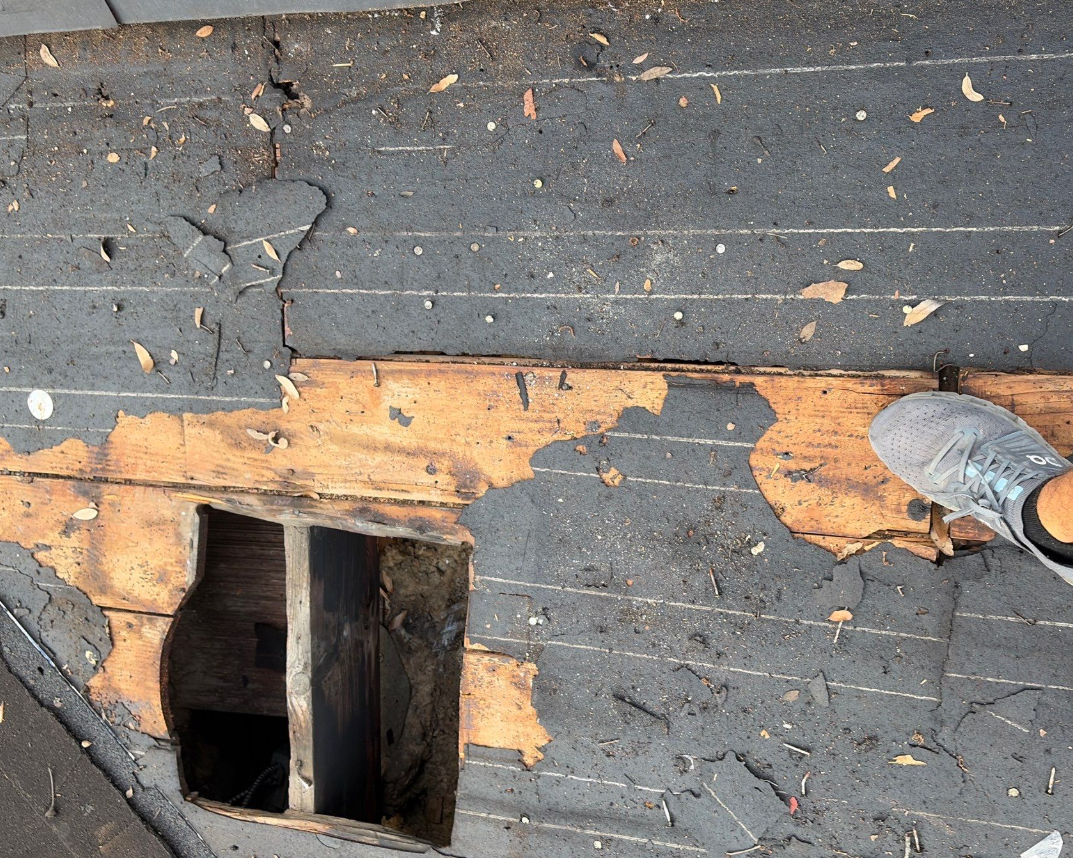
One of the biggest indicators of rotten roof decking is a soft or spongy feeling when walking across the roof surface. A healthy roof deck should feel solid and stable underfoot. When sections of the roof feel weak, flex excessively, or seem to sink when stepped on, it can indicate moisture damage, wood rot, or deteriorated decking beneath the shingles.
On this particular roof, several areas felt noticeably weaker than the surrounding sections. While walking across the roof, some spots appeared stable while others felt as if they dropped nearly an inch under pressure. These soft spots are often a strong indication that the wood decking underneath has been compromised by water intrusion over time.
Rotten roof decking is commonly caused by long-term roof leaks, aging roofing materials, poor ventilation, improper flashing installation, storm damage, or moisture that becomes trapped beneath the roofing system. Left untreated, rotted decking can continue to deteriorate and may eventually lead to structural concerns, interior water damage, mold growth, or more expensive repairs.
This is one of the reasons why a full roof replacement often includes an inspection of the decking after the shingles and underlayment have been removed. If damaged decking is discovered, the affected sections can be replaced before the new roofing materials are installed. Replacing compromised decking helps create a solid foundation for the new roof and improves the overall lifespan and performance of the roofing system.
At Driftwood Builders Roofing, every roof replacement includes a thorough inspection of the decking once the existing roofing materials have been removed. If we discover rotted wood, we document the damage with photos, explain the situation to the homeowner, and replace only the areas that need repair.
If you suspect your roof may have hidden damage, soft spots, sagging areas, or signs of water intrusion, schedule a professional roof inspection before the problem becomes more expensive.
🌐 Website: https://driftwoodbuildersroofing.com/
📍 Location Featured in This Video: Austin, TX
🎥 Subscribe for more roofing tips, roof inspections, roof replacement advice, storm damage information, and homeowner education from Central Texas roofing experts.
#RoofDecking #RoofReplacement #AustinRoofing #RoofInspection #RoofRepair

Why Is My Ceiling Leaking? Roof Drainage Problem Explained in Bastrop, TX
A leaking ceiling doesn't always mean you need a new roof. Sometimes the real issue is poor roof drainage and water management. In this video, Nick Riley from Driftwood Builders Roofing explains why a homeowner in Bastrop, TX was experiencing an active ceiling leak and how a detailed roof inspection revealed the true cause.
The homeowner noticed water stains and leaking inside the home and wanted to understand why the ceiling was leaking every time it rained. After inspecting the attic, there were no obvious signs pointing directly to the source of the leak. With a large amount of insulation covering much of the attic space, the issue wasn't immediately visible from inside the home.
The next step was a full exterior roof inspection. Once on the roof, the problem became much clearer. This home has a very large roof area that channels a significant amount of rainwater into a single location. During heavy rain events, water from multiple roof slopes converges into one section of the gutter system. Although metal flashing had been installed, the volume of water was simply overwhelming the drainage capacity in that area.
As rainwater concentrated into a single downspout location, it began overflowing the flashing and allowing water to enter areas where it shouldn't. Over time, this caused moisture intrusion that eventually showed up inside the home as a leaking ceiling.
Rather than recommending an unnecessary roof replacement, the solution was straightforward: improve the drainage system. By adding two additional gutter downspouts, rainwater can be distributed more efficiently across multiple exit points. This reduces the volume of water concentrated in one area and helps prevent future overflow issues.
This project highlights an important lesson for homeowners: roof leaks are not always caused by damaged shingles or failing roofing materials. Sometimes the real problem is improper water flow, inadequate drainage design, clogged gutters, or insufficient downspout capacity. A thorough inspection can help identify the root cause and save homeowners from expensive repairs that don't actually solve the problem.
If you're dealing with a leaking ceiling, roof leak, overflowing gutters, or storm-related roofing concerns in Bastrop, Austin, or the surrounding Central Texas area, Driftwood Builders Roofing is here to help. We provide honest inspections, detailed documentation, and practical solutions designed to address the actual cause of the problem.
For more roofing tips, leak diagnostics, roof repair advice, and homeowner education, subscribe to our channel.
🌐 Website: https://driftwoodbuildersroofing.com/
🎥 Full Video:
https://youtu.be/rgZIgAdaFNU
#RoofLeak #CeilingLeak #BastropTX #RoofInspection #GutterDrainage

How Much Does a Roof Cost in Austin & Bastrop, TX? 5 Biggest Factors That Affect Roofing Prices
How much does a new roof cost? It's one of the most common questions we get from homeowners throughout Austin, Bastrop, and Central Texas. The honest answer is that every roof is different, and the final cost depends on several important factors.
In this video, Nick Riley from Driftwood Builders Roofing walks through a recently completed roof replacement project in Bastrop, TX that came in at $24,397 and explains the five biggest factors that determine the cost of a new roof.
The first and most obvious factor is the size of the roof. Larger roofs require more shingles, underlayment, flashing, labor, and disposal costs. The more square footage your roofing system covers, the higher the overall project cost will be.
The second major factor is roof complexity. Not all roofs are created equal. Some homes have simple roof designs with few angles and penetrations, while others feature multiple roof planes, valleys, dormers, steep slopes, chimneys, skylights, and complex architectural details. This Bastrop roof is a great example of a complex roofing system with multiple sections, varying slopes, and a waste factor of 16.34%. Complex roofs require more labor, more materials, and more installation expertise.
The third factor is the type and quality of roofing materials selected. For this project, Driftwood Builders Roofing installed GAF Timberline HDZ Class 3 architectural shingles, which provide excellent durability, wind resistance, and long-term performance. While some homeowners may choose lower-cost three-tab shingles, architectural shingles are generally considered the industry standard for residential roof replacements because they offer better protection and a longer lifespan.
The fourth factor is what happens during the tear-off process. Once the old roofing materials are removed, contractors can inspect the underlying roof structure. Sometimes hidden issues are discovered, such as damaged underlayment, rotted roof decking, water damage, or structural concerns. These repairs are often impossible to identify before the roof is removed. In this particular project, the decking and underlayment were in excellent condition, which helped keep costs lower than many similar roof replacements.
The fifth factor is location. While roofing materials are generally consistent across Central Texas, project logistics can vary based on where the property is located. Travel time, disposal costs, access challenges, and local conditions can all affect the final project price.
When comparing roofing estimates, homeowners should focus on more than just the bottom-line price. It's important to understand exactly what is included in the scope of work, including shingle type, underlayment, ventilation upgrades, flashing details, cleanup procedures, workmanship warranties, and material warranties.
At Driftwood Builders Roofing, we believe in providing detailed roof inspections, transparent pricing, clear communication, and quality workmanship on every project. Whether you need a roof replacement in Bastrop, Austin, Westlake, Lakeway, Bee Cave, Dripping Springs, or anywhere in Central Texas, our team is here to help.
If you're wondering how much your roof replacement may cost, contact Driftwood Builders Roofing for a free roof inspection and estimate.
🌐 Website: https://driftwoodbuildersroofing.com/
📍 Location Featured in This Video: Bastrop, TX
🎥 Learn more about roofing costs, roof replacements, roof inspections, storm damage repairs, and homeowner roofing tips by subscribing to our channel.
#RoofReplacement #RoofCost #BastropTX #AustinRoofing #RoofEstimate
What Is the Black Tar on My Roof? | Roof Cement Explained in Austin, TX
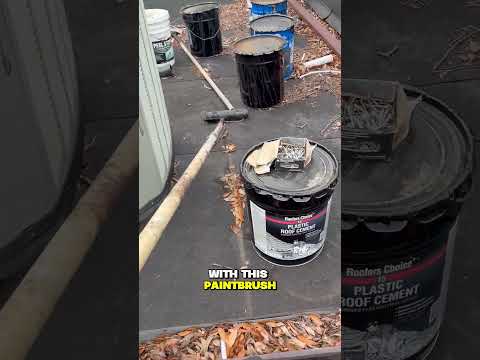
If you've ever looked at your roof and noticed large patches of black tar-like material spread across the shingles, you may have wondered what it is and why it's there. In this video, Nick Riley from Driftwood Builders Roofing explains one of the most common roofing repair materials homeowners encounter: roof cement.
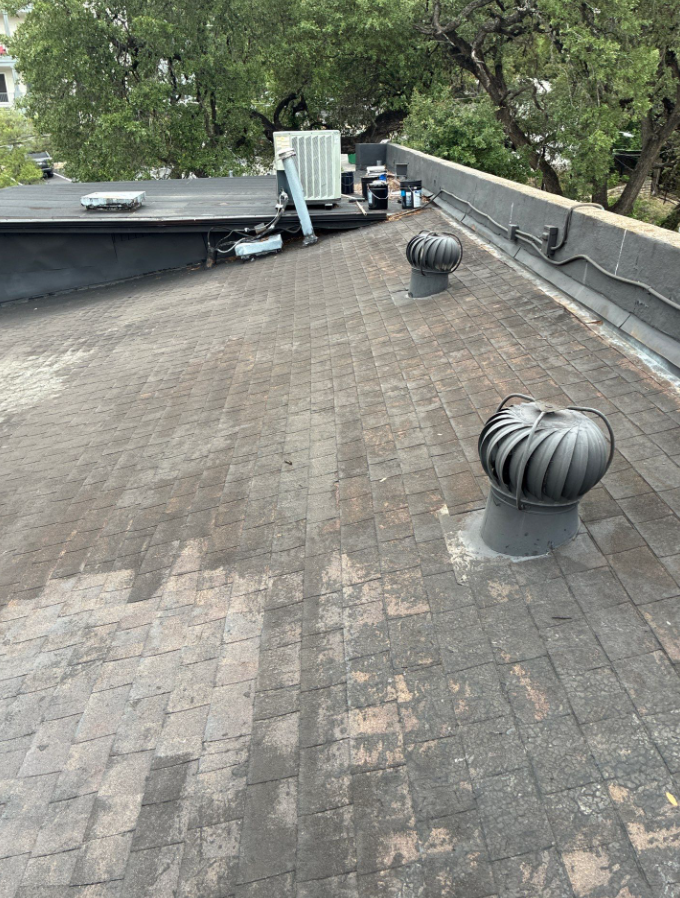
While inspecting a commercial roof near South Congress in Austin, TX, Nick came across a roof that had been heavily coated with black roofing tar. It appeared that a previous contractor or homeowner had used a brush to apply large amounts of roof cement across sections of the asphalt shingle roof in an effort to address leaks or waterproof vulnerable areas.
Roof cement, often referred to as roofing tar, is a thick asphalt-based sealant designed to help stop water intrusion around roofing components, flashing details, penetrations, and damaged areas. When applied correctly, it can provide an additional layer of protection against moisture and help extend the life of certain repairs.
However, while roof cement can be effective as a repair material, excessive application is often a sign that previous leak issues may have been addressed with temporary fixes instead of more permanent roofing solutions. Large areas of visible roofing tar may not be aesthetically appealing, but they are commonly used to seal gaps, cracks, flashing transitions, and other areas where water infiltration has occurred.
Austin roofs face constant exposure to intense heat, UV rays, thunderstorms, hail, wind, and heavy rainfall. Over time, roofing materials naturally expand, contract, and weather, which can create areas where water is able to penetrate the roofing system. Roof cement is frequently used as a maintenance or repair product to help reduce the risk of leaks in these situations.
That said, roof cement is not always a substitute for proper repairs. In some cases, damaged flashing, deteriorated shingles, failing sealants, or aging roofing systems may require more comprehensive repairs to address the root cause of the problem rather than simply covering the symptom.
If you notice black tar, roof cement, patched areas, or signs of previous repairs on your roof, it's often worth having a professional inspection performed to determine whether the repairs are still functioning properly and whether additional maintenance may be needed.
At Driftwood Builders Roofing, we provide roof inspections, leak detection, roof repairs, maintenance services, and roof replacements throughout Austin and the surrounding communities.
📍 South Congress, Austin, TX
🌐 https://driftwoodbuildersroofing.com/
#AustinRoofing #SouthCongress #RoofRepair #RoofInspection #RoofMaintenance #DriftwoodBuildersRoofing

How to Tell If Your Roof Has Rotted Decking | Warning Signs Every Austin Homeowner Should Know
How can you tell if your roof has rotted decking before replacing your roof? In this video, Nick Riley from Driftwood Builders Roofing explains one of the most common warning signs homeowners can notice during a roof inspection.
While the only way to fully confirm rotted roof decking is to remove the shingles and underlayment during a roof replacement, there are times when the roof gives clear clues. As Nick walks across this older roof, certain areas feel soft, weak, and spongy underfoot, indicating that the wood decking underneath may have deteriorated from years of moisture exposure or previous roof leaks.
Rotted roof decking is more than just an inconvenience: it can compromise the structural integrity of your roofing system and shorten the lifespan of your new roof if it isn't replaced. That's why a proper tear-off and thorough decking inspection are essential parts of any quality roof replacement.
At Driftwood Builders Roofing, we inspect the entire roof deck after removing the existing shingles. If damaged plywood or OSB decking is discovered, we document everything with photos, discuss the findings with the homeowner, and replace only the sections that truly need replacement before installing the new roofing system.
In this video, you'll learn:
✔️ How to recognize possible signs of rotted roof decking
✔️ Why soft or spongy areas on a roof are a major warning sign
✔️ Why decking problems usually can't be confirmed until the old roof is removed
✔️ How water damage can weaken your roof over time
✔️ Why replacing damaged decking is critical for a long-lasting roof replacement
If your roof feels uneven, has experienced leaks, or is approaching the end of its lifespan, it's a good idea to have it professionally inspected before small issues become expensive structural repairs.
Driftwood Builders Roofing proudly serves homeowners throughout Austin, TX, helping families make informed decisions with honest inspections, detailed documentation, and high-quality workmanship.
Visit our website:
https://driftwoodbuildersroofing.com/
#RoofDecking #RottedDecking #RoofReplacement #RoofInspection #AustinTX #AustinRoofing #DriftwoodBuildersRoofing #HomeMaintenance #RoofRepair #PlywoodDecking

How Much Does a Roof Cost? 5 Biggest Factors That Affect Roofing Prices | Bastrop, TX
How much does a new roof actually cost?
The honest answer is: **it depends on your roof.** In this video, **Nick Riley** with **Driftwood Builders Roofing** breaks down the five biggest factors that determine the cost of a roof replacement using a recently completed roofing project in **Bastrop, TX**.
For this particular home, the total roof replacement cost was **$24,397**, but every home is different. Roof size, complexity, materials, and existing conditions all play a major role in the final price.
In this video, Nick explains the five biggest pricing factors homeowners should understand before replacing their roof.
✅ **1. Roof Size**
The larger your roof, the more shingles, underlayment, labor, and disposal are required. Roof size is one of the biggest drivers of total project cost.
✅ **2. Roof Complexity**
Not all roofs are built the same. Roofs with multiple levels, valleys, hips, dormers, steep slopes, and complex layouts require more labor and generate additional material waste. This Bastrop home has multiple roof sections and a waste factor of **16.34%**, making it a more complex installation than a simple roof.
✅ **3. Roofing Materials**
The type of shingles you choose affects both performance and price. This project was completed using **GAF Timberline HDZ Class 3 architectural shingles**, which offer outstanding durability and wind resistance. While some contractors still install lower-cost three-tab shingles, Driftwood Builders Roofing installs architectural shingles as its standard because they provide better long-term value for homeowners.
✅ **4. Tear-Off & Existing Roof Conditions**
Once the old roof is removed, contractors inspect what's underneath. If damaged underlayment or rotted roof decking is discovered, those materials must be replaced before the new roofing system can be installed correctly. Fortunately, this project did not require additional decking or underlayment replacement, helping keep costs lower than many roof replacements.
✅ **5. Project Location**
Location also influences roofing costs. Travel time, material delivery, debris removal, and disposal logistics all contribute to the overall project price. Homes located farther from suppliers or disposal facilities may have slightly higher installation costs.
Whether you're planning a roof replacement now or simply budgeting for the future, understanding these five factors will help you make a more informed decision and avoid unexpected surprises.
If you're looking for an honest roofing estimate in **Bastrop, TX**, **Austin, TX**, or the surrounding Central Texas area, Driftwood Builders Roofing is happy to provide a professional roof inspection and transparent pricing.
🌐 https://driftwoodbuildersroofing.com/
#RoofCost #RoofReplacement #RoofEstimate #BastropTX #AustinRoofing #RoofingContractor #GAFRoofing #ArchitecturalShingles #DriftwoodBuildersRoofing #RoofingTips

Why Is My Ceiling Leaking? Roof Drainage Problem Explained | Bastrop, TX
Why is your ceiling leaking even when your roof doesn't appear to have obvious damage?
In this video, **Nick Riley** with **Driftwood Builders Roofing** explains a real roof leak investigation at a home in **Bastrop, TX**. The homeowner noticed water leaking through the ceiling after rain, but finding the source wasn't as straightforward as expected.
The inspection started inside the home and continued into the attic, where no obvious signs of the leak were found because the insulation concealed much of the roof structure. After moving outside and inspecting the roof, the real cause became clear.
This home has a very large roof area that directs a significant amount of rainwater toward a single drainage point. During heavy rain, water from multiple roof sections funnels into one location, overwhelming the existing drainage system. Although metal flashing was installed, the sheer volume of water was enough to overflow the flashing, allowing water to enter the home and create a ceiling leak.
Instead of simply applying sealant or patching the area, the proper solution is to improve the roof's drainage capacity. In this case, the repair involves adding **two additional gutter downspouts**. By spreading the water across three drainage points instead of one, the roof can safely move rainwater away from the home without overflowing the flashing, providing a long-term solution to the leak.
In this video, you'll learn:
• Why ceiling leaks aren't always caused by damaged shingles
• How roof design and drainage affect water flow
• Why attic inspections don't always reveal the source of a leak
• How overflowing flashing can allow water into your home
• Why proper gutter and downspout placement matters
• A permanent solution for drainage-related roof leaks
Many homeowners assume every roof leak means they need a new roof, but that's often not the case. Sometimes the problem is simply poor water management. A professional roof inspection can identify the true source of the leak and recommend the most effective repair.
If your ceiling is leaking after heavy rain, don't ignore it. Water intrusion can lead to insulation damage, wood rot, mold growth, and expensive structural repairs if left unresolved.
If you're looking for honest roofing advice, roof leak diagnosis, gutter improvements, or roof repair in **Bastrop, TX** or the greater Austin area, Driftwood Builders Roofing is here to help.
🌐 https://driftwoodbuildersroofing.com/
#RoofLeak #CeilingLeak #RoofRepair #BastropTX #DriftwoodBuildersRoofing #RoofInspection #Gutters #RoofDrainage #HomeMaintenance #Roofing

What Is Black Tar on a Roof? | Austin Roofer Explains Roof Cement Repairs
What is that black tar spread across a roof, and is it a good thing?
In this video, Nick Riley with Driftwood Builders Roofing explains why you sometimes see black roof cement (roofing tar) applied to asphalt shingle roofs. While it may not look attractive, roof cement is commonly used as a temporary or supplemental sealant to help protect vulnerable areas from water intrusion.
On this commercial roof near South Congress in Austin, TX, Nick shows an example where someone applied a generous amount of black roof cement over part of the roof. Although it isn't the most visually appealing repair, it can provide an additional layer of protection against leaks in certain situations.
In this video, you'll learn:
What black roofing tar (roof cement) is
Why roofers use roof cement on asphalt shingles
When roof cement can help reduce leaks
Why appearance and long-term roofing performance are different things
When a professional roof inspection is recommended
Roof cement has its place, but it isn't always the best long-term solution. If you're seeing black tar patches on your roof, it's worth having an experienced roofing contractor determine whether the repair is still effective or if a more permanent solution is needed.
If you have questions about roof leaks, roof repairs, asphalt shingles, or roof replacement in the Austin area, we're always happy to help.
📍 Serving Austin, TX and surrounding communities.
🌐 https://driftwoodbuildersroofing.com/
🎥 Watch more roofing tips from Driftwood Builders Roofing:
https://www.youtube.com/@DriftwoodBuildersRoofing
#Roofing #RoofRepair #RoofLeak #RoofCement #BlackTar #AsphaltShingles #AustinRoofing #AustinTX #DriftwoodBuildersRoofing

Best Roof Shingle Color for Austin Homes? GAF Timberline HDZ Barkwood Explained
Looking for the right roof color for your home? In this video, Tom with Driftwood Builders Roofing showcases one of the most popular roofing shingle colors in Central Texas: GAF Timberline HDZ Barkwood.
Barkwood is a versatile architectural shingle color that pairs beautifully with many of the exterior styles commonly found throughout Austin and the Texas Hill Country. Whether your home features natural stone, cedar accents, brick, or earthy exterior tones, Barkwood provides a timeless look that complements a wide range of architectural designs.
One of the reasons homeowners love Barkwood shingles is their ability to blend naturally with Texas landscapes while maintaining strong curb appeal. The color works especially well with Hill Country stone homes, cedar trim, rustic exteriors, and darker earth-tone color palettes. It also tends to age gracefully, helping roofs maintain an attractive appearance for years to come.
At Driftwood Builders Roofing, we help homeowners compare roofing materials, shingle colors, and roofing systems to find the best option for their home and budget. Choosing the right roof color can impact everything from curb appeal to resale value, making it an important part of any roof replacement project.
In this video, you'll learn:
✔ What GAF Timberline HDZ Barkwood shingles look like
✔ Why Barkwood is popular in Austin and the Texas Hill Country
✔ Which home styles pair best with Barkwood shingles
✔ How roofing color affects curb appeal
✔ Why architectural shingles remain a top choice for Texas homeowners
If you're planning a roof replacement and need help selecting the right shingle color, contact Driftwood Builders Roofing for a free roof inspection and consultation. @driftwoodbuilders2592
🌐 https://driftwoodbuildersroofing.com/
Serving homeowners throughout Austin, TX and surrounding communities.
#gaftimberlinehdz #barkwoodshingles #roofreplacement #austintxroofing #austintexas #roofingcontractor #roofing #timberlinehdz #barkwood #gafroofing #roofshingles #driftwoodbuildersroofing #roofingcontractor #hillcountryhomes #homeimprovement #newroof #roofdesign #curbappeal #roofcolors #texashomes

Is My Roof Leaking? Metal Roof Leak Inspection in Tarrytown, Austin, TX
A roof leak can be frustrating for any homeowner, especially when it seems to appear every time it rains. In this video, Nick Riley from Driftwood Builders Roofing and Guillermo respond to a customer concern about a leaking metal roof at a home in Tarrytown, Austin, TX.
The homeowner noticed water intrusion after recent rainfall and wanted to determine exactly where the leak was coming from. After performing a roof inspection, Nick and Guillermo climbed onto the metal roof to investigate the source of the problem.
During the inspection, they discovered that the sealant around a plumbing vent pipe had deteriorated and worn away over time. Pipe penetrations are one of the most common locations for roof leaks because they require specialized flashing and sealant systems to create a watertight seal around the opening in the roof.
In Austin's climate, roofing sealants are constantly exposed to intense sunlight, UV radiation, heat, heavy rain, wind, and seasonal weather changes. Over time, even high-quality sealants can dry out, crack, shrink, or lose adhesion. When this happens, water can find its way through small gaps and enter the roofing system, eventually causing leaks inside the home.
Fortunately, not every roof leak requires a major repair or full roof replacement. In this case, the issue was identified quickly and can be resolved with a relatively simple repair. By removing the failed sealant and applying new roofing-grade sealant around the pipe penetration, the watertight barrier can be restored and future water intrusion prevented.
This inspection highlights why regular roof maintenance and prompt leak investigations are so important. Small issues such as deteriorated sealant, cracked flashing, or minor penetrations can often be repaired quickly and affordably when caught early. Left unattended, however, these same problems can lead to interior water damage, mold growth, damaged insulation, and expensive structural repairs.
If you've noticed water stains on your ceiling, dripping during storms, or signs of moisture around roof penetrations, it's a good idea to schedule a professional roof inspection before the problem becomes worse.
At Driftwood Builders Roofing, we provide roof leak detection, metal roof inspections, roof repairs, flashing repairs, maintenance services, and roof replacements throughout Austin and the surrounding communities.
📍 Tarrytown, Austin, TX
🌐 https://driftwoodbuildersroofing.com/
#AustinRoofing #TarrytownTX #MetalRoof #RoofLeakRepair #RoofInspection #DriftwoodBuildersRoofing

Why Roof Ventilation Matters More Than Most Homeowners Realize | Austin Roofing Tips
Did you know that roof ventilation is one of the most overlooked parts of a roofing system? Many homeowners focus on shingles, underlayment, and roof appearance, but proper attic ventilation plays a major role in determining how long a roof will last.
In this video, Nick Riley from Driftwood Builders Roofing explains why balanced roof ventilation is critical for protecting your home and extending the lifespan of your roofing system.
A properly designed roofing system needs balanced intake and exhaust airflow. Fresh air should enter through the intake vents and exit through the exhaust vents, creating continuous airflow throughout the attic space. When this process works correctly, excess heat and moisture are removed before they can cause damage.
Unfortunately, poor roof ventilation can create several costly problems. Excess heat can become trapped inside the attic, especially during the hot Texas summers. That trapped heat can stress roofing materials from underneath, causing asphalt shingles to age faster than expected. Over time, this may contribute to premature roof deterioration and reduce the overall lifespan of the roof.
Ventilation problems can also lead to moisture buildup inside the attic. Excess moisture may contribute to mold growth, wood rot, insulation issues, and uneven roof aging. Even a high-quality roofing system can experience performance problems if ventilation is not properly designed and installed.
In this video, you'll learn:
• Why roof ventilation is essential for long-term roof performance
• How balanced intake and exhaust airflow works
• The relationship between attic temperatures and roof lifespan
• How trapped heat affects asphalt shingles
• Why moisture buildup can damage your roofing system
• Common signs of poor attic ventilation
• How proper ventilation can help a roof last longer
One of the simplest ways to think about roof ventilation is that your roof needs to breathe. When airflow is restricted, heat and moisture become trapped. When airflow is balanced and functioning correctly, your roofing system can perform much more efficiently and experience less stress over time.
For homeowners in Austin, Texas, proper ventilation is especially important because roofs are exposed to extreme summer temperatures, intense UV exposure, and seasonal storms. Ensuring that your attic ventilation system is working correctly can help protect your investment and improve overall roof performance.
If you have questions about attic ventilation, roof inspections, roof repairs, or roof replacement, the team at Driftwood Builders Roofing is here to help.
Watch the full video:
https://www.youtube.com/watch?v=3ZOAhd6NqNM
Learn more:
https://driftwoodbuildersroofing.com/
#AustinRoofing #RoofVentilation #AtticVentilation #RoofInspection #DriftwoodBuildersRoofing

Why Advertised Thirty-Year Shingles Only Last 15-20 Years in Austin, TX? | Roof Lifespan Explained
Many Austin homeowners ask the same question: If asphalt shingles are advertised as 30-year or even 50-year shingles, why do most roofs in Austin only last about 15 to 20 years?
In this video, Nick from Driftwood Builders Roofing breaks down the difference between manufacturer expectations and real-world roofing performance in Central Texas. While roofing manufacturers aren't being misleading, their lifespan estimates are typically based on ideal conditions, including perfect ventilation, proper insulation, moderate weather, and minimal storm exposure.
Unfortunately, Austin homeowners know that Texas weather is anything but ideal.
Extreme summer heat, intense UV exposure, hailstorms, high winds, falling tree branches, and poor ventilation can all dramatically shorten the lifespan of an asphalt shingle roof. Even small hail events that don't qualify for an insurance claim can gradually wear down roofing materials over time.
Nick explains the biggest factors that impact roof longevity in Austin, including:
✅ Intense Texas heat and UV exposure
✅ Hail and wind damage accumulation
✅ Poor attic ventilation
✅ Falling branches and storm debris
✅ Roofing installation quality and workmanship
One of the most overlooked factors is ventilation. A properly ventilated roofing system allows hot air and moisture to escape, helping shingles perform better and last longer. Poor ventilation can trap heat in the attic, accelerate shingle deterioration, and create moisture problems that affect the entire roofing system.
The video also discusses why routine roof inspections are important after major storms. Catching minor damage early can help homeowners avoid costly repairs and potentially identify insurance-covered storm damage before it becomes a larger problem.
At Driftwood Builders Roofing, we believe homeowners deserve realistic expectations about roof life, not just marketing numbers from a product brochure. Every roof is different, and understanding the environmental factors that affect your specific home is essential when planning for roof maintenance, repairs, or replacement.
If you're wondering how long your roof should realistically last in Austin, Texas, or if you're concerned about storm damage, ventilation issues, or aging shingles, this video provides practical insights from experienced local roofing professionals.
Learn more about Driftwood Builders Roofing:
https://driftwoodbuildersroofing.com/
Driftwood Builders Roofing proudly serves Austin, TX and surrounding communities with roof inspections, roof repairs, roof replacements, storm damage assessments, insurance claim support, and roofing education. @driftwoodbuilders2592
#austintxroofing #rooflifespan #asphaltshingles #roofreplacement #driftwoodbuildersroofing #roofing #roofinspection #roofinspection #haildamage #roofrepair #homemaintenance #roofventilation #texasroofing #homeimprovement #rooflife #stormdamagerepair #rooftips #austinhomes

How Hail Damage Affects Your Roof Over Time | Austin, TX Roofing Advice
Can small hail damage your roof even if it doesn't qualify for an insurance claim?
In this video, Nick from Driftwood Builders Roofing explains the two ways hail can impact your roof and why Austin homeowners should pay attention after every major storm.
The first type of hail damage is obvious storm damage. When hail reaches larger sizes (often around one inch or greater) it can cause significant damage to asphalt shingles, roof vents, flashing, gutters, and other roofing components. In many cases, this type of damage may qualify for an insurance claim. That's why professional roof inspections, thorough documentation, and detailed photos are so important after severe weather events.
The second type of hail damage is much more gradual and often goes unnoticed. Small hail events may not create enough damage to justify an insurance claim, but repeated exposure over many years can slowly wear down your roofing system. Even hail measuring only a quarter inch can contribute to long-term deterioration when storms occur year after year.
Over time, repeated impacts can accelerate granule loss, weaken shingle performance, and shorten the overall lifespan of your roof. While each individual storm may seem minor, the cumulative effect of multiple hail events can be significant, especially in Austin and Central Texas where severe weather is common.
This is one of the reasons regular roof inspections are so valuable. A professional inspection can help identify storm-related damage early, document the condition of your roof, and provide homeowners with the information they need to make informed decisions about repairs, maintenance, or insurance claims.
At Driftwood Builders Roofing, we encourage homeowners to schedule inspections after major hail and wind events. Early detection can help prevent small issues from becoming larger and more expensive roofing problems down the road.
If you're concerned about hail damage, roof aging, or storm-related wear and tear, this video provides practical insight into how hail affects roofing systems over time and what homeowners can do to protect their investment.
Watch Full Video Here:
https://www.youtube.com/watch?v=3ZOAhd6NqNM
Learn more about roofing services in Austin, Texas:
https://driftwoodbuildersroofing.com/
#AustinTX #HailDamage #RoofInspection #RoofRepair #DriftwoodBuildersRoofing

Why Proper Roof Installation Matters More Than Shingle Warranties | Austin, TX Roofing Tips
When it comes to roof longevity, installation quality is one of the most important factors that determines whether your roof will last 15 years, 20 years, or even longer. In this video, Nick from Driftwood Builders Roofing explains why proper installation details can make all the difference in how well your roofing system performs over time.
Many homeowners focus on shingle brands and warranties, but even the highest-quality roofing materials can fail prematurely if they are not installed correctly. A properly installed roof starts with a complete tear-off, allowing the roofing contractor to inspect the decking underneath and identify any hidden issues before new materials are installed.
Nick discusses several critical components that every homeowner should look for in a roofing scope of work, including ice and water shield protection in roof valleys, proper nailing patterns with six nails per shingle, decking inspections, replacement of rotted wood, starter shingles, ridge cap installation, flashing details, synthetic underlayment, and drip edge protection.
Flashing is especially important around chimneys, walls, and roof-to-wall transitions where leaks commonly occur. Proper flashing installation helps direct water away from vulnerable areas and protects your home from moisture intrusion.
Another key point covered in this video is documentation. Homeowners should expect detailed photo documentation throughout the roofing process. Photos help verify the work being completed and provide transparency throughout the project. The more documentation available, the easier it is to understand the condition of the roof before, during, and after installation.
For Austin, Texas homeowners, choosing the right roofing contractor is often more important than choosing between roofing brands. A detailed scope of work, quality workmanship, and proper installation practices can significantly impact the lifespan and performance of your roof.
If you're considering a roof replacement in Austin, TX, make sure you understand exactly what materials, installation methods, and quality-control processes your contractor plans to use.
Full Video:
https://youtu.be/rgZIgAdaFNU
Learn More About Driftwood Builders Roofing:
https://driftwoodbuildersroofing.com/
Serving Austin, TX and surrounding communities with professional roof inspections, roof repairs, roof replacements, storm damage assessments, and roofing education for homeowners.
#AustinTX #RoofReplacement #RoofInstallation #RoofingContractor #DriftwoodBuildersRoofing
Why Do 30-Year Shingles Only Last 15 to 20 Years? Austin, TX Roofing Expert Explains
If you've ever researched roofing materials, you've probably noticed that many asphalt shingles are advertised as "30-year," "40-year," or even "50-year" shingles. Naturally, many Austin homeowners ask the same question: if shingles are rated to last 30 to 50 years, why do most asphalt shingle roofs in Central Texas realistically last only 15 to 20 years?
In this video, Nick Riley with Driftwood Builders Roofing takes a deep dive into one of the most common misconceptions in the roofing industry and explains what actually determines the lifespan of a roof in Austin, Texas.
The first thing homeowners should understand is that roofing manufacturers are not necessarily trying to mislead anyone. Those advertised lifespan ratings are generally based on ideal conditions. The testing assumes proper installation, perfect ventilation, adequate insulation, mild weather exposure, and regular maintenance throughout the life of the roof.
The problem is that Austin, Texas is far from a perfect environment for roofing materials.
Central Texas roofs face intense heat, powerful UV rays, hailstorms, severe thunderstorms, strong winds, falling tree debris, and dramatic temperature fluctuations throughout the year. These environmental factors place constant stress on roofing systems and can significantly reduce the practical lifespan of an asphalt shingle roof.
One of the biggest threats to roofing materials in Austin is extreme heat. During the summer months, roof temperatures can become dramatically hotter than the outside air temperature. Asphalt shingles experience continuous thermal cycling, expanding during hot days and contracting during cooler evenings. Over time, this repeated movement weakens roofing materials and accelerates aging.
UV exposure creates another challenge. Constant sunlight gradually breaks down the asphalt binder that helps shingles remain flexible and weather-resistant. As shingles age, they begin losing protective granules. Once those granules wear away, the roof becomes increasingly vulnerable to weather damage and deterioration.
Roof color can also play a role. Darker-colored roofs generally absorb more heat than lighter-colored roofing systems, potentially increasing the amount of thermal stress experienced over time.
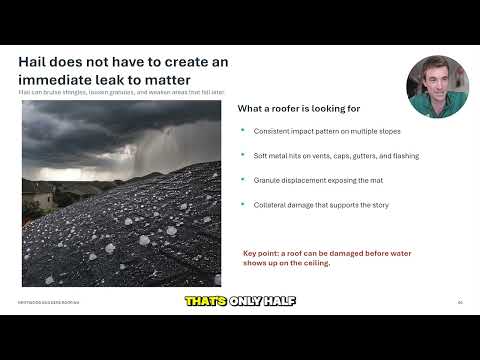
Hail damage is another major factor affecting roof lifespan in Austin. Many homeowners assume hail only matters when it creates obvious leaks or qualifies for an insurance claim. In reality, smaller hail events can create cumulative damage over time. Quarter-inch, half-inch, and three-quarter-inch hail may not immediately destroy a roof, but repeated impacts year after year gradually weaken shingles and reduce their useful life.
When professional roof inspectors evaluate storm damage, they look for consistent impact patterns across multiple roof slopes, dents on metal roof components, granule displacement, damaged flashing, vent cap impacts, and other indicators that help determine whether hail damage is present.
Ventilation is another critical but often overlooked factor. A properly ventilated attic allows heat and moisture to move through the roofing system efficiently. Poor ventilation can trap excessive heat inside the attic, creating higher temperatures that accelerate roof aging. It can also allow moisture to become trapped beneath the roof deck, potentially leading to mold growth, rotted decking, blistering shingles, and premature roof failure.
This is why installation quality is often more important than the specific shingle brand chosen.
At Driftwood Builders Roofing, we regularly explain to homeowners that a properly installed roof will usually outperform a poorly installed roof regardless of whether the shingles come from GAF, TAMKO, or another major manufacturer.
Proper installation starts with a complete tear-off of old roofing materials when appropriate. It includes inspecting the roof decking, replacing rotted wood, installing synthetic underlayment, adding ice and water shield in vulnerable areas such as valleys, installing proper drip edge protection, and ensuring flashing details are completed correctly around chimneys, walls, skylights, and roof penetrations.
If you're unsure about the condition of your roof, a professional inspection can help identify potential issues before they become costly repairs and provide a realistic assessment of your roof's remaining lifespan.
Driftwood Builders Roofing is located in Manchaca, Texas and proudly serves Austin, Westlake, Tarrytown, Cedar Park, Round Rock, Buda, Kyle, Dripping Springs, Lakeway, and surrounding Central Texas communities. @driftwoodbuilders2592
Website:
https://driftwoodbuildersroofing.com/
#roofing #asphaltshingles #roofreplacement #roofrepair #roofinspection #homeimprovement #austintexas #haildamage #roofmaintenance #contractortips #roofingcontractor #shingleroof #stormdamage #homeownertips #driftwoodbuildersroofing #austintxroofing

Why Cleaning Roof Valleys Matters | Austin, TX Roofing Maintenance Tips
Did you know that one of the most important areas of your roof is also one of the most overlooked?
In this video, Nick Riley from Driftwood Builders Roofing explains why roof valleys play such a critical role in protecting your home and why keeping them free of leaves, debris, and buildup can help prevent costly roofing problems.
A roof valley is the area where two roof slopes meet, creating a natural channel that directs rainwater off the roof and into the gutter system. During heavy rainstorms in Austin and Central Texas, roof valleys handle a significant amount of water flow. Because of this, valleys are often one of the most vulnerable parts of a roofing system.
That's why professional roofing contractors install additional protection in these areas. At Driftwood Builders Roofing, we install Ice & Water Shield in roof valleys to provide an extra layer of waterproof protection. This specialized roofing material helps protect the decking underneath from water intrusion and moisture damage.
However, even the best roofing materials can be challenged when debris begins to accumulate.
Leaves, sticks, pine needles, and other debris can collect in roof valleys over time. When this buildup becomes excessive, it can slow the flow of water and create areas where water sits instead of draining properly. Standing water increases the risk of leaks, moisture intrusion, premature shingle deterioration, and damage to the underlying roofing structure.
In this video, you'll learn:
✔ What a roof valley is
✔ Why roof valleys are important
✔ How rainwater flows through roof valleys
✔ What Ice & Water Shield does
✔ Why debris buildup can become a problem
✔ How clogged valleys can contribute to roof leaks
✔ Simple roof maintenance tips for homeowners
Regular roof maintenance is one of the easiest ways to extend the life of your roof. By periodically checking your roof valleys and keeping them clear of leaves and debris, you can help water flow safely off your roof and reduce the likelihood of future roofing issues.
Homeowners should also inspect their roofs after major storms, especially in Austin, Texas, where strong winds, hail, and heavy rain can quickly deposit debris onto roofing systems. Early detection and routine maintenance often prevent small problems from becoming expensive repairs.
At Driftwood Builders Roofing, we believe homeowner education is one of the most valuable services we provide. Whether you need a roof inspection, roof repair, roof replacement, storm damage assessment, or simply want professional advice about maintaining your roof, our team is here to help.
We proudly serve homeowners throughout Austin, Westlake, Tarrytown, Lakeway, Bee Cave, Dripping Springs, Cedar Park, Round Rock, Georgetown, and surrounding Central Texas communities.
Full Video:
https://www.youtube.com/watch?v=Hm6PI0MiLAc
Website:
https://driftwoodbuildersroofing.com/
Subscribe for more roofing tips, roof maintenance advice, storm damage education, and homeowner resources from Austin's trusted roofing professionals.
#AustinTX #RoofMaintenance #RoofValley #DriftwoodBuildersRoofing #RoofingTips

6 Ways Austin Homeowners Can Make Their Roof Last Longer | Austin, TX Roofing Tips
What can homeowners do to make their roof last longer?
It's one of the most common questions we hear at Driftwood Builders Roofing, and the good news is that a few simple maintenance habits can significantly extend the life of your roof and help you avoid costly repairs down the road.
In this video, Nick Riley from Driftwood Builders Roofing shares six practical roofing tips for Austin, Texas homeowners who want to maximize the lifespan of their roofing system.
Many people assume a roof will either last or fail based solely on the shingles that were installed. In reality, regular inspections, preventative maintenance, and addressing small issues before they become major problems can make a huge difference in how long your roof performs.
Here are six ways to help your roof last longer:
1️⃣ Inspect your roof after major hail or wind events. Central Texas weather can be unpredictable, and severe storms can damage shingles, flashing, gutters, and other roofing components. Identifying damage early can help prevent leaks and expensive structural repairs.
2️⃣ Keep valleys and gutters clear of leaves and debris. Roof valleys are designed to channel large amounts of water off your roof. When debris accumulates, water can back up and increase the risk of leaks, moisture intrusion, and premature roof deterioration.
3️⃣ Trim overhanging tree branches whenever possible. Tree limbs rubbing against shingles can wear away protective granules over time. Branches can also break during storms and cause significant roof damage.
4️⃣ Address small repairs before they become major leaks. A missing shingle, damaged flashing, or minor leak may seem insignificant today, but delaying repairs often leads to larger and more expensive roofing problems later.
5️⃣ Ask for photo documentation during inspections. Quality roofing contractors should provide clear photos and explanations of any issues they find. Documentation helps homeowners make informed decisions and better understand the condition of their roof.
6️⃣ Get an honest assessment based on your actual roof, not just a sales presentation. Every roof is different. A trustworthy roofing company will evaluate the condition of your roof and recommend repairs or replacement based on what your home truly needs.
At Driftwood Builders Roofing, we believe education is one of the most important services we provide. Whether your roof is brand new or approaching the end of its lifespan, routine maintenance and regular inspections can help protect your investment and extend the life of your roofing system.
If you're concerned about storm damage, aging shingles, clogged gutters, roof leaks, ventilation issues, or general roof maintenance, our team is happy to provide a professional inspection and honest recommendations.
Driftwood Builders Roofing proudly serves Austin, Texas and surrounding Central Texas communities, including Westlake, Tarrytown, Bee Cave, Lakeway, Cedar Park, Round Rock, Georgetown, Dripping Springs, and beyond.
Full video link:
https://www.youtube.com/watch?v=Hm6PI0MiLAc
Website:
https://driftwoodbuildersroofing.com/
Watch more roofing tips, roof maintenance advice, and homeowner education videos on our channel.
#AustinTX #RoofMaintenance #RoofInspection #DriftwoodBuildersRoofing #RoofingTips

Why Is My Roof Leaking Around the Chimney? | Tarrytown Roof Leak Inspection
A roof leak around a chimney can be difficult to diagnose without proper testing. In this video, Nick Riley from Driftwood Builders Roofing investigates a roof leak at a home in Tarrytown, Austin, TX, where water was making its way into the home through the fireplace chimney area.
When roof leaks occur around chimneys, there are typically a few common causes. In this case, the leak appeared to be coming from either wind-driven rain entering through a vulnerable area around the chimney flashing or from cracked and deteriorated sealant that was no longer providing a watertight barrier.
To identify the exact source of the leak, Nick performed a controlled water test. While the homeowner monitored the interior of the home, water was applied to the suspected problem area on the roof. After testing, the homeowner confirmed that water began leaking into the chimney area, helping verify the source of the problem.
The inspection revealed that the deteriorated sealant around the chimney flashing was allowing water intrusion during rainstorms. Over time, sealants can crack, shrink, and lose adhesion due to Austin’s intense heat, UV exposure, storms, and changing weather conditions. Even a small failure in the sealant can create a pathway for water to enter the roofing system and eventually reach ceilings, walls, or fireplaces inside the home.
Roof leaks rarely fix themselves and often become more expensive when left unaddressed. Early diagnosis can help homeowners avoid costly repairs, water damage, mold growth, and structural deterioration. That's why regular roof inspections and prompt repairs are important, especially after severe weather events.
At Driftwood Builders Roofing, we help Austin homeowners identify roof leaks, inspect chimney flashing, repair damaged roofing components, and provide honest recommendations based on the actual condition of the roof.
If your roof is leaking around a chimney, fireplace, skylight, vent, or other roof penetration, professional testing and inspection can help pinpoint the problem before it causes more damage.
Watch the full video to see how this chimney leak was diagnosed and why proper flashing and sealant maintenance are critical to protecting your home.
📍 Tarrytown, Austin, TX
🌐 https://driftwoodbuildersroofing.com/
#AustinRoofing #TarrytownTX #RoofLeakRepair #ChimneyLeak #RoofInspection #DriftwoodBuildersRoofing

How to Spot Hail Damage on Your Roof in Austin, TX | Simple Chalk Test Explained
After a hailstorm, many homeowners wonder whether their roof has suffered damage. While some signs of hail damage are obvious, others can be surprisingly difficult to spot without the right inspection techniques. In this video, Nick Riley from Driftwood Builders Roofing demonstrates a simple but effective method professional roofers use to identify hail damage on metal roofing components: the chalk test.
During this roof inspection in Tarrytown, Austin, TX, Nick examines several metal surfaces that may have been impacted by hail. On some roofing components, hail dents are easy to see with the naked eye. However, flat metal surfaces often make hail damage much harder to identify because the dents can be shallow and blend into the surrounding material.
To help reveal hidden hail strikes, roofers often rub chalk across the metal surface. In theory, a perfectly flat piece of metal should accept the chalk evenly across the entire area. However, when hail impacts create small dents or depressions, the chalk highlights those imperfections. As the chalk is applied, circular patterns begin to appear where hailstones struck the metal.
This technique helps roofing professionals identify storm damage that may otherwise go unnoticed. In the video, Nick demonstrates how multiple hail impact marks become visible after chalk is applied, making it much easier to document and evaluate the extent of the damage.
Metal roof accessories such as vents, flashing, drip edge, chimney caps, and other exposed metal components often provide some of the clearest evidence of hail activity. Because hail can leave visible impact marks on these surfaces, they are commonly inspected during storm damage evaluations. Roofing contractors use this information alongside other indicators, including shingle damage, granule loss, soft metal impacts, and collateral storm damage throughout the property.
It's important to remember that not every dent automatically qualifies for an insurance claim. The severity, size, location, and overall impact of the hail event must be considered. That's why a professional roof inspection is often the best way to determine whether your roof has experienced functional damage that requires repair or replacement.
If your home has recently been through a hailstorm, windstorm, or severe weather event, a professional inspection can help identify potential issues before they become expensive leaks or structural problems.
At Driftwood Builders Roofing, we provide detailed roof inspections, photo documentation, storm damage assessments, hail damage evaluations, roof repairs, and roof replacements throughout Austin and the surrounding communities. @driftwoodbuilders2592
📍 Tarrytown, Austin, TX
🌐 https://driftwoodbuildersroofing.com/
#austinroofing #tarrytowntx #haildamage #roofinspection #stormdamagerepair #driftwoodbuildersroofing #roofingtips #roofrepair #roofingcontractor #metalroof #hailstorm #homemaintenance #roofreplacement #roofdamage #roofexpert #roofingcompany #homeimprovement

GAF vs TAMKO Shingles: Which Roof Is Better? | Austin, TX Roofing Expert
When homeowners in Austin, Texas, are planning a roof replacement, one of the most common questions we hear is: "What's the difference between GAF and TAMKO shingles?"
In this video, Nick Riley from Driftwood Builders Roofing shares an honest comparison between two of the most popular asphalt shingle manufacturers in the roofing industry: GAF and TAMKO. While many roofing companies focus heavily on brand names, the reality is that proper installation matters far more than the specific shingle manufacturer you choose.
Nick explains the comparison using a simple analogy: GAF vs TAMKO is a lot like Coca-Cola vs Pepsi. Everyone has a preference, but both are proven products that can perform well when installed correctly. At Driftwood Builders Roofing, we are proud to install GAF roofing systems, but we also recognize that TAMKO shingles can be a quality option when paired with excellent workmanship.
The biggest factor that determines the lifespan and performance of your roof is not the logo printed on the shingle wrapper: it's the quality of the roofing contractor and the installation process.
In this video, you'll learn:
✔ The differences between GAF and TAMKO shingles
✔ Why installation quality matters more than shingle brand
✔ What homeowners should look for during a roof replacement
✔ Why a complete tear-off is often better than roofing over existing problems
✔ The importance of inspecting roof decking during installation
✔ Why underlayment, flashing, starter shingles, ridge caps, and ventilation matter
✔ How proper workmanship can add years to the life of your roof
A quality roof replacement should include:
• Complete removal of old roofing materials
• Inspection and replacement of any rotted decking
• High-quality synthetic underlayment
• Proper flashing installation around roof penetrations and walls
• Starter shingles along eaves and rakes
• Correct ridge vent and attic ventilation systems
• Detailed documentation and photo updates throughout the project
At Driftwood Builders Roofing, we believe homeowners deserve honest advice instead of sales pressure. Sometimes that means recommending repairs. Other times it means recommending a full roof replacement. Our goal is to help homeowners make informed decisions based on the condition of their roof, not simply on marketing materials or shingle brochures.
Whether you're comparing GAF shingles, TAMKO shingles, Owens Corning shingles, CertainTeed shingles, or other roofing products, remember that the roofing contractor you choose will often have a bigger impact on your roof's performance than the shingle brand itself.
If you're located in Austin, Westlake, Tarrytown, Cedar Park, Round Rock, Georgetown, Lakeway, Dripping Springs, Bee Cave, or anywhere in Central Texas and would like a professional roof inspection, contact Driftwood Builders Roofing today.
Full Video:
https://www.youtube.com/watch?v=Hm6PI0MiLAc
Website:
https://driftwoodbuildersroofing.com/
Watch more roofing tips and homeowner education videos on our channel.
#AustinTX #RoofReplacement #GAFShingles #TAMKOShingles #DriftwoodBuildersRoofing
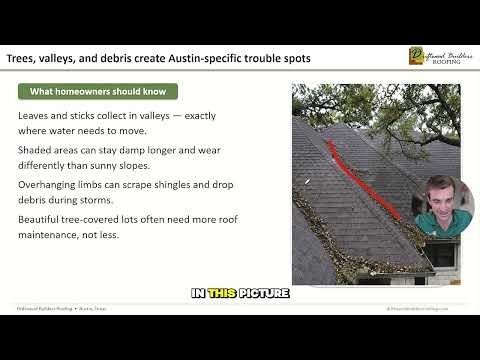
GAF vs TAMKO Shingles: Which Is Better? | Austin, TX Roofing Expert Explains
If you're planning a roof replacement, you've probably wondered: **Which shingles are better: GAF or TAMKO?**
The truth is that while homeowners often spend a lot of time comparing shingle brands, the quality of the roof installation is usually far more important than the specific shingle manufacturer.
In this video, Nick Riley from Driftwood Builders Roofing explains the differences between GAF and TAMKO shingles, why installation quality matters more than brand selection, and what Austin, TX homeowners should focus on when hiring a roofing contractor.
You'll learn:
✅ The differences between GAF and TAMKO shingles
✅ Why shingle brand isn't the most important factor in roof performance
✅ How poor installation can cause roof failures even with premium shingles
✅ What a full roof tear-off should include
✅ Why decking inspections matter during a roof replacement
✅ The importance of quality underlayment, flashing, starter shingles, ridge installation, and ventilation
✅ How proper installation can help your roof last longer in Austin's climate
At Driftwood Builders Roofing, we're proud to be a **GAF Master Elite® Certified Roofing Contractor**, but we also believe in giving homeowners honest information. While we prefer GAF products and use them on many of our projects, the reality is that both GAF and TAMKO manufacture quality roofing materials.
A good roof isn't just about the shingles you choose: it's about the complete roofing system and the craftsmanship behind the installation.
When evaluating roofing contractors, homeowners should focus on:
✔ Complete roof tear-off instead of roofing over existing problems
✔ Thorough decking inspection and replacement of rotted wood when needed
✔ High-quality synthetic underlayment
✔ Proper flashing installation around chimneys, walls, skylights, and roof penetrations
✔ Correct starter shingle installation
✔ Proper ridge cap installation
✔ Balanced attic ventilation
✔ Detailed written scope of work with clear documentation
Another important tip for Austin, TX homeowners is keeping roof valleys clean. Roof valleys are designed to direct large amounts of rainwater safely toward your gutters. When leaves, sticks, and debris build up in valleys, water flow can be restricted, increasing the risk of leaks and premature roof wear.
To help your roof last longer:
• Inspect your roof after major hailstorms and wind events
• Keep gutters and valleys free of leaves and debris
• Trim tree branches hanging over your roof
• Address small roof repairs before they become larger problems
• Request photo documentation during inspections
• Seek professional roofing advice based on your roof's condition, not just marketing materials
Driftwood Builders Roofing proudly serves homeowners throughout Austin, TX, Westlake, TX, Bee Cave, Lakeway, Cedar Park, Round Rock, Georgetown, Pflugerville, Dripping Springs, and the surrounding Central Texas area.
Our services include:
✔ Roof Replacements
✔ Roof Repairs
✔ Hail Damage Inspections
✔ Storm Damage Restoration
✔ Insurance Claim Assistance
✔ Asphalt Shingle Roofing
✔ Metal Roofing
✔ Tile Roofing
✔ Commercial Roofing
Learn more about our roofing services:
https://driftwoodbuildersroofing.com/
If you're considering a roof replacement and have questions about GAF shingles, TAMKO shingles, roofing warranties, installation quality, or roofing costs in Austin, Texas, contact Driftwood Builders Roofing for a free inspection and consultation. @driftwoodbuilders2592
#austintx #austinroofing #gafshingles #tamkoshingles #roofreplacement #roofingcontractor #driftwoodbuildersroofing #roofinstallation #roofrepair #austinroofer #centraltexasroofing #roofingtips #homeimprovement #westlaketx #gafmasterelite

How to Tell If Your Roof Has Rotted Decking | Austin, TX Roofing Inspection Tips
How do roofers know if there's rotted decking underneath a roof?
In this video, Nick Riley from Driftwood Builders Roofing explains one of the warning signs that may indicate rotted roof decking beneath your shingles. While the only way to fully confirm damaged decking is by removing the roofing materials, there are certain signs experienced roofers look for during a roof inspection.
On this older roof in Austin, TX, sections of the roof felt significantly weaker underfoot, causing noticeable sagging and movement when walked on. These soft spots are often a sign that the plywood decking beneath the shingles has deteriorated due to long-term moisture exposure.
In this video you'll learn:
✅ What roof decking is
✅ How roofers identify potential rotted decking
✅ Why soft spots on a roof are a warning sign
✅ Common causes of roof decking deterioration
✅ When roof repairs may no longer be enough
✅ Signs your roof may need replacement
If your roof feels soft, sagging, or has experienced long-term leaks, it's important to schedule a professional inspection before the damage becomes more severe.
Driftwood Builders Roofing provides roof inspections, roof repairs, roof replacements, storm damage assessments, and preventative maintenance services throughout Austin, TX, Westlake, TX, and surrounding Central Texas communities.
Learn more about our roofing services:
https://driftwoodbuildersroofing.com/
If you're concerned about the condition of your roof decking or need a professional roof inspection in Austin, TX, leave a comment below or contact our team.
#AustinTXRoofing #RoofInspection #RottedDecking #RoofReplacement #RoofRepair #AustinTexas #DriftwoodBuildersRoofing #NickRiley #RoofingContractor #HomeMaintenance

What Is Roof Underlayment? | Austin Roofer Explains Why It's Important
What is roof underlayment, and why is it so important?
In this video, Nick Riley from Driftwood Builders Roofing explains one of the most important components of a roofing system: underlayment.
Many homeowners only see the shingles on top of their roof, but underneath those shingles is a critical protective layer designed to help prevent water intrusion and protect the roof deck from damage.
In This Video You'll Learn:
✅ What roof underlayment is
✅ Where underlayment is installed
✅ How underlayment protects your home
✅ Why it's an essential part of a roofing system
✅ What happens if shingles are damaged during storms
✅ The role underlayment plays in preventing leaks
A roofing system is made up of multiple layers. The roof deck forms the foundation, shingles provide the first line of defence, and underlayment serves as an additional barrier against moisture and weather-related damage.
If strong winds, hail, or storm damage compromise the shingles, the underlayment helps provide extra protection for the structure underneath.
Driftwood Builders Roofing provides roof inspections, roof repairs, roof replacements, storm damage assessments, and roofing consultations throughout Austin, TX and surrounding Central Texas communities.
🌐 Website: https://driftwoodbuildersroofing.com/
📍 Serving Austin, TX, Westlake, Lake Travis, Marble Falls, and surrounding Central Texas areas.
👍 Subscribe for roofing tips, homeowner education, roof replacement insights, and real roofing project walkthroughs.

What Happens During a Roof Inspection? Austin, TX Roofer Shows the Full Process
Wondering what actually happens during a professional roof inspection in Austin, TX?
In this video, Nick Riley from Driftwood Builders Roofing walks through a real roof inspection on a home in Austin, TX. From checking for rotted roof decking and damaged shingles to looking for animal damage, flashing issues, algae staining, and signs of roof aging, you'll see exactly what roofing contractors look for when evaluating a roof.
🌐 Website: https://driftwoodbuildersroofing.com/
Many homeowners know they need a roof inspection, but they don't know what roofers actually inspect once they're on the roof. This behind-the-scenes look shows the process used by professional roofing contractors to identify potential problems and determine whether a roof needs repairs or replacement.
In this video you'll learn:
✅ What happens during a professional roof inspection
✅ How roofers identify rotted roof decking
✅ Signs of aging asphalt shingles
✅ How animal damage can affect your roof
✅ What roof flashing inspectors look for
✅ How roofers check for hail damage and storm damage
✅ Common roofing problems found during inspections
✅ When a roof repair may be enough and when a roof replacement may be recommended
During this inspection, Nick Riley evaluates several roofing concerns including missing shingles, worn ridge caps, algae staining, potential animal damage, deteriorated flashing, and roof decking issues. He also discusses how factors like the age of the roof and a pending home sale can influence repair versus replacement recommendations.
If you're buying, selling, or maintaining a home in Austin, TX, a professional roof inspection can help identify problems before they become expensive repairs.
Driftwood Builders Roofing provides roof inspections, roof repairs, roof replacements, hail damage assessments, and roofing consultations throughout Austin, TX, Westlake, TX, and surrounding Central Texas communities.
📍 Serving Austin, TX, Westlake, TX, and surrounding areas.
👍 Like, Subscribe, and Share for more roofing tips, roof inspections, roof repair advice, and homeowner education. @driftwoodbuilders2592
#austintxroofing #roofinspection #austinroofing #roofrepair #driftwoodbuildersroofing #roofreplacement #roofingcontractor #homeinspection #roofmaintenance #austintexas #roofinspection #asphaltshingles #roofdamage #raccoondamage #texasroofing #homeimprovement #roofingtips #stormdamage #shrifffordbuilders
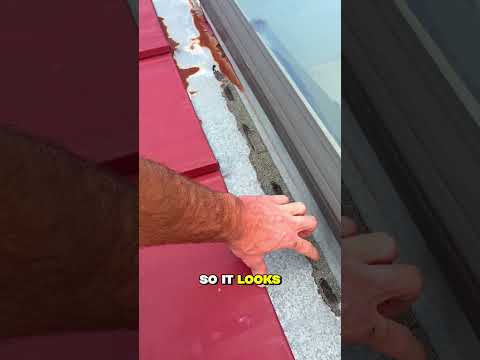
Why Is My Ceiling Leaking Around a Skylight? | Austin, TX Roofing Tips
Why is my ceiling leaking around a skylight? If you've noticed water stains on your ceiling, dripping water during rainstorms, or moisture around a skylight, you're not alone. This is one of the most common roofing problems homeowners face in Austin, TX.
In this video, **Nick Riley with Driftwood Builders Roofing** investigates a ceiling leak that appears near a skylight and explains what is actually causing the problem. Many homeowners assume a leaking skylight means the skylight itself has failed, but that's not always the case. In many situations, the surrounding roofing materials, flashing, drainage systems, or aging components of the roof can allow water to collect and eventually enter the home.
During this inspection, Nick traces the source of the leak and shows how water is collecting in an area of the roof before making its way into the home. What starts as a small roofing issue can quickly become a larger problem if left untreated, leading to damaged drywall, stained ceilings, mold growth, wood rot, and costly repairs.
If you're searching for answers to questions like:
• Why is my ceiling leaking when it rains?
• Why is my skylight leaking?
• How do roofers find the source of a roof leak?
• What causes water stains on ceilings?
• Can an old roof cause a skylight leak?
• How much does roof leak repair cost in Austin, TX?
• Do I need a roof repair or a roof replacement?
This video will help you better understand the problem and what steps may be needed to fix it.
A leaking ceiling is often a symptom of a larger roofing issue. Water can travel a surprising distance before becoming visible inside your home, which is why professional roof inspections are so important. Identifying the true source of a leak requires experience, proper inspection techniques, and an understanding of how roofing systems shed water.
At Driftwood Builders Roofing, we help homeowners throughout Austin, TX, Westlake, TX, Tarrytown, Barton Hills, Zilker, South Austin, and surrounding Central Texas communities diagnose and repair roof leaks before they turn into major problems.
Whether your home has an asphalt shingle roof, metal roof, tile roof, or another roofing system, our team can provide professional roof inspections, roof repairs, leak detection services, roof replacements, storm damage assessments, and preventative maintenance solutions.
Our roofing services include:
✅ Roof Leak Detection
✅ Roof Repair
✅ Skylight Leak Repair
✅ Asphalt Shingle Roofing
✅ Metal Roofing
✅ Tile Roofing
✅ Storm Damage Inspections
✅ Hail Damage Assessments
✅ Roof Replacements
✅ Preventative Roof Maintenance
✅ Insurance Claim Assistance
If you believe your roof may be leaking, don't wait until the damage becomes worse. Early detection can help protect your home and save thousands of dollars in future repair costs.
Learn more about our roofing services:
[https://driftwoodbuildersroofing.com/](https://driftwoodbuildersroofing.com/)
Driftwood Builders Roofing proudly serves homeowners throughout Austin, TX, Westlake, TX, and the greater Central Texas area.
If you found this video helpful, be sure to Like, Subscribe, and Share for more roofing tips, roof repair advice, homeowner education, and roofing insights from Austin, TX roofing professionals.
#AustinTX #AustinRoofing #RoofLeak #CeilingLeak #SkylightLeak #RoofRepair #RoofInspection #DriftwoodBuildersRoofing #WestlakeTX #AustinTexas

Asphalt shingles, metal, or clay tile? Each roofing type has differen... #Shorts
Asphalt shingles, metal, or clay tile?
Each roofing type has different costs, durability, and lifespan. Choose one based on your goals and budget.
Full video:
https://www.youtube.com/watch?v=0Py3pa8s55c
https://driftwoodbuildersroofing.com/
Austin, TX

Why Is My Tile Roof Leaking? Austin, TX Roofer Explains a Common Roof Leak Cause
Is your tile roof leaking? In this video, Nick Riley from Driftwood Builders Roofing explains a real roof leak inspection in Westlake, TX and shows one of the most common reasons tile roofs develop leaks.
Many homeowners assume roof leaks are caused by storm damage, but in this case the problem was improperly fastened roof tiles that allowed water to reach the roof decking underneath. Learn how roofing professionals diagnose leaks and what repairs may be needed to prevent further water damage.
🌐 Website: https://driftwoodbuildersroofing.com/
In this video you'll learn:
- Why tile roofs leak
- How loose or improperly installed roof tiles cause water intrusion
- Signs your ceiling leak may be coming from the roof
- What roof decking damage looks like
- How roofing contractors inspect tile roof leaks
- When roof repairs are needed vs. full roof replacement
- What homeowners in Austin, TX and Westlake, TX should know about tile roof maintenance
If you're dealing with a roof leak in Austin, TX, Westlake, TX, or the surrounding areas, it's important to identify the source of the leak before it causes additional damage to your home's structure and interior.
Driftwood Builders Roofing has helped homeowners throughout Austin, TX diagnose roof leaks, repair damaged roofing systems, and extend the life of their roofs through professional inspections and repairs.
Whether you own a tile roof, asphalt shingle roof, metal roof, or another roofing system, understanding why your roof is leaking can help you make better repair decisions and avoid costly damage.
📍 Serving Austin, TX, Westlake, TX, and surrounding Central Texas communities.

What affects the cost of a new roof? Roof size, pitch, complexity, ma... #Shorts
What affects the cost of a new roof?
Roof size, pitch, complexity, materials, and underlying repairs can all impact pricing.
Full video:
https://www.youtube.com/watch?v=0Py3pa8s55c
https://driftwoodbuildersroofing.com/
Westlake, TX

How is a roof replacement priced? Roof size, waste factor, roofing ma... #Shorts
How is a roof replacement priced?
Roof size, waste factor, roofing material, and repair needs all impact the final cost.
Full video:
https://www.youtube.com/watch?v=0Py3pa8s55c
https://driftwoodbuildersroofing.com/
Austin, TX

Repair or replace your roof? For newer roofs with minor issues, a rep...
Repair or replace your roof?
For newer roofs with minor issues, a repair is often the better investment. It can extend the life of your roof and help you avoid larger expenses down the road
Full video:
https://www.youtube.com/watch?v=BmGZZ8J0gQ0

Sometimes a roof replacement makes more sense than a repair. If your...
Sometimes a roof replacement makes more sense than a repair.
If your roof is older and failing in multiple areas, investing in a replacement can save money long-term.
Full video:
https://www.youtube.com/watch?v=BmGZZ8J0gQ0

When does a roof repair make sense? If your roof is relatively young...
When does a roof repair make sense?
If your roof is relatively young and the issue is limited to one area (like missing shingles or a damaged pipe jack) a repair is often the smartest option.
Full video:
https://www.youtube.com/watch?v=BmGZZ8J0gQ0

Hail falls in circles, not lines. Round dents on gutters may indicate... #Shorts
Hail falls in circles, not lines.
Round dents on gutters may indicate hail damage, while long scratches or bends are often caused by physical impact, not a storm.
Full video:
https://www.youtube.com/watch?v=Mvzv0lZVVlM
How Much Does a New Roof Cost in Austin, TX? Roof Replacement Cost Breakdown
How much does a new roof cost in Austin, TX?
In this video, Nick Riley from Driftwood Builders Roofing breaks down exactly how roofing contractors calculate roof replacement costs using real projects completed in Austin, TX and surrounding areas including Bastrop, Wimberley, and Westlake, TX.
You'll learn:
- How roof size affects pricing
- What roofing squares and waste factors mean
- How roof pitch impacts labor costs
- Real asphalt shingle roof replacement example
- Real metal roof replacement example
- How roofing estimates are calculated
- What to look for in a roofing proposal
- How to compare roofing contractors in Austin, TX
Whether you're looking for a roof replacement in Austin, TX, Westlake, TX, Wimberley, TX, Bastrop, TX, or the surrounding Central Texas area, this guide will help you understand the true cost of a new roof and avoid overpaying.
Learn more about Driftwood Builders Roofing:
https://driftwoodbuildersroofing.com/
Driftwood Builders Roofing proudly serves Austin, TX, Westlake, TX, Driftwood, TX, Wimberley, TX, Bastrop, TX, and surrounding communities.
Topics Covered:
- Roof replacement cost Austin TX
- New roof cost Austin TX
- Metal roof cost Austin TX
- Shingle roof cost Austin TX
- Roofing estimates Austin TX
- Residential roofing Austin TX
- Roofing contractor Austin TX
- Roof replacement pricing Texas
- Roofing inspections Austin TX

Not every mark on siding is hail damage. #Shorts
Not every mark on siding is hail damage.
Hail impacts are typically round, while aging and weathering create different patterns. Knowing the difference matters when assessing storm damage.
Full video:
https://www.youtube.com/watch?v=Mvzv0lZVVlM

Hail-damaged window screens often have round holes of similar size. #Shorts
Hail-damaged window screens often have round holes of similar size. These impact marks can be a strong indicator that your property was hit by hail.
Full video:
https://www.youtube.com/watch?v=Mvzv0lZVVlM
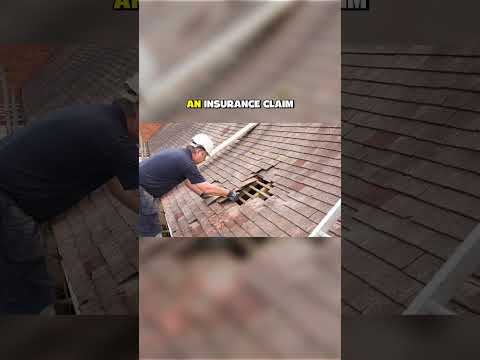
How does the insurance process work?
After a hailstorm, many homeowners ask: "How does the insurance process work?"
Start with a roof inspection, document the damage, file a claim, and meet with the insurance adjuster. Proper documentation can make a big difference.
Full video:
https://www.youtube.com/watch?v=jQ_aNpomUP8

After a hailstorm, check these 3 areas for signs of damage #Shorts
After a hailstorm, check these 3 areas for signs of damage:
- Gutters & downspouts
- Window screens
- Siding
These can help identify storm damage before a roof inspection.
Full video:
https://www.youtube.com/watch?v=Mvzv0lZVVlM

How to Spot Hail Damage on Your Roof in Austin, TX (Before Filing an Insurance Claim)
Wondering if your roof has hail damage after a recent storm in Austin, TX? Before filing an insurance claim, it's important to understand the signs of hail damage and how to identify potential problems on your roof, siding, gutters, vents, and other exterior surfaces.
In this video, **Nick Riley** from Driftwood Builders Roofing explains how homeowners in **Austin, TX**, **Westlake, TX**, and throughout Central Texas can spot hail damage, distinguish it from normal wear and tear, and determine when it's time to schedule a professional roof inspection.
You'll learn:
- How to identify hail damage from the ground
- Common signs of roof hail damage
- How hail affects siding, gutters, vents, and exterior surfaces
- The difference between hail damage and manufacturing defects
- When to contact a roofing contractor for an inspection
- Common mistakes homeowners make after a hailstorm
- What insurance adjusters look for during a hail damage inspection
- How to protect your home and avoid costly roofing issues
Hailstorms are common throughout **Austin, TX**, **Westlake, TX**, and surrounding Central Texas communities. Understanding the warning signs early can help homeowners make informed decisions and potentially avoid larger repair costs in the future.
If you suspect hail damage on your roof, siding, or gutters, it's important to have a qualified roofing professional perform a thorough inspection and provide documentation before moving forward with an insurance claim.
Driftwood Builders Roofing has been helping homeowners throughout **Austin, TX**, **Westlake, TX**, and the surrounding area with roof inspections, roof repairs, storm damage assessments, and roof replacements for over 20 years.
For more information or to schedule an inspection, visit:
- https://driftwoodbuildersroofing.com/

Wear and tear is a bigger deal than most homeowners realize. #Shorts
🏠 Wear and tear is a bigger deal than most homeowners realize.
After a hailstorm, many people assume insurance will automatically pay for a new roof. But if your roof is older and already has significant wear and tear, your claim may face additional scrutiny.
Think of it like bald tires on a car: age and condition matter.
That's why regular roof inspections and proper maintenance are so important before severe weather strikes.
🎥 Watch the full video:
https://www.youtube.com/watch?v=jQ_aNpomUP8
Have questions about hail damage or roof insurance claims? Driftwood Builders Roofing is here to help.

Roof Repair vs Roof Replacement: Which One Saves You More Money? | Driftwood Builders Roofing
Are you wondering whether you should repair your roof or replace it completely? In this video, we break down the key factors homeowners should consider before making an expensive roofing decision.
You'll learn:
✅ How roof age affects repair vs replacement decisions
✅ When roof damage can be repaired
✅ Signs your roof may need full replacement
✅ How to avoid overspending on roofing projects
✅ Questions every homeowner should ask their roofing contractor
✅ Why documentation and inspections matter
Choosing between roof repair and roof replacement can save or cost you thousands of dollars. Watch until the end to discover the 5 most important factors that determine the right choice for your home.
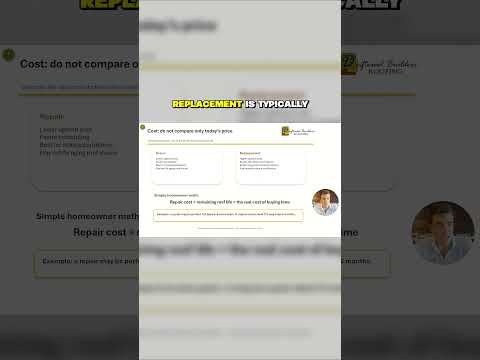
How much does a roof cost? Repair vs Replacement Cost: Which Is the Better Investment? Austin, TX
When it comes to your roof, one of the biggest questions homeowners ask is: “Should I repair my roof or replace it?”
Whether you are repairing or replacing your roof, it is a major investment decision. For most homeowners, their house is their biggest asset, so protecting that asset with the right roofing decision matters.
In this video, we talk about the cost difference between roof repairs and roof replacements, and why timing is one of the biggest factors.
If your roof is newer and only has a few small issues, a roof repair may be the better investment. A targeted repair can extend the life of the roof and help you avoid paying for a full roof replacement too early.
However, if your roof is older and nearing the end of its useful life, a full roof replacement often makes more long-term financial sense. Instead of paying for an expensive repair now and then paying for a full replacement a few years later, replacing the roof once can give you peace of mind for the next 15 to 20 years.
The cost of both roof repairs and roof replacements tends to go up over time, so homeowners should think carefully about whether a short-term repair or a long-term replacement is the better investment.
At Driftwood Builders Roofing, we help Austin homeowners understand their options, compare repair vs. replacement costs, and make the best decision for their home.
Topics covered:
Roof repair vs. roof replacement cost
Cost to replace roof in Austin, TX
When roof repair is the better investment
When roof replacement is the better investment
Why roof age matters
How long a roof replacement lasts
Why delaying roof replacement can cost more over time
How to protect your home’s value with the right roofing decision
If you are comparing the cost to repair your roof versus the cost to replace your roof in Austin, TX, contact Driftwood Builders Roofing for a professional roof inspection.
Driftwood Builders Roofing
Austin, TX Roofing Contractor
Roof Repair | Roof Replacement | Roof Inspections | Storm Damage Repair | Insurance Claim Assistance

When Does Roof Replacement Make More Sense Than Roof Repair?
Sometimes a roof repair makes sense. Other times, a full roof replacement is the smarter long-term investment.
A roof replacement usually makes more sense when the roof is older, nearing the end of its useful life, and the damage is showing up in multiple areas. At that point, repairs can become expensive, and the homeowner may end up spending thousands of dollars now just to replace the roof a few years later.
In this video, we explain when roof replacement may be a better option than repair and share a real example from a South Austin homeowner.
Recently, we inspected a 22-year-old roof in South Austin that was failing in multiple areas. The repair estimate came out to about $8,000, while a full roof replacement was about $12,000.
In that situation, we recommended replacement because the homeowner would have been spending $8,000 on repairs for a roof that was already near the end of its life. A few years later, they likely would have needed a full replacement anyway, potentially at an even higher cost.
Instead, the customer chose to replace the roof, giving them a new roofing system and peace of mind for the next 20 years.
At Driftwood Builders Roofing, our goal is to give honest guidance. If a repair makes sense, we’ll tell you. If replacement is the better long-term decision, we’ll explain why.
Topics covered:
Roof repair vs. roof replacement
When roof replacement makes more sense
How roof age affects repair decisions
Why multiple roof leaks can make repairs expensive
When an old roof should be replaced
South Austin roof replacement example
How to avoid wasting money on temporary roof repairs
If you’re not sure whether your roof needs a repair or full replacement, contact Driftwood Builders Roofing for a professional roof inspection in Austin, TX.
Driftwood Builders Roofing
Austin, TX Roofing Contractor
Roof Repair | Roof Replacement | Roof Inspections | Storm Damage Repair | Insurance Claim Assistance

When Does a Roof Repair Make More Sense Than Roof Replacement? Austin, TX
One of the most common questions homeowners ask is: “Should I repair my roof or replace it?”
In many cases, a roof repair makes sense when the roof is still relatively young, performing well overall, and the damage is limited to one specific area.
Examples of roof issues that may be good candidates for repair include a few missing shingles, a small leak, a damaged pipe jack, minor flashing issues, or isolated storm damage.
The key is whether the rest of the roof is still in good condition. If the roof has plenty of useful life left, a targeted repair can help extend the life of the roof without the cost of a full roof replacement.
In this video, we explain when a roof repair usually makes sense, what types of roof problems can often be repaired, and when homeowners should start thinking about replacement instead.
At Driftwood Builders Roofing, we help Austin homeowners make honest, practical decisions about roof repair vs. roof replacement.
Topics covered:
When roof repair makes sense
Roof repair vs. roof replacement
Missing shingle repair
Pipe jack replacement
Small roof leak repair
How to extend the life of your roof
When isolated roof damage can be repaired
Roof inspections in Austin, TX
If you’re not sure whether your roof needs a repair or full replacement, contact Driftwood Builders Roofing for a professional roof inspection in Austin, TX.
Driftwood Builders Roofing
Austin, TX Roofing Contractor
Roof Repair | Roof Replacement | Roof Inspections | Storm Damage Repair | Insurance Claim Assistance

How Does the Roof Insurance Claim Process Work After Hail Damage? Austin, TX
After a hail storm hits, one of the most common questions homeowners ask is: “How does the roof insurance claim process work?”
The good news is that the process is usually pretty simple. In most cases, it follows a five-step process:
Step 1: Call a roofing contractor you trust
The first step is to have a roofing contractor inspect your roof for hail damage, wind damage, missing shingles, leaks, or other storm-related issues.
At Driftwood Builders Roofing, we take detailed photos and document everything we find. We highly recommend working with a roofer who uses strong documentation, because when it comes to insurance claims, you can never have too many photos. We use CompanyCam to organize photos, notes, and inspection findings so homeowners have a clear record of the roof damage.
Step 2: Prevent further damage if needed
If there is active leaking or immediate storm damage, the roofer may need to tarp the roof or make temporary repairs to help prevent further interior damage.
Step 3: File the insurance claim
After the inspection and documentation are complete, the homeowner can file a claim with their insurance company.
Step 4: Meet with the insurance adjuster
Once the claim is filed, the insurance company will usually schedule an adjuster to inspect the property. In many cases, your roofing contractor can meet the adjuster at the property to help point out areas of concern and provide documentation.
A good roofer should not pressure the adjuster or tell them how to do their job. The adjuster is the one responsible for making their own findings. The roofer’s role is to be helpful, organized, and make sure the adjuster has the information they need.
Step 5: The insurance company reviews the claim
After the adjuster completes the inspection, their findings are sent back to the insurance company. A desk adjuster or claims representative will usually review the documentation and make the final decision on whether the claim is approved, partially approved, or denied.
In this video, we walk through how the roof insurance claim process works after hail damage and what homeowners should expect from inspection to adjuster meeting to final claim decision.
At Driftwood Builders Roofing, we help Austin homeowners document roof damage, understand the insurance claim process, and make informed decisions after hail storms.
Topics covered:
How roof insurance claims work
What to do after hail damage
Why roof documentation matters
What a roofing contractor does during an insurance claim
What happens when the insurance adjuster comes out
Temporary roof tarping after storm damage
How insurance companies approve or deny roof claims
Roof inspections after hail storms in Austin, TX
If your roof was hit by hail or you think you may have storm damage, contact Driftwood Builders Roofing for a professional roof inspection in Austin, TX.
Driftwood Builders Roofing
Austin, TX Roofing Contractor
Roof Repair | Roof Replacement | Hail Damage Inspections | Storm Damage Repair | Insurance Claim Assistance

Will Insurance Cover an Older Roof With Hail Damage?
One important thing homeowners need to understand is that wear and tear matters when it comes to roof insurance claims.
If your roof is 20 years old, your insurance company may be much less likely to approve a full roof replacement than they would be for a newer roof that was damaged by hail.
That’s because insurance is designed to cover sudden storm damage, like hail or wind damage, not normal aging, deterioration, or long-term wear and tear.
In this video, we explain why the age and condition of your roof can impact your insurance claim, what adjusters typically look for, and why a professional roof inspection is important before filing a claim.
At Driftwood Builders Roofing, we help Austin homeowners understand the difference between storm damage and normal roof wear so they can make informed decisions after a hail storm.
Topics covered:
Does insurance cover old roofs?
How roof age affects insurance claims
Hail damage vs. normal wear and tear
Why a 20-year-old roof may be harder to get approved
What insurance adjusters look for after a storm
Roof inspections after hail damage in Austin, TX
If your roof was recently hit by hail, contact Driftwood Builders Roofing for a professional roof inspection in Austin, TX.
Driftwood Builders Roofing
Austin, TX Roofing Contractor
Roof Repair | Roof Replacement | Hail Damage Inspections | Storm Damage Repair | Insurance Claim Assistance

Will Insurance Pay for a New Roof After Hail Damage? Austin, TX Roofing Contractor Explains
After a big hail storm, one of the first questions homeowners ask is: “If hail damage is found on my roof, will insurance pay for a new roof?”
The answer is: most of the time, yes, but not always.
Every insurance company handles claims a little differently, and the outcome can depend on your specific policy, the amount of damage, the age of your roof, and even the adjuster assigned to your claim.
In this video, we explain what Austin homeowners need to know after a hail storm, how roof insurance claims typically work, and why a professional roof inspection can help you understand whether your roof damage may qualify for an insurance-covered replacement.
At Driftwood Builders Roofing, we’ve helped Austin homeowners navigate roof damage, hail claims, inspections, and roof replacements for over 20 years.
Topics covered:
Does insurance cover hail damage to your roof?
When will insurance pay for a roof replacement?
Why every insurance claim is different
What homeowners should do after a hail storm
Why roof inspections matter before filing a claim
If you think your roof may have hail damage, contact Driftwood Builders Roofing for a professional roof inspection in Austin, TX.
Driftwood Builders Roofing
Austin, TX Roofing Contractor
Roof Repair | Roof Replacement | Hail Damage Inspections | Insurance Claim Assistance

Does homeowners insurance cover roof replacement in Texas? Austin, TX professional roofer explains
Does homeowners insurance cover roof replacement in Texas? This is one of the most common questions Texas homeowners ask after hail, wind, severe storms, or roof leaks. The honest answer is: sometimes, but it depends on what caused the roof damage, what your policy says, the age and condition of your roof, your deductible, and whether your insurance policy pays based on Replacement Cost Value or Actual Cash Value.
In this video, Driftwood Builders Roofing explains how roof replacement insurance coverage typically works for homeowners in Texas. We cover what types of roof damage are commonly covered, what situations may not be covered, and what homeowners should understand before filing a claim.
Many Texas homeowners assume that if their roof is damaged, insurance will automatically pay for a full roof replacement. Unfortunately, it is not always that simple. Insurance companies usually look at whether the damage was caused by a covered event, such as hail, wind, falling debris, or a sudden storm-related leak. They may also consider whether the roof had pre-existing wear and tear, improper installation, manufacturer defects, old age, or maintenance issues.
If you live in Austin, Westlake, Tarrytown, Circle C, Kyle, Buda, Dripping Springs, Bee Cave, Lakeway, South Austin, or the surrounding Central Texas area, this video is designed to help you better understand the roof insurance claim process before you make a decision.
In this video, we discuss:
Does homeowners insurance cover roof replacement in Texas?
Does insurance cover hail damage to a roof?
Does insurance cover wind damage to shingles?
What happens if your roof is old?
What is the difference between storm damage and normal wear and tear?
Should you call a roofer or your insurance company first?
What is a wind and hail deductible?
What does 1% or 2% deductible mean in Texas?
What is Replacement Cost Value, or RCV?
What is Actual Cash Value, or ACV?
Why would insurance approve only part of a roof?
Can insurance deny a roof claim?
What should you do after a hailstorm in Austin?
How can a roofing contractor help document roof damage?
What should homeowners know before filing a claim?
At Driftwood Builders Roofing, we have served Austin-area homeowners for over 20 years. We help homeowners inspect their roofs, understand storm damage, review their options, and make informed decisions after hail, wind, leaks, and other roofing issues.
We are a locally owned roofing company serving Austin and the surrounding Central Texas communities. Our team works on asphalt shingle roofs, metal roofs, tile roofs, flat roofs, roof repairs, roof replacements, storm damage repairs, insurance-related roofing projects, siding, gutters, and exterior improvements.
One important thing to remember: a roofing contractor should not tell you that insurance will definitely cover your roof before your insurance company reviews the claim. A good roofing contractor can inspect the roof, document visible damage, take photos, explain what they are seeing, and help you understand whether it may be worth contacting your insurance company.
This video is meant to be educational and is not legal, insurance, or policy-specific advice. Every insurance policy is different, so homeowners should always review their own policy, understand their deductible, and speak directly with their insurance carrier or agent when making claim decisions.
Need help after a storm?
Contact Driftwood Builders Roofing if you have questions about possible hail damage, wind damage, roof leaks, missing shingles, damaged vents, damaged gutters, or whether your roof may need repair or replacement.
Learn more about Driftwood Builders Roofing:
https://driftwoodbuildersroofing.com/
Austin-area roofing services:
Roof replacement in Austin, TX
Roof repair in Austin, TX
Hail damage roof inspections
Wind damage roof repair
Insurance claim roofing assistance
Asphalt shingle roof replacement
Metal roofing
Tile roofing
Flat roofing
Storm damage repair
Gutter and exterior damage review
Siding and exterior improvements
Service areas:
Austin, Westlake, West Lake Hills, Tarrytown, Circle C, Shady Hollow, Kyle, Buda, Dripping Springs, Bee Cave, Lakeway, Steiner Ranch, Cedar Park, Leander, Round Rock, Georgetown, South Austin, Southwest Austin, and the surrounding Central Texas area.
Related questions homeowners ask:
Does homeowners insurance cover a new roof in Texas?
Will insurance pay for a roof replacement after hail damage?
Should I file a roof claim after a hailstorm?
Will my insurance go up if I file a roof claim?
How long do I have to file a hail claim in Texas?
Does insurance cover old roofs?
What does ACV mean for roof insurance?
What does RCV mean for roof insurance?
Can a roofer waive my deductible in Texas?
What does roof hail damage look like?
How do I know if my roof has storm damage?

Best Roofing Company in Austin, TX? | Why Homeowners Trust Driftwood Builders Roofing
What makes a roofing company truly stand out in a city like Austin, TX?
In this video, Nick and Nathan from Driftwood Builders Roofing explain what sets their company apart from other roofing contractors in the area, including industry certifications, long-term experience, and trusted local partnerships.
With over 20 years in business, Driftwood Builders Roofing has built a reputation based on quality workmanship, transparency, and reliability for homeowners across Central Texas.
They are also certified as a GAF Master Elite roofing contractor and a James Hardie siding certified contractor: credentials that reflect a high standard of professionalism and expertise.
🔍 In this video, you’ll learn:
What makes a top roofing company in Austin, TX
Why certifications like GAF Master Elite matter
The importance of experience in roofing
How long-term local partnerships build trust
Why homeowners choose Driftwood Builders Roofing
If you're looking for a trusted roofing contractor in Austin, TX, experience and certifications matter when protecting your home.
🌐 Website: https://driftwoodbuildersroofing.com/
📍 Serving Austin, TX & surrounding Central Texas areas

Why a Detailed Roofing Scope of Work Matters in Austin, TX | Transparent Roofing Process Explained
With hundreds of roofing companies in Austin, TX, choosing the right contractor can feel overwhelming, especially after a storm.
In this video, Nathan from Driftwood Builders Roofing explains why a detailed scope of work is essential when hiring a roofing contractor and how transparency can help homeowners make informed decisions.
A proper roofing estimate should include clear explanations, photos, and documentation of all materials and work involved so homeowners fully understand what is being done on their roof.
🔍 In this video, you’ll learn:
Why a detailed roofing scope of work matters
How transparent roofing estimates protect homeowners
What should be included in a professional roofing proposal
Why photos and documentation are important
How to choose the right roofing contractor in Austin, TX
At Driftwood Builders Roofing, we take time to educate every homeowner before any work begins, ensuring clarity, trust, and confidence in every project.
🌐 Website: https://driftwoodbuildersroofing.com/
📍 Serving Austin, TX & surrounding Central Texas areas

Will My Insurance Premium Go Up If I File a Roof Claim? | Austin TX Roofing Insurance Explained
Will filing a roof insurance claim increase your premium?
In this video, Nick from Driftwood Builders Roofing explains how roof insurance claims actually work in Austin, TX, and what really affects your insurance rates after storm or hail damage.
Many homeowners believe that filing a claim automatically raises their premiums, but the reality is more complex. Insurance adjustments are typically influenced by broader factors like neighborhood storm activity and regional risk, not just individual claims.
🔍 In this video, you’ll learn:
Whether roof insurance claims affect your premium
What actually influences insurance rate changes
How storm activity impacts your local area
Why filing a claim is not automatically a penalty
What Austin homeowners should understand about roof insurance
If your home has storm or hail damage in Austin, TX, it’s important to understand your insurance process before making decisions about repairs or replacement.
Driftwood Builders Roofing provides roof inspections, storm damage assessments, roof repairs, and roof replacements across Austin, TX and surrounding Central Texas areas.
🌐 Website: https://driftwoodbuildersroofing.com/
📍 Serving Austin, TX & surrounding areas

What Should Austin Homeowners Do After Storm Damage? | Free Roof Inspection Explained
Worried about roof damage after a storm in Austin, TX?
In this video, Nick from Driftwood Builders Roofing explains what homeowners should do if they suspect storm or hail damage on their roof, and how to get a professional, no-pressure inspection.
Our goal is to help homeowners understand their roof condition without unnecessary stress or sales pressure.
🔍 In this video, you’ll learn:
What to do after storm damage in Austin, TX
Why a professional roof inspection is important
How free inspections work
What “no-pressure” roofing service means
When to call a roofing contractor after a storm
If your home has recently experienced hail or storm activity, it’s always best to have a trusted professional inspect your roof before small issues become costly repairs.
Driftwood Builders Roofing provides free roof inspections, storm damage assessments, roof repairs, and roof replacements across Austin, TX and surrounding Central Texas areas.
🌐 Website: https://driftwoodbuildersroofing.com/
📍 Serving Austin, TX & surrounding areas

How to Choose the Best Roofing Contractor in Austin, TX | 5 Mistakes Homeowners Should Avoid
How do you choose the right roofing contractor in Austin, TX? With hundreds of roofing companies serving Central Texas, it can be difficult to know who to trust after storm damage, a roof leak, or when it's time for a roof replacement.
In this video, Nathan from Driftwood Builders Roofing shares practical tips Austin homeowners can use to evaluate roofing companies, compare estimates, and avoid costly mistakes when hiring a roofer.
Learn:
✔️ How to research roofing contractors properly
✔️ Why long-term customer reviews matter
✔️ What to look for in a roofing estimate
✔️ How to avoid storm-chasing roofing companies
✔️ Questions to ask before signing a contract
✔️ How to protect your home and investment
At Driftwood Builders Roofing, we believe homeowners should have all the information they need to make confident roofing decisions.
Learn more about our roofing services in Austin, TX:
https://driftwoodbuildersroofing.com/
We proudly serve Austin, TX, Westlake, TX, Manchaca, TX, Tarrytown, TX, and surrounding Central Texas communities.
Need a roof inspection, roof repair, or roof replacement in Austin, TX?
Contact Driftwood Builders Roofing today for a free, no-pressure consultation.

How Do I Choose the Right Roofing Company After Storm Damage? | Austin, TX Expert Advice
How do you choose the right roofing company after storm damage?
After a major hailstorm or windstorm in Austin, TX, homeowners are often overwhelmed by roofing companies offering inspections and repairs. In this Studio 512 interview, Nick Riley and Nathan Thomas from Driftwood Builders Roofing explain what homeowners should look for when hiring a roofing contractor and how to make an informed decision after storm damage.
In this video, you'll learn:
- How to choose a reputable roofing company after a storm
- Why online reviews matter when evaluating roofers
- What to ask before hiring a roofing contractor
- Whether filing a roof insurance claim affects your premiums
- Why detailed scopes of work are important
- How professional roof inspections help homeowners make informed decisions
- What separates quality roofing companies from the competition
If your home has experienced hail damage, wind damage, or storm-related roof issues, it's important to work with a contractor who provides transparent communication, detailed inspections, and a clear scope of work.
At Driftwood Builders Roofing, we provide free, no-pressure roof inspections throughout Austin, TX and Central Texas. Our team takes the time to educate homeowners, document findings with photos, and explain every recommended repair or replacement option.
Why homeowners choose Driftwood Builders Roofing:
- Over 20 years serving Central Texas
- GAF Master Elite Certified Roofing Contractor
- James Hardie Certified Contractor
- Trusted roofing partner of ABC Home & Commercial Services
- Detailed inspection reports and transparent recommendations
Learn more or schedule an inspection:
https://driftwoodbuildersroofing.com/
Serving:
📍 Austin, TX
📍 Westlake, TX
📍 Manchaca, TX
📍 Buda, TX
📍 Kyle, TX
📍 Driftwood, TX
📍 Central Texas
Whether you're dealing with hail damage, storm damage, roof leaks, or insurance questions, Driftwood Builders Roofing is here to help homeowners make confident roofing decisions.

Why Is My Metal Roof Leaking? Simple Roof Leak Repair in Tarrytown, Austin TX
If you are asking, “Why is my roof leaking?” the answer is not always that you need a full roof replacement.
We recently got a call from a homeowner in Tarrytown, Austin, TX after their metal roof started leaking during the rain. Our team went out to inspect the roof and found the issue around one of the roof pipe penetrations.
On this metal roof, the sealant around the pipe had completely worn down and failed. Once that sealant breaks down, water can get into the roof system and eventually show up as a ceiling leak inside the home.
The good news is that this was a simple roof repair, not a full roof replacement.
For this project, we inspected the metal roof, identified the leaking pipe penetration, and recommended resealing the area properly to stop the leak. Sometimes a roof leak comes from something small like worn sealant, damaged flashing, pipe boots, exposed fasteners, or another vulnerable roof penetration.
That is why it is important to have a roofing contractor inspect the roof before assuming the worst.
At Driftwood Builders Roofing, we help homeowners figure out whether they need a roof repair or a full roof replacement. If a repair will solve the problem, we are going to tell you that. Our goal is to give honest roofing advice and help Austin homeowners make the right long-term decision for their home.
If your roof is leaking after rain, do not ignore it. Even a small leak can lead to water damage, stained ceilings, damaged insulation, wood rot, mold concerns, and more expensive repairs if it is not addressed.
We serve homeowners throughout Tarrytown, Austin, West Austin, Central Austin, Westlake, Bee Cave, Lakeway, Dripping Springs, Cedar Park, Round Rock, South Austin, North Austin, Southwest Austin, and the surrounding Central Texas area.
Driftwood Builders Roofing
Austin roofing company specializing in roof leak repair, metal roof repair, roof inspections, roof replacement, storm damage inspections, hail damage roof repair, wind damage repair, shingle roofing, metal roofing, and honest roofing advice for Central Texas homeowners.

What Homeowners Should Know Before Hiring a Roofing Contractor in Austin, Texas?
One thing we wish more homeowners knew about roofing contractors is that in Texas, there are very few barriers to entry to become a roofer.
That surprises a lot of people.
Before getting into roofing, I was a licensed CPA. To become a CPA, you have to go to college, pass difficult exams, take an ethics exam, and complete continuing education. There is a formal process, licensing requirements, and ongoing accountability.
Roofing in Texas is very different.
Because there is no statewide roofing license requirement in Texas, homeowners need to be extra careful when choosing a roofing contractor. A roof replacement is a major investment, and the company you hire matters. Your roof protects your home, your family, and everything inside, so this is not a decision you want to rush.
Before hiring a roofer, take the time to do your research. Look at how long the roofing company has been in business, read their reviews, check their past projects, ask about insurance, understand the warranty, and make sure they are a local company that will stand behind their work.
The cheapest roofing bid is not always the best choice. A good roofing contractor should be able to explain the full scope of work, the materials being used, the installation process, the warranty, and what happens if you need help after the roof is complete.
At Driftwood Builders Roofing, we believe homeowners deserve honest advice, clear communication, and quality work. Whether you need a roof repair, roof replacement, roof inspection, hail damage repair, storm damage inspection, wind damage repair, shingle roof replacement, or metal roofing in Austin, TX, our goal is to help you make the right long-term decision for your home.
If you are looking for a roofing contractor in Austin, Dripping Springs, Westlake, Bee Cave, Lakeway, Cedar Park, Round Rock, South Austin, North Austin, Southwest Austin, or anywhere in Central Texas, we would be happy to help.
Driftwood Builders Roofing
Austin roofing company specializing in roof replacement, roof repair, roof inspections, storm damage inspections, hail damage roof repair, wind damage roof repair, metal roofing, shingle roofing, and honest roofing advice for Central Texas homeowners.

How to Choose a Roofing Contractor in Austin, TX?
Choosing a roofing contractor is one of the most important decisions a homeowner can make, especially when you are paying for a roof repair, roof replacement, storm damage inspection, or hail damage repair.
A roof is not cheap, and the roofing company you hire matters.
In Texas, homeowners should do serious due diligence before choosing a roofing contractor. Before signing a contract, take the time to research the company, read their reviews, look at their past work, ask how long they have been in business, and make sure they are a local roofing company you can trust.
The lowest roofing bid is not always the best choice. A roof replacement is a major investment, and the contractor you choose should be able to explain the full scope of work, the materials being used, the warranty, the installation process, and what happens if you need help after the job is complete.
At Driftwood Builders Roofing, we believe homeowners should feel confident before hiring a roofer. Whether you are comparing roofing estimates, dealing with a roof leak, looking at hail damage, or trying to decide between roof repair and roof replacement, it is important to work with a contractor who gives honest advice.
Do your research. Read the reviews. Look at the company’s reputation. Ask questions. Make sure the roofer you choose is someone who will stand behind their work for years to come.
If you are looking for a roofing contractor in Austin, Dripping Springs, Westlake, Bee Cave, Lakeway, Cedar Park, Round Rock, South Austin, North Austin, Southwest Austin, or anywhere in Central Texas, Driftwood Builders Roofing would be happy to help.
Driftwood Builders Roofing
Austin roofing company specializing in roof replacement, roof repair, roof inspections, storm damage inspections, hail damage roof repair, wind damage roof repair, metal roofing, shingle roofing, and honest roofing advice for Central Texas homeowners.

Why the Cheapest Roofing Bid Is Not Always the Best Choice. Austin, TX Contractor Explains Why
Why the Cheapest Roofing Bid Is Not Always the Best Choice
If you are comparing roof replacement estimates in Austin, TX, it is easy to focus only on the price.
For example, one roofing company may quote $18,000, another may quote $19,000, and another may quote $20,000. So naturally, the homeowner asks: “Why should we choose the highest roofing bid?”
The answer comes down to trust, long-term service, accuracy, and who will actually be there when you need help.
A roof replacement is not just about the number on the proposal. It is about the company standing behind the roof years after the project is complete. Let’s say five years from now a major hailstorm, windstorm, or severe Texas storm hits your neighborhood. You need someone you can call who will answer the phone, come out to your house, climb on your roof, inspect the damage, and give you honest advice.
At Driftwood Builders Roofing, we are local, owner-involved, and focused on being here for the next 20 years. If you need help after a storm, you have access to a real person who cares about the work we did and the reputation we are building in Austin and Central Texas.
The other important piece is estimate accuracy.
A cheaper roofing bid is not always cheaper if the estimate is incomplete. Sometimes a contractor gives a low number up front, then once the roof is torn off, the price starts changing. Suddenly there are add-ons, surprises, missed details, or extra charges that were not clearly explained in the original proposal.
That is why homeowners should compare more than just the final price. Look at the full scope of work, materials, warranty, communication, reviews, reputation, and how detailed the estimate is.
The best roofing company is not always the cheapest. It is the company that gives you an honest recommendation, a clear proposal, quality installation, and long-term support when you need it.
If you are comparing roofing estimates in Austin, Dripping Springs, Westlake, Bee Cave, Lakeway, Cedar Park, Round Rock, South Austin, North Austin, Southwest Austin, or anywhere in Central Texas, Driftwood Builders Roofing can help you understand your options.
Driftwood Builders Roofing
Austin roofing company specializing in roof replacement, roof repair, storm damage inspections, hail damage roof repair, wind damage roof repair, metal roofing, shingle roofing, and honest roofing advice for Central Texas homeowners.

Roof Repair vs Replacement: Honest Advice from an Austin, TX Roofing Company
Roof Repair vs. Roof Replacement: Why We Don’t Push a New Roof Unless You Need One
One of the biggest questions homeowners ask is: “Do I need a roof repair or a full roof replacement?”
The honest answer is that it depends on the condition of your roof, the age of the roof, the type of damage, and whether the issue can be fixed properly with a repair. Unfortunately, some roofing companies may recommend a full roof replacement when a roof repair would solve the problem.
At Driftwood Builders Roofing, we look at it differently.
If your roof only needs a repair, we are going to tell you it only needs a repair. We are not here to sell every homeowner a full roof replacement just because it is the bigger job. Our goal is to build long-term trust with homeowners in Austin, TX and Central Texas, not pressure people into work they do not need.
A roof replacement is a major investment. For many Austin homeowners, replacing a roof can cost thousands or even tens of thousands of dollars depending on the size of the home, roof pitch, roofing material, complexity, decking condition, ventilation, flashing, and storm damage. That is why it is so important to work with a roofing contractor who will give you an honest recommendation.
Sometimes the right answer is a small roof repair. Sometimes it is fixing flashing, sealing pipe penetrations, repairing storm damage, replacing damaged shingles, addressing a roof leak, or correcting a problem area before it gets worse.
Other times, the roof is old enough, damaged enough, or worn down enough that a full roof replacement really is the better long-term decision.
But either way, homeowners deserve the truth.
We want to be the roofing company you call for the next 20 years. If we help you with an honest roof repair today, we believe you will remember us when your roof eventually does need to be replaced years down the road. Even more importantly, we hope you feel confident recommending us to your friends, family, neighbors, and community.
That is how we believe roofing should be done.
If you are wondering whether your roof needs a repair or a replacement, Driftwood Builders Roofing can help inspect your roof and walk you through your options.
We serve homeowners throughout Austin, Dripping Springs, Westlake, Bee Cave, Lakeway, Cedar Park, Round Rock, South Austin, North Austin, Southwest Austin, and the surrounding Central Texas area.
Driftwood Builders Roofing
Austin roofing company specializing in roof repair, roof replacement, storm damage inspections, hail damage roof repair, metal roofing, shingle roofing, and honest roofing advice for Central Texas homeowners.

HELOC vs Financing Which is Cheaper for Homeowners? Austin, TX
HELOC vs. Roof Financing: What Austin Homeowners Should Know
If you are planning a roof replacement in Austin, one of the biggest questions is how to pay for it. A lot of roofing companies push roof financing, and while financing can be helpful, it is not always the cheapest option for homeowners.
In our experience, a HELOC, also known as a Home Equity Line of Credit, often comes with a lower interest rate than standard contractor financing. That means a HELOC may save you money over the life of the loan, especially on a larger project like a roof replacement, metal roof, storm damage repair, or full exterior renovation.
At Driftwood Builders Roofing, we do offer roof financing options for homeowners who need them. But we also believe in giving honest advice. If you have access to a HELOC through your bank or credit union, it is worth checking that option first. Compare the interest rate, monthly payment, loan fees, and total cost before deciding.
Our goal is to help homeowners in Austin, TX make the best long-term decision for their roof and their budget.
If you are considering a roof replacement, roof repair, or storm damage inspection in Austin, Dripping Springs, Westlake, Bee Cave, Lakeway, Cedar Park, Round Rock, or the surrounding Central Texas area, our team is here to help.
Driftwood Builders Roofing
Austin roofing company specializing in roof replacement, roof repair, metal roofing, storm damage, hail damage, and honest roofing advice.
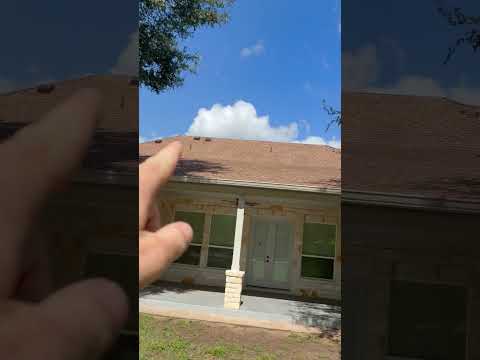
Why is my ceiling leaking? Local Austin, TX Roofers Solves The Problem | Driftwood Builders Roofing
Why is my ceiling leaking when it rains?
Hey Austin, Nick Riley here with Driftwood Builders Roofing.
We recently came out to inspect a beautiful home in Bastrop, Texas, where the customer had a very common and stressful question: “Why is my ceiling leaking?”
Any time you see water stains, bubbling paint, discoloration, or active dripping from the ceiling, it is easy to assume the roof is failing or that you may need a full roof replacement. But that is not always the case. A ceiling leak can come from several different areas of the roofing system, which is why a proper roof leak inspection is so important.
For this home, the ceiling leak was visible from inside the house. So the first step was to inspect the interior area where the water was showing up. From there, I went into the attic to try to trace the leak back to the source.
The attic inspection is important because water does not always enter the home directly above the ceiling stain. Water can travel along rafters, decking, framing, insulation, flashing, or other parts of the roof system before it finally shows up inside the house.
In this case, there was a lot of insulation in the attic, which made it difficult to clearly see where the water was coming from. I looked through the attic as carefully as possible, but I could not find an obvious leak source from the inside.
That is when we moved the inspection outside and started looking at how the roof was actually draining during rain.
Once I got on the roof, the issue became much clearer. This home has a very large roof section, and a huge amount of water was being directed into one small area. Every time it rains, water from multiple roof planes flows down from the left side and the right side, and it all collects in one tight location.
That one area was being asked to handle way too much water.
The home did have metal flashing in that section, but there was only about six inches of flashing protecting the area. Under normal conditions, flashing is designed to help direct water away from vulnerable areas of the roof. But when a massive amount of rainwater is forced into one small spot, the flashing can get overwhelmed.
That is exactly what was happening here.
The roof was not necessarily leaking because of bad shingles. It was not automatically a sign that the entire roof needed to be replaced. The real issue was a roof drainage problem.
Every time it rained, so much water came down into that one area that it essentially flooded over the six inches of metal flashing. Once that happened, the water was able to get past the protection system and eventually show up as a ceiling leak inside the home.
This is one of the reasons roof leaks can be tricky. The visible stain inside the home tells you where the water ended up, but it does not always tell you where the water started.
For this Bastrop roof leak repair, the solution was to improve the drainage. Right now, too much water is being pushed into one gutter downspout and one drainage point. To fix the problem, we are going to add two additional gutter downspouts.
One new downspout will be added on one side of the problem area, and another downspout will be added on the other side. Instead of all the water draining into one spot, the rainwater will now be dispersed into three different drainage points.
That simple change makes a big difference.
By spreading the water out across multiple downspouts, we reduce the amount of water hitting that flashing area at one time. That helps prevent the flashing from being overwhelmed, improves the gutter system, and helps permanently solve the ceiling leak.
This is a great example of why homeowners should not assume every ceiling leak means they need a new roof. Sometimes the issue is caused by roof flashing, gutters, drainage design, pipe jacks, roof penetrations, valleys, clogged gutters, or how water is moving across the roof.
A good roofing contractor should not just look at the ceiling stain and immediately recommend a full roof replacement. The better approach is to inspect the interior, attic, roof surface, flashing, gutters, and drainage pattern to figure out the real cause of the problem.
If you are asking, “Why is my ceiling leaking when it rains?” or “Do I need a new roof if my ceiling is leaking?” the answer depends on what is actually causing the leak.
In this case, the homeowner did not need to jump straight into a full roof replacement. The smarter solution was to correct the drainage issue by adding more gutter downspouts and giving the water somewhere else to go.
At Driftwood Builders Roofing, we help homeowners in Austin, Bastrop, Westlake, Bee Cave, Dripping Springs, Lakeway, Circle C, Tarrytown, South Austin, North Austin, and Central Texas diagnose roof leaks, repair roof issues, and determine whether a roof repair or full roof replacement makes the most sense.
How Much Does a New Roof Cost in Austin, TX? Top 5 Factors That Affect Roof Replacement Pricing
How much does a new roof cost in Austin, Texas or Bastrop, Texas?
Hey Austin, Nick Riley here with Driftwood Builders Roofing, your local Austin roofing company serving Austin, Bastrop, Westlake, Bee Cave, Dripping Springs, Lakeway, Round Rock, Cedar Park, Leander, and the surrounding Central Texas area.
Today we’re in Bastrop, Texas, on a roof replacement project we just completed for a homeowner. One of the most common questions we get is, “How much does my roof cost?” or “What is the average cost to replace a roof in Austin?”
The honest answer is that every roof is different. Roof replacement cost depends on the size of the roof, roof complexity, shingle type, roof decking condition, tear-off requirements, and the location of the home.
For this Bastrop roof replacement, the total cost came out to $24,397. That included removing the old shingles, installing a new architectural shingle roofing system, cleanup, disposal, labor, materials, and the full roof replacement process.
Here are the top five factors that determine the cost of a roof replacement in Austin, Bastrop, and Central Texas.
Roof size is one of the biggest drivers of roofing cost. A larger roof requires more shingles, underlayment, nails, ridge cap, flashing, labor, and disposal. A lot of homeowners think roof pricing is based only on home square footage, but roof square footage is different. Roof pitch, garages, covered patios, porches, overhangs, and multiple roof sections can all increase the actual roof size.
This roof was pretty complex. It had multiple roof sections, valleys, ridges, slopes, angles, cuts, and transitions. Some areas had a lower slope, while other sections were steeper. A simple asphalt shingle roof is usually easier and more affordable to replace. A complex roof with valleys, chimneys, skylights, dormers, steep pitches, and different roof lines usually costs more.
On this project, the waste factor was 16.34%. Waste factor is the extra shingle material needed to correctly install the roof around valleys, ridges, edges, walls, vents, and other roof details.
For this project, we installed GAF Timberline HDZ architectural shingles, which are Class 3 shingles. This is the standard shingle system we typically recommend for Central Texas homeowners because it offers a strong combination of durability, curb appeal, and long-term performance.
Architectural shingles are a better option than basic three-tab shingles. Three-tab shingles may be cheaper upfront, but they generally do not provide the same appearance, wind performance, durability, or long-term value. That is why we do not typically recommend or install three-tab shingles.
In Austin and Central Texas, roofs deal with hail storms, high winds, heavy rain, extreme heat, and UV exposure, so the type of shingle and the quality of the roofing system matter.
When we replace a roof, we remove the existing shingles and inspect what is underneath. Roof decking is the wood surface under the shingles. If the decking is rotted, soft, damaged, or unable to hold nails properly, it needs to be replaced.
On this Bastrop roof replacement, the decking was in good shape, so there was no major rotted decking to replace. But on many Austin roof replacement projects, it is common to find damaged decking. For example, replacing around five sheets of rotted roof decking could add roughly $500, depending on the project.
A complete roofing system is not just the shingles you see from the street. It also includes underlayment, drip edge, flashing, pipe boots, ventilation, starter shingles, ridge cap, nails, and the details that help prevent leaks.
This project was in Bastrop, Texas, which is a little farther from our main Austin service area. Location can affect roof replacement pricing because of travel time, material delivery, crew logistics, dump fees, disposal distance, and roof access.
A roof replacement in Austin, Westlake, Bee Cave, Lakeway, Dripping Springs, Round Rock, Cedar Park, Leander, Georgetown, Buda, Kyle, or Bastrop may all have slightly different logistics. HOA requirements, driveway access, neighborhood restrictions, and disposal distance can all impact the final roof replacement estimate.
If you are searching for roof replacement cost in Austin, new roof cost in Bastrop, Austin roofing company, roofing contractor in Austin, asphalt shingle roof replacement, GAF shingle installer, storm damage roof inspection, hail damage roof replacement, or Central Texas roofing contractor, Driftwood Builders Roofing is here to help.
We help homeowners with roof replacement, roof repair, roof inspections, storm damage inspections, hail damage assessments, asphalt shingle roofs, architectural shingles, metal roofing, tile roof repair, and insurance roofing claims.
This is Nick Riley with Driftwood Builders Roofing, an Austin roofing company serving Austin and Central Texas. Thanks for watching.

How Much Does a Roof Cost in Austin, TX? | Roof Complexity Explained | Driftwood Builders #shorts
Hey Austin homeowners, Nick Riley here with Driftwood Builders Roofing.
One of the most common questions we get is: “How much does a new roof cost?” The truth is, roof pricing depends on several factors, but one of the biggest is roof complexity.
Today we’re standing on a beautiful home on Windsor Road in Austin, Texas, and it’s a perfect example of why every roof is different.
Some roofs are simple and straightforward. They may have:
One story
A basic roofline
Consistent slopes
Easy access for crews and materials
Those roofs are typically faster and less expensive to replace.
But this home is much more complex. It has:
Multiple stories
Several roof sections
Different elevations
Steep slopes
More detailed transitions and valleys
Complex roofs require:
More labor
Additional safety equipment
More material waste
Extra installation time
Detailed flashing and waterproofing work
That all impacts the final roof replacement cost.
Even if two homes have similar square footage, the more complicated roof can cost significantly more because of the extra craftsmanship and labor involved.
At Driftwood Builders Roofing we provide detailed roof inspections and transparent estimates so homeowners understand exactly what goes into their roofing project.
If you're in Austin, Tarrytown, Windsor Road, Westlake, or surrounding areas and want to know the real cost of your roof replacement, reach out to our team for a free inspection.

Roof Leak in Circle C Austin TX | Raccoon Damage Near Ridge
Dealing with a roof leak in Circle C, Austin TX? This project is a great example of how roof leaks aren’t always caused by aging shingles or storm damage, sometimes wildlife is the culprit. In this case, a homeowner called us out after noticing active leaking during rain. Upon inspection, we found that raccoons (or possibly squirrels) had torn apart a section of shingles right along the ridge line, creating a direct opening for water to enter the home.
Animal damage like this is more common in Austin and Central Texas than most homeowners realize. Raccoons, squirrels, and other wildlife are constantly looking for warm, dry places to nest, and your roof ridge, attic vents, and soft decking areas are prime targets. Once they gain access, they can quickly cause significant damage by ripping shingles, tearing underlayment, and exposing your roof to the elements.
Any time it rains, water can pass straight through these compromised areas, leading to interior leaks, ceiling stains, insulation damage, and even mold growth if left unaddressed. The tricky part is that this type of damage is often not visible from the ground, which is why leaks can seem to “randomly” appear.
For this homeowner, we provided a fast response and installed a professional-grade tarp to immediately stop the leak and prevent further water intrusion. This temporary solution buys time and protects the home while we prepare for a full, permanent repair. Depending on the extent of the damage, repairs may involve replacing shingles, underlayment, decking, and reinforcing vulnerable areas to prevent future wildlife intrusion.
If you’re in Austin, TX or surrounding areas like Circle C, and you’ve noticed signs like:
Water spots on ceilings or walls
Leaks during or after rain
Scratching or movement sounds in the attic
Missing or lifted shingles near the ridge
Debris or damage around roof penetrations
…it’s important to get a professional inspection as soon as possible. Catching these issues early can save thousands in repair costs and prevent more serious structural damage.
At Driftwood Builders Roofing, we specialize in identifying the root cause of leaks, not just patching the symptom. Whether it’s storm damage, aging materials, or wildlife intrusion, we provide honest assessments, fast emergency solutions, and high-quality repairs built to last in the Texas climate.
📍 Serving Circle C, Austin, TX, and all surrounding Central Texas areas
📞 Fast inspections and emergency tarping available
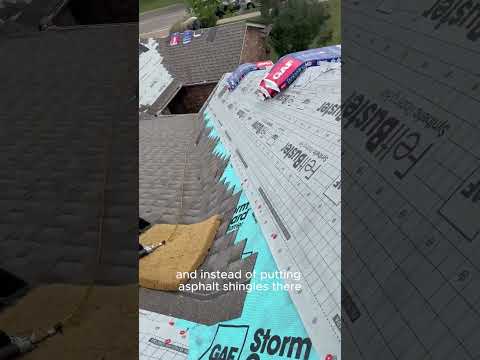
What Is Rolled Roofing? Austin, TX (Best Solution for Low Slope Roof Areas Explained) #shorts #fyp
What is rolled roofing, and when should you use it?
In this video, we’re out on a roof in South Austin explaining why rolled roofing is the best option for low-slope sections where standard asphalt shingles don’t perform well.
On steeper roof areas, shingles work great, but in flatter sections, water can sit and cause leaks. That’s where rolled roofing comes in. Its long, continuous sheets allow water to shed quickly, reducing the risk of pooling and water intrusion.
🔨 In this video, you’ll learn:
What rolled roofing is
Why it’s used on low-slope roofs
The difference between shingles vs rolled roofing
How it helps prevent leaks in problem areas
If you’re a homeowner in Austin, understanding the right materials for each part of your roof can make all the difference in long-term performance.
Serving Austin for over 20 years: Driftwood Builders Roofing provides honest inspections and quality roof replacements done the right way.

What Is Roof Underlayment? (Why It’s Critical for Protecting Your Roof)
What is roof underlayment, and why does it matter?
In this video, we break down one of the most important (and most overlooked) parts of a roofing system: underlayment. Installed between the wood decking and shingles, underlayment acts as a crucial secondary layer of protection.
If high winds, heavy rain, or storm damage compromise your shingles, the underlayment helps prevent water from reaching the decking and causing leaks.
🔨 In this video, you’ll learn:
What roof underlayment is
Where it sits in your roofing system
Why it’s essential for leak prevention
How it protects your home during storms
If you’re a homeowner in Austin or surrounding areas, understanding how your roof works can save you thousands in repairs.
We’ve been serving the Austin area for over 20 years: offering honest inspections, quality installations, and straightforward advice.

How Many Nails Per Shingle? Austin Roofer Shows Proper 6-Nail Installation | Driftwood Builders
Out on a roof replacement in Austin, Miguel the Marksman is laying shingles the right way: locking each one in with 6 nails.
It’s a simple step, but it’s what helps roofs stand up to high winds, heavy rain, and the Texas heat. Cutting corners here can lead to blow-offs and costly repairs down the line.
🔨 In this video:
Real installation footage from an Austin jobsite
Proper nailing technique and placement
Why 6 nails per shingle makes a difference
This is the kind of detail that separates a quick install from a roof that actually lasts.

Most Roofers Skip This… Miguel the Marksman Uses 6 Nails Per Shingle in Austin, TX
On this roof replacement in Austin, Miguel the Marksman shows the correct 6-nail shingle installation method: a key step that directly impacts the lifespan of your roof.
Using the proper number of nails improves wind resistance, prevents shingle blow-offs, and ensures the system meets manufacturer standards.
🔨 In this video:
Proper nail placement and pattern
Why 6 nails per shingle matters
Real jobsite footage from Austin
A small detail most people overlook, but it makes all the difference.

Austin Roof Replacement: Miguel the Marksman Nails Shingles the Right Way (6 Nails Per Shingle)
On this roof replacement in Austin, Miguel the Marksman demonstrates the proper way to install shingles using 6 nails per shingle: a small detail that makes a big difference in roof performance.
Many contractors cut corners with fewer nails, but using the correct nailing pattern helps prevent blow-offs, improves wind resistance, and ensures the roof meets manufacturer specifications.
🔨 What you’ll see in this video:
Proper shingle nailing technique
Why 6 nails per shingle matters
Real-time installation on an Austin roof replacement
If you're a homeowner, this is something to look for on your next roof. If you're a contractor, this is the standard you should be holding.
Driftwood Builders Roofing has been serving the Austin area for over 20 years, specializing in high-quality roof replacements and repairs.
Austin TX Roof Leak Fix Flat Tile Roof Causing Water Damage Full Diagnosis & Repair
Out on a tile roof in Marble Falls, we diagnosed a roof leak that multiple contractors couldn’t figure out.
The issue? Poor drainage on a low-slope (almost flat) tile roof. Every time it rained, water pooled in one corner, leading to rotted decking and cracked underlayment: eventually causing a leak inside the home.
🔍 What we found:
Water collecting in a single low point
Rotted roof decking underneath
Cracked underlayment from prolonged moisture
Temporary metal patch that didn’t solve the root issue
🛠️ Our solution:
Remove and reset existing roof tiles
Replace all damaged decking
Install new underlayment
Add an extra layer of ice & water shield for protection
Improve slope and drainage to prevent future pooling
This is a great example of why proper diagnosis matters: fixing the cause, not just the symptom.
If you're dealing with a roof leak in the Austin or Hill Country area, we offer free inspections and honest assessments.

Austin Roofing Tip Always Check Shingle Bundles Before Installation Avoid Costly Mistakes
Working on a roof in South Austin, we ordered 50 squares of shingles, but caught a costly issue before installation. After inspecting every bundle, we found 6 damaged shingle packs likely caused during shipping.
This quick roofing tip can save homeowners and contractors time, money, and headaches: always inspect your materials before install.
In this case, we coordinated with ABC Supply to replace the damaged shingles immediately: keeping the project on track and ensuring quality.
If you're in Austin and want a reliable roofing contractor who pays attention to the details, Driftwood Builders Roofing has you covered.
✔️ Free roof inspections
✔️ 20+ years experience in Austin
✔️ Residential & commercial roofing
How to Tell If Your Roof Needs Replacing Austin Roofing Tip
Not sure if your roof needs to be replaced? One of the easiest signs to look for is discoloration and granule loss.
In this video, Nick with Driftwood Builders Roofing shows a real example from a home in South Austin (Palladian community), where aging shingles are losing their protective granules: leading to visible white spots and a shiny appearance.
If you can spot these signs from the ground, your roof may be nearing the end of its life.

What Happens During a Roof Replacement? Step-by-Step (Austin, TX)
What actually happens during a full roof replacement? In this video, Nick with Driftwood Builders Roofing walks you through the first key steps of the process on a 65-square roof in South Austin.
From tearing off old shingles to installing new underlayment and protecting critical areas like valleys, you’ll see exactly how a professional roofing crew gets the job done.
If you’re a homeowner in Austin considering a new roof, this gives you a clear, behind-the-scenes look at what to expect.

How to Spot Hail Damage Without Climbing Your Roof - Austin Roofing Tips
Think you might have hail damage but don’t want to climb on your roof? In this video, Nick from Triford Roofing shows a simple way homeowners in Austin can identify storm damage, just by checking their windows.
We’re out in Meridian, South Austin during a full roof replacement, and you’ll see real signs of hail damage that most people miss. These small indicators can help you catch issues early and avoid costly repairs.
If you’ve recently had a storm in Austin, this is a quick and easy way to check your home.

Why Is My Dryer Vent Clogged? | Austin, TX Home Maintenance Tip
Why is your dryer taking longer to dry clothes? A clogged dryer vent could be the reason.
In this quick home maintenance tip, we show a common problem we see with dryer vents: leaving the exterior screen cover in place. Over time, lint can build up behind the screen, restricting airflow and creating a clogged dryer vent.
In this video, you'll learn:
- What a clogged dryer vent looks like
- Why lint builds up inside dryer vents
- How exterior vent screens can contribute to blockages
- Signs your dryer vent needs cleaning
- How proper airflow helps your dryer run efficiently
- Why regular dryer vent maintenance is important for homeowners
A blocked dryer vent can reduce dryer performance, increase energy costs, and create unnecessary maintenance issues. Regular inspections and cleaning can help keep your home's ventilation system working properly.
Driftwood Builders Roofing provides roofing inspections, roof repairs, roof replacements, and exterior home improvement services throughout Austin, TX and Central Texas.
Learn more:
https://driftwoodbuildersroofing.com/
Serving:
📍 Austin, TX
📍 Westlake, TX
📍 Manchaca, TX
📍 Buda, TX
📍 Kyle, TX
📍 Driftwood, TX

Roof Leak Test Results: Finding the Exact Leak Near Ridge Vent & Solar Panels
After performing a detailed water test, we identified multiple roof leaks near the ridge vent and around the solar panel area. By systematically spraying different sections, we were able to pinpoint exactly where water was entering, and just as importantly, where it wasn’t. This step-by-step leak detection process helps avoid unnecessary full roof replacements and ensures a targeted, cost-effective repair. If you're dealing with a roof leak in Austin or after recent storms, this is exactly how professionals diagnose the problem.

How to Find a Roof Leak in a Ridge Vent (Step-by-Step Water Test) | Austin Roofing #shorts #viral
Wondering how roof leaks are actually found, without replacing the entire roof?
In this video, Nick with Driftwood Builders Roofing is on-site in Kyle, Texas, demonstrating a simple but effective method to locate a leak coming from a ridge vent. Instead of replacing the full roof or ridge vent, we perform a controlled water test by spraying the ridge line while a second technician checks inside the attic for signs of moisture.
This step-by-step process allows us to pinpoint the exact source of the leak, saving the homeowner time and money by focusing only on the area that needs repair.
In this video, you’ll learn:
How to identify leaks coming from a ridge vent
Why a water test is one of the most effective diagnostic tools
How to avoid unnecessary full roof replacements
What causes ridge vent leaks over time
If you're in Austin, Kyle, or Central Texas and suspect a roof leak, this is exactly how a professional roofing inspection works.

Hail Damage Roof Inspection in Austin, TX How to Spot Roof Hail Damage Real Example
What does hail damage actually look like on a roof? In this real inspection in Austin, Texas, Nick with Driftwood Builders Roofing walks through a home with significant hail damage and shows exactly how to identify it.
You’ll see clear examples of hail impact marks on asphalt shingles, including circular bruising, granule loss, and soft spots that aren’t visible from the ground. During this inspection, we marked over 30+ hail hits on just one slope of the roof: strong evidence of storm damage that could qualify for a full roof replacement through insurance.
In this video, we also break down:
How to spot hail damage on your roof
What size hail typically causes roof damage (¾", 1", 1.25"+)
When insurance is likely to approve a roof claim
What the roof inspection and insurance adjuster process looks like
Why early detection can save you thousands in future repairs
If your home in Austin or Central Texas has recently experienced hail or severe storms, it’s important to get a professional roof inspection. Many homeowners have hidden damage that can lead to leaks, mold, and structural issues over time if left untreated.
At Driftwood Builders Roofing, we offer free roof inspections and will meet with your insurance adjuster to make sure all damage is properly documented.
📍 Serving Austin, TX and surrounding areas
🏠 Residential & multifamily roofing
⭐ GAF Master Elite Contractor
Don’t wait until you have a leak: hail damage can worsen over time. Contact us today to schedule your free inspection and find out if your roof qualifies for an insurance-covered replacement.

Roof Flashing: Why We Use Screws Instead of Nails (Austin, TX Roofer) | Driftwood Builders
One of the biggest causes of roof leaks isn’t your shingles: it’s flashing.
In this video, Todd from Driftwood Builders Roofing explains how roof-to-wall flashing works and why the way it’s installed makes a huge difference in how long your roof lasts.
Here’s what most homeowners don’t know:
When replacing a roof, this type of flashing is usually not replaced because it’s made of durable galvanized metal and is still in good condition. However, how it’s reinstalled is critical.
The key difference:
Nails (used by most roofing companies):
Faster and cheaper to install
Can back out over time (typically 10 to 12 years)
Leads to gaps where water can enter
2-inch wood screws (what we use):
Stay securely fastened for the life of the roof
Help keep flashing tight and sealed
Prevent long-term leaks and callbacks
Why this matters:
Even a small detail like how flashing is fastened can determine whether your roof lasts 20+ years, or starts leaking halfway through its lifespan.
If you’re in Austin, TX and planning a roof replacement, make sure your contractor is paying attention to these details.
- GAF Master Elite Contractor
- James Hardie Certified Contractor
- Free roof inspections available
📞 Need a roof inspection? Contact us today.

What Happens If Rotted Roof Decking Is Found During a Roof Replacement? Austin, TX
If you're getting a roof replacement in Austin, one common question is: what happens if rotted wood decking is discovered underneath your shingles?
In this video, Driftwood Builders Roofing walks you through a real example from a home near Zilker Park. After removing the shingles and underlayment, our crew uncovered rotted roof decking, and we show exactly how we handle it.
Here’s what you’ll learn:
How roofers identify rotted decking
What happens during the tear-off process
How damaged wood is safely removed and replaced
How we communicate repairs with homeowners
Why fixing decking is critical for a long-lasting roof
If you’re a homeowner in Austin, TX dealing with roof leaks, storm damage, or planning a roof replacement, this is something you definitely want to understand.
- GAF Master Elite Contractor
- James Hardie Certified Contractor
- Serving Austin & surrounding areas
Need a free roof inspection before the next storm? Reach out today.

Top 4 Most Popular Roof Types in Austin, TX (What Homeowners Should Know)
What type of roof is most common in Austin, TX?
In this video, Nick Riley with Driftwood Builders Roofing breaks down the top 4 most popular roofing systems in Central Texas, and what homeowners should know about each.
We cover:
• Asphalt shingles (architectural vs. three-tab)
• Metal roofing (growing in popularity)
• Clay tile roofs (high-end and durable)
• TPO roofing (flat and commercial applications)
Whether you’re replacing your roof or just learning about your options, this quick breakdown will help you understand what’s most common in Austin and why.
📍 Serving Austin, TX
🏠 Roof replacements, inspections, and exterior upgrades

How Roofers Keep Job Sites Clean During a Roof Replacement (Austin Roofing Tips)
Worried about the mess during a roof replacement?
In this video, Nick Riley with Driftwood Builders Roofing explains how professional roofers keep your property clean during a full roof replacement in Austin, TX.
On this Tarrytown project, we’re removing an old tile roof and installing a new shingle roof. To protect the home and keep the job site clean, we use a debris chute system that sends old roofing materials directly into a dumpster: minimizing mess, protecting landscaping, and improving efficiency.
If you’re considering a new roof, this is one of the key things to look for in a quality roofing contractor.
📍 Serving Austin, TX
🏠 Roof replacements, inspections, and exterior upgrades

Skip Sheathing vs Tongue & Groove: What Roofers Look For (Austin Roofing Explained)
If you’re replacing your roof in Austin, understanding what’s underneath is critical.
In this video, Nick Riley with Driftwood Builders Roofing explains the difference between skip sheathing and tongue-and-groove decking, and why it matters when installing a new roof.
After removing an old tile roof in Tarrytown, we found skip sheathing (wood boards with gaps), which requires a different installation approach. To ensure a proper roofing system, we install battens both horizontally and vertically before adding a durable 22-gauge standing seam metal roof.
If you’re considering a roof replacement or want to know what’s under your roof, this is a must-watch.
📍 Serving Austin, TX
🏠 Roof replacements, inspections, and metal roofing specialists

Roof Leak After Rain in Austin Raccoon Damage Causing Major Roof Leaks Tarrytown Case Study
Experiencing a roof leak after heavy rain in Austin, TX? In this video, Nick from Driftwood Builders Roofing explains a real-life roof leak in Tarrytown caused by storm damage and raccoons getting into the attic.
Learn the common causes of roof leaks, how animal damage can make leaks worse, and what to do if water is coming through your ceiling.
We also show how a simple emergency roof tarp can prevent further interior damage until permanent repairs are made.
If you’re dealing with a leaking roof in Austin, especially after recent storms, this is what you need to know.
📍 Serving Austin, TX including Tarrytown, Westlake, and surrounding areas
📞 Contact us for inspections, emergency tarping, and full roof replacements

How to Safely Get on a Roof (Homeowner Guide) | Austin Roofing Tips
hinking about getting on your roof? ⚠️ Most homeowners don’t know the safest way to do it, and one wrong move can lead to serious injury.
In this video, Nick from Driftwood Brothers Roofing walks you through the proper way to:
Set up your ladder safely
Step onto your roof with confidence
Walk on your roof without slipping
Understand where it’s safest to step (like valleys)
We filmed this during a full roof replacement in North Austin, where a homeowner joined us on the roof during an insurance inspection: something we get asked about all the time.
💡 Whether you’re checking for damage, meeting an adjuster, or just curious, this quick guide will help you stay safe.
📍 Serving Austin & Central Texas
🏠 Roof Repairs | Full Replacements | Insurance Claims
- Have questions about your roof? Drop them in the comments or reach out!

Is Your Roofer Doing It Right? 3 Things to Check During Installation
How Do You Know If Your Roofer Is Doing a Good Job?
If you’re getting your roof replaced, it’s normal to wonder what’s happening up there, and whether the job is being done correctly.
In this video, we walk through 3 simple ways to check your roofer during installation:
Why starter shingles are critical for wind resistance
Where ice and water shield should be installed (especially in valleys)
Why communication and documentation matter throughout the job
We’re currently working on a full roof replacement here in North Austin, and these are the exact things we focus on to make sure every job is done right.
If your roofer isn’t doing these things, it could be a red flag 🚩
📍 Serving homeowners in Austin
📞 Reach out if you have any questions or want a free roof inspection

Do You Need to Be Home During a Roof Replacement? (Austin Roofer Explains)
Do You Need to Be Home During a Roof Replacement?
This is one of the most common questions we get from homeowners: Do I need to be home while my roof is being replaced?
The short answer is no: you don’t.
In this video, we explain:
How roof replacements are handled when homeowners aren’t home
How we keep you updated throughout the day
What to expect during the process
Why roof replacements can be loud (and why being away can actually be better)
We’re currently working on a full roof replacement here in North Austin, and our client isn’t home, but we’re keeping him fully informed with photos and updates every step of the way.
As long as your roofing contractor communicates clearly, you don’t need to be home during the project.
📍 Serving homeowners in Austin
📞 Reach out if you have any questions or want a free roof inspection

What Is Ice & Water Shield & Why Does Your Roof Need It? | Austin, TX Roofing Tips
What is Ice & Water Shield, and why do roofing contractors install it on certain parts of a roof?
In this video, Nick Riley from Driftwood Builders Roofing explains how Ice & Water Shield provides an extra layer of protection against water intrusion and why it's one of the most important components of a properly installed roofing system.
Many homeowners focus on shingles, but a quality roof is made up of multiple layers working together. Ice & Water Shield is designed to help protect vulnerable areas of the roof where water naturally collects and flows.
In this video, you'll learn:
- What Ice & Water Shield is
- Where Ice & Water Shield is installed on a roof
- Why roof valleys need extra water protection
- The difference between underlayment and Ice & Water Shield
- How a complete roofing system prevents leaks
- Why proper installation matters for long-term roof performance
In this North Austin roofing project, Nick walks through the three main components of a roofing system (shingles, underlayment, and roof decking) and explains why Driftwood Builders Roofing installs Ice & Water Shield in roof valleys where water runoff is heaviest.
If you're considering a roof replacement in Austin, TX, understanding how your roofing system works can help you make better decisions and avoid costly water damage in the future.
🌐 Learn more about Driftwood Builders Roofing:
https://driftwoodbuildersroofing.com/
Driftwood Builders Roofing provides roof inspections, roof repairs, roof replacements, asphalt shingle roofing, metal roofing, tile roofing, storm damage restoration, and preventative roof maintenance throughout Austin and Central Texas.
📍 Serving Austin, TX, Westlake, TX, Lakeway, Dripping Springs, Buda, Kyle, Manchaca, Round Rock, Cedar Park, Georgetown, and surrounding Central Texas communities.