Is it Possible to Over-ventilate a Roof?
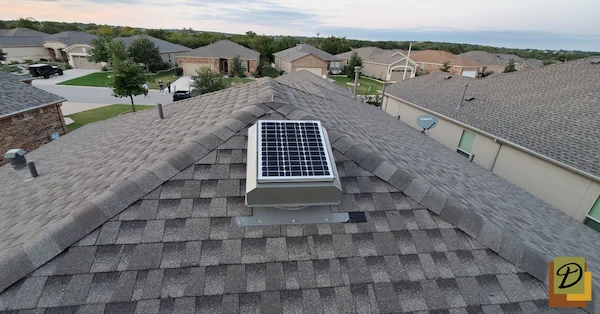
Can You Actually Over-ventilate a Roof?
Yes, you can over-ventilate a roof, and in Central Texas it happens more often than homeowners expect. When too many vents are added, or the wrong vent types are combined, the airflow in your attic stops working the way it should. Extra vents can pull conditioned air out of the living space and let humid outside air in, which drives up cooling costs during long Austin summers.
Over-ventilation also undermines your attic insulation. When air moves through insulation too aggressively, it loses some of its ability to hold back heat and humidity. The result is condensation, and that moisture becomes a source of mold, wood rot, and stained ceilings. Older homes are especially vulnerable, since prior owners or handymen may have stacked on extra vents or used mismatched sizes over the years.
If you have seen leak signs in your attic with no obvious storm damage, an experienced Austin roofing company can tell whether excess ventilation is the hidden cause.
How Much Attic Ventilation Does a Roof Actually Need?
Roofers use a simple ratio to size attic ventilation. The common standard is 1 square foot of net free vent area for every 150 square feet of attic floor, or 1 per 300 square feet when intake and exhaust are properly balanced and a vapor barrier is present. Half of that should be intake low on the roof and half should be exhaust high on the roof, so air flows in one continuous path.
Several vent styles can be combined to hit that balance:
- Soffit vents pull cool air in along the eaves.
- Ridge vents let hot air escape along the peak.
- Box and turbine vents add exhaust on roofs without a continuous ridge.
- Powered attic fans force air out, but they can short-circuit other vents if used incorrectly.
- Gable vents let air move through the end walls, but they can short-circuit a ridge and soffit system, because air can travel from the gable to the ridge and skip the soffit intake vents.
Your neighbor may have an identical floor plan and still need a different layout, because roof pitch, sun exposure, and shade from surrounding trees all change the math. Getting the right combination is where roofing expertise matters most.
What Problems Does Over-ventilation Cause?
When you over-ventilate a roof, the extra vents start competing with each other instead of moving air in one smooth direction. Mixing exhaust types is a frequent culprit, since a powered fan or ridge vent can pull air from a nearby box vent rather than from the soffits, leaving dead spots where moisture collects.
The most common consequences include:
| Problem | What It Looks Like |
|---|---|
| Moisture and condensation | Damp insulation, musty smell, water stains on the attic deck |
| Mold and wood rot | Dark spots on rafters and sheathing |
| Higher energy bills | Cooled or heated air pulled out before it does its job |
| Ice dams | Ice ridges at the eaves during rare Central Texas freezes |
| Hidden leaks | Backed-up moisture seeping into the roof structure |
These issues are subtle and often appear long after the vents were installed. Adding a quick attic check to your monthly or quarterly home routine helps you catch trouble early. If you spot water where it should not be, a roof leak repair visit can confirm whether ventilation is to blame.
How Do You Fix Over-ventilation in an Austin Home?
Fixing over-ventilation starts with a measurement, not a guess. A roofer calculates your attic square footage, totals the existing net free vent area, and compares it to the 150 to 300 ratio. From there, the fix may mean removing redundant exhaust vents, sealing off a powered fan, or rebalancing intake and exhaust so air follows one clean path.
Austin conditions make this balance important. Intense summer heat, high humidity, spring hail, and straight-line winds all stress an attic, and a poorly balanced system traps that heat and moisture instead of releasing it. Local building code and insurance expectations also favor a properly engineered layout over a patchwork of add-on vents.
The best time to correct ventilation is during a roof replacement, when the whole system can be designed at once. Driftwood Builders Roofing has been GAF Master Elite certified since 2005 and serves Austin and Central Texas communities including Cedar Park, Round Rock, Leander, Lakeway, Georgetown, Pflugerville, Buda, and Kyle.
When Should You Call a Professional Roofer?
Call a professional any time you notice damp insulation, musty attic odors, rising energy bills, or visible mold on the rafters, since these point to a ventilation imbalance you cannot solve by simply adding more vents. A roofer can confirm whether your roof is over-ventilated or under-ventilated and design the correct mix for your home.
Driftwood Builders Roofing provides free estimates and never asks for a deposit on labor or materials. We handle residential and commercial roofs, assist with insurance claims, and back our work as GAF Master Elite contractors and members of our local Better Business Bureau. If you suspect a ventilation problem, request a free estimate and we will inspect your attic and roof to recommend the right fix.
Frequently Asked Questions
Can a roof have too many vents?
Yes. Too many vents, or the wrong combination of vent types, makes them compete with each other and creates dead spots where moisture collects. The goal is balanced intake and exhaust, not the highest possible number of vents.
What are the signs that my roof is over-ventilated?
Watch for damp or compressed insulation, a musty attic smell, water stains on the roof deck, mold on the rafters, and unexpectedly high energy bills. In rare Central Texas freezes, ice dams at the eaves can also signal a ventilation imbalance.
How much attic ventilation does an Austin home need?
A common standard is 1 square foot of net free vent area for every 150 square feet of attic floor, or 1 per 300 square feet when intake and exhaust are balanced and a vapor barrier is present. Half should be intake and half exhaust.
Does over-ventilation raise my energy bills?
It can. Excess vents pull cooled air out of the home in summer and heated air out in winter, forcing your HVAC system to work harder. Correcting the balance often lowers cooling and heating costs.
Should I fix ventilation during a roof replacement?
Yes, a roof replacement is the ideal time to correct ventilation because the entire system can be designed and balanced at once. Discuss vent types and spacing with your roofer before installation begins to get the best layout for your home.
How can we help?
Your questions and comments are important to us. Please use the form below to contact us by email.

Author: Driftwood Builders Roofing
Driftwood Builders Roofing is a family-owned residential roofing company headquartered in Manchaca, Texas, serving Austin and the surrounding Hill Country since 2005. The company has delivered 3,700 full roof replacements and 783 repairs across 3,559 different customers over 20 years in business, with 97 years of combined construction experience across the leadership team and 74 years specifically inside Driftwood Builders. The company holds the highest contractor certifications offered by the major shingle manufacturers, including GAF Master Elite Contractor (the top 3% of GAF contractors nationally), GAF Certified Green Roofer, Owens Corning certified, TAMKO Pro Certified Contractor, and a Berridge Roof Installation Seminar Certificate for standing-seam metal roofs. Driftwood is an NRCA member, holds an Angie's List Super Service Award, is BBB Accredited, and is a GuildQuality member for verified customer satisfaction data. James Hardie certification covers the siding side of the business. Services include residential roof replacement, leak and storm-damage repair, tile roof repair, metal roofing, TPO commercial roofing, roof inspections, hail and storm damage inspections with insurance claim assistance, gutter work, and James Hardie siding. The customer-protection policy is straightforward: Only Pay Upon Completion. The company serves 22 cities across the Hill Country and Greater Austin and holds a 5-star rating across Google, GuildQuality, Angi, Nextdoor, Facebook, Thumbtack, and Yelp.
