Have you discovered signs of roof leaks? There are many reasons leaks can pop up, and not all of those reasons have to do with the shingles. Roof vents are one of the most common leak points on a Central Texas roof, because every vent is a deliberate opening cut through the roof deck that depends on flashing to stay watertight. When that flashing or a rubber boot fails, the fix is usually replacing or reflashing the vent, not sealing over it.
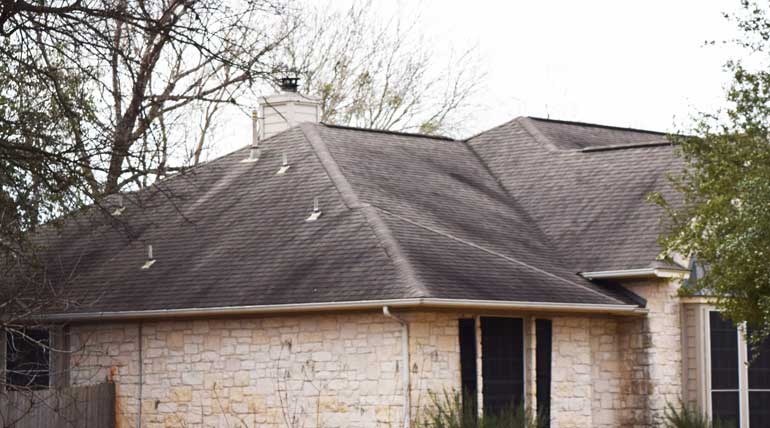
When a Roof Vent Needs Repair and When It Needs Replacing
A roof will not last forever. And like any part of a home, your roof will need its own type of maintenance, repairs, and eventually replacement. Roofing vents are one type of roofing component that can fail, for a variety of reasons: flashing pulling loose, rubber gaskets hardening in the Texas sun, hail denting a metal housing, or fasteners backing out after years of thermal movement.
Roof Vent Repair in Austin and Central Texas
Driftwood Builders Roofing repairs and replaces roof vents across Austin and the surrounding Hill Country, in every city on our service-area list. Vent inspections are free and no deposit is required: we inspect the roof and put the recommendation in writing. If you would rather start with a ballpark figure, you can request an online roof quote first. When a plumbing vent is the leak source, our standard repair is metal pipe flashing that fully surrounds the pipe, not another builder-grade rubber boot that will split again in a decade.
Types of Roof Vents (and Why the Difference Matters)
“Roof vent” gets used loosely, and that causes real confusion when something starts leaking. Two completely different systems pass through your roof, and they fail in different ways:
- Attic ventilation vents move air through the attic. These split into intake vents (usually soffit vents at the eaves, drawing cooler air in) and exhaust vents (ridge vents, box vents, turbines, or powered fans near the peak, letting hot air out).
- Plumbing and appliance penetrations are not attic ventilation at all. Pipe jacks vent your drain lines; bathroom fans and dryers terminate through the roof or a sidewall. They pass through the same roof plane but serve a completely separate purpose.
Mixing these up leads to bad repairs. Sealing a plumbing vent boot does nothing for a hot attic, and adding exhaust vents does nothing for a leaking pipe jack.
| Vent type | What it does | How it typically fails |
|---|---|---|
| Box / turtle vent | Static attic exhaust, set in a row near the ridge | Hail dents, cracked or warped housing, loose flashing, backed-out nails |
| Ridge vent | Continuous exhaust along the roof peak | Damaged ridge-cap shingles, improper fastening, ridge slot cut too narrow or not cut at all |
| Soffit / intake vent | Draws makeup air in at the eaves | Blocked by insulation, painted shut, damaged soffit panels |
| Powered attic vent | Motorized exhaust, thermostat or humidistat controlled | Motor failure, seized bearings, flashing leaks; can pull conditioned air upward if intake is undersized |
| Pipe jack / plumbing vent boot | Seals where a drain vent pipe exits the roof | Cracked or split rubber gasket, UV degradation, corroded flange |
| Bath fan / dryer termination | Exhausts moist air from inside the home to the outside | Failed damper, duct disconnected in the attic, flashing leaks, terminating into the attic instead of outdoors |
When Should a Roof Vent Be Replaced?
A vent is a wear part. These are the practical triggers that move a vent from “monitor it” to “replace it”:
- Cracked or brittle plastic. Plastic housings and plastic pipe collars go chalky and crack after years of UV exposure. Once a housing has cracked, it cannot be reliably sealed.
- Rust or corrosion. Rust streaks running down the shingles below a vent usually mean the base flange is deteriorating, not just the paint.
- Damaged or lifted flashing. If the flange is bent, lifted, or no longer tucked under the shingle course above it, water has a path in regardless of how much sealant gets added.
- Split rubber boots. Across Driftwood Builders Roofing repair calls in the Austin area, a failed pipe boot is the leak source we find most often.
- Loose or backed-out fasteners. Nails that have worked their way up create both a leak path and a loose vent that wind can catch.
- Storm damage. Hail dents in a metal cap, or a housing lifted, cracked, or shifted by wind.
- Warped housings. Repeated heat cycling can distort a cap so it no longer sits flat against the deck.
- Leaking at the penetration. Staining on the decking or insulation immediately around the vent opening.
- Age-related deterioration. If the vents are original to a roof near the end of its service life, replacing them one at a time rarely makes economic sense; plan them into the reroof instead.
Sealant vs. Proper Flashing: What Actually Stops a Vent Leak
This is the most important distinction on this page, and the one most often gotten wrong.
Flashing is the waterproofing. A vent stays dry because its metal flange is integrated into the shingle courses, tucked beneath the shingles above it and lapped over the shingles below, so water running down the roof is shed over the top of it. That is a mechanical system, and on a correctly installed vent it works without depending on sealant.
Sealant is a maintenance component, not the waterproofing. It has legitimate uses: covering exposed fastener heads, dressing a small gap at a counterflashing, or as a secondary detail where the manufacturer’s installation instructions call for it. Used that way, on a vent whose flashing and housing are still sound, a quality lap sealant or polyurethane sealant does useful work and is worth maintaining.
What sealant cannot do is take the place of flashing that has failed. Smearing roofing cement around a leaking vent is a temporary measure at best. In Central Texas heat it commonly cracks within a season or two, and it can trap water underneath in the meantime, which sometimes makes the eventual repair larger than it needed to be. If a vent has been caulked before and is leaking again, that is strong evidence the problem sits at the flashing or the boot, not at the surface.
The rule we work by: diagnose at the flashing, boot, and penetration level first, then decide. Sealant is what you reach for once the underlying detail is confirmed sound, not instead of confirming it.
How to Replace a Roof Vent Cap
If a roof vent becomes worn, rusty, cracked, or otherwise damaged, replacing the vent is the right call. The shingles above and around the vent are carefully lifted and their nails released, the old vent is removed, and the deck opening is checked for rot or prior water damage. If the framed opening does not match the new vent, it is cut and adjusted. The new vent is then set with its flange under the shingle courses above it and lapped over the courses below, fastened in the manufacturer’s pattern, and the disturbed shingles are re-laid and sealed. Old fastener holes in the deck and shingles are addressed at the same time.
Done correctly, the replacement is watertight because of how it is layered, not because of what was squeezed around the edge afterward.
Pipe Jacks and Plumbing Vent Boots: The Most Common Leak Point
Every home has plumbing vent pipes that let sewer gases escape and keep drains flowing properly. Where those pipes pass through the roof, they are sealed by a pipe jack, also called pipe flashing or a vent boot. Across Driftwood Builders Roofing repair calls in the Austin area, a failed pipe boot is the single most common source of roof leaks we find, and it is almost always the rubber that fails first, not the pipe.
The common builder-grade part is a 3-in-1 rubber boot: a metal base flange with a rubber gasket stretched over the pipe. The metal tends to last; the rubber does not. Under constant Texas UV and daily heat cycling, the gasket hardens, shrinks back from the pipe, and splits, often in the 10 to 15 year range, well before the shingles are finished. That is what our crews see on Austin-area roofs, not a manufacturer rating. Once it splits, water runs down the outside of the pipe and into the attic. That is why we install metal pipe flashing that fully surrounds the pipe, with no rubber component to degrade, rather than reusing or re-boot-ing the old part.
When a boot has split but the metal flange, the shingles around it, and the decking are all still sound, a retrofit boot or a replacement collar over the existing flange can be an appropriate repair. When the flange itself is corroded or lifted, when the shingles around it have been damaged, or when the penetration has already been caulked over once before, replacing the whole pipe flashing and reworking it into the shingle courses is the repair that actually lasts.
Box and Turtle Vent Problems
Box vents (also called turtle vents or static vents) are the low, square hoods you see in a row near the ridge. They have no moving parts, which makes them reliable, but they are exposed, and in a hail-prone market they take a beating.
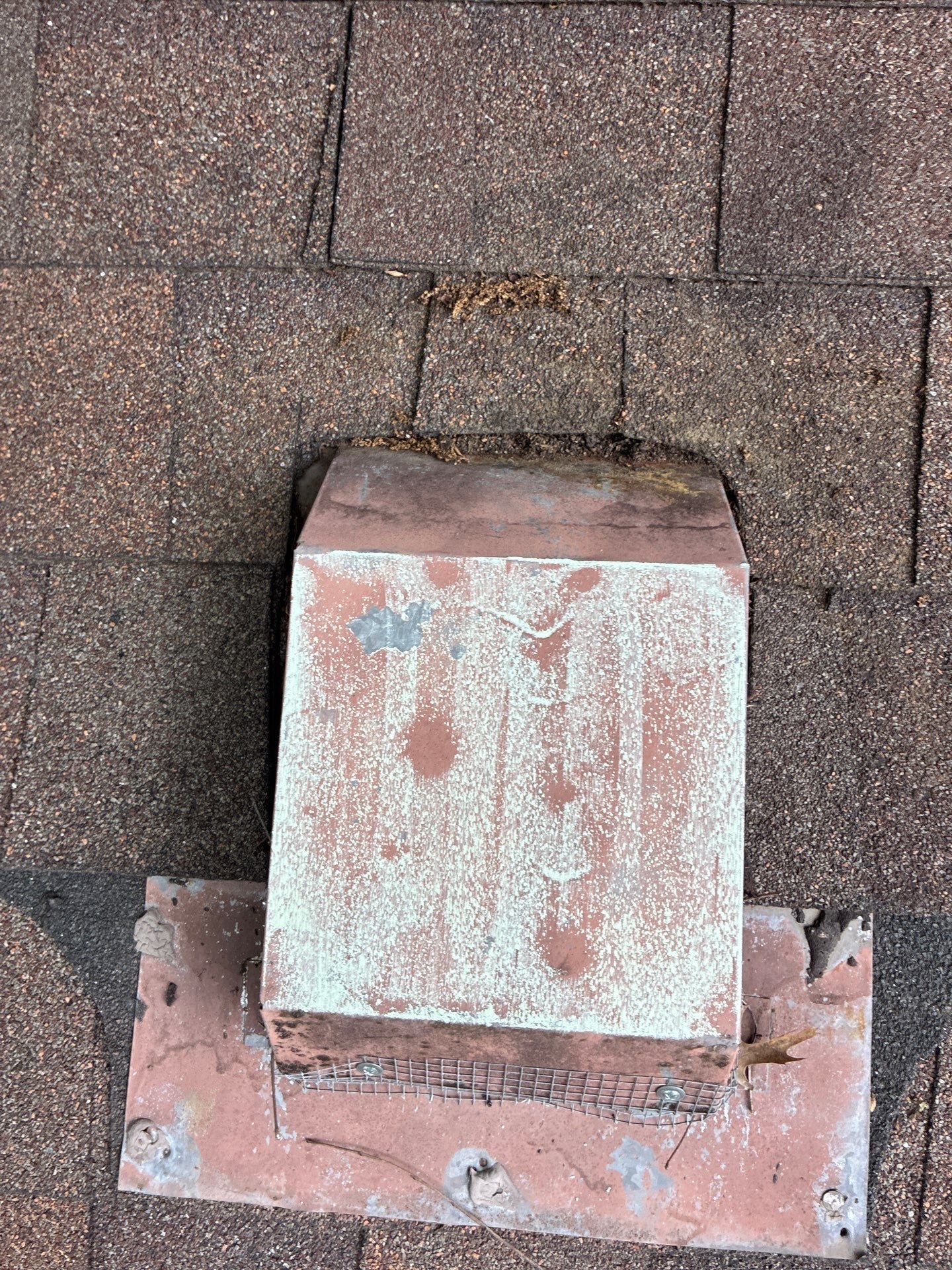
The vent above is a good example of what age looks like on a Central Texas roof: the painted housing has chalked and corroded, the flashing flange is fully exposed rather than tucked under the shingle course, and someone has previously dabbed sealant over the fastener heads. That last detail is the tell: sealant over fasteners on an exposed flange is a vent that has already been patched once.
- Cracked housings. Plastic housings crack from UV and impact. A cracked hood cannot be resealed into a watertight condition.
- Hail and wind damage. Metal caps dent, and because they dent visibly they are often the clearest evidence of a hail event on the whole roof. Wind can lift a poorly fastened hood or drive rain up under it.
- Loose or damaged flashing. The flange is the part that matters. If it has lifted out of the shingle courses, the vent needs to be reset, not caulked.
- Improper sealing. A vent that was face-nailed and then sealed over, rather than layered into the shingles, will keep leaking as the sealant ages.
Reseal a box vent when the housing and flange are both intact and the issue is a small gap or an exposed fastener. Replace it when the housing is cracked, dented through, warped, or when the flashing has to come up anyway to fix the real problem. At that point a new vent costs little more than reinstalling the old one and resets the clock. Hail dents that are cosmetic on one vent may still matter for an insurance hail damage claim, so document them before anything is replaced.
Ridge Vent Problems
Ridge vents run along the peak and are covered by ridge-cap shingles. Their common failure points are fastening and installation quality rather than the vent material itself: ridge-cap shingles damaged or blown off, nails that are too short or driven at the wrong angle, and a ridge slot that was cut too narrow, or never cut at all, so the vent is decorative rather than functional.
One issue is worth flagging here because it affects vent replacement decisions: mixing different exhaust types in the same attic zone can short-circuit the airflow. If a ridge vent and box vents share one attic space, the ridge vent can end up pulling air from the box vents instead of from the soffit intake, leaving part of the attic unventilated. If you are replacing vents, keep the exhaust type consistent within each zone.
How Roofers Diagnose a Roof Vent Leak
The hardest part of a vent leak is rarely the repair. It is confirming that the vent is actually the source. Water does not fall straight down. It enters at the penetration, runs along the underside of the decking, travels down a rafter or truss chord, and drips wherever it finally loses the surface. The wet spot on your ceiling can be several feet from the hole, and on a low-slope run it can be considerably further. Chasing the stain instead of the entry point is the most common reason a “repaired” leak comes back.
These are the distinctions we work through on site:
- Vent flashing leak. Staining concentrated at the vent opening and along the flange edges; often the deck is darker on the upslope side of the penetration.
- Cracked vent boot. Water tracking down the outside of the pipe itself, with a visible split or a gap where the rubber has pulled back from the pipe.
- Nearby shingle damage. Missing, lifted, or creased shingles uphill from the vent, with the entry point above the vent rather than at it.
- Roof deck damage. Soft, delaminated, or previously repaired decking around the opening, which usually means the leak has been active for a long time.
- Condensation. Broad, even dampness across the underside of the deck or on nail points, worse in cold snaps, with no single entry point. That points to a ventilation or moisture problem, not a flashing failure.
- Wind-driven rain. Leaks that appear only in storms from one direction and stay dry in ordinary rain. This often points to a vent hood that admits water under pressure rather than one that is failing outright.
If a leak is active and you need it stopped now, our emergency roof repair team can get it stabilized and diagnosed properly.
Should You Reseal or Replace a Roof Vent?
The decision is usually simpler than it looks:
| What you are looking at | Reasonable action |
|---|---|
| Minor maintenance issue, flashing and housing both sound (exposed fastener head, small gap at an edge) | Reseal or spot-repair |
| Cracked housing, split boot, or failed / lifted flashing | Replace the vent |
| Leak has returned after the vent was previously caulked | Stop adding sealant; open it up and diagnose the flashing |
| Roof is broadly aged and several vents are deteriorating | Evaluate vent replacement as part of the reroof |
| Decking around the penetration is soft or damaged | Repair the deck first. A new vent over bad decking will not hold |
How Do You Seal a Roof Vent?
Sealing a roof vent is a common maintenance task, and it is worth doing correctly on a vent that is otherwise in good condition. Appropriate roof-grade sealants protect the fastener penetrations and the edges of the flange, and they should be applied so that water sheds away from the vent rather than pooling around it or being driven under the shingles. Sealant works as a supporting detail on top of correct flashing. It is not the thing holding the water out, and a vent that needs sealant to stay dry is a vent that needs attention at the flashing.
Can You Seal Roof Vent from Inside?
A roof vent repair or reseal can really only be done from the outside. A roof vent that is leaking needs to be assessed for problems at the flashing and the penetration, which are accessible only from the roof surface. The shingles will likely require adjustment, and any sealant needed is applied to exterior areas. The attic is useful for tracing a leak, following the water back up the framing to the entry point, but attempting the actual repair from inside will likely lead to disappointment.
What Do You Use to Seal a Vent Cap or Vent Pipe on a Roof?
There are a number of products that can be used to seal a roof vent or pipe on a home. The location and type of vent in use determine which is appropriate. Two common options are designed for roofs: a lap sealant, or a durable polyurethane sealant. Both are made to withstand weather and to resist cracking and fading from heat and sun exposure. Whichever is used, follow the vent manufacturer’s instructions. Some systems specify a particular sealant type, and some flashing details are designed to be left unsealed so they can drain.
Vent Replacement and Ventilation Balance
Replacing vents changes your attic’s airflow, so it is worth a moment of thought before the parts get swapped.
Exhaust vents only work if there is enough intake to feed them. Intake normally comes from soffit vents at the eaves, so if the soffits are blocked with insulation or painted over, adding exhaust capacity will not fix a hot attic, because the system simply cannot draw. Adding more exhaust vents is also not automatically better; past a certain point, extra exhaust can pull air from the nearest available opening rather than from the eaves. The safe default when replacing vents is to preserve the roof’s intended ventilation design: same type, same count, same positions, unless a roofer has evaluated the whole system and recommended a change.
Roof Vents in the Austin and Central Texas Climate
Vents here do not fail the way they fail in milder markets. Intense UV and long stretches of extreme summer heat age rubber and plastic components faster, which is why pipe boots that might last two decades elsewhere commonly split at the 10 to 15 year mark in Central Texas. That is what our crews see on Austin-area roofs, not a manufacturer rating. Hail dents metal caps and cracks plastic housings, and because metal vents show impacts more clearly than shingles do, they are one of the first things a roofer checks after a storm. Wind-driven rain can push water under a hood that handles ordinary rain fine. And the daily expansion and contraction cycle works fasteners loose over time, which is a slow, quiet way for a well-installed vent to start leaking years later.
What Does Roof Vent Replacement Cost?
We do not publish a flat price for vent work, because the honest answer is that the cost is driven by what the inspection finds rather than by the part itself. A vent hood is an inexpensive component; the labor and the scope around it are what vary. The main factors:
- How many vents are being replaced. Doing several in one visit costs far less per vent than one-off trips.
- Vent type. A pipe jack that has to be worked back into the shingle courses is different work from a retrofit collar.
- Roof access, pitch, and height. Steep and high roofs take longer and require more setup.
- Whether shingles have to be cut in or replaced around the penetration, and whether matching material is available.
- Whether the decking underneath is damaged. Deck repair is separate work and is the most common reason a small vent job grows.
- Whether the roof is near replacement age. If it is, vent replacement is usually better folded into the reroof than paid for twice.
Driftwood Builders Roofing inspects and quotes vent repairs at no charge, and we will tell you plainly when resealing is the sensible call and when replacement is.
What to Ask When a Roof Vent Is Leaking
Whether you are talking to us or to another contractor, these questions will tell you quickly whether the leak was actually diagnosed or just covered up:
- Is the leak coming from the vent itself, or from the roofing near it?
- Has the flashing failed, or is it still sound?
- Is the rubber boot cracked or pulled away from the pipe?
- Has this vent already been caulked before?
- Is a repair appropriate here, or should the vent be replaced?
- Is the roof deck damaged underneath the penetration?
- Will this replacement change the attic’s ventilation balance?
- Are there other vents of the same age that should be replaced at the same time?
Roof Vent Repair and Sealing FAQs
Should roof vents be sealed?
Roof vents should be flashed correctly first, and sealed only as a supporting detail. Sealant belongs on exposed fastener heads and small gaps at the flange on a vent whose flashing and housing are sound. It is not a substitute for flashing, and a vent that depends on sealant to stay dry needs attention at the flashing instead.
Can you caulk around a roof vent?
Yes, with a roof-grade lap sealant or polyurethane sealant, and only where the manufacturer’s instructions call for it. Caulk is useful maintenance on a sound vent. Smearing roofing cement around a vent that is already leaking is a temporary measure that usually cracks within a season or two in Central Texas heat.
How do you know if a roof vent is leaking?
Look for staining on the decking or insulation immediately around the vent opening, water tracking down the outside of a vent pipe, rust streaks below a metal flange, or a split where a rubber boot has pulled back from the pipe. Because water travels along the underside of the deck before it drips, the wet spot on your ceiling is often not directly below the entry point.
Can you reseal a roof vent or does it need replacement?
Reseal when the housing and flashing are both intact and the issue is a small gap or an exposed fastener. Replace when the housing is cracked, dented through, or warped, when the flashing has lifted or corroded, or when the vent has already been caulked once and is leaking again.
How long do roof vent boots last?
In the Austin area, rubber pipe boots commonly split in the 10 to 15 year range, well before the shingles are finished. That is what our crews see on Austin-area roofs, not a manufacturer rating. Intense UV and daily heat cycling harden the rubber gasket until it shrinks back from the pipe and cracks. Metal pipe flashing, which has no rubber component to degrade, is built to last the life of the roof.
Why do plumbing vent boots leak?
The common builder-grade part is a three-in-one boot: a metal base flange with a rubber gasket stretched over the pipe. The metal generally lasts, but the rubber degrades under sun and heat, hardens, and splits. Once it splits, water runs down the outside of the pipe and into the attic.
Can roof vents leak during heavy rain?
Yes. A vent that stays dry in ordinary rain can admit water in wind-driven rain, when water is pushed sideways and upward under the hood rather than shedding down the roof. Leaks that only appear during storms from one direction are a strong signal of this, rather than of a vent that has failed outright.
How much does it cost to replace a roof vent?
The vent itself is an inexpensive part, so cost is driven by scope: how many vents are being replaced, the vent type, roof pitch and access, whether shingles have to be cut in around the penetration, and whether the decking underneath is damaged. Driftwood Builders Roofing inspects and quotes vent work at no charge.
Should roof vents be replaced during a new roof?
Generally yes. Vents are usually the same age as the roof, and replacing them during a reroof costs far less than doing it as separate visits later. It is also the point at which pipe jacks can be upgraded to metal flashing rather than another rubber boot that will fail again in a decade.
Can too many roof vents cause problems?
Adding more exhaust vents is not automatically better. Exhaust only works if intake, usually soffit vents at the eaves, can feed it. Past a certain point extra exhaust can draw air from the nearest available opening instead of from the eaves, leaving part of the attic unventilated.
Can ridge vents and box vents be used together?
Not within the same attic zone. A ridge vent can end up pulling air from nearby box vents rather than from the soffit intake, which short-circuits the airflow and leaves part of the attic unventilated. Keep the exhaust type consistent within each zone when replacing vents.
Your Local Austin TX Roofing Professionals
We strive to bring you the best in roofing in the Austin, Texas area. We have decades of roofing experience, training, and knowledge in this area’s needs. We are a prominent roofing company in residential roof repair and roof replacement. We will not ask for a deposit on labor or materials as a dependable way to stand out from the competition while bringing you the best product and service in Austin.
When we inspect, install, or repair your roof, we want to provide you with the best options for your roof design, components, and ventilation. We are Master Elite Contractors bringing you the latest in roofing technology, and a member of our local area Better Business Bureau, so you know we take pride in our work and our community.
Contact us by phone or email to schedule your FREE roofing inspection and quote today.