How the right team protects your home and saves what matters most
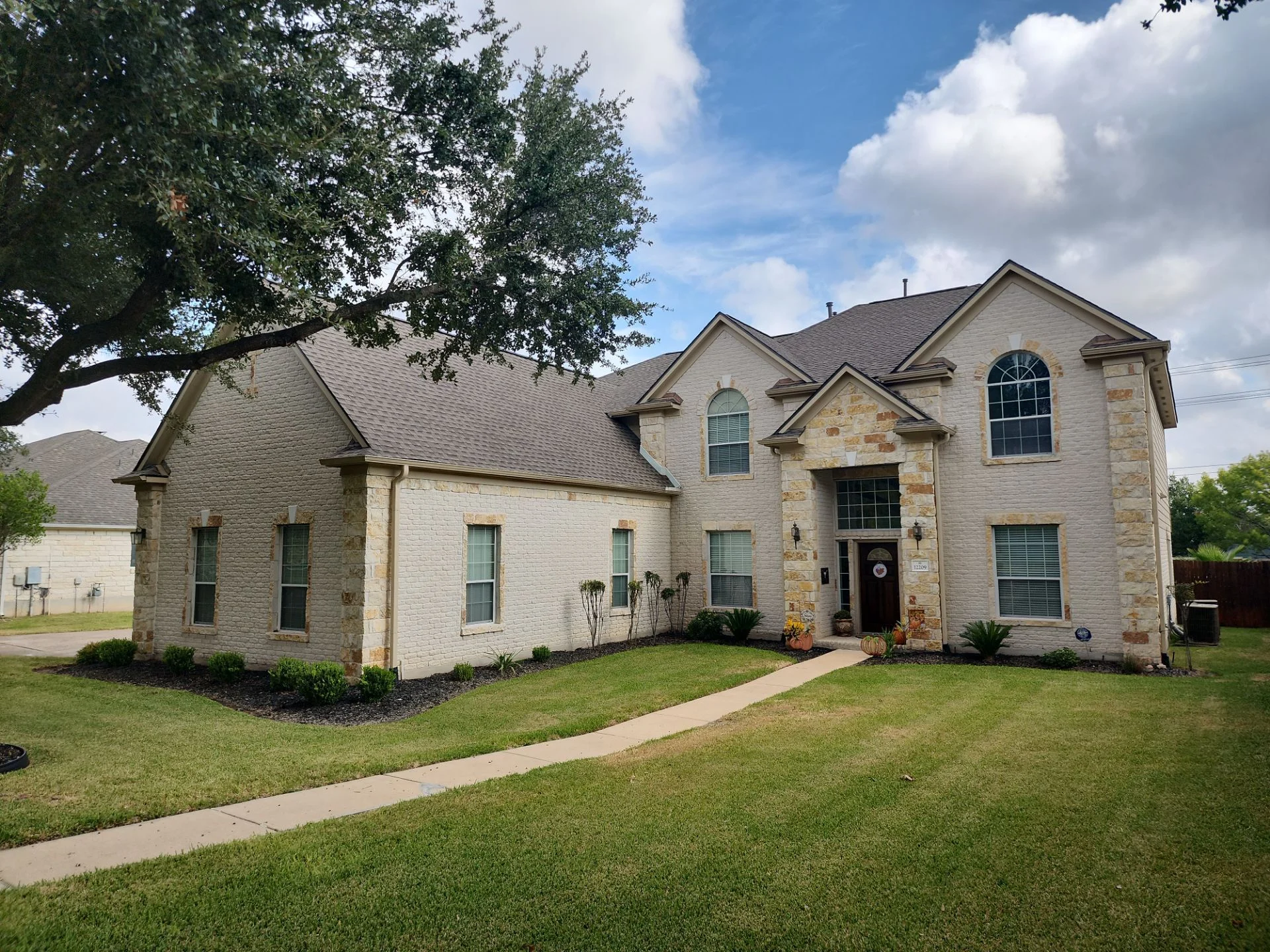
A ceiling stain is never just a ceiling stain.
From the historic homes of Georgetown to the college-town neighborhoods of San Marcos, from the lakeside properties of Bee Cave to the family communities of Cedar Park, the pattern repeats: water finds a way in through the roof, and by the time it shows up inside, the damage has already spread.
The visible stain is the symptom. The real question is how much can still be saved.
Why Does Water Damage Spread So Quickly?
Water follows gravity and capillary action. A single roof leak can travel along rafters, soak through insulation, wick into drywall, and pool in places nowhere near the original entry point. By the time a homeowner notices a stain in the living room, the water may have already affected the attic, multiple wall cavities, and flooring in adjacent rooms.
This is why a professional roof inspection after any storm matters so much. Finding the entry point early is the difference between a simple roof repair and a multi-room restoration project.
The roof stops the source. The restoration team handles everything the water touched on its way through.
What Can Actually Be Saved After Water Damage?
More than most homeowners expect. Modern restoration techniques focus on drying rather than demolition. Advanced moisture detection finds exactly where water traveled. Industrial dehumidifiers and air movers can save hardwood floors, drywall, and structural components that would have been torn out a decade ago.
Beyond the structure, content restoration can recover furniture, rugs, clothing, documents, and irreplaceable personal items. The key is acting fast and using a team that knows how to assess what’s salvageable versus what’s truly lost.
For storm-related damage, Texas insurance policies typically cover both the roof work and the interior restoration. A storm damage inspection with insurance claim support documents the full scope of damage, strengthening your claim and ensuring nothing gets missed.
When Does Repair Become Replacement?
Sometimes a targeted roof repair is the right call. Patch the entry point, dry the affected area, restore what was damaged, move on. But when damage is widespread, when the roof has simply aged out, or when repair costs approach replacement costs, a full roof replacement becomes the smarter investment.
Flexible payment options and roof replacement financing make it possible to move forward even when the timing isn’t ideal. Many storm-related replacements are covered by insurance anyway.
For commercial properties, commercial roofing adds complexity: flat roof systems, business continuity concerns, and the need for coordinated scheduling between roofing and restoration crews.
The Local Advantage
National franchises follow scripts. Local teams solve problems. A restoration company that serves Dripping Springs knows about the limestone foundations and the well water issues. A roofer who’s worked Kyle and Bastrop understands which neighborhoods flood first after heavy rain.
Homeowners searching for roofers near me in Central Texas want someone who answers the phone, shows up the same day, and will still be here next year if there’s a warranty issue. That’s what 20 years of serving this community looks like.
Driftwood Builders Roofing holds GAF Master Elite certification, a distinction only about 2% of roofers nationwide achieve. As a James Hardie Certified Contractor, siding installation and repair is part of the complete exterior picture when storm damage extends beyond the roofline.
Partners in Protection
When water gets inside, you need both problems solved: the roof that let it in and the damage it caused on its way through. Driftwood Builders Roofing and Best Option Restoration work together to handle both sides of the equation.
Best Option Restoration brings IICRC-certified technicians, advanced drying equipment, and a focus on saving rather than demolishing. They handle water damage, mold remediation, fire restoration, and content recovery throughout Travis County and surrounding areas.
Together, these partnerships mean Austin homeowners don’t have to coordinate separate contractors or wonder if something got missed. One call connects you to a team that handles the full scope.
The Bottom Line
Whether you’re in Marble Falls or Spicewood, Round Rock or anywhere else in Central Texas, the principle stays the same: stop the source first, then restore everything it touched.
Don’t assume that visible stain is the full extent of the damage. Homeowners near me in Central Texas deserve a roofing contractor and restoration team who actually know how water moves through homes in this climate.
This article is a partnership between Best Option Restoration and Driftwood Builders Roofing. Two local businesses committed to protecting Austin homes inside and out.
Frequently Asked Questions
How does roof condition affect home appraisal value?
Roof condition is one of the first exterior factors appraisers evaluate. A well-documented, recently inspected roof supports the asking price. A roof with unknown age or visible issues gives buyers and appraisers reason to negotiate down.
Should I get a roof inspection before selling my home?
Yes. A pre-sale roof inspection creates documentation that supports your asking price and prevents surprises during buyer inspections. Addressing issues before listing is almost always less expensive than negotiating credits after an offer is made.
How long do I have to file a roof insurance claim in Texas?
Most Texas homeowners insurance policies require claims to be filed within 12 months of the storm date. After that window closes, the repair bill is entirely out of pocket. Getting a storm damage inspection soon after a storm ensures you have documentation before the deadline.
How much does a roof replacement cost in Austin?
A full roof replacement typically ranges from $10,000 to $25,000 depending on home size, materials, and roof complexity. Many storm-related replacements are covered by insurance. Flexible financing options are available for those paying out of pocket.
Why should I choose a local Austin roofer over a national company?
Local roofers understand Austin’s specific challenges: clay soil expansion, tree canopy effects, hail patterns, and which materials perform best here. They’re accountable to the community and available for follow-up service. When you search for roofers near me, you want someone who will still be here next year.
What should I look for when choosing a roofing contractor?
Look for local ownership, long track record, and industry certifications. GAF Master Elite certification means the contractor has met strict standards for installation quality and business practices. Ask whether they upsell repairs into replacements unnecessarily. A trustworthy roofer will recommend only what’s actually needed.
Author: Driftwood Builders Roofing
Driftwood Builders Roofing is a family-owned residential roofing company headquartered in Manchaca, Texas, serving Austin and the surrounding Hill Country since 2005. The company has delivered 3,700 full roof replacements and 783 repairs across 3,559 different customers over 20 years in business, with 97 years of combined construction experience across the leadership team and 74 years specifically inside Driftwood Builders. The company holds the highest contractor certifications offered by the major shingle manufacturers, including GAF Master Elite Contractor (the top 3% of GAF contractors nationally), GAF Certified Green Roofer, Owens Corning certified, TAMKO Pro Certified Contractor, and a Berridge Roof Installation Seminar Certificate for standing-seam metal roofs. Driftwood is an NRCA member, holds an Angie's List Super Service Award, is BBB Accredited, and is a GuildQuality member for verified customer satisfaction data. James Hardie certification covers the siding side of the business. Services include residential roof replacement, leak and storm-damage repair, tile roof repair, metal roofing, TPO commercial roofing, roof inspections, hail and storm damage inspections with insurance claim assistance, gutter work, and James Hardie siding. The customer-protection policy is straightforward: Only Pay Upon Completion. The company serves 22 cities across the Hill Country and Greater Austin and holds a 5-star rating across Google, GuildQuality, Angi, Nextdoor, Facebook, Thumbtack, and Yelp.
