Hail Damage on a Metal Roof: What It Looks Like and Whether Insurance Pays
Watch the Video
What does hail damage look like on a metal roof?
Hail damage on metal looks completely different from hail damage on asphalt shingle, which is why inspectors approach the two differently.
On a shingle roof, hail knocks protective granules off, leaving a bruise where the asphalt is exposed. That is functional damage, because the exposed asphalt then breaks down under UV and the roof’s life is shortened even though nothing leaks yet.
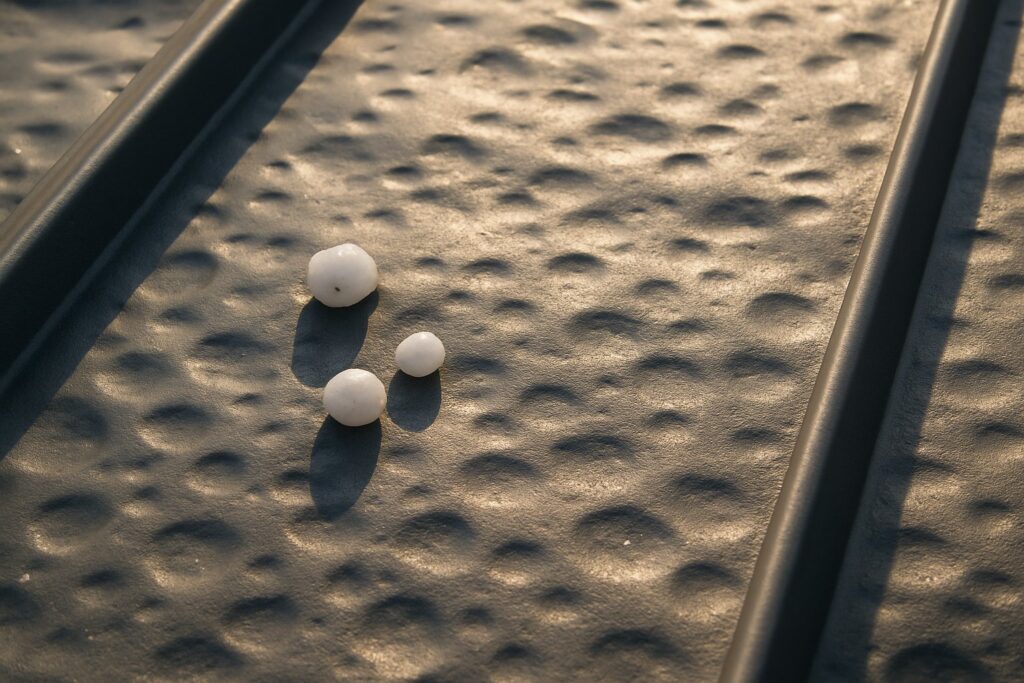
On a metal roof, hail dents. The panel deforms slightly at the point of impact, leaving a dimple. The coating usually remains intact, the panel remains sealed, and the roof continues shedding water exactly as before.
What to look for:
- Dimples or dents across the panel surface, most visible in raking light early or late in the day.
- Chipped or fractured coating at impact points, which is the more serious version because bare metal will begin to rust.
- Damage concentrated on one slope, typically the side facing the storm, which is a useful confirmation that it was hail and not something else.
- Dents in softer components such as gutters, downspouts, vents, and flashing. These often show damage before the panels do, and they matter for a claim.
A practical detail: dents can be difficult to see from the ground and very obvious from a low angle in the right light. Photograph in the early morning or late afternoon when shadows exaggerate surface irregularities.
Is hail damage on a metal roof cosmetic or functional?
This distinction decides whether a claim pays, so it is worth being precise about.
Cosmetic damage means the roof looks different but performs identically. Dents that have not fractured the coating fall here. The panel is deformed, the finish is intact, water sheds normally, and the roof’s expected lifespan is essentially unchanged.
Functional damage means the roof’s ability to protect the building has been reduced:
- Punctured panels, which are rare but happen with very large hail.
- Fractured or chipped coating, exposing bare steel that will corrode. This is the most common way hail causes genuine damage to metal.
- Split or separated seams, where impact has disturbed the lock on a standing seam panel.
- Damaged flashing at chimneys, walls, and valleys.
- Cracked pipe boots, since aged rubber is far more brittle than steel.
- Loosened fasteners on exposed fastener systems, where impact has broken the seal on rubber washers.
The important insight is that the functional damage is usually not in the panels. It is in the accessories: the boots, the flashing, the fasteners, the vents. An inspector who only looks at panels and reports dents may be missing the part of the roof that actually got hurt, and that is also the part most likely to be covered.
Does insurance cover hail damage to a metal roof?
Sometimes, and the answer turns almost entirely on one clause in your policy.
Texas homeowners policies generally cover sudden accidental damage including hail. However, over recent years insurers have increasingly added cosmetic damage exclusions, sometimes called cosmetic damage endorsements, specifically for metal roofs. Where one applies, the insurer will pay for damage that affects function but not for dents that merely affect appearance.
That leaves metal roof owners in an awkward position. The very property that makes metal good in hail, that it dents rather than fails, is what can put the damage outside coverage.
What to do:
- Read your policy for cosmetic damage language before a storm, not after. If you are choosing coverage, this clause is worth more attention than the premium difference.
- Document everything on every slope, including gutters, vents, flashing, and boots. Functional damage to accessories is covered even where panel dents are excluded, and it is frequently missed on a fast inspection.
- File within the policy window, which is shorter than most people assume.
- Look for coating fractures specifically. A dent with a cracked finish is not cosmetic, because the steel underneath will rust. That distinction is worth photographing closely.
Adjusters work through many claims quickly after a regional storm, and initial estimates often miss flashing, ridge cap, and ventilation components. Driftwood Builders Roofing documents the damage and can meet your adjuster on site to explain what we found. See our storm damage and insurance claim assistance page.
Should I repair or replace a hail damaged metal roof?
Most hail damaged metal roofs do not need replacing. That is worth stating plainly, because it is the opposite of what a storm chaser knocking on your door after a hailstorm will tell you.
Repair, or no work at all, is usually right when:
- Damage is limited to dents with the coating intact
- Only accessories were damaged, meaning boots, flashing, vents, or gutters, all of which are replaceable in place
- A small number of panels are affected on one slope
- Fasteners need replacing but the holes are still sound
Replacement becomes the honest answer when:
- Panels are punctured or structurally deformed rather than dimpled
- Coating is fractured across broad areas, meaning corrosion will start everywhere at once
- Seams have separated across multiple panels
- The decking underneath has been compromised
Because the coating is what stands between steel and rust, fractured finish across a wide area is the condition that most often turns a cosmetic event into a replacement. Isolated chips can be cleaned and touched up.
Be cautious of anyone recommending full replacement for a metal roof based on dents alone, particularly if they arrived uninvited after a storm. Ask for photographs showing punctures, coating fractures, or seam separation. Our wider guide covers when a metal roof can be repaired versus replaced.
How do I protect a metal roof from future hail?
You cannot stop hail, but the specification of the roof makes a substantial difference to how it comes through a storm. These decisions are made before installation.
- Heavier gauge. This is the single most effective choice. 24 gauge resists denting considerably better than 26, and 26 better than 29. In a hail corridor like Central Texas, the cost difference is usually worth it.
- Impact-rated panels. Some metal roofing carries a Class 4 impact rating, the highest available, and many Texas insurers offer premium discounts for it. Ask your carrier what discount applies, because it can offset a meaningful part of the upgrade cost.
- Textured or striated panels. Surface texture disguises minor denting far better than a large flat glossy pan, which is the same reason striations help with oil canning.
- Matte or low-gloss finishes. These do not prevent dents but they substantially reduce how visible dents are, because gloss reflects light in a way that highlights every surface irregularity.
- Maintain the accessories. Pipe boots, sealant, and fasteners are the components that genuinely fail in hail. Replacing aged boots and sealant proactively means a storm has less to break.
Annual inspections matter here too, plus a check after any significant storm. Damage that causes no immediate leak still starts the insurance clock, and a documented inspection soon after the event preserves your ability to claim.
Driftwood Builders Roofing is a family-owned, GAF Master Elite contractor working from Manchaca across Austin and the Hill Country since 2005, with 783 repairs and 2,776 replacements completed for 3,559 customers. Our inspections are free and we photograph every slope. See our metal roofing page, call our Austin roofing company team at (512) 894-0129, or request a free estimate.
Related Videos
Can Hail Damage a Metal Roof? | What Every Homeowner Should Know
Frequently Asked Questions
What does hail damage look like on a metal roof?
Mostly dents rather than breaches. Look for dimples across the panel surface, best seen in raking light early or late in the day, chipped or fractured coating at impact points, damage concentrated on the slope facing the storm, and dents in softer components such as gutters, downspouts, vents, and flashing, which often show damage before the panels do.
Does insurance cover hail dents on a metal roof?
Not always. Texas policies generally cover sudden hail damage, but cosmetic damage exclusions have become common specifically for metal roofs. Where one applies, the insurer pays for damage affecting function but not for dents affecting only appearance. Read your policy for that clause, and document coating fractures closely since those are functional, not cosmetic.
Is a dented metal roof still watertight?
Usually yes. A dent where the coating remains intact leaves the panel sealed and the roof performing as before, with its expected lifespan essentially unchanged. The concern is a dent that has chipped or fractured the finish, because bare steel underneath will begin to corrode. That distinction is what separates cosmetic from functional damage.
Do I need to replace a hail damaged metal roof?
Most of the time, no. Replacement is warranted when panels are punctured or structurally deformed, coating is fractured across broad areas, seams have separated across multiple panels, or decking is compromised. Dents with intact coating, and damage limited to boots, flashing, vents, or gutters, are repairs. Be cautious of replacement recommendations based on dents alone.
How can I make a metal roof more hail resistant?
Specify heavier gauge, since 24 resists denting far better than 26. Consider Class 4 impact-rated panels, as many Texas insurers offer premium discounts that offset part of the upgrade cost. Choose textured or striated panels and a matte finish, which disguise minor denting. Keep pipe boots, sealant, and fasteners maintained, since those are what genuinely fail.
Author: Driftwood Builders Roofing
Driftwood Builders Roofing is a family-owned residential roofing company headquartered in Manchaca, Texas, serving Austin and the surrounding Hill Country since 2005. The company has delivered 3,700 full roof replacements and 783 repairs across 3,559 different customers over 20 years in business, with 97 years of combined construction experience across the leadership team and 74 years specifically inside Driftwood Builders. The company holds the highest contractor certifications offered by the major shingle manufacturers, including GAF Master Elite Contractor (the top 3% of GAF contractors nationally), GAF Certified Green Roofer, Owens Corning certified, TAMKO Pro Certified Contractor, and a Berridge Roof Installation Seminar Certificate for standing-seam metal roofs. Driftwood is an NRCA member, holds an Angie's List Super Service Award, is BBB Accredited, and is a GuildQuality member for verified customer satisfaction data. James Hardie certification covers the siding side of the business. Services include residential roof replacement, leak and storm-damage repair, tile roof repair, metal roofing, TPO commercial roofing, roof inspections, hail and storm damage inspections with insurance claim assistance, gutter work, and James Hardie siding. The customer-protection policy is straightforward: Only Pay Upon Completion. The company serves 22 cities across the Hill Country and Greater Austin and holds a 5-star rating across Google, GuildQuality, Angi, Nextdoor, Facebook, Thumbtack, and Yelp.
