Inadequate Ventilation vs. Over-Ventilation: Finding Balance
What is the difference between inadequate ventilation and over-ventilation?
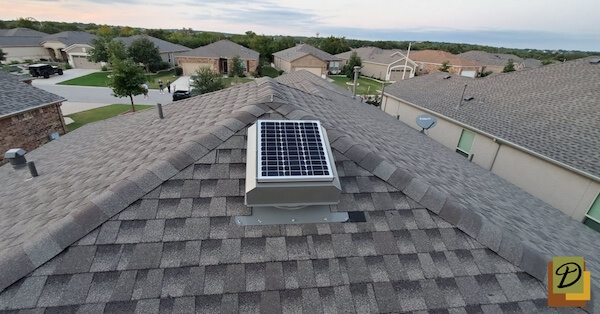
Finding the right attic ventilation balance means avoiding two opposite problems. Inadequate ventilation happens when too little air moves through the attic, so heat and humidity build up under the roof. That trapped moisture condenses on wood, metal, and insulation, leading to mold, rot, and shingles that age and crack years ahead of schedule. In an Austin summer, an underventilated attic can climb well past 130 degrees and bake the shingles from below.
Over-ventilation is the reverse: too many or mismatched vents create openings that can let wind-driven rain into the attic and add weak points where storm gusts get under the roof. A proper system pairs intake vents low at the eaves with exhaust vents high at the ridge so air flows in one smooth direction. A trusted Austin roofing company can confirm whether your setup is starved, overdone, or correctly balanced for our climate.
What ratio gives you the right attic ventilation balance?
The industry standard for attic ventilation balance is the net free area ratio, which compares the open vent area to the attic floor square footage. There are two accepted ratios:
- 1:300 ratio: One square foot of net free vent area for every 300 square feet of attic floor, allowed when intake and exhaust are split roughly 50/50 and a vapor barrier is present.
- 1:150 ratio: One square foot of vent area for every 150 square feet of attic floor, used when ventilation is unbalanced or a vapor barrier is missing.
Net free area is the actual open space air can pass through, not the overall size of the vent, since screens and louvers block part of every opening. The goal is an even split: about half the area at the intake (soffit or eave) and half at the exhaust (ridge or roof vents). Too much exhaust without matching intake pulls conditioned air out of the house, a common hidden flaw in older Central Texas homes.
What are the warning signs of poor attic ventilation?
Your attic usually signals a ventilation problem long before the roof fails. Watch for these red flags:
- Condensation or frost on the underside of the roof deck, nails, or rafters.
- Mold and mildew growth or a persistent musty smell near the roofline.
- Damp, matted insulation that has lost its loft and stopped working well.
- High cooling bills in summer as superheated attic air radiates into the living space.
- Cupped, cracked, or blistered shingles aging faster than expected.
- Ice or icicles at the eaves during a rare Central Texas freeze.
These symptoms are easy to miss until damage spreads to framing or ceilings. A professional roof inspection can confirm whether ventilation is the cause and measure your net free area against the recommended ratio.
How does Austin's climate affect roof ventilation?
Central Texas puts unusual demands on attic ventilation, which is why the right balance matters more here than in milder regions. Several local forces work at once:
- Intense, prolonged heat: Months of triple-digit sun drive attic temperatures sky-high, so strong exhaust is essential to vent that heat before it cooks the shingles and your cooling bills.
- Spring storms and hail: Severe weather rewards a sealed, balanced system; oversized or poorly placed vents become entry points for wind-driven rain.
- Straight-line winds: High gusts can lift shingles and exploit extra openings, so vent count and placement affect uplift resistance.
- Humidity swings: Damp stretches load the attic with moisture that only steady airflow can carry out.
Because our roofs face heat, hail, and wind in the same year, ventilation has to handle all three. After a major storm, a storm damage and insurance claim review can document vent damage that throws the system out of balance.
Inadequate vs over-ventilation: how do the two compare?
The table below shows how the two extremes differ and why a balanced middle is the goal:
| Factor | Inadequate ventilation | Over-ventilation | Balanced system |
|---|---|---|---|
| Attic heat | Trapped, often over 130 degrees | Removed, but airflow is uneven | Steadily exhausted |
| Moisture | Condenses, feeds mold and rot | Wind-driven rain can enter | Carried out continuously |
| Shingle life | Shortened by heat from below | Reduced by uplift at extra vents | Reaches full lifespan |
| Storm risk | Pressure buildup, no relief | More openings for wind to exploit | Sealed and resistant |
| Energy bills | Higher cooling costs | Conditioned air pulled from house | Lower, more efficient |
Neither extreme protects your home. The fix is matching intake and exhaust to the correct ratio for your attic, not simply adding more vents. Driftwood Builders Roofing has been GAF Master Elite certified since 2005 and serves Austin and Central Texas with free estimates and no deposit required. If you suspect your attic ventilation balance is off, request a free estimate.
Frequently Asked Questions
Can a roof have too much ventilation?
Yes. Over-ventilation creates extra openings that can let wind-driven rain into the attic and give storm gusts more places to lift the roof. Too much exhaust without matching intake also pulls conditioned air out of the living space, raising energy costs.
How do I know if my attic ventilation is balanced?
A balanced attic splits net free vent area roughly 50/50 between low intake vents at the eaves and high exhaust vents at the ridge, sized to the 1:150 or 1:300 ratio for your attic floor area. A roofer can measure your actual vent area and compare it to what your home needs.
What problems does poor attic ventilation cause in Austin?
Inadequate ventilation traps heat and humidity, leading to mold, wood rot, premature shingle aging, and higher cooling bills during long Central Texas summers. Left unaddressed, trapped moisture can damage insulation and roof framing.
What is net free area in roof ventilation?
Net free area is the actual open space air can pass through a vent, after screens and louvers block part of the opening. It is the number used to calculate the 1:150 or 1:300 ratio, not the vent’s overall physical size.
Does roof ventilation affect my energy bills?
Yes. A balanced system vents superheated attic air so it does not radiate into your living space, which lowers summer cooling costs in the Austin heat. Poor or unbalanced ventilation forces your air conditioner to work harder and run longer.

Author: Driftwood Builders Roofing
Driftwood Builders Roofing is a family-owned residential roofing company headquartered in Manchaca, Texas, serving Austin and the surrounding Hill Country since 2005. The company has delivered 3,700 full roof replacements and 783 repairs across 3,559 different customers over 20 years in business, with 97 years of combined construction experience across the leadership team and 74 years specifically inside Driftwood Builders. The company holds the highest contractor certifications offered by the major shingle manufacturers, including GAF Master Elite Contractor (the top 3% of GAF contractors nationally), GAF Certified Green Roofer, Owens Corning certified, TAMKO Pro Certified Contractor, and a Berridge Roof Installation Seminar Certificate for standing-seam metal roofs. Driftwood is an NRCA member, holds an Angie's List Super Service Award, is BBB Accredited, and is a GuildQuality member for verified customer satisfaction data. James Hardie certification covers the siding side of the business. Services include residential roof replacement, leak and storm-damage repair, tile roof repair, metal roofing, TPO commercial roofing, roof inspections, hail and storm damage inspections with insurance claim assistance, gutter work, and James Hardie siding. The customer-protection policy is straightforward: Only Pay Upon Completion. The company serves 22 cities across the Hill Country and Greater Austin and holds a 5-star rating across Google, GuildQuality, Angi, Nextdoor, Facebook, Thumbtack, and Yelp.
