Kickout Flashing: The Hidden Cause of Rot Where Your Roof Meets Your Siding
Watch: Roof Flashing at a Wall
What Kickout Flashing Is
Kickout flashing (sometimes called a diverter) is a small, angled piece of metal installed at the bottom termination of a step-flashing run, exactly where a sloped roof edge meets a wall and stops. Its job is simple: kick the water flowing down that roof-wall joint outward, into the gutter, instead of letting it keep going straight down behind the siding.
It's easy to confuse with step flashing, but they're not the same thing. Step flashing is the series of individual overlapping pieces that run up the slope of the roof-wall intersection. Driftwood Builders Roofing's existing guide on roof flashing and leaks covers step flashing in general. Kickout flashing is the one piece at the bottom of that run that redirects the water sideways, out of the wall plane entirely.

Where It Belongs
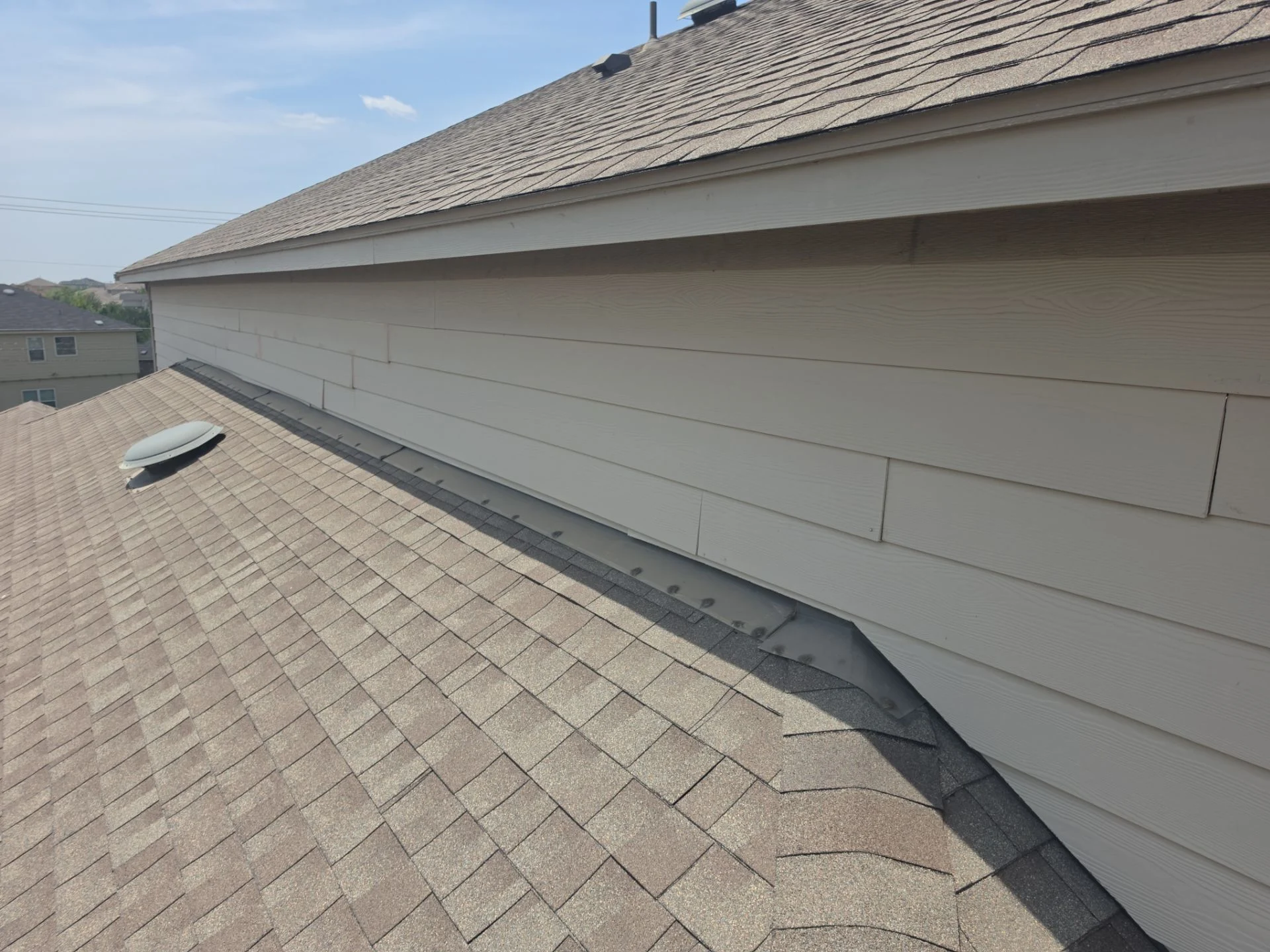
Anywhere a roof edge terminates into a sidewall, most commonly:
- Where a porch roof, garage roof, or lower addition's roofline meets the main house wall
- Above windows and doors positioned where a lower roofline ends against the wall
- At dormers, where the dormer's roof edges meet its own walls
If you can find a spot on your house where a sloped roof edge stops right next to (or under) vertical siding, that's a location that needs a kickout flashing.
Why It Matters: The Water Path, Step by Step
- Rain hits the roof and runs down toward the roof-wall intersection.
- Step flashing carries that water down the slope, tucked behind the siding and lapped over the shingles below it (the same general roof-to-wall flashing detail described in Driftwood Builders Roofing's roof flashing guide).
- At the bottom of that run, the water has nowhere left to go except behind the siding, unless a kickout flashing is there to redirect it outward into the gutter.
- Without a kickout flashing, that water keeps traveling down, behind the siding and its weather-resistant barrier, soaking the sheathing and framing below. This can continue for years without a visible interior leak, because the water is running down the outside of the wall assembly, inside the siding, not necessarily reaching the living space at all.
What Homeowners May See: Inside and Outside
Outside:
- Staining, streaking, or a greenish/dark discoloration on the siding directly below where a roof edge meets the wall
- Siding that looks warped, bulging, or soft in that specific spot, even if the rest of the wall looks fine
- Visible gaps or a missing metal piece at the bottom of a step-flashing run (sometimes it was simply never installed)
Inside (less common, later-stage):
- Soft or spongy drywall near an interior corner below the affected roofline
- Musty odor in a closet or corner that backs up to the roof-wall intersection
By the time interior symptoms show up, the damage has usually been developing for a while. This is exactly the kind of "quiet until it isn't" problem that rewards catching early from the outside.
Relationship to Gutters
A kickout flashing's entire job is to get water into the gutter instead of behind the siding, so it only works if it's actually aimed at the gutter, not past it or short of it. A gutter installed or extended after the roof was originally flashed can sometimes end up not lining up with the kickout, defeating its purpose even though the piece is technically present.
Relationship to Step Flashing
Kickout flashing is the last piece in a step-flashing run, not a separate system. See Driftwood Builders Roofing's roof flashing and leaks guide for how step flashing itself works along the rest of the roof-wall joint.
Rot and Sheathing Consequences
Because the water travels behind the siding rather than pooling somewhere visible, the sheathing and framing directly behind the affected area are what actually take the damage. A real inspection is the only way to know the extent of it on any specific home.
Repair Implications, and When Siding May Need to Be Removed
Fixing a missing or misdirected kickout flashing usually means removing a section of siding at the affected corner to install the piece correctly. It can't be added from the outside without disturbing the siding at that joint. If the leak has been ongoing, that same siding removal is also what reveals whether the sheathing underneath needs repair, which is why "just add a kickout flashing" and "assess what's behind the siding" tend to be the same visit, not two separate ones. This is also exactly the kind of detail that should get addressed correctly during a roof replacement, since the roofline at that joint is being rebuilt anyway.
Austin/Central Texas Relevance
Central Texas doesn't get the sustained heavy rain some regions do, but it does get intense, concentrated downpours, and a kickout flashing problem gets worse with volume and duration of rain, not just frequency. A missing kickout on a home that's been through several Austin storm seasons has had real opportunities to develop hidden damage, even if leaks have never showed up inside.
Code and Manufacturer Guidance
Roof-to-wall flashing generally is addressed by the International Residential Code, Section R903.2, the same section Driftwood Builders Roofing's existing flashing guide cites. Multiple independent building-science and trade sources (Fine Homebuilding, the Journal of Light Construction, InterNACHI, and the Building America Solution Center) specifically identify IRC Section R903.2.1 as the kickout-flashing provision. Adopted code editions and amendments vary by jurisdiction. This is general education, not a substitute for a code review specific to your property; a licensed professional can confirm what applies to your home.
What to Look For: A Homeowner Checklist
- Find every spot where a sloped roof edge ends at a wall: porch roofs, lower additions, dormers.
- At the bottom of each one, look for a distinct piece of metal aimed toward the gutter, separate from the step flashing running up the slope.
- Check the siding and trim directly below that spot for staining, discoloration, or a soft/spongy feel.
- If you see a roofline ending flush into siding with no visible diverter at all, that's worth a closer look.
Not sure if this affects your home? Schedule a free inspection. Driftwood Builders Roofing inspects the details other contractors skip, including where your roof meets your siding.
Frequently Asked Questions
What is kickout flashing?
A small, angled piece of metal at the bottom of a step-flashing run, where a roof edge meets a wall, that redirects water into the gutter instead of letting it continue behind the siding.
How is kickout flashing different from step flashing?
Step flashing is the series of overlapping pieces running up the slope of a roof-wall intersection. Kickout flashing is the single piece at the bottom that diverts the water sideways, out of the wall plane, once the step-flashing run ends.
What happens if kickout flashing is missing?
Water that would otherwise be redirected into the gutter keeps traveling down behind the siding instead, which can cause hidden rot to the sheathing and framing over time, often without an interior leak ever appearing.
How do I know if my house is missing a kickout flashing?
Look at every spot where a sloped roof edge ends against a wall. If there's no distinct diverter piece aimed at the gutter, and especially if you see staining or soft siding directly below that spot, it's worth having inspected.
Does fixing a missing kickout flashing require removing siding?
Usually, yes. The piece has to be installed at the roof-wall joint, which means disturbing the siding at that corner. That same access is also what lets a contractor check whether any damage has developed behind it.
Is kickout flashing required by code?
Multiple trade and building-science sources point to IRC Section R903.2.1 as covering kickout flashing specifically, under the broader roof-to-wall flashing requirements in R903.2. Adopted codes vary by jurisdiction. Confirm what applies to your specific property with a licensed professional.

Author: Driftwood Builders Roofing
Driftwood Builders Roofing is a family-owned residential roofing company headquartered in Manchaca, Texas, serving Austin and the surrounding Hill Country since 2005. The company has delivered 3,700 full roof replacements and 783 repairs across 3,559 different customers over 20 years in business, with 97 years of combined construction experience across the leadership team and 74 years specifically inside Driftwood Builders. The company holds the highest contractor certifications offered by the major shingle manufacturers, including GAF Master Elite Contractor (the top 3% of GAF contractors nationally), GAF Certified Green Roofer, Owens Corning certified, TAMKO Pro Certified Contractor, and a Berridge Roof Installation Seminar Certificate for standing-seam metal roofs. Driftwood is an NRCA member, holds an Angie's List Super Service Award, is BBB Accredited, and is a GuildQuality member for verified customer satisfaction data. James Hardie certification covers the siding side of the business. Services include residential roof replacement, leak and storm-damage repair, tile roof repair, metal roofing, TPO commercial roofing, roof inspections, hail and storm damage inspections with insurance claim assistance, gutter work, and James Hardie siding. The customer-protection policy is straightforward: Only Pay Upon Completion. The company serves 22 cities across the Hill Country and Greater Austin and holds a 5-star rating across Google, GuildQuality, Angi, Nextdoor, Facebook, Thumbtack, and Yelp.
