Why Is the Trim Around My Windows or Doors Rotting?
What Homeowners Usually Notice First
- Trim that feels soft or spongy when pressed, especially at the bottom edge of a window or along a horizontal sill
- Paint that's cracking, peeling, or bubbling specifically at the trim around an opening — not spread evenly across the wall
- Wood that looks discolored, darker than the surrounding trim, or has a slightly green or grayish cast
- A visible gap or separation where the trim meets the siding, sometimes with a crumbling or missing caulk line
Why This Often Points to a Water-Management Problem, Not Just "Old Wood"
All exterior wood trim eventually needs maintenance — that part is normal. What's different about trim rot specifically at a window or door is where it shows up. Openings in a wall are the most common place for water to find a way behind the exterior finish, because every window and door interrupts the siding and the weather-resistant barrier behind it. When trim rot is concentrated right at an opening rather than spread generally across a wall, that's usually not coincidence — it's a sign of a water path at that specific spot, not simply wood reaching the end of its service life on its own schedule.
Window and Door Flashing: The Detail That's Supposed to Prevent This
Flashing is the material installed around a window or door frame specifically to direct water around the opening instead of behind it. When that flashing is missing, installed incorrectly, or has failed over time, water that would normally be directed away from the wall can instead work its way behind the siding at that exact point — which is the mechanism behind a large share of window and door trim rot cases, not a mystery cause.
Caulk Failure at the Siding-to-Trim Interface
The joint where siding meets trim around a window or door is sealed with caulk specifically because it's a transition point, not a continuous surface. Caulk has a real service life — it cracks, shrinks, and eventually loses adhesion. Once that seal fails, the joint stops doing its job, and water that would have been shed by an intact seal can instead sit right at the trim and work its way in. A cracked or missing caulk line at a window or door is worth treating as an active problem, not a cosmetic one.
Where the Water Actually Goes Once It's Behind the Trim
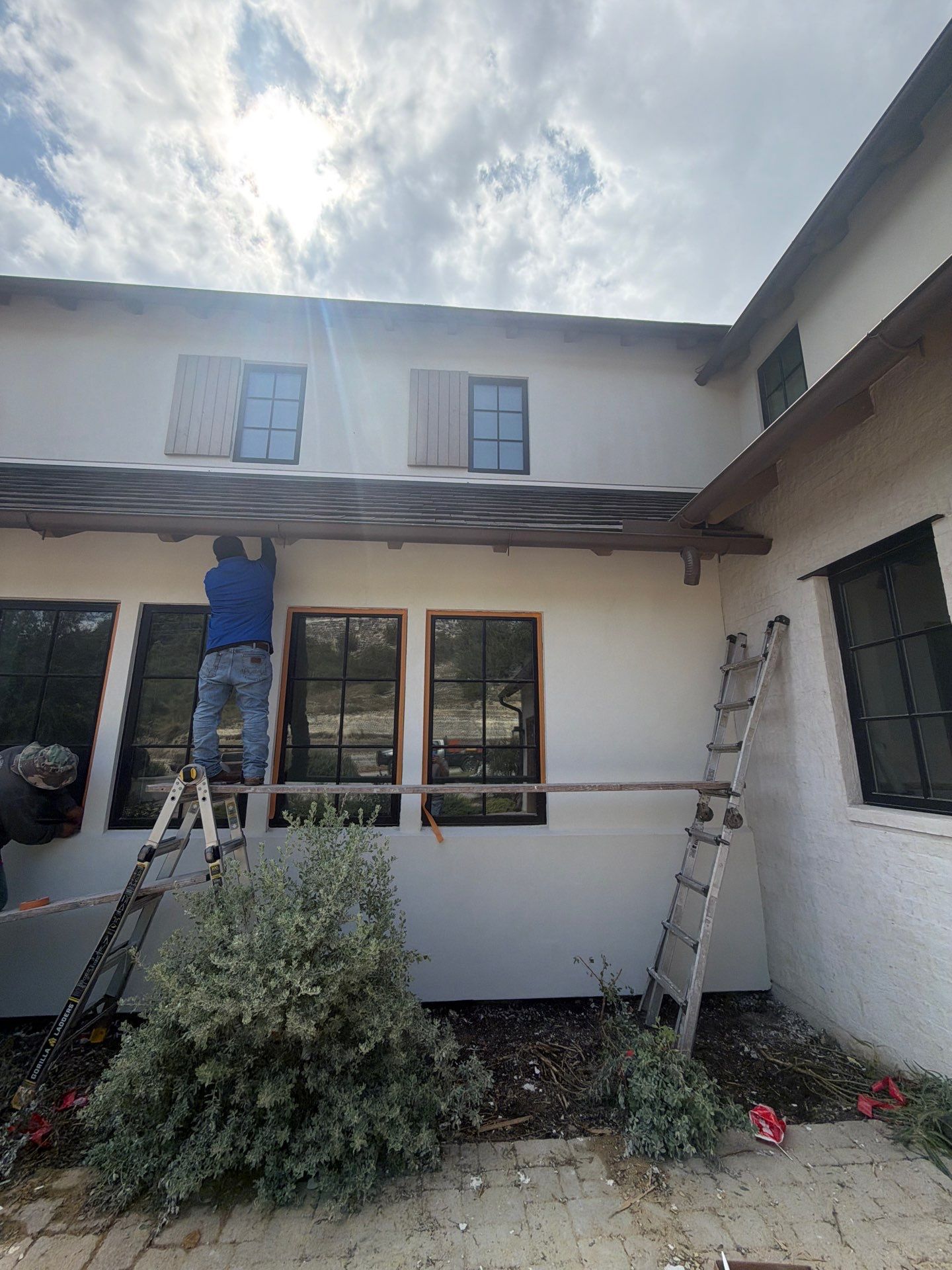
Once water gets past a failed flashing detail or a failed caulk joint, it doesn't stay contained to the trim. It can travel behind the siding and reach the wall sheathing and the weather-resistant barrier underneath — the layer actually responsible for keeping the wall assembly dry. This is exactly the mechanism at work on a real Driftwood job: a Westlake project that began as a straightforward Marvin window replacement turned up concealed framing and sheathing damage once the surrounding area was opened up — damage that had never been visible from the outside. See the full project writeup for that specific example.
When Trim-Only Repair Is Enough
If the rot is genuinely limited to the trim piece itself — the wood behind it (sheathing, framing) checks out sound once inspected, and the flashing and caulk at that opening are confirmed intact or correctable — replacing just the affected trim is a legitimate, complete repair. This is common when the issue is caught relatively early, before water has had years to travel further into the wall.
When Siding Needs to Come Off
If there's any real possibility water has been getting behind the siding at that opening — visible staining beyond the trim itself, soft siding near the opening, or a flashing detail that's clearly been failed for a while — the only way to actually know the extent of the damage is to remove the siding at that section and look. This is the same principle behind the Westlake project above: what looked like a contained window job became a full framing and sheathing repair once the wall was actually opened up, because that's the only way anyone could know what was really there.
What a Contractor Should Inspect Before Replacing Trim
A repair that only replaces the visible rotted trim, without checking these, is incomplete:
- The condition of the flashing at that specific window or door frame — intact, damaged, or missing
- Whether the sheathing directly behind the trim is soft or sound
- Whether the weather-resistant barrier at that opening is intact
- Whether the caulk joint between siding and trim (and around the window/door unit itself) is still sealing properly
- Whether the damage is isolated to one opening or shows the same pattern at multiple windows/doors — a pattern across several openings points toward an installation-era issue rather than one isolated failure
Notice soft or rotting trim around a window or door? Schedule a free inspection →
Frequently Asked Questions
Why is the trim around just one of my windows rotting, but not the others?
This usually points to a localized cause at that specific opening — a failed flashing detail or a caulk joint that's cracked at that window specifically — rather than a general material or age issue that would typically affect windows more evenly.
Is rotted window trim just a cosmetic problem?
Not necessarily. Trim rot at an opening is often the visible symptom of water getting behind the siding at that spot, which can affect the sheathing and weather barrier behind it — not something you can rule out just by looking at the trim.
How do I know if I need to replace just the trim, or if siding needs to come off too?
If the wood behind the trim checks out sound and the flashing/caulk at that opening are intact or repairable, trim-only replacement is usually enough. If there's any sign water has been getting behind the siding — staining, soft siding nearby, a long-failed flashing detail — the siding needs to come off at that section to see the real extent of the damage.
What actually causes trim to rot at a window or door in the first place?
Most often, failed or missing flashing around the frame, or a cracked/failed caulk joint at the siding-to-trim interface — both let water reach wood that isn't designed to handle sustained moisture exposure.
You found hidden damage on a real project — how common is that?
We can't quantify how common it is across every home, but it's real and documented on at least one Driftwood project: a Westlake window replacement that turned up concealed framing and sheathing damage once the wall was opened up, none of it visible from outside beforehand. Full project details here.

Author: Driftwood Builders Roofing
Driftwood Builders Roofing is a family-owned residential roofing company headquartered in Manchaca, Texas, serving Austin and the surrounding Hill Country since 2005. The company has delivered 3,700 full roof replacements and 783 repairs across 3,559 different customers over 20 years in business, with 97 years of combined construction experience across the leadership team and 74 years specifically inside Driftwood Builders. The company holds the highest contractor certifications offered by the major shingle manufacturers, including GAF Master Elite Contractor (the top 3% of GAF contractors nationally), GAF Certified Green Roofer, Owens Corning certified, TAMKO Pro Certified Contractor, and a Berridge Roof Installation Seminar Certificate for standing-seam metal roofs. Driftwood is an NRCA member, holds an Angie's List Super Service Award, is BBB Accredited, and is a GuildQuality member for verified customer satisfaction data. James Hardie certification covers the siding side of the business. Services include residential roof replacement, leak and storm-damage repair, tile roof repair, metal roofing, TPO commercial roofing, roof inspections, hail and storm damage inspections with insurance claim assistance, gutter work, and James Hardie siding. The customer-protection policy is straightforward: Only Pay Upon Completion. The company serves 22 cities across the Hill Country and Greater Austin and holds a 5-star rating across Google, GuildQuality, Angi, Nextdoor, Facebook, Thumbtack, and Yelp.
