Key Takeaways
Older Austin homes can look well cared for while water, movement, or decay develops behind the exterior. A careful pre-purchase review should consider age, weather exposure, drainage, and the condition of the systems beneath cosmetic updates.
- Check roof age, granule loss, storm damage, and signs of repeated patching.
- Follow gutter discharge and grading to see where rainwater actually goes.
- Look behind fresh paint for soft trim, bubbling, discoloration, or trapped moisture.
- Treat cracks, sticking openings, and sloping hardscape as clues that need context.
- Price remaining useful life and likely repairs before making an offer.
1. Aging roofing, granule loss, and concealed storm damage
The roof is one of the easiest places to underestimate risk when buying an older home in Austin. From the ground, shingles may appear intact even as years of intense sun, heat, wind, hail, and heavy rain have reduced their weather resistance. A roof does not need to be actively leaking to deserve closer attention.
I recently spoke with Realtor.com about hidden remodeling and repair costs buyers often overlook when purchasing an older home. One of the biggest mistakes I see is focusing on cosmetic upgrades while missing expensive exterior issues like an aging roof, failed flashing, water intrusion, deteriorated siding, or poor drainage.
Look for widespread light or shiny spots, curling edges, missing shingles, exposed fiberglass, and granules collecting in gutters. Granule loss can leave shingles more vulnerable to cracking, moisture intrusion, and storm damage, although discoloration alone does not prove that replacement is immediately necessary. A dedicated Austin roof inspection can help distinguish ordinary wear from damage that affects the remaining useful life.
Water can also travel behind roofing and wall materials before it appears as an indoor stain. Failed flashing, roof-to-wall transitions, and penetrations around windows or doors may allow moisture to affect sheathing, framing, or insulation quietly. Driftwood Builders Roofing provides roof inspections and explains whether a roof can be repaired or whether replacement is the more cost-effective long-term option.
2. Patchwork roof repairs that signal bigger problems
A new-looking patch is not the same as a new roof. Older properties sometimes receive the minimum repair needed to address one immediate issue, leaving the rest of an aging roofing system in place. When buying an older home in Austin, ask for invoices, dates, storm history, and any documentation showing whether repairs were isolated or repeated across several roof areas.
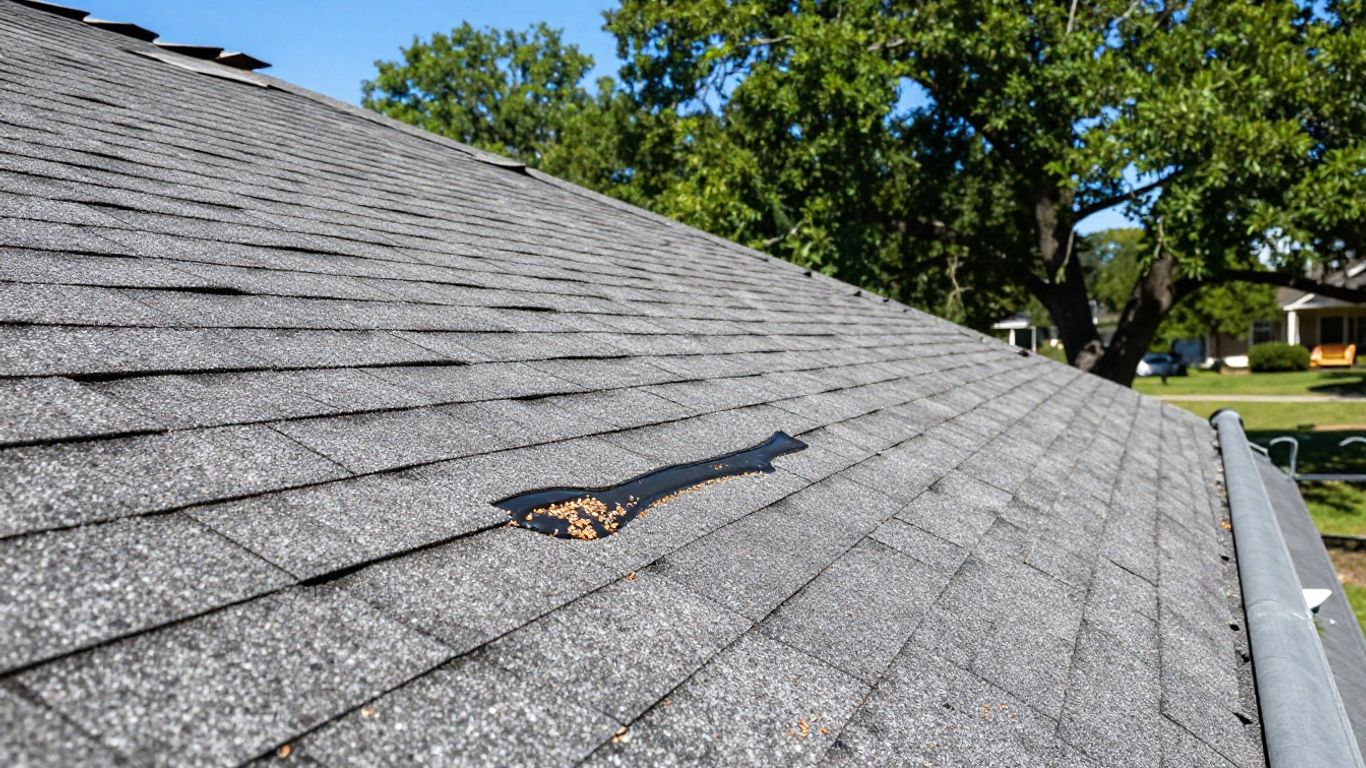
Mismatched shingles, thick sealant, exposed fasteners, and several different repair textures can suggest a history worth investigating. So can a sagging roofline or gutters filled with unusually large amounts of granules. These clues do not establish the cause by themselves, but they make a professional assessment more useful than relying on a seller’s fresh patch or a general visual impression.
A repair may be sensible on a newer roof with localized damage, while an older roof failing in multiple places may make replacement the better long-term value. Driftwood Builders Roofing offers roof repairs and full replacements, with recommendations grounded in the roof’s age, condition, repair history, and remaining useful life rather than an automatic preference for either option.
Want to see what we actually look for during a roof inspection? Watch this quick walkthrough from Driftwood Builders Roofing.
3. Failing gutters, downspouts, and drainage around the foundation
Gutters are part of the exterior water-management system, not just an accessory along the roof edge. When they clog, pull away, overflow, or discharge beside the house, water can saturate soil near the foundation and splash against siding. Older homes often have years of improvised extensions, buried outlets, or settled areas that make the original drainage pattern difficult to see.
Walk the perimeter after rain if possible, or look for staining below the gutters, eroded soil, algae, standing water, and downspouts that end too close to the wall. Box gutters on early Austin houses deserve particular care because hidden leaks can affect surrounding wood and framing. The box gutter repair guidance explains why surface patches may not address rot beneath the visible channel.
The foundation itself may not be the first component damaged by poor drainage. Repeated wetting can affect soil, masonry, siding, trim, and crawlspaces before a buyer notices a dramatic interior problem. Ask an inspector to connect roof runoff, gutter performance, grading, and any cracking into one water-management picture rather than treating each symptom as unrelated.
4. Rotting siding, trim, soffits, and fascia beneath fresh paint
Fresh paint can make a tired exterior feel settled, especially around an addition, window, porch, or recently repaired wall. It can also conceal bubbling, soft wood, open joints, and moisture that has not been corrected. Run a careful visual inspection along lower siding courses, corners, window trim, soffits, and fascia, where water often lingers.
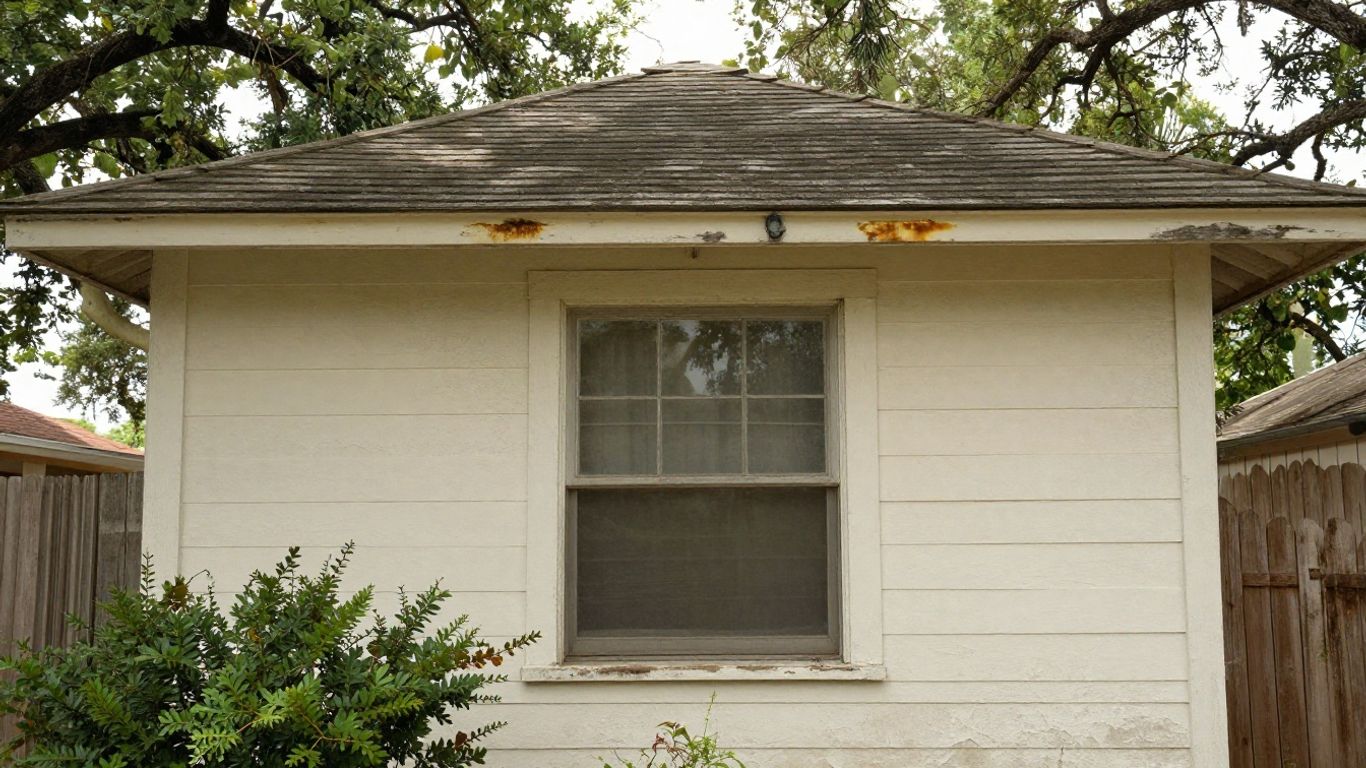
Pay attention to paint that is unusually fresh in one concentrated area, along with musty odors, wall discoloration, or trim that appears swollen or uneven. Failed flashing may let water move behind siding, stucco, masonry, or other finishes without creating an obvious ceiling stain indoors. The visible defect may therefore be much smaller than the work required behind it.
Do not assume that replacing a few boards will settle the question. Removing damaged cladding can reveal deteriorated sheathing, rotted framing, wet insulation, mold, or improperly installed flashing. Surface appearance is only one clue; the inspection should establish whether moisture is active, where it entered, and how far the concealed damage extends.
5. Foundation movement hidden by grading, landscaping, or hardscaping
Older homes naturally accumulate layers of landscaping and hardscape, and those additions can hide the relationship between the walls and the surrounding soil. Raised beds, dense shrubs, patios, and newer paths may cover cracks, low spots, or areas where water collects. They can also make it difficult to see whether the ground slopes toward the home instead of away from it.
Look for diagonal cracks near corners, stair-step cracks in masonry, separated porch surfaces, doors or windows that no longer sit square, and retaining walls that lean. None of these signs alone identifies the cause or severity of movement. Soil conditions, drainage, construction history, and ordinary material shrinkage all matter, so a qualified foundation assessment may be appropriate when several clues occur together.
Be cautious about cosmetic grading fixes that simply add soil against siding or cover a low area with pavers. Those changes may redirect water while hiding the original condition. Before making an offer, document what is visible, ask when hardscaping and landscaping were installed, and determine whether an engineer or specialist should evaluate movement rather than guessing from one crack.
6. Damaged windows, doors, and exterior seals that waste energy
Windows and doors are frequent transition points between the exterior weather barrier and the interior. Aging seals, failed flashing, warped frames, and poorly fitted replacements can admit wind-driven rain even when the glass looks clear and the room has no obvious stain. They may also create drafts and uneven temperatures that buyers mistake for an HVAC problem.
Inspect caulk lines, sill corners, trim, thresholds, and the joints where openings meet siding or masonry. Look for bubbling paint, soft wood, staining, fogged insulated glass, daylight around a closed door, and locks that do not align. A window can appear serviceable while moisture sits behind the trim or insulation, particularly after repeated storms.
Ask whether openings were replaced one at a time and whether the surrounding flashing was updated with them. A general inspection can identify warning signs, but concealed moisture may require closer evaluation. Include likely seal, trim, flashing, and energy-efficiency work in the budget instead of assuming every problem calls for complete window replacement.
7. Unsafe trees, fences, decks, and other neglected exterior structures
Mature trees are part of the appeal of many Austin neighborhoods, but their condition matters to more than curb appeal. Dead limbs can threaten roofs, decks, vehicles, and people, while branches rubbing against shingles or siding can accelerate wear. Roots, leaning trunks, and saturated soil may also complicate drainage and access around the house.
Walk fences, gates, decks, stairs, railings, and detached structures with the same attention given to the main exterior. Watch for loose posts, soft boards, rusted connections, unstable steps, rot at ground contact, and surfaces that slope unexpectedly. A recent coat of stain or paint can make neglected wood look better without restoring its strength.
Separate routine maintenance from immediate safety concerns, and bring in the right specialist when a tree or structural element exceeds a buyer’s ability to assess safely. Add removal, repair, sealing, drainage changes, and periodic upkeep to the ownership budget. The goal is not to reject every imperfect older home; it is to understand which imperfections are manageable and which ones could compound after closing.
Conclusion
A charming exterior can still conceal an aging roof, trapped moisture, poor drainage, movement, or unsafe structures. When buying an older home in Austin, pair the general inspection with focused questions about hidden conditions, remaining useful life, and the cost of correcting deferred maintenance before you commit.
Frequently Asked Questions
How old is too old for an Austin home?
There is no single cutoff. The more useful questions are how the home has been maintained, which major components have been updated, and whether the purchase price leaves room for likely repairs.
Can a roof look fine and still have storm damage?
Yes. Hail, wind, failed flashing, and worn shingles may not produce an immediate interior leak. A closer roof inspection can identify damage and aging that are difficult to confirm from the yard.
Does a roof repair reset the roof’s age?
No. A localized repair addresses a particular problem, but the age and remaining useful life of the overall roofing system stay the same.
What does fresh exterior paint hide?
It may cover bubbling, soft trim, discoloration, open joints, or earlier water damage. Fresh paint is not proof of concealed damage, but unusual patching deserves further investigation.
How can drainage affect an older home?
Overflowing gutters, short downspouts, and grading that slopes toward the house can keep soil and exterior materials wet. Over time, that moisture may contribute to erosion, decay, or foundation-related concerns.
Should buyers worry about every foundation crack?
No. Cracks vary in cause and significance. Their location, direction, width, progression, relationship to doors and windows, and connection to drainage all help determine whether specialist evaluation is needed.
What should buyers budget for besides the purchase price?
Include the remaining life of the roof, siding, windows, gutters, drainage, trees, decks, fences, and major interior systems. Turning likely future replacements into annualized expenses can make the home’s real cost easier to compare.