Brava Roof Tile Reviews: Problems, Complaints and What We Found

Our Verdict After Installing It
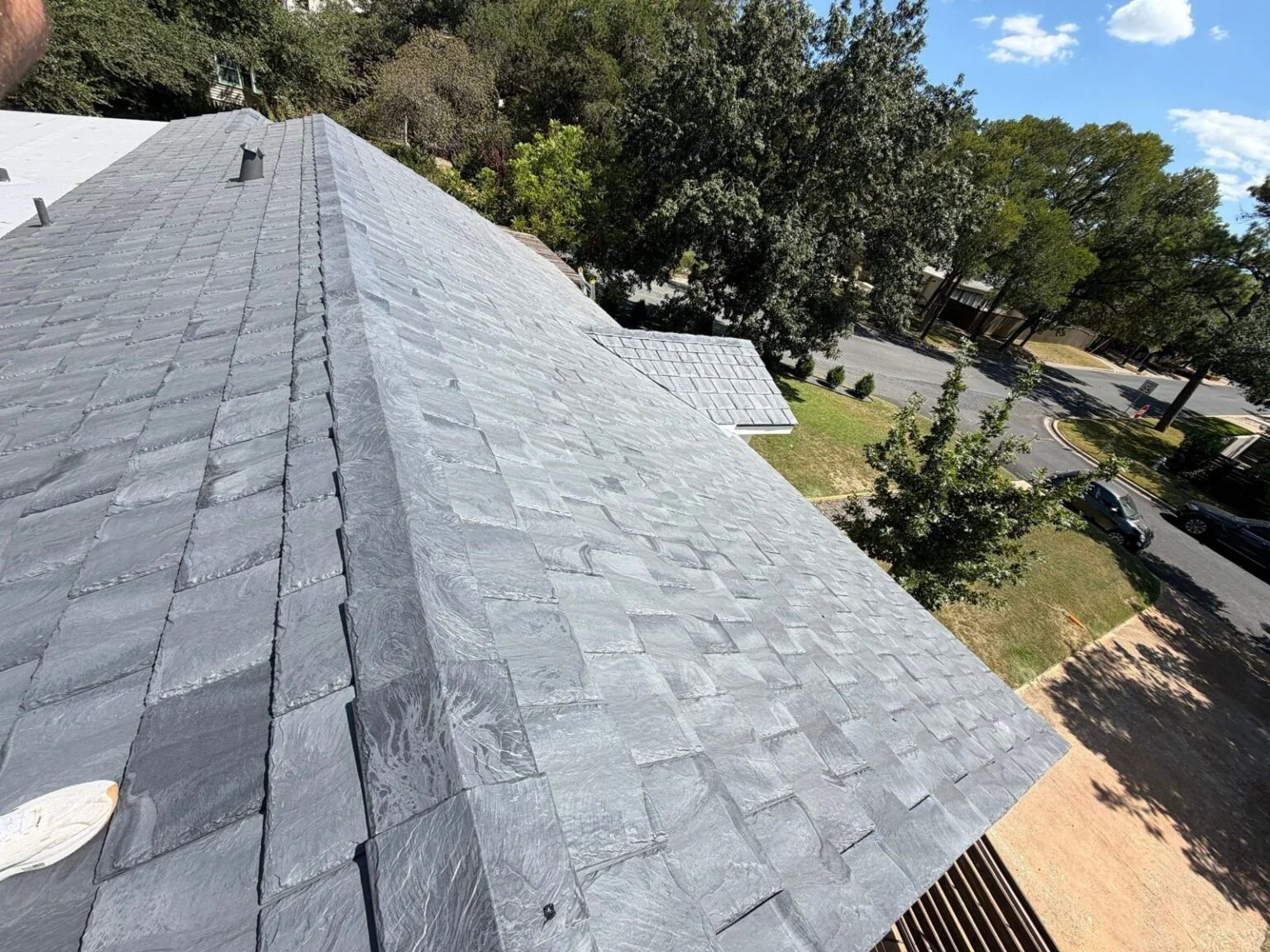
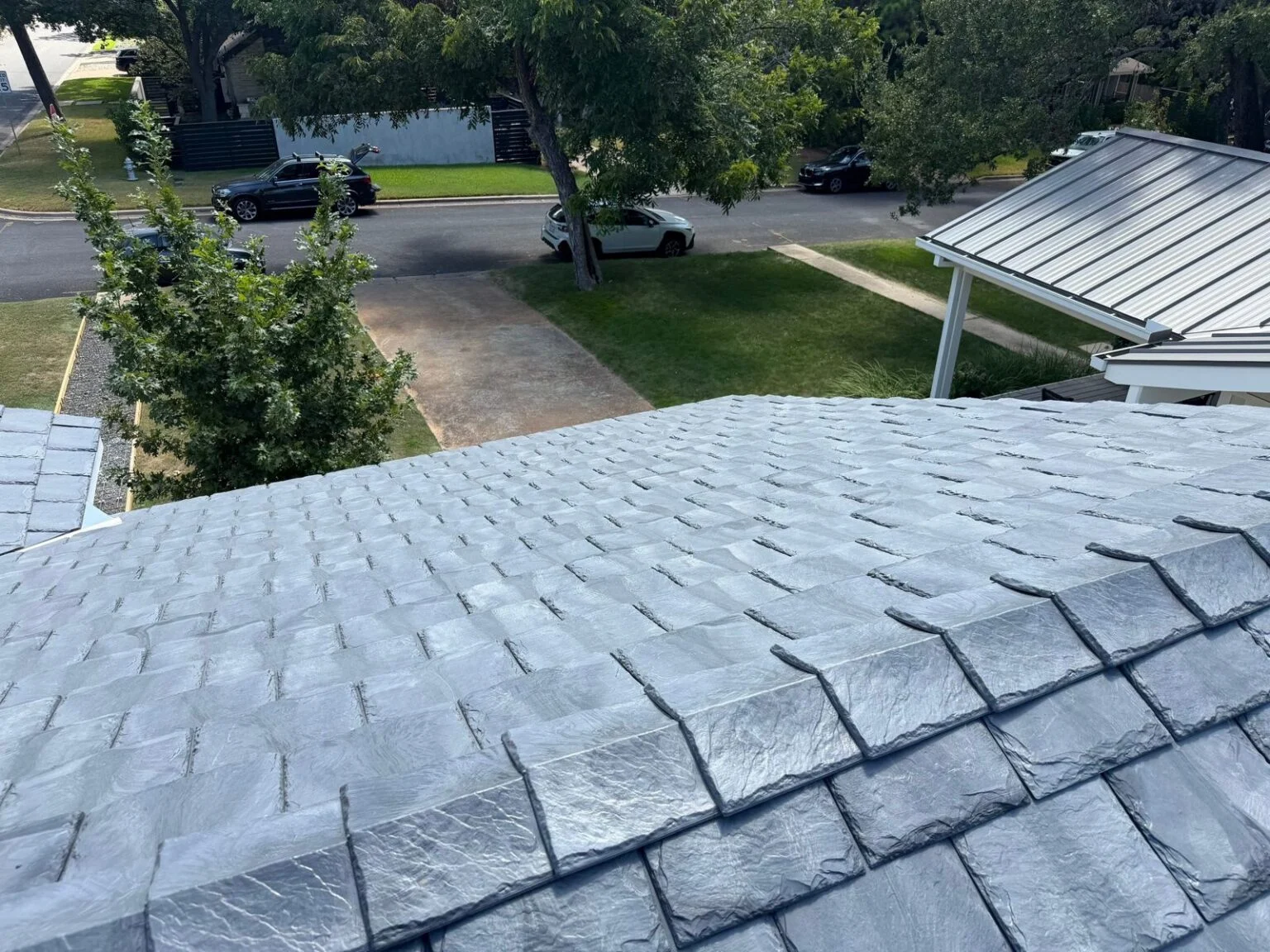
We installed Brava Old World Slate on a Tarrytown home in July and August 2026. The tile itself was easy to cut and handle, the color variation looks convincing from the street, and nothing about the product slowed us down. What did cost time had nothing to do with the tile: plank decking under four layers of old felt, a low-slope section that needed a membrane roof, and a supplier order that came in larger than the roof could use. That roof is new, so we will not claim long-term results from it; our view on durability below relies on Brava's documents, not on our experience.
| Pros | Cons |
|---|---|
| Looks like slate, shake or clay at a fraction of their weight (about 281 to 321 lb per square) | Costs roughly twice an architectural shingle roof, per Brava |
| Class 4 impact rating; hail up to 1.5 in. covered in the warranty | Hail over 1.5 in. excluded; wind covered 15 years only |
| Color runs through the tile, not just a surface coat | Some color change is expected; fade coverage is 10 years |
| Class A available as an assembly | Class C over standard underlayment |
| Recycled content; recyclable, per Brava | Slippery when wet, dusty or frosty |
| Simple tools to cut and nail | Needs a solid sheathed deck and 4:12 pitch (3:12 with full membrane) |
The Real Problems, One by One
1. Fading and color change
This is the most common worry about any synthetic roof in Texas sun, and it is reasonable. Brava's own technical bulletin (TB-240402R1) says no material is fade proof after years of UV exposure, and that its products are designed not to fade by more than 4 Hunter units in the first 10 years. Brava colors its tiles with mineral pigments through the whole tile and reports long xenon-arc and QUV weathering tests. Our take: expect the roof to mellow a little over the years, as natural slate and cedar do, and do not expect warranty help for gradual change after year 10. If color stability is critical to you, ask about Brava's High UV package and look at older Brava roofs in person.
2. Slippery tiles
Brava's roof safety bulletin (TB-250701) warns that tiles can be slippery when wet, dusty or frosty. That is a safety issue for roofers, and a practical issue for you when an HVAC, satellite or solar technician needs to get on the roof. Tell them it is a Brava roof before they climb.
3. Installation errors
Brava's warranty requires installation to its instructions, and those instructions are specific about the deck (15/32 in. plywood or 7/16 in. OSB), minimum pitch (4:12 recommended; 3:12 only with full self-adhered membrane), fastening for the wind rating, and fire-rated underlayment for a Class A roof. Short-life plastic pipe boots and the wrong underlayment on a low slope are recurring complaints across synthetic roofs. See what a proper Brava installation includes.
4. Wrong expectations about "lifetime"
"Lifetime" in Brava's warranty means 50 years. Installation costs are part of the remedy only in the first 120 months, capped at $350 per square. After that, the remedy is a refund of part of the product price, prorated by months remaining. That is normal for this category (DaVinci's warranty is structured the same way), but it surprises people.
5. Weight and structure are rarely the issue
Brava lists its standard slate at 311 lb per square, Cedar Shake at about 321 lb and Spanish Barrel at 281 lb. That is far below natural slate, which Brava puts at 800 to 1,500 lb per square. Weight is a reason people choose Brava, not a common complaint.
What the Warranty Does Not Cover
From Brava's Limited Lifetime Warranty, effective January 1, 2024:
- Hail larger than 1.5 inches in diameter, as determined by the National Weather Service. See Brava and Texas hail.
- Wind above 90, 110 or 130 mph depending on the fastening used, and any wind damage after the first 15 years.
- Algae, fungi, lichen and staining from trees and vegetation.
- Damage from extra heat sources such as reflections from windows or metal surfaces.
- Products not installed to Brava's specifications.
- Transfer is allowed once, in the first 25 years, if the new owner files within 30 days of the sale.
- Claims must be sent to Brava in writing within 60 days of discovering the problem.
Ask your contractor for the current warranty with your proposal and keep a copy with your closing documents.
What Is Documented in Brava's Favor
- ICC-ES evaluation report ESR-4756 (issued November 2025) evaluates Brava slate and shake tiles for weather resistance, fire classification and wind resistance under the 2018 and 2021 IBC and IRC.
- Texas Department of Insurance listing: Brava Slate, Cedar Shake and Spanish Barrel Tile appear in TDI's polymer and composite product evaluations as impact resistant, under report CERUS-1014.
- UL 2218 Class 4 impact rating, stated in the warranty itself.
- Lab wind ratings of 188 mph with nails and 211 mph with high-wind screw installation, per Brava's spec sheets. Keep these separate from the warranty's wind coverage.
A Note on "Brava Complaints" Search Results
If you search for Brava complaints, you will find many thin pages on unrelated websites that repeat each other and cite nothing. Before you trust a claim, look for a named source: a manufacturer document, a court record, a building department, or a homeowner who shows their roof. We have used only those kinds of sources here.
Who Makes Brava
Brava Roof Tile is based in Washington, Iowa. It is a US manufacturer of composite roof tile, and its evaluation reports are held under its parent entity name, Wildhawk Investments LLC doing business as Brava Roof Tile. For homeowners, the practical point is the same as with any 50-year warranty: you are relying on the manufacturer being there later, and on keeping your paperwork.
More from our Brava and composite roofing guides
Frequently Asked Questions
Is Brava roof tile any good?
It is a well-documented Class 4 composite tile with an ICC-ES evaluation report, TDI impact listings and a 50-year limited warranty. Its weak points are expected color change over time, slippery surfaces and warranty limits on hail over 1.5 inches.
Does Brava roof tile fade?
Some color change is expected. Brava says no material is fade proof and that its tiles are designed not to fade more than 4 Hunter units in the first 10 years, which is what the warranty covers.
What are common problems with Brava roofs?
Most problems come from installation: wrong deck, too-low pitch without full membrane, short-life pipe boots, or missing fire-rated underlayment where Class A is required. Slipperiness and gradual color change are product traits.
Does the Brava warranty cover hail?
Yes, for hail up to 1.5 inches in diameter as determined by the National Weather Service. Larger hail is excluded, so your homeowners insurance remains your main protection.
How long does a Brava roof last?
Brava backs its tile with a 50-year limited warranty. Real-world life depends on installation, attic ventilation and weather. Brava has not been on roofs long enough for anyone to show a 50-year record.
Where is Brava made?
Brava Roof Tile is a US company based in Washington, Iowa, according to its warranty and certification documents.
Sources
- Brava Roof Tile, Limited Lifetime Warranty, effective January 1, 2024
- Brava TB-240402R1, UV Testing and Color Durability (rev. October 7, 2024)
- Brava TB-250701, Roof Safety
- Brava TB-241202R1, Fire Resistance Ratings; TB-260801, Roof Sheathing Requirements
- ICC-ES Evaluation Report ESR-4756 (issued November 2025)
- Texas Department of Insurance, Polymer and Composite product evaluations
- Brava Old World Slate, Cedar Shake and Spanish Barrel spec sheets
Author: Driftwood Builders Roofing
Driftwood Builders Roofing is a family-owned residential roofing company headquartered in Manchaca, Texas, serving Austin and the surrounding Hill Country since 2005. The company has delivered 3,700 full roof replacements and 783 repairs across 3,559 different customers over 20 years in business, with 97 years of combined construction experience across the leadership team and 74 years specifically inside Driftwood Builders. The company holds the highest contractor certifications offered by the major shingle manufacturers, including GAF Master Elite Contractor (the top 3% of GAF contractors nationally), GAF Certified Green Roofer, Owens Corning certified, TAMKO Pro Certified Contractor, and a Berridge Roof Installation Seminar Certificate for standing-seam metal roofs. Driftwood is an NRCA member, holds an Angie's List Super Service Award, is BBB Accredited, and is a GuildQuality member for verified customer satisfaction data. James Hardie certification covers the siding side of the business. Services include residential roof replacement, leak and storm-damage repair, tile roof repair, metal roofing, TPO commercial roofing, roof inspections, hail and storm damage inspections with insurance claim assistance, gutter work, and James Hardie siding. The customer-protection policy is straightforward: Only Pay Upon Completion. The company serves 22 cities across the Hill Country and Greater Austin and holds a 5-star rating across Google, GuildQuality, Angi, Nextdoor, Facebook, Thumbtack, and Yelp.