Brava Roof Installation: What a Proper Install Includes

The Deck: Solid Sheathing, Not Planks
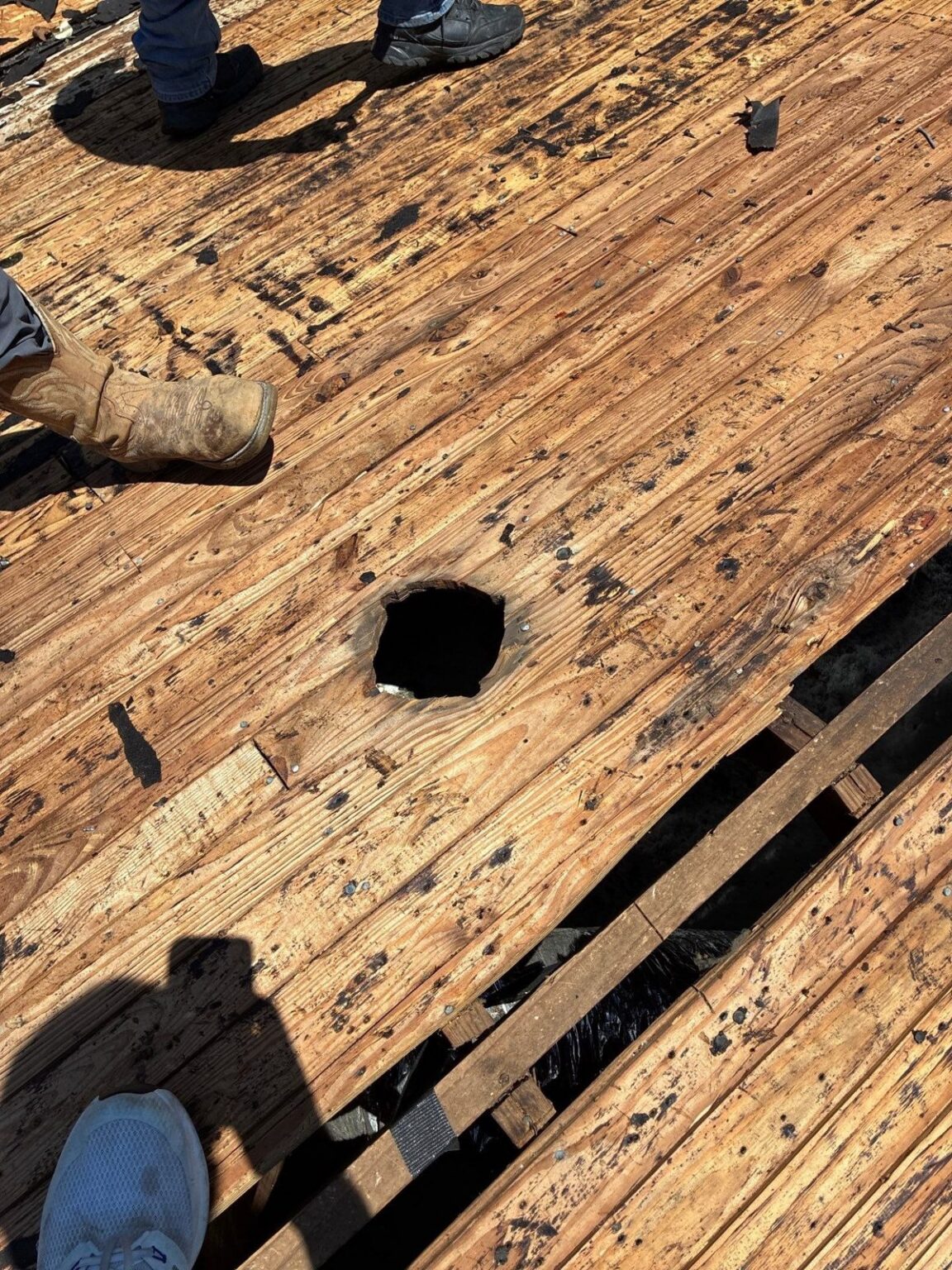
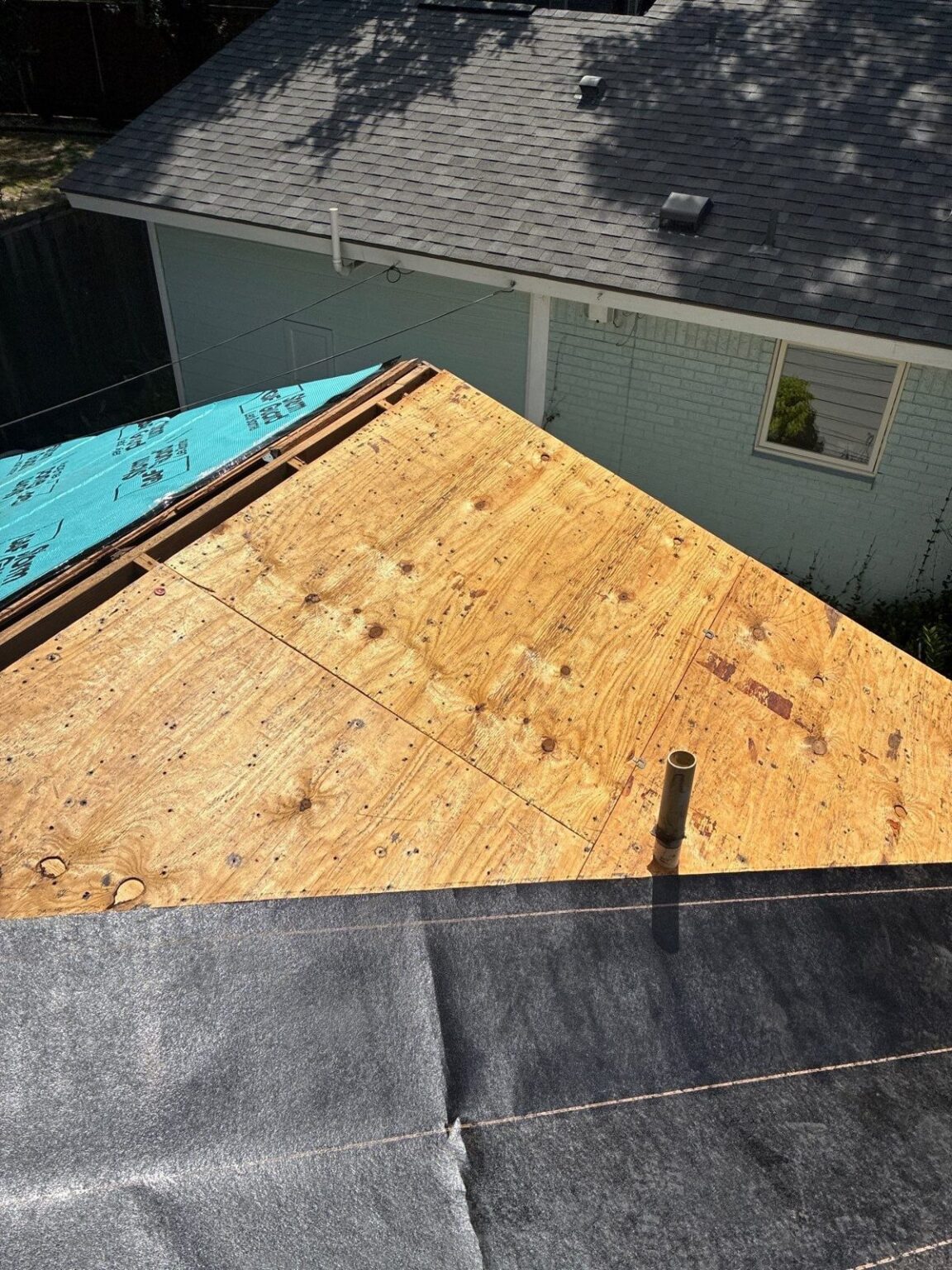
Brava's sheathing bulletin (TB-260801, August 2026) is direct: the deck should be at least 15/32 in. plywood or 7/16 in. OSB, and plank or spaced sheathing is not recommended. That matters in Austin, because many homes built before the 1970s in Tarrytown, Travis Heights, Hyde Park, Allandale and similar neighborhoods still have board decks under several generations of roofing.
You usually cannot see the deck until the old roof is off, so a good proposal says what happens if planks are found: new sheathing installed over them, at a stated price per sheet. If your proposal is silent on this, ask. Our guide to plank roof decking in older Austin homes explains what we look for.
Roof Pitch: Where Brava Can and Cannot Go
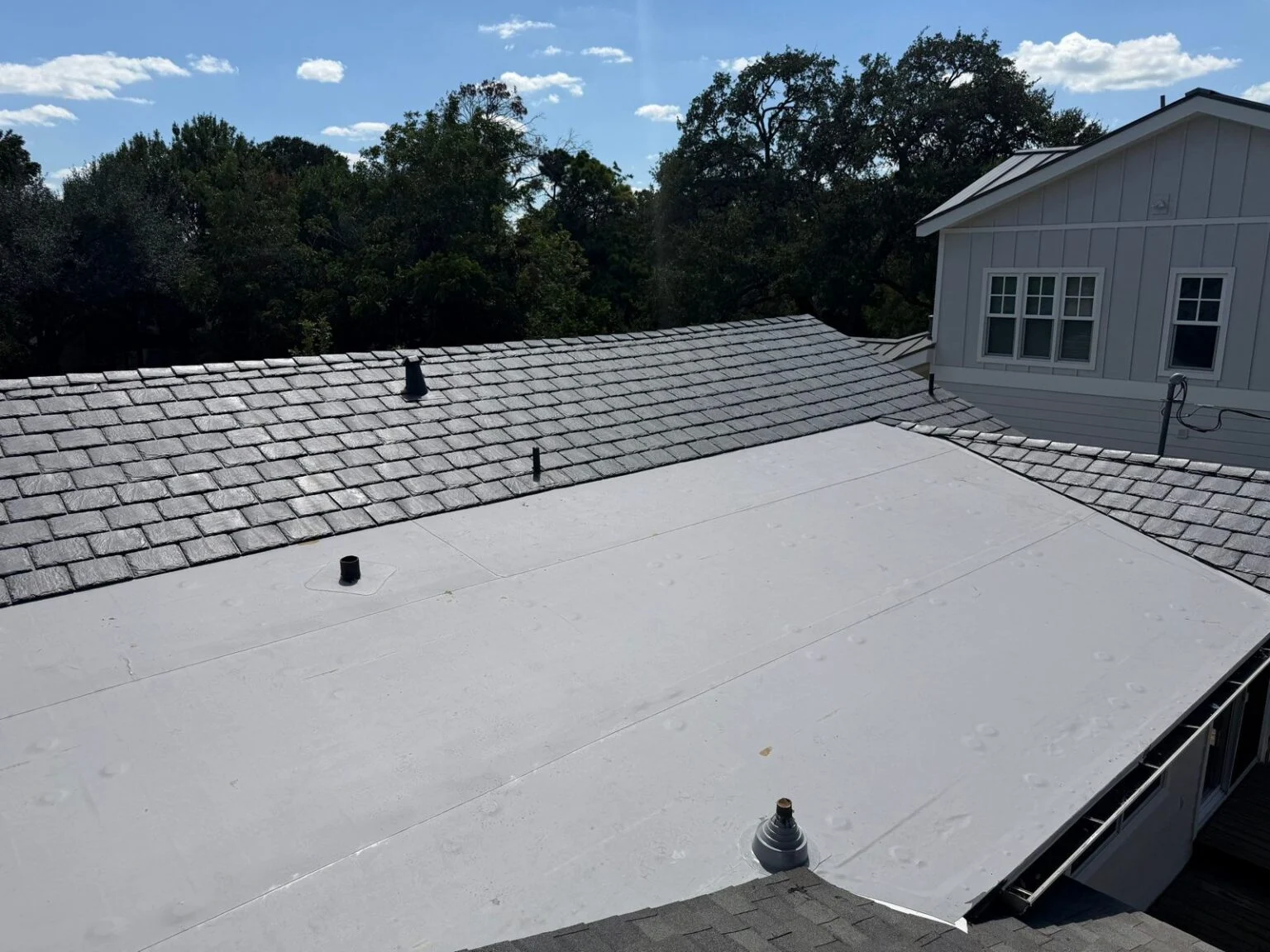
Brava's October 2026 installation guides recommend a slope of 4:12 or steeper. A slope of 3:12 is allowed for warranty only when self-adhered ice and water membrane covers the entire roof, not just eaves and valleys. Anything flatter than 3:12 is not a Brava roof at all; it needs a low-slope system.
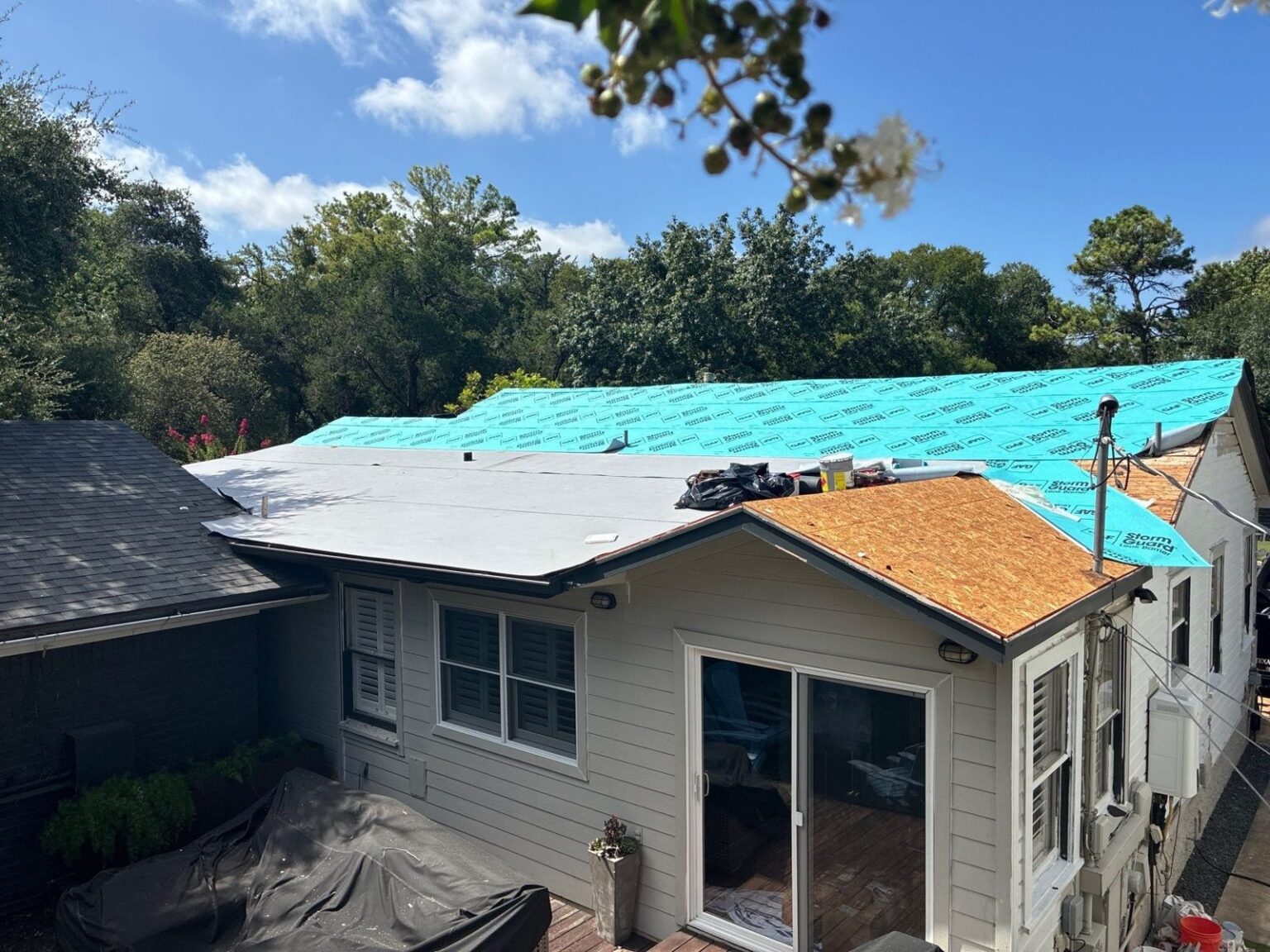
That is a real design question on Central Texas homes, which often mix steep main roofs with shallow porch, patio or addition roofs. On our Tarrytown job a 2:12 section between the steep slopes was built in white TPO membrane while everything else got Brava. Ask your contractor to mark each roof plane's pitch on the proposal so you know exactly which areas get tile.
Video: Brava Tile Roof Installation Explained | Roof Pitch, Ice & Water Shield & Valley Flashing. Our crew explains which sections of the Tarrytown roof qualified for Brava by pitch, the full-roof ice and water shield, and the custom metal valleys
For a refresher on how slope is measured, see our synthetic tile roof pitch video or the roof pitch calculator.
Underlayment and Fire Rating
Here is a detail that surprises people. Brava's fire bulletin (TB-241202R1, October 2026) says a Brava roof is Class C over standard underlayment and reaches Class A only as a tested assembly over a fire-resistant underlayment. Spanish Barrel needs Brava's Class A version of the tile for a Class A assembly. In other words, the tile alone does not make the roof Class A.
That matters where a Class A roof is required, including Austin's Wildland-Urban Interface (WUI) areas and some subdivisions in the western Hill Country. Our article on Austin's roof permit and wildfire code covers how to check whether your address is in the WUI. If it is, the proposal should name the fire-resistant underlayment and state that the assembly is Class A.
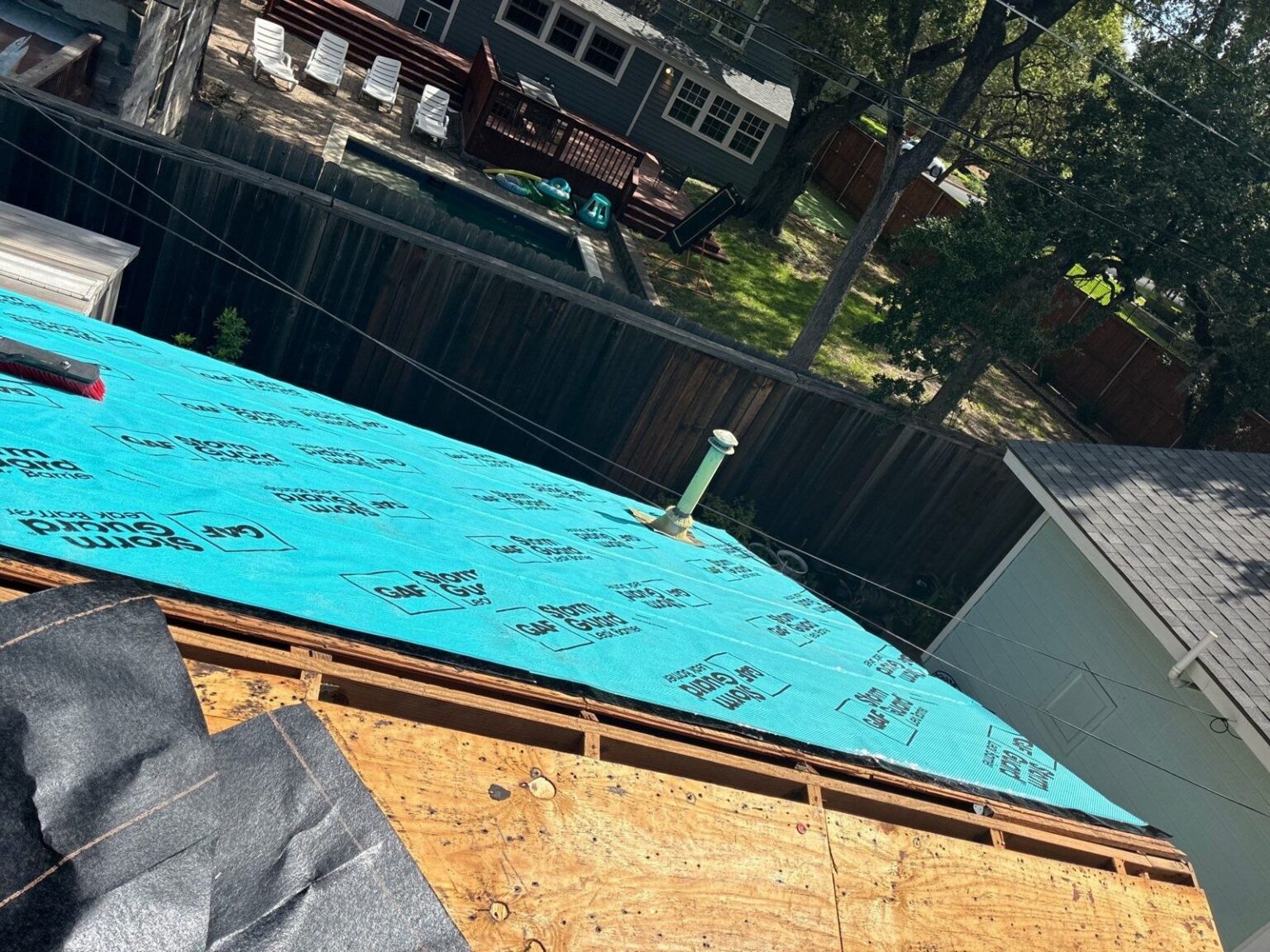
Separately from fire rating, the slope rules above decide how much self-adhered membrane you need. On the Tarrytown roof we covered the full deck in GAF StormGuard leak barrier, which met Brava's full-coverage condition everywhere. That roof is Class C for fire, because it was not built as Brava's Class A assembly, and we describe it that way.
Fastening, Wind and the Warranty
Brava's wind coverage is tied to how the tile is fastened. Under the Limited Lifetime Warranty (effective January 1, 2024) and Brava's wind bulletin TB-230501R2, wind coverage runs 15 years at 90, 110 or 130 mph depending on the fastening pattern used. The higher ratings require the enhanced fastening the bulletin describes, so the wind rating you are promised should match the fastening your crew will actually use.
The warranty also expects the product to be installed to Brava's instructions. Coverage includes a labor component for the first 120 months, capped at $350 per square, and it does not cover hail larger than 1.5 inches. The homeowner registers the warranty within 30 days. On our Tarrytown job we made sure the homeowner had the product details and knew the deadline. Read our plain-English review of what the Brava warranty covers before you sign anything.
Valleys, Hips, Ridges and Flashing
- Valleys. We line valleys with membrane and install metal valley flashing before tile goes in. Open metal valleys shed water and debris better than woven tile on a cut-up roof.
- Hips and ridges. Brava hip and ridge pieces come in pitch ranges. The Tarrytown roof needed two ranges, and the job ran short of the low-pitch pieces mid-install because a supplier quantity was wrong. Your contractor should order by measured pitch, not by total ridge length alone.
- Walls, chimneys and crickets. Every wall and chimney needs step and counter flashing in metal. Small crickets behind chimneys are wrapped in membrane and flashed before tile is laid around them.
- Pipe boots. A plastic boot that lasts 15 years on a roof meant to last decades is a known failure point on synthetic roofs. Ask for metal or long-life flashings. We measured every penetration before tear-off so the right flashings were on site.
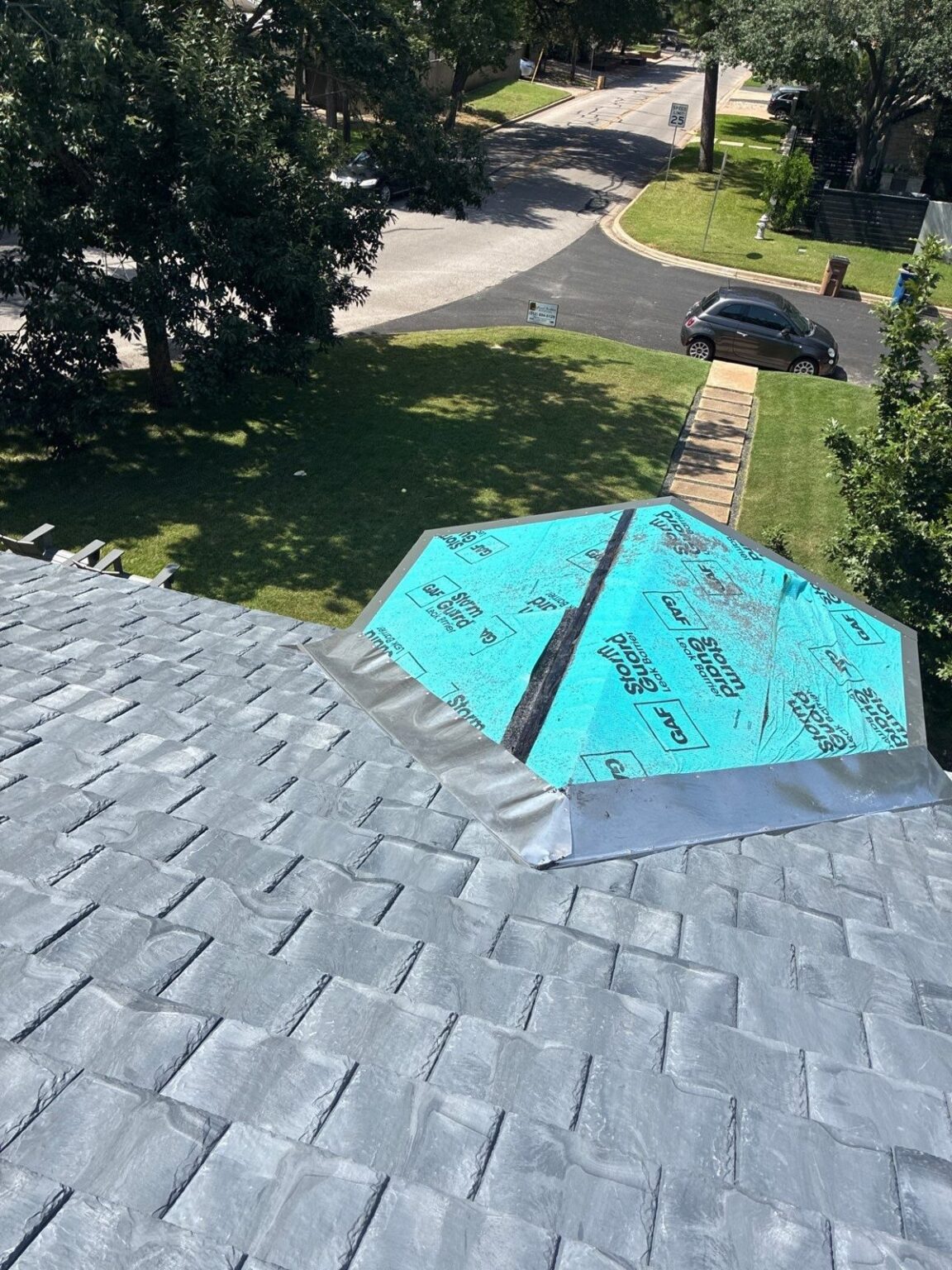
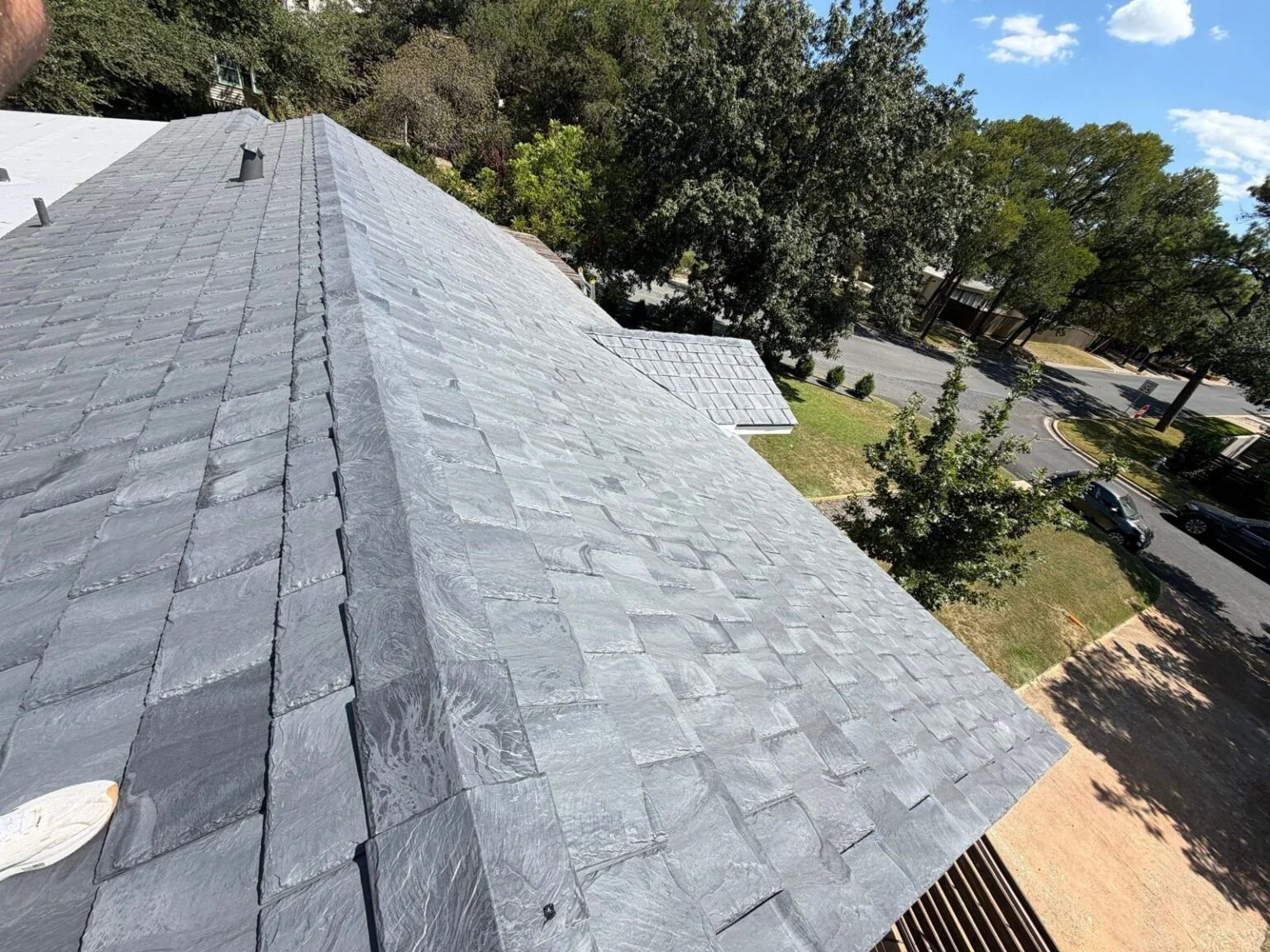
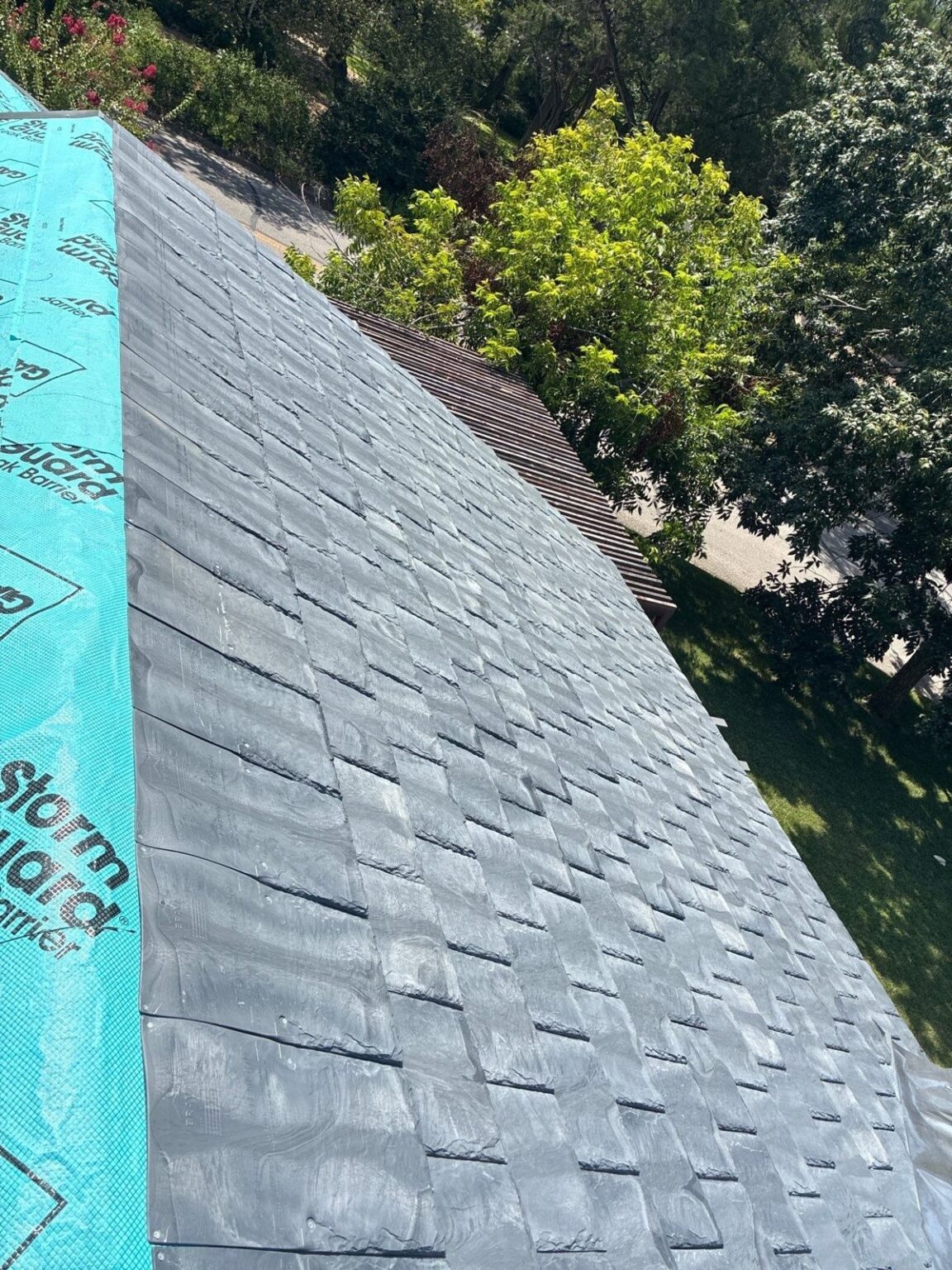
Video: Brava Roof Replacement Process Explained | How Brava Roof Tiles Are Installed | Tarrytown, Austin. Starter placement, spacing, alignment and staggering on the Tarrytown roof
Ventilation
Brava publishes a separate bulletin on balanced attic ventilation (TB-240401). The short version: intake at the eaves and exhaust high on the roof should be balanced, as with any steep-slope roof. Austin attics get very hot, and a roof that traps heat works harder. Our attic ventilation calculator shows how the intake and exhaust numbers are worked out.
What We Learned on a Real Job
Our Tarrytown Brava Old World Slate roof was installed in July and August 2026. A few lessons from that job are worth passing on:
- Check the takeoff. The manufacturer takeoff built from aerial measurements came back far larger than the area that could take tile, because it did not subtract the low-slope section. We ordered about 21 squares of Brava for the steep slopes. Ask your contractor how the order was measured.
- Material comes from San Antonio. For Austin jobs our supplier stocks Brava in San Antonio, with delivery in a few days. Returns are not guaranteed, so accurate ordering matters.
- Expect to find something at tear-off. Plank decking under four layers of felt was the big one here. A proposal with a clear decking line item avoids an argument later.
- Low-slope areas need their own system. Plan the transition detail before work starts.

A Checklist for Your Contractor's Proposal
| Item | What the proposal should say |
|---|---|
| Deck | Existing deck type, and the price to add 15/32 in. plywood or 7/16 in. OSB if planks or damage are found |
| Pitch by roof plane | Which planes get Brava, which get a low-slope system, and how the transition is built |
| Membrane coverage | Eaves and valleys only (4:12 and steeper) or the full deck (required for 3:12) |
| Fire rating | Class C or Class A assembly, and the named underlayment if Class A is required |
| Fastening | The fastening pattern and the wind warranty speed it qualifies for |
| Flashing | Metal valleys, step and counter flashing, and the type of pipe flashings |
| Hip and ridge | Pitch-matched Brava hip and ridge pieces |
| Ventilation | Intake and exhaust plan |
| Warranty | Who registers it, and the 30-day deadline |
Driftwood is a Brava Authorized Contractor. That is Brava's entry certification level, earned through Brava's online training; Brava's Preferred and Craftsman levels require more registered volume. Ask any installer which level they hold and how many Brava roofs they have completed. Ask to see a finished Brava roof they installed, as you can with ours in Tarrytown.
Can You Walk on a Brava Roof?
Trained roofers can, carefully. Brava's roof safety bulletin (TB-250701) warns that the tiles can be slippery when wet, dusty or frosty, so crews use fall protection and avoid walking on a damp roof. For homeowners the practical point is service visits: tell HVAC, satellite or solar technicians the roof is Brava before they climb up, and ask them to step on the lower part of each tile rather than the unsupported edges.
More from our Brava and composite roofing guides
Frequently Asked Questions
What is the minimum pitch for Brava roof tile?
Brava recommends 4:12 or steeper. Its October 2026 installation guides allow 3:12 for warranty only with self-adhered ice and water membrane over the entire roof. Anything flatter needs a low-slope roofing system.
Can Brava be installed over plank decking?
Brava's sheathing bulletin TB-260801 calls for 15/32 in. plywood or 7/16 in. OSB and says plank or spaced sheathing is not recommended. On older Austin homes the usual fix is new sheathing over the planks.
Is a Brava roof Class A fire rated?
Only as an assembly. Per Brava TB-241202R1, Brava is Class C over standard underlayment and Class A over a fire-resistant underlayment; Spanish Barrel needs Brava's Class A tile version.
Can Brava go over my existing shingles?
Brava's instructions are written for a clean, solid deck, and the deck has to meet the sheathing bulletin, which you cannot confirm through old roofing. We tear off to the deck on every Brava job.
Who registers the Brava warranty?
The homeowner, within 30 days of installation under the Limited Lifetime Warranty effective January 1, 2024. Your contractor should give you the product, color and install date you need.
How long does a Brava installation take?
It depends on size, pitch, how cut up the roof is, and what is found at tear-off. Brava tile takes longer to lay than shingles. Your contractor should give you a schedule with weather allowance rather than a fixed promise.
Sources
- Brava Old World Slate Installation Guide (Oct 15, 2026)
- Brava TB-260801, Roof Sheathing Requirements (Aug 2026)
- Brava TB-241202R1, Fire Resistance Ratings (Oct 2026)
- Brava TB-230501R2, Wind Warranty Installation Requirements
- Brava TB-240401, Balanced Attic Ventilation
- Brava TB-250701, Roof Safety
- Brava Limited Lifetime Warranty, effective 1/1/2024
- Driftwood Builders Roofing project records, Tarrytown, Austin (July and August 2026)
Author: Driftwood Builders Roofing
Driftwood Builders Roofing is a family-owned residential roofing company headquartered in Manchaca, Texas, serving Austin and the surrounding Hill Country since 2005. The company has delivered 3,700 full roof replacements and 783 repairs across 3,559 different customers over 20 years in business, with 97 years of combined construction experience across the leadership team and 74 years specifically inside Driftwood Builders. The company holds the highest contractor certifications offered by the major shingle manufacturers, including GAF Master Elite Contractor (the top 3% of GAF contractors nationally), GAF Certified Green Roofer, Owens Corning certified, TAMKO Pro Certified Contractor, and a Berridge Roof Installation Seminar Certificate for standing-seam metal roofs. Driftwood is an NRCA member, holds an Angie's List Super Service Award, is BBB Accredited, and is a GuildQuality member for verified customer satisfaction data. James Hardie certification covers the siding side of the business. Services include residential roof replacement, leak and storm-damage repair, tile roof repair, metal roofing, TPO commercial roofing, roof inspections, hail and storm damage inspections with insurance claim assistance, gutter work, and James Hardie siding. The customer-protection policy is straightforward: Only Pay Upon Completion. The company serves 22 cities across the Hill Country and Greater Austin and holds a 5-star rating across Google, GuildQuality, Angi, Nextdoor, Facebook, Thumbtack, and Yelp.