Board (Plank) Roof Decking on Older Austin Homes: What Changes When You Replace the Roof
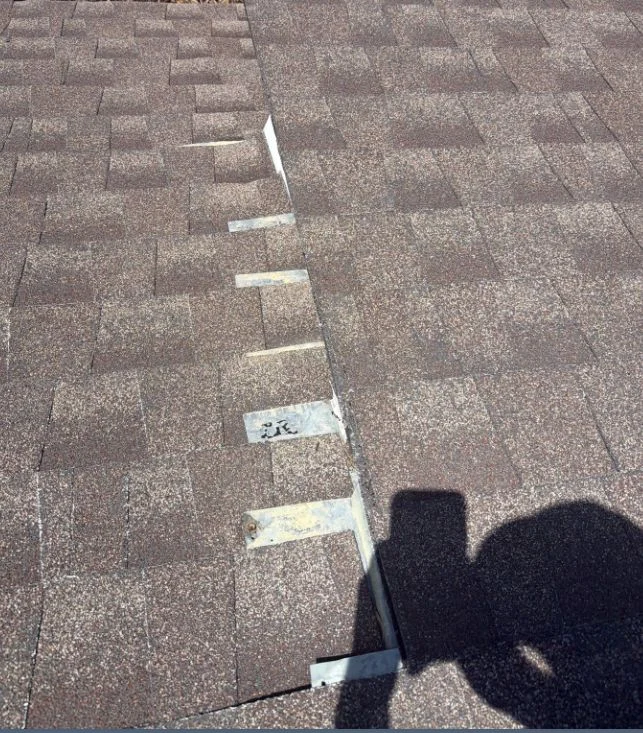
Three Kinds of Roof Deck
| Deck type | What it is | What it means for new shingles |
|---|---|---|
| Plywood or OSB panels | 4x8 sheets nailed to the rafters. Standard in newer homes. | Damaged sheets are replaced one at a time. |
| Solid board (plank) decking | Individual boards laid tight together, sometimes tongue-and-groove (the boards interlock) | Can serve as the base for shingles if the boards are sound and within the shingle maker's limits |
| Spaced board decking ("skip sheathing") | Boards with open gaps between them, a pattern used under wood shingles and shakes | Not a solid base for asphalt shingles. New sheathing is needed. |
You can sometimes tell which you have from the attic. Panels show regular sheet seams, while boards run in long parallel strips. Gaps, daylight, or water stains between boards are worth pointing out to your roofer before you get an estimate.
Why Older Roofs Hide the Deck
Replacing the roof on an older house is a little like opening a wall. On older homes, earlier re-roofs often left several layers of old felt underlayment behind. On two Tarrytown roofs Driftwood has documented, the crews removed four layers of felt before reaching the wood. Those layers have to come off before anyone can see the condition of the deck underneath, which is why a roofer can only estimate the deck from the attic and confirm it at tear-off.
What the Building Code Says
The City of Austin enforces the 2024 International Residential Code, effective July 10, 2025. Austin's local amendments to the roofing chapter change only the material standards for wood shingles and wood shakes, so the rules below apply as written:
- Asphalt shingles need a solid base. "Asphalt shingles shall be fastened to wood structural panels or solid lumber sheathing" (IRC R905.2.1). The code's spaced-sheathing provisions are written for wood shingles and wood shakes (R905.7.1 and R905.8.1), not asphalt shingles.
- A replacement goes down to the deck. "Roof replacement shall include the removal of existing layers of roof coverings down to the roof deck" (IRC R908.3, with limited exceptions).
- No covering up a failed roof. The code does not allow a new roof covering to be laid over an existing roof that is water-soaked or deteriorated (IRC R908.4).
- The boards have to be thick enough for the rafter spacing. For example, 5/8-inch net lumber where rafters are 24 inches apart (IRC Table R803.1).
If you want the broader picture on when old decking can be reused, see Roof Decking: When to Replace vs When to Reuse.
Is Your Board Decking Suitable? The Conditions That Decide It
Board decking does not automatically need to be covered. Whether it can stay as the base for new shingles comes down to a few checks after tear-off:
- Solid, not spaced. The boards have to form a solid deck. GAF's Timberline installation instructions allow wood plank decks with gaps of no more than 1/8 inch between boards.
- Board size. GAF calls for boards at least 1 inch nominal thickness and no wider than 6 inches. The building code also sets a minimum thickness based on rafter spacing.
- Condition. The boards must be dry, well supported and able to hold nails, with no rot, water soaking, splits or breaks. GAF requires nails to penetrate at least 3/4 inch into a wood deck.
- Structure. The roof framing has to carry the new roof.
What happens next depends on the result:
- All four checks pass: the boards can stay as the deck. Some homeowners choose an optional overlay of new sheathing over sound boards for a more uniform nailing surface. That is a preference, not a code requirement.
- Spaced boards, gaps wider than the shingle maker allows, or damage spread across a large area: new sheathing over the existing framing is the usual fix, so the shingles are fastened to a continuous, solid surface. GAF's instructions call for plywood or OSB at least 3/8 inch thick.
- Rotted or broken boards in limited areas: those sections are replaced before the new roof goes on, just as rotted plywood would be.
Your roofer should show you photos of what was found, and explain which condition was not met, before adding sheathing to your bill. Because the deck cannot be fully seen until the old roof is off, a fair estimate also tells you up front how any added decking will be priced, so it is predictable rather than a surprise. For current pricing context, see our Austin roof replacement cost guide.
Permits in Austin
Inside the City of Austin, the permit-exempt list includes asphalt shingles that replace existing asphalt shingles, unless the home is in the Wildland-Urban Interface (WUI) area and 50% or more of the roofing is being replaced. It also exempts roof decking that does not exceed 128 square feet. A full board-deck overlay on a whole house goes well past that, so it needs a permit. Ask your roofer who pulls it.
In the WUI area, Austin's amended wildfire code says that when 50% or more of a roof covering is replaced, the whole roof must meet new-construction requirements, which call for a Class A roof assembly. Our Austin roof permit and wildfire code guide covers how to check your address. Outside the city limits, check with your own city.
Two Tarrytown Roofs, Two Different Outcomes
A Farmers-approved hail replacement, about 2,911 sq ft. On this Tarrytown project, tear-off removed four layers of old felt and uncovered board (plank) decking with gaps, holes and broken boards. 65 sheets of new decking were added to create a continuous deck, then the new roof system was installed. This was an insurance-funded project. Whether decking is included on any other claim depends on the policy, the cause of loss and the insurer's review.
A 1930 Tarrytown home, also a hail replacement. In a Driftwood video about another Tarrytown roof, the crew again found four layers of felt (three over the garage). But when the deck was exposed, there was no rotted decking. Older does not automatically mean a bad deck. It means a higher chance of surprises, which is why it is worth discussing before work starts.
Driftwood has published two videos about these Tarrytown roofs: "Why Is This Tarrytown Roof More Expensive?" and "Tarrytown Roof Replacement: 2 Hidden Problems Common in Older Austin Roofs."
What to Ask Your Roofer Before You Sign
- What kind of deck do you expect, based on the attic?
- How will added decking be priced, and is that written into the estimate?
- Will you photograph the deck after tear-off and show me before adding sheathing?
- If my roof has board decking, is new sheathing required, or optional?
- If decking work goes over 128 square feet, who pulls the permit?
More on reading a bid: What to Look for in a Roofing Estimate.
Replacing the roof on an older Austin home?
Driftwood Builders Roofing can inspect your roof, check the attic where it is accessible, and tell you up front what is likely under your shingles and how decking would be handled. Request a free roof inspection, or see Roof Replacement in Austin.
Sources: 2024 International Residential Code sections R905.2.1, R905.7.1, R905.8.1, R908.3, R908.4 and Table R803.1; City of Austin Ordinance No. 20250410-040 (building code adoption); City of Austin, Work Exempt from Building Permits; City of Austin Ordinance No. 20250410-041 (Wildland-Urban Interface Code, Section 507.1) and 2024 IWUIC Section 504.2; GAF Timberline shingle installation instructions (RESTL622, 4/2023); Driftwood project page for the Farmers-approved Tarrytown redecking project; Driftwood YouTube videos on two Tarrytown roof replacements.
Frequently Asked Questions
Can I tell what kind of roof deck I have from the attic?
Often, yes. Plywood or OSB shows regular sheet seams, while board decking shows long parallel boards. Gaps or daylight between boards suggest spaced decking. The full condition is still confirmed at tear-off.
Does board decking always need to be covered with plywood or OSB?
No. The code allows asphalt shingles over solid lumber sheathing, and GAF allows board decks within its size and gap limits. Sound, tight, thick-enough boards can stay. Spaced boards, wider gaps, or deteriorated boards need new sheathing or replacement.
Do I need a permit for new decking in Austin?
The City of Austin exempts roof decking work up to 128 square feet. More than that needs a permit. In the Wildland-Urban Interface area, replacing half or more of the roof covering also brings the whole roof under the wildfire code.
Why didn't my estimate include new decking?
The deck is hidden under the old roof and underlayment, so nobody can see its full condition until tear-off. A good estimate tells you ahead of time how added decking will be priced.
Will insurance pay for new decking?
It depends on your policy, the cause of loss and the insurer's review. On one documented Tarrytown project the insurer approved the decking, but that is not a guarantee for any other claim. Questions about a policy can go to the Texas Department of Insurance at 800-252-3439.
Does an older roof mean the decking is rotten?
Not necessarily. On one 1930 Tarrytown home, the crew found four layers of felt but no rotted decking.

Author: Driftwood Builders Roofing
Driftwood Builders Roofing is a family-owned residential roofing company headquartered in Manchaca, Texas, serving Austin and the surrounding Hill Country since 2005. The company has delivered 3,700 full roof replacements and 783 repairs across 3,559 different customers over 20 years in business, with 97 years of combined construction experience across the leadership team and 74 years specifically inside Driftwood Builders. The company holds the highest contractor certifications offered by the major shingle manufacturers, including GAF Master Elite Contractor (the top 3% of GAF contractors nationally), GAF Certified Green Roofer, Owens Corning certified, TAMKO Pro Certified Contractor, and a Berridge Roof Installation Seminar Certificate for standing-seam metal roofs. Driftwood is an NRCA member, holds an Angie's List Super Service Award, is BBB Accredited, and is a GuildQuality member for verified customer satisfaction data. James Hardie certification covers the siding side of the business. Services include residential roof replacement, leak and storm-damage repair, tile roof repair, metal roofing, TPO commercial roofing, roof inspections, hail and storm damage inspections with insurance claim assistance, gutter work, and James Hardie siding. The customer-protection policy is straightforward: Only Pay Upon Completion. The company serves 22 cities across the Hill Country and Greater Austin and holds a 5-star rating across Google, GuildQuality, Angi, Nextdoor, Facebook, Thumbtack, and Yelp.
