Central Texas Termites and Your Siding: What We Look For
Does James Hardie Siding Actually Attract or Resist Termites?
Manufacturer marketing for fiber cement siding often states it "won't attract termites," and that's accurate as far as it goes: the material itself isn't a food source. But that claim is easy to misread as "termites can't be a problem if I have Hardie siding," which isn't the same thing. Termites go after the wood behind and around the siding: framing, sheathing, trim, and any wood-to-soil contact points, not the fiber cement panels themselves.
Central Texas Termite Pressure Is Real
Austin sits in a region with active subterranean termite populations, and older homes with original, never-opened-up exteriors are the ones most likely to have something developing unnoticed, not because anything was necessarily done wrong originally, but because termite activity behind a wall doesn't announce itself on the surface.
A Real Example: What We Found in Westlake
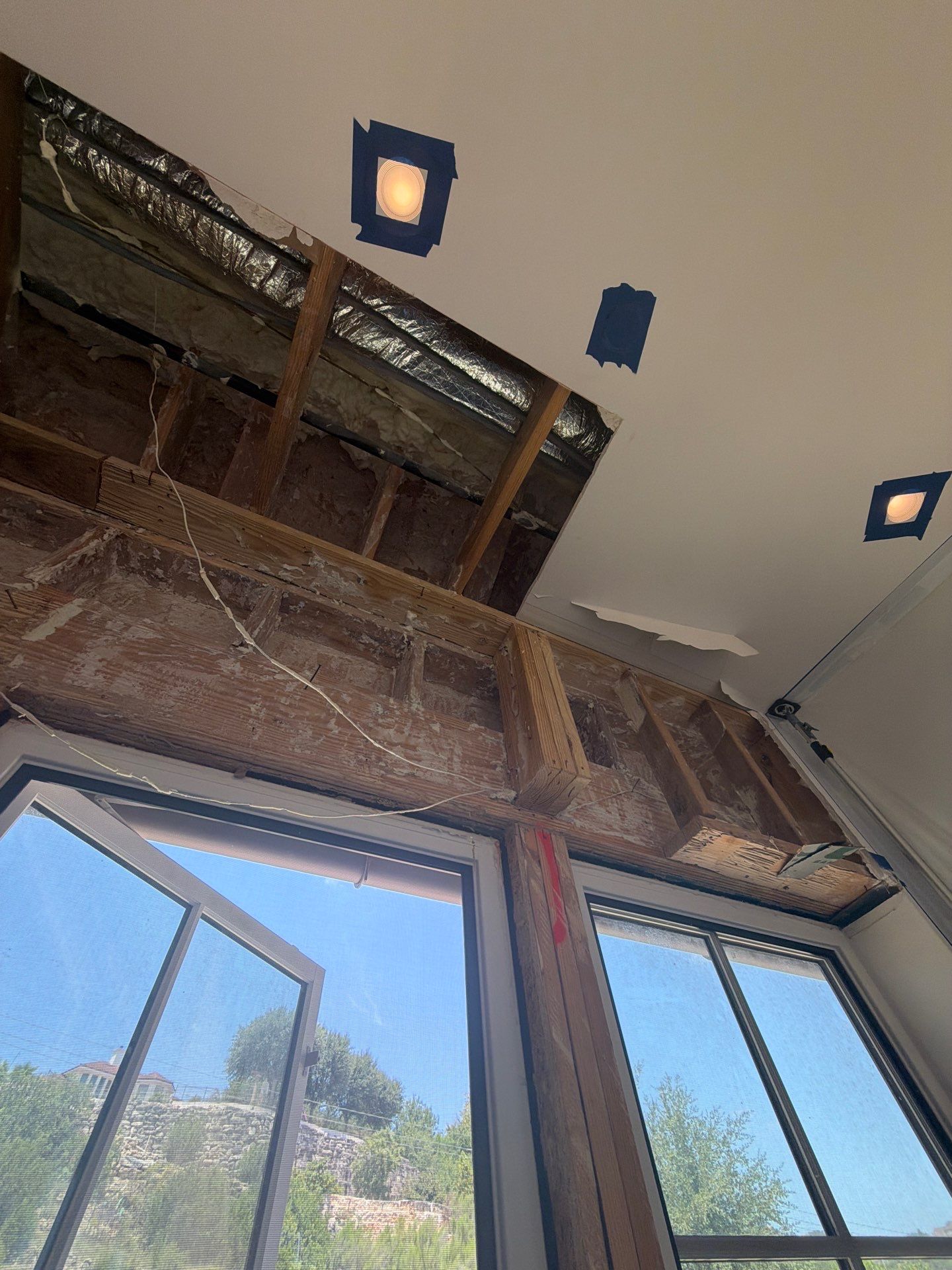
We were called out to a home in Westlake for what started as a straightforward Marvin window replacement. Once demolition began, we found termite damage behind the original stucco that had never shown any sign from outside. The exterior looked completely normal. As part of the restoration, we installed proper two-ply building paper, addressing the moisture issue that had likely contributed to conditions termites could exploit in the first place. See the full project writeup with before/during/after photos.

Why Termites and Moisture Problems Often Travel Together
Termites are drawn to damp wood more than dry wood. A moisture problem behind your siding (a failed weather-resistant barrier, a leak at a window or trim detail) doesn't just risk rot on its own, it can make that same area more attractive to termites. This is part of why a real inspection checks for both at once rather than treating them as unrelated questions.
What Homeowners Can Actually See From Outside
Termite activity behind siding is rarely visible directly, but a few things are worth a closer look:
- Mud tubes (pencil-width, dirt-colored tunnels) on foundation walls or piers, especially near siding transitions
- Soft or hollow-sounding wood trim near grade
- Small piles of what look like wood-colored pellets (frass) near siding or trim, especially after swarms
- Paint that's bubbling or a wall surface that looks slightly warped in a way that doesn't match ordinary weathering
None of these are certain proof, but they're worth a real inspection rather than a guess.
What to Do If You Suspect Termite Activity
A licensed pest control company is the right authority for termite diagnosis, treatment, and ongoing prevention. That's not something a roofing and siding contractor can or should do. What Driftwood can do is what we did in Westlake: when exterior work opens up a wall, document what's actually found, repair the framing and sheathing correctly, and install the moisture-management details (proper barriers, correct flashing) that reduce the conditions termites exploit going forward.
Wondering what might be happening behind your own siding? Schedule a free inspection →
Frequently Asked Questions
Does James Hardie fiber cement siding attract termites?
No. The material itself isn't a food source for termites. But the wood framing, sheathing, and trim behind and around the siding can be, so termite risk isn't eliminated just by choosing fiber cement.
Can you tell if there's termite damage without opening up the wall?
Not reliably. Some outside signs (mud tubes near the foundation, soft trim, small pellet piles) are worth checking, but the only way to know for certain is a real inspection, ideally including a licensed pest control company for termite-specific diagnosis.
What did you find on the Westlake project specifically?
Termite damage behind the original stucco that wasn't visible from outside, discovered once demolition began for a window replacement. We installed proper two-ply building paper as part of the restoration. Full project details here.
Should I call a pest control company or a siding contractor first?
If you suspect active termite activity, a licensed pest control company is the right first call for diagnosis and treatment. If the concern is about repairing damage that's already occurred, or you're already planning exterior work and want it checked at the same time, that's where Driftwood Builders Roofing comes in.
Are older Austin homes more at risk?
Homes with original exterior finishes that have never been opened up for inspection are the ones most likely to have something developing unnoticed, simply because nobody's had a reason to look yet, not necessarily because anything was done wrong originally.

Author: Driftwood Builders Roofing
Driftwood Builders Roofing is a family-owned residential roofing company headquartered in Manchaca, Texas, serving Austin and the surrounding Hill Country since 2005. The company has delivered 3,700 full roof replacements and 783 repairs across 3,559 different customers over 20 years in business, with 97 years of combined construction experience across the leadership team and 74 years specifically inside Driftwood Builders. The company holds the highest contractor certifications offered by the major shingle manufacturers, including GAF Master Elite Contractor (the top 3% of GAF contractors nationally), GAF Certified Green Roofer, Owens Corning certified, TAMKO Pro Certified Contractor, and a Berridge Roof Installation Seminar Certificate for standing-seam metal roofs. Driftwood is an NRCA member, holds an Angie's List Super Service Award, is BBB Accredited, and is a GuildQuality member for verified customer satisfaction data. James Hardie certification covers the siding side of the business. Services include residential roof replacement, leak and storm-damage repair, tile roof repair, metal roofing, TPO commercial roofing, roof inspections, hail and storm damage inspections with insurance claim assistance, gutter work, and James Hardie siding. The customer-protection policy is straightforward: Only Pay Upon Completion. The company serves 22 cities across the Hill Country and Greater Austin and holds a 5-star rating across Google, GuildQuality, Angi, Nextdoor, Facebook, Thumbtack, and Yelp.
