Commercial Roof Replacement Cost in Austin (2026): TPO, PVC, EPDM and Modified Bitumen
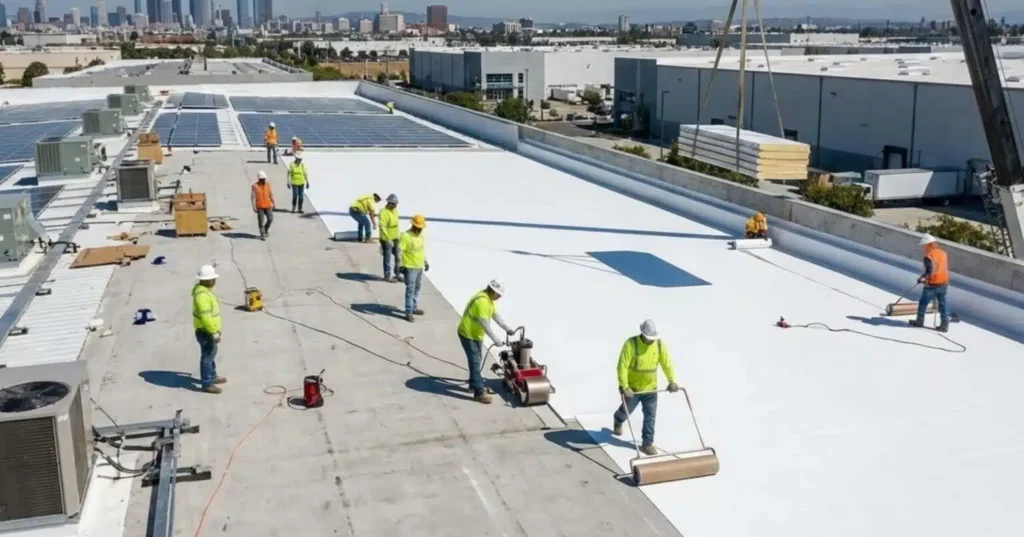
Why is a commercial roof price so hard to pin down in Austin?
A commercial roof replacement price in Austin depends on the building more than the membrane. The same TPO sheet can sit on a clean steel deck over a vacant warehouse or on wet insulation under six rooftop units at an occupied medical office, and those two jobs will not price anywhere near each other.
That is why the commercial roofing services page at Driftwood Builders Roofing says every commercial roof is priced from a site survey, with a written, itemized estimate. The variables it lists are roof size, the system chosen, the condition of the existing roof and deck, drainage and insulation, rooftop equipment and penetrations, and site access.
Austin adds its own pressure on those variables. Long, hot summers favor reflective membranes. Spring storms test drains and seams. Hail tests the whole assembly. A bid that ignores any of the three is cheap for a reason.
What are Austin property owners putting on commercial roofs in 2026?
Most low-slope commercial roofs in Austin are being replaced with one of four membrane families: TPO, PVC, EPDM or modified bitumen.
Driftwood’s commercial page says it typically recommends TPO for most Austin commercial buildings because of its heat-reflective surface and cost efficiency, with EPDM as a lower-cost option and modified bitumen for roofs with heavy foot traffic or equipment.
TPO. A white, heat-welded thermoplastic sheet, and the most common choice on newer commercial work around Austin. Carlisle, quoted in our guide to TPO vs PVC vs EPDM vs modified bitumen, calls TPO the largest segment of the commercial roofing industry.
PVC. Looks like TPO on the roof and is also heat-welded, but it is marketed for resistance to grease and many chemicals. Restaurants and buildings that vent oil onto the roof are the usual reason to pay for it.
EPDM. A synthetic rubber membrane with taped or adhered seams. It is proven, but standard EPDM is black, and in Central Texas that usually tips owners toward a light-colored sheet.
Modified bitumen. A multi-layer, asphalt-based system. It handles foot traffic, rooftop equipment and complicated flashing details well, and it is the natural path off an old tar-and-gravel roof.
How much does commercial roof replacement cost per square foot?
National cost guides put most installed membrane roofs between $4 and $16 per square foot in 2026, before tear-off. The table below shows those published ranges by system. They are national figures, not Driftwood’s Austin prices; Driftwood prices each building from a site survey with a written, itemized estimate.
| System | Published Range, Installed (Per Sq Ft) | Where It Fits |
|---|---|---|
| Modified bitumen | $4 to $8 | Smaller roofs, heavy traffic, many penetrations |
| EPDM | $4 to $13 | Simple layouts, lower budget |
| TPO | $4 to $14 | Most Austin retail, office and warehouse roofs |
| PVC | $5 to $16 | Restaurants, grease or chemical exposure |
| Tear-off and disposal | $1 to $5 | Added when the old roof comes off |
Published ranges come from Fixr’s 2026 flat roof replacement cost guide (updated January 27, 2026). That guide is national and written largely around smaller flat roofs, so a large, simple warehouse roof and a small, cut-up retail roof will land in very different parts of each range.
Fixr’s separate TPO roof cost guide, written for commercial and industrial buildings, puts installed TPO at $4.50 to $16 per square foot nationally and breaks out membrane thickness:
- 45-mil TPO: $3.00 to $4.50 per sq ft
- 60-mil TPO: $4.00 to $6.50 per sq ft
- 80-mil TPO: $5.50 to $8.50 per sq ft
The same guide puts tear-off, disposal and surface prep at $1 to $2 per square foot, including any wet or damaged insulation underneath, and insulation materials at $1.60 to $15 per square foot.
To see what those ranges mean for a real building, run the arithmetic. A 10,000 square foot roof at the national TPO range of $4 to $14 is $40,000 to $140,000 before tear-off. That spread is exactly why a per-square-foot number from the internet is a starting point, not a budget.
What you pay for beyond the membrane
The membrane is only one layer of the bill. Insulation, cover board, edge metal, flashing at every curb and drain, walkway pads and the labor to detail all of it often matter as much as which sheet goes on top.
What changes the price most
Roof-over vs tear-off. If the existing roof is dry and sound, a new system can sometimes go over it, which saves the removal cost. Wet insulation or multiple old layers usually mean tear-off. The video below shows TPO installed over an existing metal roof, one of the bigger cost decisions on a commercial job.
Rooftop equipment. Every HVAC unit is a penetration to flash, and units sometimes have to be disconnected or lifted. Driftwood’s commercial page says the crew coordinates directly with HVAC contractors when that is needed.
Drainage corrections. Tapered insulation, added drains or scuppers cost money up front and fix the cause of ponding instead of re-covering it.
Working around tenants. Night, weekend or phased work changes labor cost. Driftwood’s commercial page says it can work in phases on occupied buildings.
Warranty level. An NDL guarantee requires an approved contractor, a manufacturer inspection and a fee. Ask each bidder to show that fee as its own line in the proposal.
Schedule. Driftwood’s commercial page puts a 10,000 sq ft TPO roof at about 5 to 7 working days, with larger or more complex buildings taking 2 to 3 weeks.
Should you repair, recover or replace a commercial roof?
A commercial roof should be replaced when problems are spread across the roof rather than limited to one area, and repaired when they are not. Driftwood’s commercial page puts it plainly: repeated leaks, widespread ponding or membrane deterioration across multiple sections usually make replacement the more cost-effective long-term choice.
Use these signals, in this order:
- Where the leaks are. One leak at one curb is a repair. Leaks in several sections point to a system that is done.
- Whether the insulation is wet. Wet insulation has to come out, which rules out a simple recover and moves you to tear-off pricing.
- How the roof drains. Water still sitting 48 hours after rain is ponding, and our guide to ponding water on a flat roof explains why it shortens membrane life. If the new roof will pond too, budget for drainage work.
- What the current warranty still covers. Read the remaining terms before you spend money. Unapproved repairs or changes can fall outside coverage.
- Who pays. On leased buildings, the lease decides whose budget the roof comes from. Our guide to who pays for the roof on a triple-net lease covers the common setups; your lease controls.
- What a documented survey says. A written roof condition assessment with photos gives owners, lenders and tenants the same facts before anyone commits to a number.
How do Austin heat, hail and storms affect commercial roof cost?
Austin’s heat, hail and sudden downpours push owners toward reflective membranes, tougher assemblies and better drainage, and each of those choices shows up in the price.
Heat. A white TPO or PVC surface reflects sun that a black membrane absorbs. Our flat roofing guide notes that in a climate with sustained temperatures above 100 degrees, that reflectivity has a real effect on cooling load.
Hail. Hail performance depends on the whole installed assembly, not the membrane name. The Insurance Institute for Business and Home Safety says on its commercial research page that impact testing has been done for low-slope metal roofing and is underway for single-ply membranes, which are more prevalent on commercial roofs. Until that data is public, compare thickness, cover board and the hail language in the warranty.
Our guide to hail on TPO roofs covers what to look for after a storm, and you can check a building’s past storms with our hail history by address tool.
Wind. The specimen NDL forms we reviewed for our guide to NDL warranties exclude winds over 55 miles per hour, and GAF’s hail-coverage form only covers hail punctures up to a diameter written into the document. Read those limits before you assume a premium warranty covers an Austin storm.
Downpours. Central Texas rain arrives fast. A drain that copes with steady rain gets overwhelmed in a cloudburst, so drain count and placement deserve a line in the scope.
Clay soils and older buildings. When a deck has moved or sagged over the years, low spots collect water. Fixing slope during a replacement costs less than fighting ponding for the life of the new roof.
How do you vet a contractor for a commercial roof replacement?
Vet a commercial roofer on the system and warranty you actually want, then on how they will run the job around your tenants. A low number from a contractor who cannot register the warranty, or who prices a thinner scope, is not a savings.
Ask every bidder for:
- Manufacturer approval for the warranty you want. Driftwood has been a GAF Master Elite certified contractor since 2005.
- A certificate of insurance sent from their carrier. Driftwood’s commercial page says it carries commercial liability and workers’ compensation and provides certificates on request.
- A line-item scope: membrane type and thickness, attachment method, insulation and cover board, tear-off or recover, edge metal, drains, and walkway pads.
- The warranty in writing, both the manufacturer’s and the contractor’s own workmanship terms, including how long the workmanship coverage runs and what it excludes.
- A schedule plan that covers occupied spaces, rooftop equipment and weather days.
- Payment terms. Driftwood’s written proposals spell out the payment schedule before anything is signed. If you need to spread the cost, ask each bidder whether financing or phased payments are available for commercial work. Our roof financing page explains how Driftwood’s financing works.
Driftwood is also a Vendor Affiliate of the CCIM Institute and works with commercial real estate professionals on roof assessments for acquisitions and pre-listing. To get a number for your building, request a commercial estimate.
- Manufacturer approval for the warranty you want. Driftwood has been a GAF Master Elite certified contractor since 2005.
Residential flat roofs: how the numbers differ for homes
Homes with flat or low-slope sections use the same membranes on a much smaller scale, so they are priced per job rather than by commercial budget lines. Driftwood’s Austin roof replacement cost guide lists TPO and flat roofing on homes at $8,000 to $16,000, and condo or townhome communities replacing many roofs at once should read our guide to HOA and association roofs.
Storm prep for commercial roofs before hail season
- Clear every drain and scupper before spring storms, and photograph them clear.
- Keep inspection and maintenance records. Manufacturer guarantees such as GAF’s require regular inspections and records.
- Write down the leak notice steps. GAF’s specimen form requires written notice within 30 days of a leak, so know who calls whom before the first storm.
FAQ: Commercial roof replacement cost in Austin
How much does a commercial roof cost per square foot in Austin?
National cost guides put installed membrane roofs at about $4 to $16 per square foot in 2026, before tear-off. Driftwood prices each Austin building from a site survey, with a written, itemized estimate. The final number depends on the system, the deck, insulation, rooftop equipment and access.
Is TPO cheaper than PVC?
Usually, yes. Fixr’s 2026 flat roof guide lists TPO at $4 to $14 per square foot and PVC at $5 to $16 nationally. PVC earns its premium on roofs exposed to grease or chemicals, such as restaurants.
How much does it cost to tear off an old commercial roof?
Fixr’s national guides put removal and disposal at $1 to $5 per square foot, with its TPO guide at $1 to $2 including wet insulation. Multiple old layers and saturated insulation push the cost up.
Can a new roof go over the existing commercial roof?
Sometimes. A recover can work when the existing roof is dry and sound and the new system is approved over it. Wet insulation or failing decking means tear-off.
How long does a commercial roof replacement take?
Driftwood’s commercial page puts a 10,000 square foot TPO roof at about 5 to 7 working days. Larger or more complex buildings can take 2 to 3 weeks, and work can be phased around tenants.
Does an NDL warranty cost more?
Yes, manufacturers charge a fee and require an approved contractor and an inspection. In exchange, an NDL guarantee covers listed leak repairs on the manufacturer’s system without a dollar cap, subject to its exclusions.
Is EPDM a good choice for a commercial roof in Texas?
EPDM is a proven, lower-cost membrane, but standard EPDM is black and absorbs heat. Most Austin owners choose a white membrane such as TPO for its reflectivity.

Author: Driftwood Builders Roofing
Driftwood Builders Roofing is a family-owned residential roofing company headquartered in Manchaca, Texas, serving Austin and the surrounding Hill Country since 2005. The company has delivered 3,700 full roof replacements and 783 repairs across 3,559 different customers over 20 years in business, with 97 years of combined construction experience across the leadership team and 74 years specifically inside Driftwood Builders. The company holds the highest contractor certifications offered by the major shingle manufacturers, including GAF Master Elite Contractor (the top 3% of GAF contractors nationally), GAF Certified Green Roofer, Owens Corning certified, TAMKO Pro Certified Contractor, and a Berridge Roof Installation Seminar Certificate for standing-seam metal roofs. Driftwood is an NRCA member, holds an Angie's List Super Service Award, is BBB Accredited, and is a GuildQuality member for verified customer satisfaction data. James Hardie certification covers the siding side of the business. Services include residential roof replacement, leak and storm-damage repair, tile roof repair, metal roofing, TPO commercial roofing, roof inspections, hail and storm damage inspections with insurance claim assistance, gutter work, and James Hardie siding. The customer-protection policy is straightforward: Only Pay Upon Completion. The company serves 22 cities across the Hill Country and Greater Austin and holds a 5-star rating across Google, GuildQuality, Angi, Nextdoor, Facebook, Thumbtack, and Yelp.
