Hail Damage to Windows in Converse, TX: What Homeowners Should Look For
When the National Weather Service upgraded its warning over Converse at 10:12 p.m. on September 11, 2026, it spelled out what it expected: "Expect hail damage to roofs, siding, windows, and vehicles." Reports from just southeast of Converse that night described broken automobile glass.
Most Converse homeowners went outside the next morning and looked at the roof. Windows are worth the same attention, for two reasons. The obvious one is that damaged windows cost money. The less obvious one matters more: windows and screens are at eye level, so they are often the first visible proof that hail actually struck your property, which is exactly the evidence a roof claim needs.
This page covers what to look for, how to tell hail damage from ordinary wear, how insurance treats it, and when a window needs repairing rather than replacing.
What Hail Damage to a Window Actually Looks Like
Broken glass is the exception. In a 1 to 2 inch hail event, which is what the Weather Service recorded around Converse, the damage is usually to everything around the glass. Work down this list from the ground, ideally on the elevation that faced the storm:
- Screens. Punctures, stretched or torn mesh, and dents in the screen frame. The most commonly damaged component, and the most commonly overlooked.
- Frames and sills. Dents in aluminium and vinyl, chipped or flaked paint, and small craters on the horizontal surfaces where hail lands hardest.
- Trim and wrapping. Gouges and dents in the exterior casing around the window, often easier to see than damage to the window itself.
- Glazing bead and seals. The strip holding the glass in place can be cracked or knocked loose. This is the one to take seriously, because it is the path water takes.
- Glass edges. Chips and small cracks tend to start at the edge, where glass is weakest, rather than in the middle of the pane.
- Weep holes and tracks. Debris and deformation here cause leaks that show up weeks later and get blamed on something else.
Photograph everything you find, and photograph it with something for scale. Date the photographs. If a claim follows, the difference between "there is some damage" and a dated, scaled photograph of a punctured screen on the north elevation is substantial.
How to Spot Hail Damage on Window Screens | Do Your Window Screens Have Hail Damage? How to check window screens for hail damage, which is the single easiest check on this list.
Real Converse Window Damage
Window damage is the easiest kind to talk yourself out of, because the marks are small and the glass usually stays in the frame. These three came off Converse inspections.
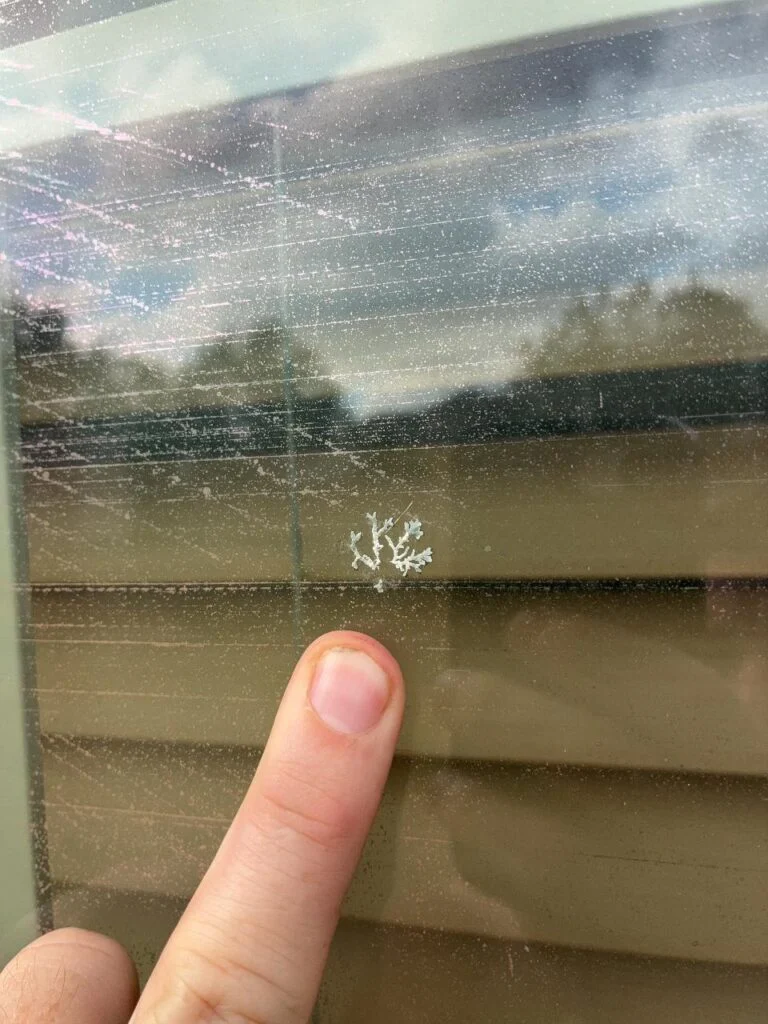
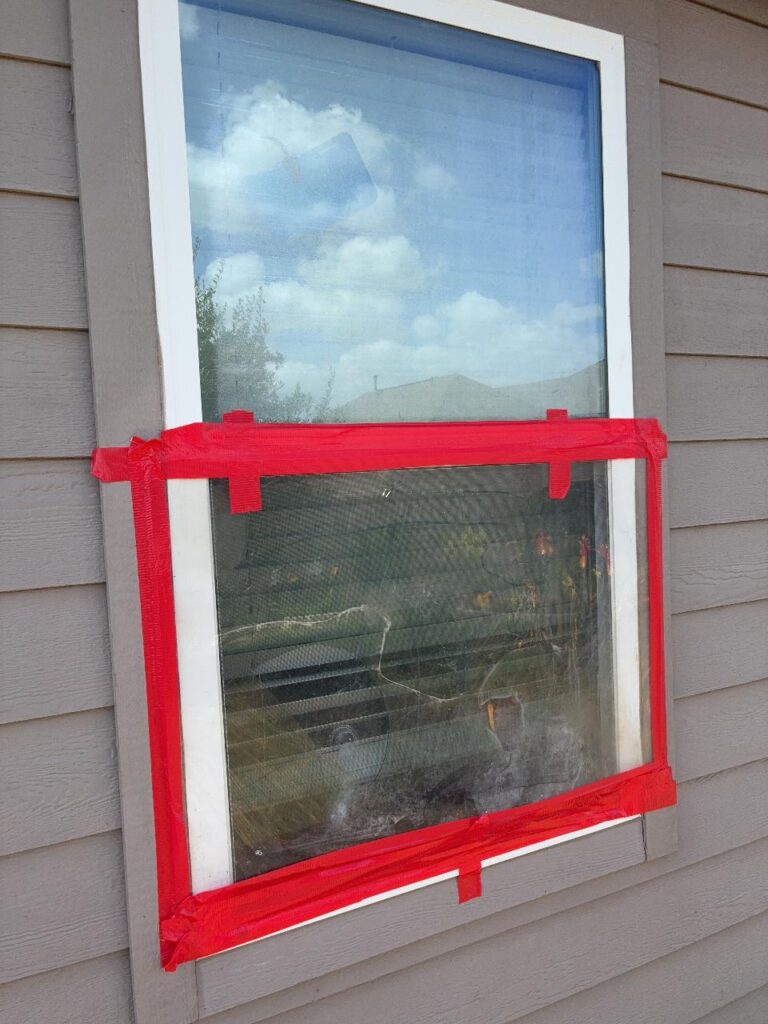
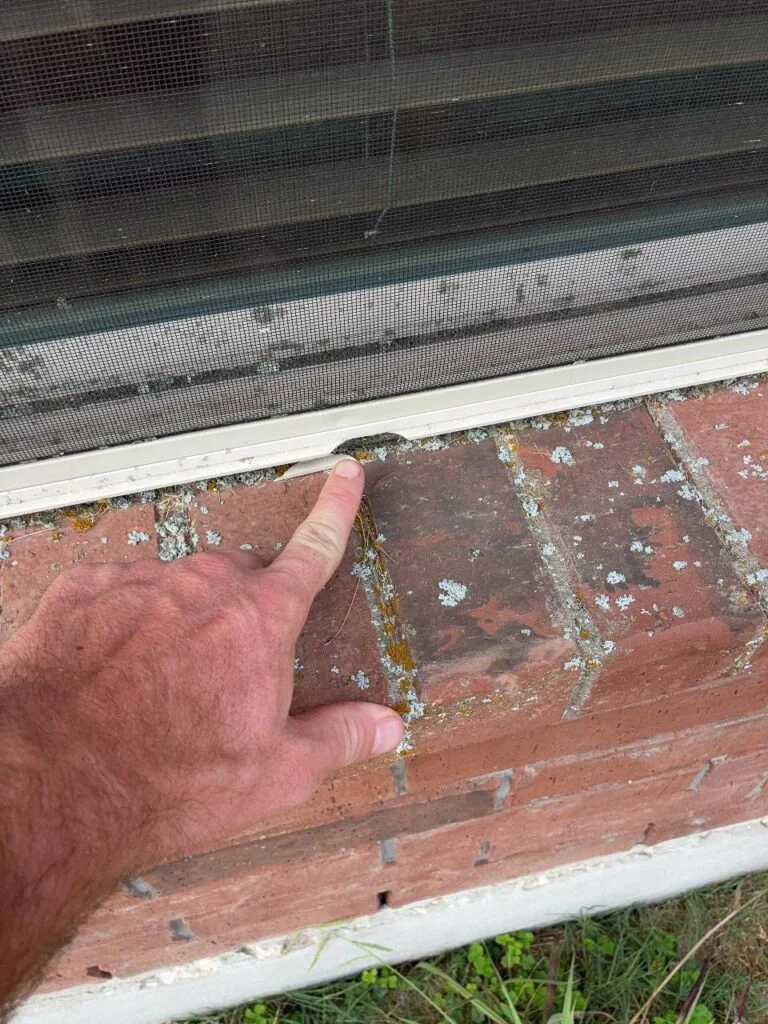
Watch: one window cracked, the next one untouched
Hail does not fall evenly. On this Converse home one window took an impact hard enough to need boarding up, while another six feet away has nothing wrong with it and the siding between them is clean. It is the clearest argument there is for having the whole exterior checked rather than only the thing you happened to notice.
Why Screens Matter More Than They Look
A punctured insect screen is a cheap thing to fix. It is also, in claims terms, one of the most useful things on your house.
Screens are soft, they are vertical, and they sit at eye level. That combination makes them a reliable record of three things an adjuster is trying to establish:
- That hail struck this property, not merely the neighbourhood. Storm reports establish an area; your screens establish your address.
- Which direction it came from. Punctures concentrated on one or two elevations tell you the angle of the storm, which should match the pattern of damage found on the roof. On September 11 the Weather Service also measured a 60 mph wind gust two miles away at Randolph AFB, and wind is what drives hail sideways into vertical surfaces.
- Rough severity. Stretched mesh and a few punctures reads very differently from mesh torn away from its frame.
Soft metal behaves the same way, which is why the same logic applies to gutters, downspouts, vent caps and the aluminium fins on your AC condenser. Those surfaces dent before a shingle shows visible damage, so they are the early warning system for the roof. That is the whole idea behind checking for hail damage without climbing on the roof.
Real Hail Damage vs Accidental Gutter Damage | Is This Hail Damage? Austin Roofer Explains: telling genuine hail damage apart from accidental damage on soft metal, using a real example.
Telling Hail Damage From Ordinary Wear
This is the distinction an adjuster will make, so it is worth making it yourself first.
| Hail damage | Age and wear | |
|---|---|---|
| Distribution | Clustered on storm-facing elevations | Even across all elevations |
| Angle | Consistent, directional | No pattern |
| Materials affected | Several at once: screens, frames, gutters, vents, roof | Usually one material degrading |
| Edges of damage | Sharp, fresh, bright metal or unweathered substrate | Oxidised, dulled, weathered |
| Timing | Appeared after a dated storm | Developed gradually |
The "several materials at once" row is the strongest single test. Hail does not damage only your windows. If screens, gutter faces, downspouts, vent caps and roof slopes all show fresh marks on the same side of the house, that is a storm. If your window frames are chalky and pitted on every elevation equally, that is twenty Texas summers.
The same reasoning applies to siding, which on many Converse homes sits right beside the windows and takes the same impacts. We cover that in hail damage to siding, and the general version of the question is in hail damage vs wind damage.
How Insurance Treats Hail Damage to Windows
It is one loss, not several. Hail damage to your roof, siding, windows, screens and gutters from a single storm is a single claim with a single deductible. Do not file separately for windows; you risk paying a deductible twice and fragmenting the evidence.
The practical consequences:
- Your wind and hail deductible applies once, and in Texas it is frequently a percentage of dwelling coverage rather than a flat amount. On a $400,000 home at 2 percent that is $8,000, which may exceed the cost of window and screen repairs on their own. Whether the whole loss clears the deductible is the real question, and that usually turns on the roof.
- Document everything together. One set of dated photographs covering every elevation, the screens, the soft metal and the roof gives the adjuster a coherent picture.
- Replacement cost versus actual cash value applies here too. Older windows depreciate like older roofs.
- Matching can be contested. If several windows are damaged and the exact unit is discontinued, whether the carrier pays to match the rest varies by policy.
The full coverage explanation is on our does homeowners insurance cover hail damage in Converse page. One thing worth repeating here: a contractor doing the work cannot act as your public adjuster, negotiate your claim, or waive your deductible. Waiving a deductible is a crime in Texas. What we can do is inspect, document and estimate, and explain what we found to your adjuster on site.
Repair or Replace?
Window damage has more intermediate options than a roof does, and the cheapest adequate fix is usually the right one.
| What is damaged | Usual fix | Relative cost |
|---|---|---|
| Screen mesh or screen frame only | Rescreen or replace the screen | Lowest |
| Exterior paint, trim, wrapping | Repair and refinish | Low |
| Glazing bead cracked or displaced | Re-bed and reseal | Low to moderate |
| Glass cracked, seal intact, frame sound | Replace the insulated glass unit only | Moderate |
| Seal failed, fogging between panes | Replace the glass unit, sometimes the sash | Moderate to high |
| Frame dented or deformed, or operation impaired | Full window replacement | Highest |
The rule of thumb: repair when the damage is cosmetic or limited to a replaceable component, and replace when the window’s job is compromised, meaning it no longer keeps water out, no longer insulates, or no longer opens and closes properly.
Be sceptical of anyone who inspects hail damage and recommends replacing every window in the house. That is the window equivalent of replacing a roof for one damaged slope, and an adjuster will treat it the same way. For whole-home window projects unrelated to storm damage, we cover that separately under window replacement.
What Your Windows Tell You About Your Roof
This is the part most homeowners get backwards, so it is worth being blunt about.
Undamaged windows do not mean an undamaged roof. Glass is strong, and it is vertical, so hail strikes it at a glancing angle. Your roof is angled toward the sky and takes the same hail almost head on, and asphalt shingles bruise at sizes that leave glass completely untouched. Intact windows over a bruised roof is an entirely normal result.
Damaged windows are strong evidence the roof needs checking. The reverse inference is reliable. If hail had enough energy to puncture a screen or dent a frame on your house, it had far more than enough to bruise the shingle mats above.
So use windows the way an inspector does: as an accessible, ground-level indicator rather than as a verdict. If you find damage down there, get the roof looked at. If you do not, and you are inside the area the Weather Service reported on, still get the roof looked at.
What was reported near Converse that night, with times, sizes and the full warning timeline, is set out in our Converse hailstorm guide. We provide free written inspections with photo documentation across Converse and northeast Bexar County; you can request one here or read more on our Converse roofing page.
Frequently Asked Questions
Can hail actually break a window?
Yes, though outright breakage usually takes larger hail or wind-driven hail hitting the glass at an angle. The September 11, 2026 storm near Converse produced reports of broken automobile glass, and the National Weather Service warning for that storm explicitly listed hail damage to windows as an expected impact. Far more often, though, the damage is to screens, frames and seals rather than the glass itself.
What does hail damage to a window look like?
Look for punctures or stretched holes in insect screens, dents and chipped paint on aluminium or vinyl frames and sills, gouges in window trim and wrapping, cracked or displaced glazing bead, and chips at the edge of the glass rather than the centre. Interior fogging between panes is a later symptom, not an immediate one.
Are damaged window screens worth reporting on a claim?
Yes. Screens are a legitimate part of a hail loss, and they matter beyond their own replacement cost: punctured screens on one elevation are strong corroborating evidence of impact direction and severity, which supports the rest of the claim.
Does homeowners insurance cover hail damage to windows?
Generally yes, under the same covered peril and the same wind and hail deductible as the roof. Because it is one loss, window, screen, siding and roof damage should be documented together rather than claimed separately. Whether it is worth claiming depends on your deductible, which in Texas is often a percentage of dwelling coverage.
Should I file a separate claim for windows?
No. Hail damage from a single storm is one loss with one deductible. Filing separately risks paying a deductible twice and complicating the file. Document everything and submit it together.
How much does hail window repair cost?
It varies enormously by what is damaged. Rescreening is typically the cheapest fix by a wide margin. Replacing a sealed insulated glass unit while keeping the existing frame costs considerably less than a full window replacement. Full replacement is the most expensive and is usually only justified when the frame or seal is compromised.
Repair or replace a hail-damaged window?
Repair when only the screen, the trim or the exterior finish is damaged and the frame and seal are intact. Replace when the frame is deformed, the seal has failed, the glass is cracked through, or you are seeing fogging between the panes, because those affect the window’s weather and thermal performance rather than just its appearance.
How do I tell hail damage from ordinary wear on a window?
Hail damage is directional and clustered. It concentrates on the elevations that faced the storm, it appears at a consistent angle, and it shows up on several different materials at once, so screens, frames, gutters and vents all show it together. Ordinary wear is uniform across every elevation and does not cluster.
Does fogging between the panes mean hail damage?
Not on its own. Fogging means the seal on an insulated glass unit has failed, which usually happens gradually with age. It can follow an impact, but if it appeared long before the storm it is a maintenance issue and not a hail claim.
My windows look fine. Should I still get the roof checked?
Yes. Undamaged windows do not clear the roof. Glass is comparatively strong and vertical, so it is struck at a glancing angle, while your roof takes the same hail nearly head on. Intact windows with a bruised roof is a completely normal combination.
Who should inspect hail damage to windows?
A roofing or exterior contractor documenting the whole storm loss can photograph window, screen, siding and roof damage together as one event, which is what an adjuster needs. A glass company can replace a unit, but it will not document the rest of the loss.
Does hail damage to windows affect my home’s energy efficiency?
It can. A failed seal on a double-glazed unit loses the insulating gas fill between the panes, which measurably reduces thermal performance. Damage limited to a screen or to exterior trim does not.
Sources
Warning language and storm reports: National Weather Service Austin/San Antonio, Severe Thunderstorm Warning 0170 and accompanying Severe Weather Statements, and Local Storm Reports, September 11 to 12, 2026 (products WUUS54, WWUS54 and NWUS54 KEWX). The quoted impact statement is from the 10:12 p.m. CDT update. The 60 mph gust at Randolph AFB is a measured AWOS report.
Deductible and claim-handling law: Texas Insurance Code Chapter 707; Texas Insurance Code §4102.163; Texas Department of Insurance, Roofing and insurance: Know the law.
This page is general information for Texas homeowners. It is not legal advice, insurance advice or a coverage opinion, and cost comparisons here are relative rather than quoted prices. Your policy language controls what is covered.
Siding sits directly beside the windows on most Converse homes and takes the same wind-driven impacts, but it fails differently depending on the material. What to look for on vinyl, fibre cement, aluminium and stucco is covered in hail damage to siding in Converse, TX.

Author: Driftwood Builders Roofing
Driftwood Builders Roofing is a family-owned residential roofing company headquartered in Manchaca, Texas, serving Austin and the surrounding Hill Country since 2005. The company has delivered 3,700 full roof replacements and 783 repairs across 3,559 different customers over 20 years in business, with 97 years of combined construction experience across the leadership team and 74 years specifically inside Driftwood Builders. The company holds the highest contractor certifications offered by the major shingle manufacturers, including GAF Master Elite Contractor (the top 3% of GAF contractors nationally), GAF Certified Green Roofer, Owens Corning certified, TAMKO Pro Certified Contractor, and a Berridge Roof Installation Seminar Certificate for standing-seam metal roofs. Driftwood is an NRCA member, holds an Angie's List Super Service Award, is BBB Accredited, and is a GuildQuality member for verified customer satisfaction data. James Hardie certification covers the siding side of the business. Services include residential roof replacement, leak and storm-damage repair, tile roof repair, metal roofing, TPO commercial roofing, roof inspections, hail and storm damage inspections with insurance claim assistance, gutter work, and James Hardie siding. The customer-protection policy is straightforward: Only Pay Upon Completion. The company serves 22 cities across the Hill Country and Greater Austin and holds a 5-star rating across Google, GuildQuality, Angi, Nextdoor, Facebook, Thumbtack, and Yelp.
