LP SmartSide vs James Hardie: What the Manufacturers Actually Say
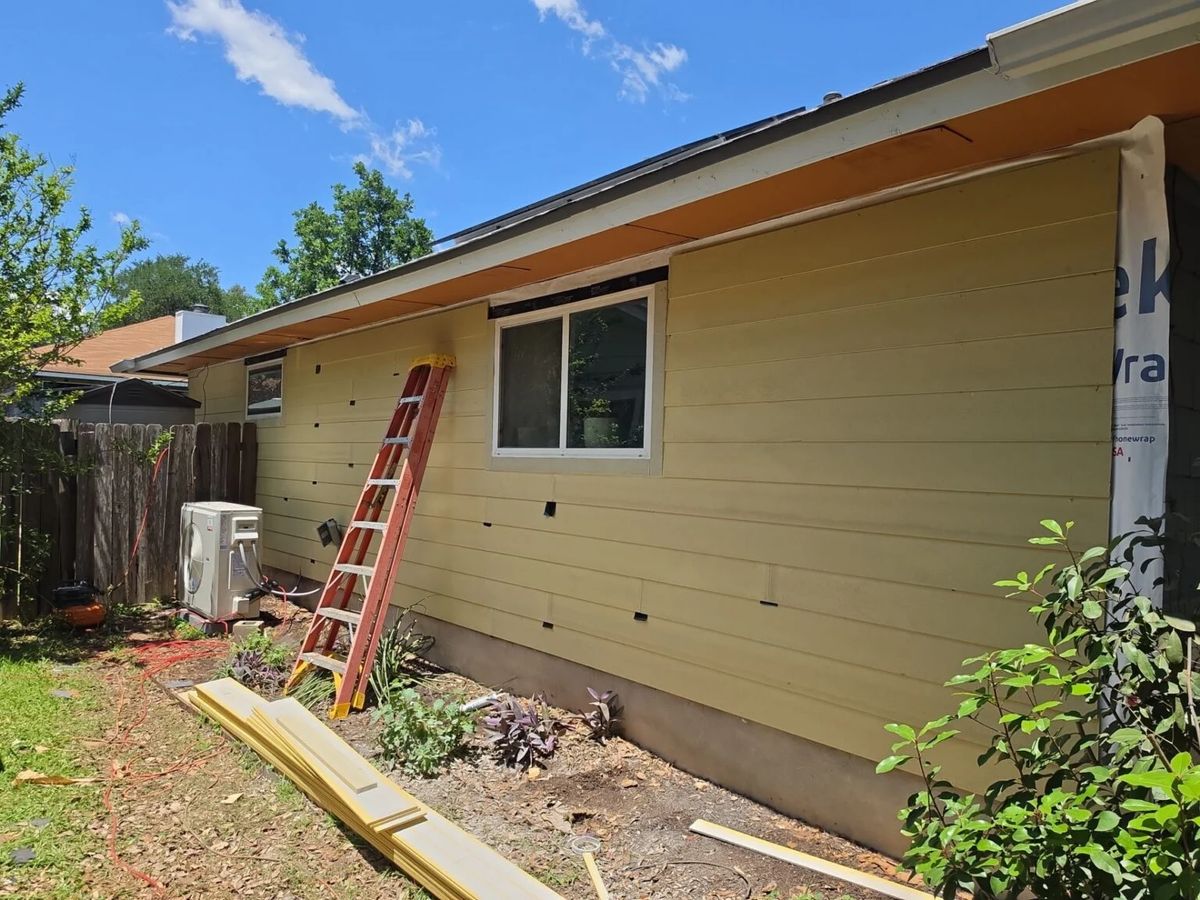
What Each Siding Is Made Of
LP SmartSide is an engineered wood product. LP's 2026 product guide says every SmartSide product is "treated to the core with an advanced formula of adhesive resins, water-resistant waxes, and zinc borate," and then a resin-saturated overlay is bonded to the surface. LP calls this its SmartGuard process. It comes primed for field painting or prefinished as LP SmartSide ExpertFinish.
James Hardie siding is fiber cement. James Hardie describes it as made of "sand, water, cellulose fibers, and Portland cement," plus proprietary additives. HardiePlank comes primed for field painting or factory-finished with ColorPlus Technology. Hardie also says it engineers its products for specific climates and offers different products and colors by region, so availability depends on where you live.
Because one is wood-based and one is cement-based, they are cut and handled differently. LP's instructions carry a wood-dust warning. Hardie's instructions carry a crystalline silica warning, recommend dust-controlled cutting methods and point to OSHA's silica rules. LP's product guide also says its lap siding has lighter weights per square foot and installs faster than fiber cement. That matters mostly to the installer, but it is a good reason to hire a crew that works with the product regularly.
Warranties Side by Side
| LP SmartSide | James Hardie | |
|---|---|---|
| Substrate | 50-year prorated limited warranty | 30-year non-prorated warranty |
| Early full coverage | 5-year, 100% labor and material replacement | Non-prorated for the full term, per Hardie's FAQ |
| Factory finish | 15-year finish on ExpertFinish prefinished products | 15-year limited warranty on ColorPlus, covering paint and labor |
| Named coverage | Hail up to 1.75 in. diameter, fungal decay, termites, and buckling, cracking, peeling and chipping of the substrate | ColorPlus: peeling, cracking and chipping |
"Prorated" means LP covers a declining share of material cost after the first five years. LP's own explanation is that after year five it "will cover a portion of the material cost." Non-prorated means the coverage does not step down over the term.
Both warranties depend on installation. LP's application instructions say failure to follow its instructions "will make the Limited Warranty inapplicable as to the products affected by such failure." Hardie's instructions say failure to follow them "may affect warranty coverage." Both companies point to their full warranty documents for limitations and exclusions. Read them before you sign.
What Each Manufacturer Claims
Neither company publishes a head-to-head study we could verify independently. Here is what each says about its own product, in its own words.
LP says SmartSide resists moisture intrusion, hail impacts, freeze-thaw damage, termites and fungal decay. Its product guide describes outdoor testing near Hilo, Hawaii since 1996 and a Formosan termite exposure test. It also says third-party testing that LP commissioned showed its cedar texture lap siding "resists hail damage better than fiber cement siding and vinyl siding," and that its lap siding is designed to withstand wind gusts up to 200 miles per hour, citing ESR-1301.
James Hardie says its siding is engineered "to resist damage from moisture, rot, and weather," and that it is non-combustible, "will not ignite when exposed to a direct flame," and has a Class A fire rating. Hardie also says its siding is "water and fire resistant, reducing the impact of pests and moisture."
Notice what is missing: neither manufacturer gives a Central Texas lifespan, and we will not invent one. Heat, sun, hail and termites are real here, and both products are marketed against them. How either one actually lasts on your house depends heavily on installation, flashing and paint. If fire resistance matters to you, for example if your home is in Austin's Wildland-Urban Interface area, ask your installer to show you how the specific siding and wall assembly meet the code that applies to your address. For California's wildfire rules, LP's instructions list CAL FIRE assemblies that put gypsum wallboard or LP FlameBlock sheathing behind the lap siding.
Installation Requirements Compared
The two instruction sets agree more than they differ. Both require a water-resistive barrier behind the siding, and both disclaim responsibility for water that gets into the wall, which leaves flashing to the installer. The numbers below come from LP's 38 and 76 Series Primed Lap Siding instructions (2023) and Hardie's HardiePlank HZ10 instructions (effective December 2019).
| Detail | LP SmartSide lap | HardiePlank lap |
|---|---|---|
| Clearance to finish grade | Min. 6 in. | 6 in. |
| Clearance to roofing | 1 in. | Min. 1 in. |
| Porches, patios, walks | At least 1 in. (3/8 in. allowed for some covered, sloped or draining surfaces) | Min. 1 in. (slabs, paths, steps and decks) |
| Kickout flashing | Required at roof eave-to-wall intersections | Required, "min 4 in. x 4 in." per IRC |
| Gap at window and door trim | 3/16 in., sealed | "Appropriate gap," then caulk |
| Cut edges | Seal all exposed cuts | Caulk, paint or prime all field-cut edges |
| Painting primed product | As soon as possible or within 180 days | Within 180 days of installation |
| Paint type | 100% acrylic recommended; oil acceptable; no stain or vinyl-based paint | 100% acrylic recommended; no stain or oil/alkyd paint |
| Standard lap length | 16 ft. standard (product guide) | 12 ft. (coverage chart) |
Longer boards mean fewer butt joints on a long wall. Both makers detail how joints should be flashed or sealed. The paint rule is worth noticing: LP allows oil-based paint and Hardie does not, so tell your painter which product is on the house. Our guide to painting James Hardie siding covers ColorPlus versus field paint, and common James Hardie installation mistakes shows what goes wrong when these details are skipped.
Cost in the Austin Market
Our siding replacement cost guide lists engineered wood (e.g. LP SmartSide-type products) at "$8 to $12/sq. ft. (general Austin-market range)" and fiber cement / James Hardie at "$16 to $25/sq. ft. (Driftwood's real, current installed pricing)." The engineered wood figure is a general market range compiled from public sources, not a Driftwood quote, because we do not install it. Compare any two quotes on what they include: tear-off, house wrap, flashing, trim and paint. Our James Hardie siding cost guide breaks the Hardie price down by product.
How to Choose, and Where Driftwood Fits
Questions that usually settle it:
- Which warranty structure matters more to you? A longer prorated term, or a shorter non-prorated one. Read both documents in full.
- Do you want factory finish or field paint? Both makers offer each, and both finish warranties are 15 years.
- Is your home in the wildfire (WUI) area? Ask how the proposed wall assembly meets the code for your address.
- Who will install it? Both warranties lean on correct installation, so the crew matters as much as the brand. Ask how they flash windows and roof-to-wall joints and how they keep clearances.
We are upfront about our side of this. Driftwood is a James Hardie Siding Contractor, and Hardie fiber cement is the siding we install. We do not install LP SmartSide, so if you have decided on LP, look for an installer who works with it regularly. If you are leaning toward fiber cement, see our James Hardie vs vinyl comparison or our James Hardie siding installation page, and ask for a free estimate. We will measure your walls and walk you through what a Hardie job on your house would include.
Sources: LP SmartSide Trim & Siding Product Guide & Specifications (2026); LP SmartSide 38 and 76 Series Primed Lap Siding Application Instructions (2023); LP Building Solutions, The What's and Why's of the LP SmartSide 5/50 Limited Warranty; James Hardie, Frequently Asked Questions (jameshardie.com); James Hardie HardiePlank Lap Siding installation instructions (HZ10, effective December 2019); Driftwood Builders Roofing, Siding Replacement Cost in Austin.
Frequently Asked Questions
Is LP SmartSide or James Hardie better?
It depends on what you value. LP offers a 50-year prorated warranty and a wood-based product; James Hardie offers a 30-year non-prorated warranty and a non-combustible fiber cement product. Both manufacturers claim resistance to moisture, pests and weather. Installation quality affects both, and both warranties depend on following the manufacturer instructions.
Does Driftwood install LP SmartSide?
No. Driftwood is a James Hardie Siding Contractor and installs James Hardie fiber cement. If you have chosen LP SmartSide, look for an installer who works with it regularly.
Do LP SmartSide and James Hardie need the same clearances?
Mostly. Both instruction sets call for 6 inches above finished grade and 1 inch above roofing, and both require kickout flashing at roof-to-wall eaves and a water-resistive barrier. Check the current instructions for the exact product being installed.
Which one holds up better to hail?
LP says testing it commissioned showed its cedar texture lap siding resisted hail better than fiber cement and vinyl, and its warranty names hail up to 1.75 inches. James Hardie does not publish a comparable hail figure in the documents we read. We have no independent head-to-head data to add.
Can I paint either one any color?
Primed versions of both are made to be field painted, and both makers recommend 100% acrylic paint. Hardie says not to use oil or alkyd paint; LP says oil is acceptable. Both say not to use stain.
Author: Driftwood Builders Roofing
Driftwood Builders Roofing is a family-owned residential roofing company headquartered in Manchaca, Texas, serving Austin and the surrounding Hill Country since 2005. The company has delivered 3,700 full roof replacements and 783 repairs across 3,559 different customers over 20 years in business, with 97 years of combined construction experience across the leadership team and 74 years specifically inside Driftwood Builders. The company holds the highest contractor certifications offered by the major shingle manufacturers, including GAF Master Elite Contractor (the top 3% of GAF contractors nationally), GAF Certified Green Roofer, Owens Corning certified, TAMKO Pro Certified Contractor, and a Berridge Roof Installation Seminar Certificate for standing-seam metal roofs. Driftwood is an NRCA member, holds an Angie's List Super Service Award, is BBB Accredited, and is a GuildQuality member for verified customer satisfaction data. James Hardie certification covers the siding side of the business. Services include residential roof replacement, leak and storm-damage repair, tile roof repair, metal roofing, TPO commercial roofing, roof inspections, hail and storm damage inspections with insurance claim assistance, gutter work, and James Hardie siding. The customer-protection policy is straightforward: Only Pay Upon Completion. The company serves 22 cities across the Hill Country and Greater Austin and holds a 5-star rating across Google, GuildQuality, Angi, Nextdoor, Facebook, Thumbtack, and Yelp.
