Roof Claim Denied for Wear and Tear? How to Assess Your Roof and Decide Between Repair and Replacement
What a Wear and Tear Denial Means
A homeowners policy is built to pay for sudden, accidental damage from covered events. It is not a maintenance plan. TDI's consumer guide puts it plainly: "Companies won't pay for damages that happen over time, like rotted boards, cracking window seals, or worn roofs." So when an adjuster's report says "wear and tear," "deterioration" or "age-related," the insurer has decided that what it saw on your roof was not caused by the storm or event you reported.
That is different from two other outcomes homeowners often lump together:
- Denied for wear and tear: the insurer says the damage is not from a covered cause. Nothing is paid for that damage.
- Paid, but less than you expected: the insurer accepts storm damage but pays a reduced amount, for example because of depreciation on an older roof. That is a payment dispute, not a denial. Our guide to whether homeowners insurance covers roof replacement in Texas explains how actual cash value and replacement cost policies differ.
What a denial does not tell you is whether your roof is sound. A denied roof may be leaking now, or it may need only a modest repair. That is a question about the roof, not the claim.
First, Get the Roof Itself Assessed
Whatever you decide about the claim, start with an independent look at the roof's actual condition. A useful inspection documents:
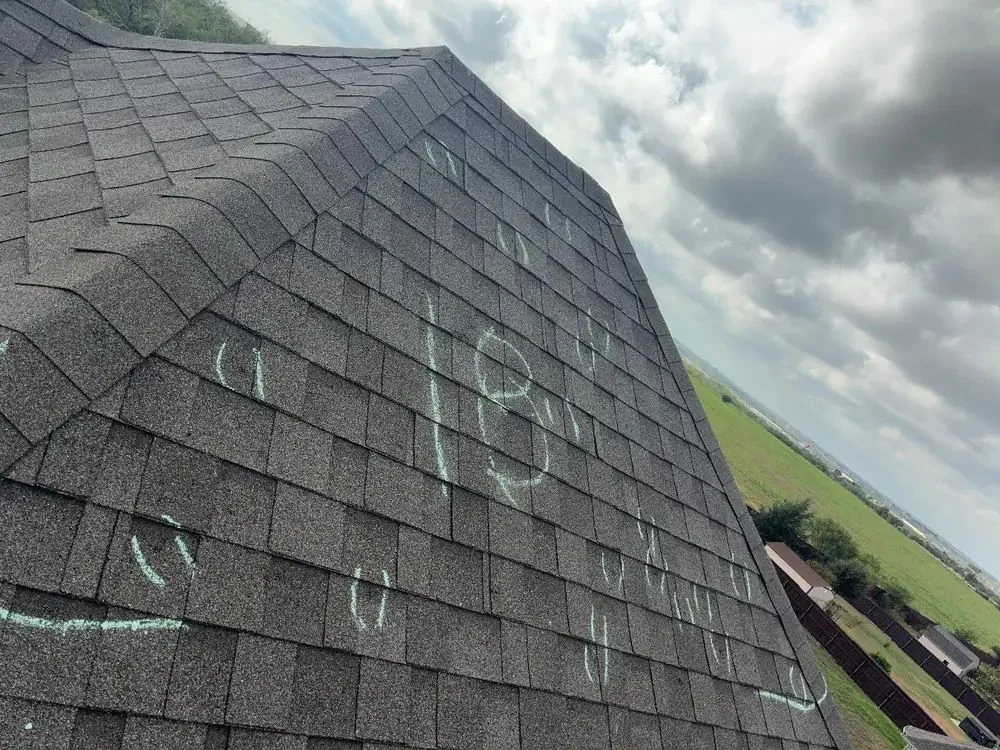
- The shingles: granule loss, cracking, curling, lifted or missing tabs, and whether any marks look like impact damage or like general aging. Our guide on natural wear versus storm damage shows the difference, and our hail damage guide covers what hail typically leaves behind.
- Flashing and penetrations: walls, chimneys, valleys, vent pipes and skylights, the joints the building code requires to be flashed.
- The deck: soft spots, sagging or water staining in the attic that suggests decking needs replacing.
- Active leaks: where water is getting in now, and how urgent the repair is.
Ask for dated photos of every finding. If you plan to tell the insurer why you disagree, TDI suggests sending supporting documentation, "such as a contractor's estimate for the repairs." The same photos and scope help you plan the roof work either way.
Repair or Replace After a Denial
If you end up paying for the work yourself, the decision is the same one any homeowner faces. A denial does not mean you need a new roof. The condition of the roof decides it.
A repair usually makes sense when:
- The problem is isolated: one leak, a few missing or damaged shingles, or a failed flashing or pipe boot.
- The rest of the roof still sheds water well, with shingles that are flat, sealed and holding their granules.
- The deck under the problem area is solid, or only a small area needs replacing.
Our guide to repairing just a section of a roof covers how section repairs work.
Replacement is usually the better use of money when:
- Wear is widespread across the slopes rather than confined to one area.
- Repairs keep recurring in different places.
- Decking is soft, rotted or delaminated in more than a small area.
The building code also limits shortcuts. The 2024 International Residential Code, which the City of Austin enforces, says a new roof covering may not be installed over an existing roof that is "water soaked or has deteriorated to the point that the existing roof or roof covering is not adequate as a base for the additional roofing," and that a full roof replacement "shall include the removal of existing layers of roof coverings down to the roof deck," with limited exceptions. Our roof repair vs replacement guide walks through the decision in more detail.
Budgeting the Work Yourself
A few practical points when you pay out of pocket:
- Get a written scope, not just a total, including decking, flashing and vents.
- Ask how decking is priced. Rotted decking under shingles may not be visible until the old roof is off. On one documented Driftwood replacement on Caleb Drive in Austin (78725), a roof of about 2,168 square feet was replaced in one day with GAF Timberline HDZ shingles, 9 sheets of rotted decking were replaced, and the total was $11,595. On another, on Creeks Edge (78733), about 2,950 square feet of 18-year-old shingle sections were replaced in one day for $15,328. Those totals were specific to those homes and scopes, not price quotes.
- Compare like for like. Our guide to what to look for in a roofing estimate covers the line items worth checking, and our Austin roof replacement cost guide explains what drives the price.
- Ask about financing. Driftwood offers multiple financing options if spreading the cost helps.
Some homeowners plan ahead rather than waiting for a failure. Driftwood documented one proactive replacement of an 18-year-old roof in South Austin, made before the roof failed.
Your Options on the Claim
This is general information, not legal advice. Your policy and your insurer's letter control the details.
- You are owed the reasons in writing. Under Texas Insurance Code Section 542.056, an insurer must notify you in writing whether it accepts or rejects a claim, generally within 15 business days after it receives everything it asked for, and "If the insurer rejects the claim, the notice ... must state the reasons for the rejection." If it needs more time, it must tell you why, then decide within 45 days. Earlier, within 15 days of your claim notice (30 business days for an eligible surplus lines insurer), it must acknowledge the claim, start its investigation and request what it needs (Section 542.055).
- Tell the company why you disagree. TDI's advice is to tell the company why and send supporting documentation, such as a contractor's estimate.
- Check for an appraisal clause. Your policy may include appraisal. It is a policy clause, not a legal right, and it settles disagreements about the amount of a loss, not whether something is covered. Each side pays its own appraiser and half the umpire's costs. Check your policy for deadlines to demand it.
- Ask about alternative dispute resolution. TDI says you can ask for alternative dispute resolution, which uses mediation with a neutral third party. TDI does not run a mediation program for private homeowners claims.
- Get professional help. A public adjuster must be licensed by TDI and can negotiate with your insurer for a fee, which TDI says can reach 10% of what the insurer pays. An attorney can advise you on deadlines, including your policy's own deadlines and Texas pre-suit notice rules.
- Call TDI. TDI's Help Line is 800-252-3439, 8 a.m. to 5 p.m., Monday to Friday, and you can file a complaint with TDI if you think a company treated you unfairly.
For how to avoid disputes in the first place, see our guide to avoiding common roofing insurance claim disputes, and for how a storm claim normally runs, our roof insurance claim process guide.
What a Roofer Can and Can't Do
Texas law draws a clear line here.
- A roofer can inspect the roof, document its condition with photos, write an estimate and, as TDI's Commissioner's Bulletin B-0051-08 states, discuss "those estimates and other technical information with an insurer or its adjuster."
- A roofer can't act as your public adjuster. Insurance Code Section 4102.163 says "A contractor may not act as a public adjuster" or advertise to adjust claims on a property where it does or may do the work, even with a license or a power of attorney. TDI adds that contractors "can't advertise that they'll handle your insurance claim."
- A roofer can't waive, absorb or rebate your deductible. That is prohibited under Texas Business and Commerce Code Section 27.02.
Driftwood's role after a denial is the same as on any roof: inspect it, document what we find, recommend a repair or a replacement honestly, and do the work if you hire us. Driftwood does not handle, negotiate or adjust insurance claims.
A Claim Denial Is Not a Nonrenewal
Under 28 Texas Administrative Code Section 21.1006, insurers may not decline to write, or refuse to renew, a homeowners policy based solely on the age of the house or of components such as the roof, though they may consider physical condition. That rule is about writing and renewing policies. It does not stop an insurer from denying a claim for damage it finds is wear and tear.
If you received a nonrenewal notice or a letter asking for a roof replacement to keep your coverage, that is a different situation. Our guide to insurance roof replacement letters in Texas covers it.
If your claim was denied and you want to know where the roof actually stands, Driftwood offers a free roof inspection and estimate. We can document what we find, tell you whether a repair will do or replacement makes more sense, and give you a written estimate. You can also call our office at (512) 894-0129.
Sources: Texas Department of Insurance, "Five things your home policy won't cover," "What if my insurance isn't paying enough?" and "Public adjusters: What to know before you hire one"; TDI Commissioner's Bulletin B-0051-08 (August 8, 2008); Texas Insurance Code Sections 542.055, 542.056, 4102.051 and 4102.163; Texas Business and Commerce Code Section 27.02; 28 Texas Administrative Code Section 21.1006 and TDI news release of September 29, 2026; 2024 International Residential Code Sections R908.3 and R908.4; Driftwood Builders Roofing project pages for Caleb Drive (78725), Creeks Edge (78733) and South Austin (78745).
Frequently Asked Questions
Does a wear and tear denial mean I need a new roof?
No. It means the insurer decided the damage it saw was not from a covered event. The roof may still need only a targeted repair. An inspection of the shingles, flashing and deck decides whether repair or replacement makes more sense.
Does my insurer have to tell me why the claim was denied?
Yes. Texas Insurance Code Section 542.056 requires the insurer to notify you in writing of a rejection, and the notice must state the reasons for the rejection.
Can appraisal overturn a wear and tear denial?
Appraisal is a policy clause that settles disagreements about the amount of a loss, not whether the damage is covered. Check whether your policy includes it, and ask TDI, a licensed public adjuster or an attorney how it applies to your situation.
Can my roofer fight the denial for me?
No. Under Texas Insurance Code Section 4102.163, a contractor may not act as a public adjuster on a property it works on. A roofer can document the roof and discuss its estimate with the adjuster. For help with the claim itself, contact TDI at 800-252-3439, a licensed public adjuster or an attorney.
Is a claim denial the same as my policy not being renewed?
No. The Texas roof-age rule, 28 TAC Section 21.1006, is about insurers declining to write or renew policies. A claim denial is a decision about whether a specific loss is covered.
Author: Driftwood Builders Roofing
Driftwood Builders Roofing is a family-owned residential roofing company headquartered in Manchaca, Texas, serving Austin and the surrounding Hill Country since 2005. The company has delivered 3,700 full roof replacements and 783 repairs across 3,559 different customers over 20 years in business, with 97 years of combined construction experience across the leadership team and 74 years specifically inside Driftwood Builders. The company holds the highest contractor certifications offered by the major shingle manufacturers, including GAF Master Elite Contractor (the top 3% of GAF contractors nationally), GAF Certified Green Roofer, Owens Corning certified, TAMKO Pro Certified Contractor, and a Berridge Roof Installation Seminar Certificate for standing-seam metal roofs. Driftwood is an NRCA member, holds an Angie's List Super Service Award, is BBB Accredited, and is a GuildQuality member for verified customer satisfaction data. James Hardie certification covers the siding side of the business. Services include residential roof replacement, leak and storm-damage repair, tile roof repair, metal roofing, TPO commercial roofing, roof inspections, hail and storm damage inspections with insurance claim assistance, gutter work, and James Hardie siding. The customer-protection policy is straightforward: Only Pay Upon Completion. The company serves 22 cities across the Hill Country and Greater Austin and holds a 5-star rating across Google, GuildQuality, Angi, Nextdoor, Facebook, Thumbtack, and Yelp.
