Roof Still Leaking After a Repair? Why It Happens and What to Do Next
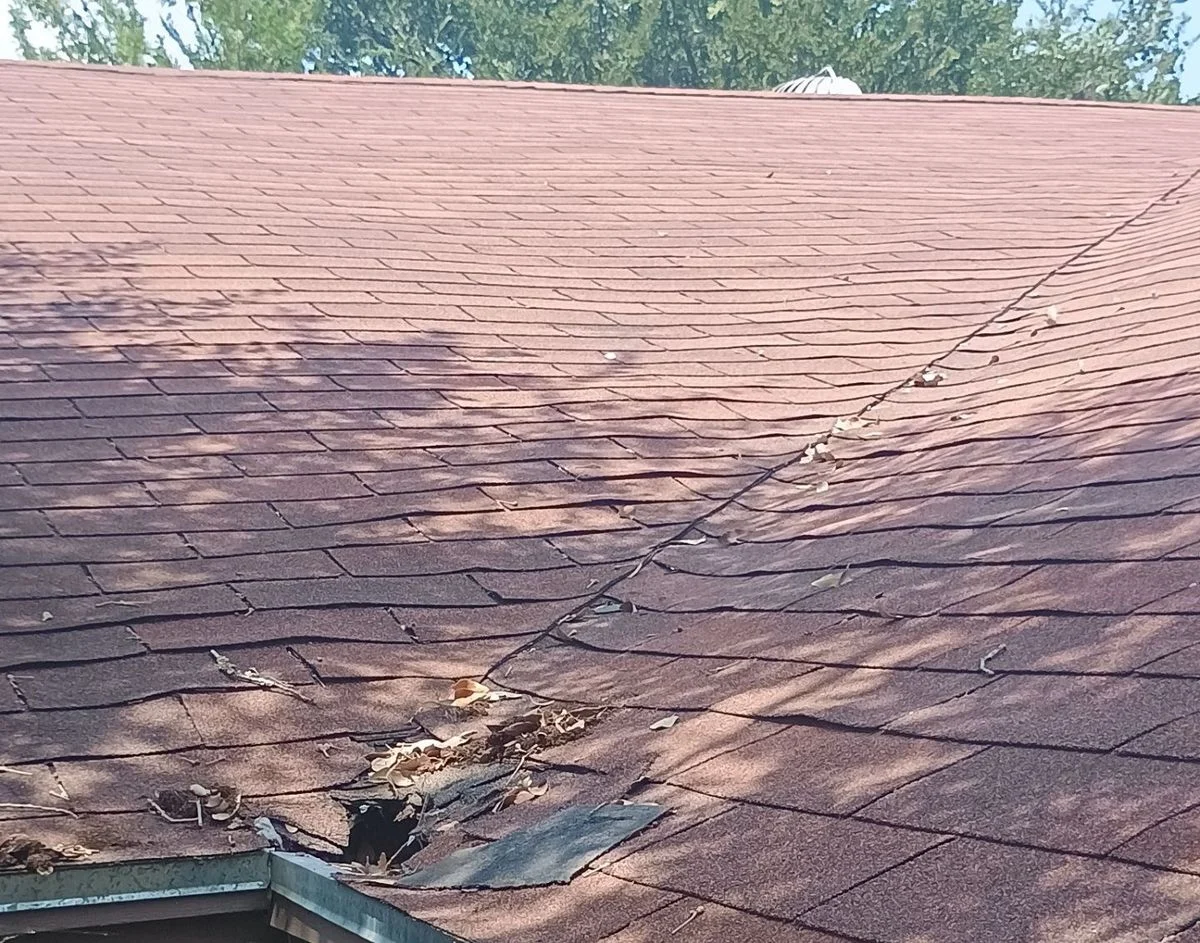
The Leak Was Not Where the Stain Was
The spot on your ceiling shows where water finally came through, not where it got into the roof. As Driftwood noted on a documented clay tile leak repair in Westlake (78746), "Roof leaks can travel along decking, underlayment, framing, or other roof components before appearing indoors, so the location of a ceiling stain is not always directly below the point of entry." In that case, the stain was around a recessed light, and the cause was only found once the tiles above were lifted.
A repair that fixes the shingles directly above the stain can miss an entry point several feet upslope, at a wall, a pipe or a valley. The result is a repair that looks fine and a ceiling that keeps getting wet.
A good leak diagnosis works from the inside and the outside:
- In the attic, trace the water path upward from the stain: wet or stained decking, rafters and insulation.
- On the roof, check every likely entry point above that path, not only the shingles closest to it.
- Note when it leaks. A leak only in wind-driven rain from one direction points to different places than one that leaks in every storm. Our guide to why a roof only leaks sometimes goes into intermittent leaks.
Other Reasons a Repaired Roof Still Leaks
There was more than one leak. A roof can have two or three separate entry points. Fixing one can reduce the water without stopping it.
It was a flashing problem, not a shingle problem. The 2024 International Residential Code, which the City of Austin enforces, requires flashing "at wall and roof intersections, wherever there is a change in roof slope or direction and around roof openings," and requires a flashing to divert water where the eave of a sloped roof meets a vertical sidewall. Against a sidewall, base flashing must be continuous or step flashing, and where there is siding, its vertical leg "shall be continuous under the siding." Vent pipe and chimney flashing must follow the shingle manufacturer's instructions. If one of these details is missing or failed, replacing nearby shingles will not stop the leak. Our guide to kickout flashing covers that roof-to-wall detail.
The flashing was sealed over instead of replaced. Driftwood's tile repair guidance for leaks at a wall, chimney or valley is to replace the flashing, and not to reseal over it. Caulk or sealant over a failed flashing can hide the problem for a while without fixing it.
The repair was temporary. The Asphalt Roofing Manufacturers Association says roofing cement "may work as a temporary repair for a puncture" but "should not be considered a suitable long-term repair." If the repair was a patch of cement, it may simply have run its course.
The damage under the roof was not repaired. If decking or underlayment below the leak was wet or rotted and was left in place, the new surface has nothing sound beneath it.
When the Water Is Not From the Roof
If the ceiling gets wet on a dry day, or during summer when the air conditioner is running hard, look at the attic equipment before the roof. The 2024 IRC requires condensate from cooling coils to be carried from the drain pan to an approved place of disposal, and where an overflow or a blocked drain line would damage the building, it requires a secondary drain, an auxiliary drain pan or a shutoff device. Where a secondary drain is used, it must discharge "to a conspicuous point of disposal to alert occupants" that the primary drain is blocked.
In practice, that means a stain below an attic air handler, or water dripping from an outlet above a window, can be an air conditioning problem rather than a roof problem. An HVAC technician is the right person to check the drain and pan. A plumbing leak in a wall or ceiling is worth ruling out too.
What to Ask the Original Repairer
Call the company that did the repair before you call someone else. Have your invoice or contract ready and ask:
- Exactly what did you repair, and where? Do you have photos?
- What did you think the source of the leak was, and did you check the attic?
- Did you replace any flashing, or seal over it?
- Was the repair intended as temporary or permanent?
- What does your workmanship warranty cover, for how long, and how do I make a claim on it?
Workmanship warranty terms are set by each contractor's own contract, so the answer to the last question is in your paperwork, not a general rule. They are also separate from any manufacturer's warranty on the materials. For reference, Driftwood provides a 2-year workmanship warranty on its own work, separate from manufacturer warranties.
If the repairer will not return, or you have lost confidence in the diagnosis, a second opinion with photos from the attic and the roof is reasonable.
When Repeated Repairs Point to Replacement
One repair that missed the source is a diagnosis problem, not a reason to replace the roof. A pattern is different. Replacement starts to make more sense when:
- Leaks keep appearing in different places, not the same spot again.
- The shingles are worn across the slopes: widespread granule loss, cracking, curling or lifting, rather than one damaged area.
- Decking is soft or rotted in more than a small area.
- Several flashing details need to be redone, which means removing a lot of roofing anyway.
- The total of recent and planned repairs is approaching a meaningful share of what a replacement would cost.
Covering the problem with a new layer is not always an option. The 2024 IRC does not allow a new roof covering over a roof that is water soaked or deteriorated to the point it is not an adequate base, or one that already has two or more layers. Our roof repair vs replacement guide walks through the decision.
What to Do Right Now
- Protect the inside: move belongings, catch the water, and note when it drips. Our guide on what to do when your roof starts leaking covers the first steps.
- Take dated photos of the stain and, if it is safe, the attic above it.
- Call the original repairer with your invoice, then get a second opinion if needed.
- Do not climb on a wet roof.
If you want a fresh diagnosis, Driftwood offers free inspections and estimates for roof leak repair across the Austin area. We can look in the attic and on the roof, show you photos of what we find, and tell you honestly whether a targeted repair will stop it or a replacement is the better use of your money.
Sources: 2024 International Residential Code Sections R903.2, R903.2.1, R905.2.8.3, R905.2.8.4, R908.4, M1411.9 and M1411.9.1; Asphalt Roofing Manufacturers Association, "Asphalt Shingle Roofs are Repairable: What You Need to Know" (February 18, 2026); Driftwood Builders Roofing Westlake (78746) clay tile leak repair project page and tile roof repair page.
Frequently Asked Questions
Why is my roof still leaking after it was repaired?
Most often the repair fixed the wrong spot. Water can travel along the decking, underlayment or framing before it reaches the ceiling, so the entry point may be well away from the stain. Other causes include a second leak, failed flashing that was sealed over, a temporary patch, or water from attic air conditioning equipment.
Should the original roofer fix it for free?
That depends on their workmanship warranty and what the contract says. Call them with your invoice and ask what the warranty covers. Warranty terms are set by each contractor, and they are separate from manufacturer warranties on materials.
Can an air conditioner cause what looks like a roof leak?
Yes. The 2024 IRC requires condensate drain pans and, where an overflow would cause damage, a secondary drain, auxiliary pan or shutoff device for attic cooling coils. A blocked drain can overflow onto the ceiling. If the leak appears in dry weather, have an HVAC technician check the drain.
Is roofing cement a permanent fix?
No. The Asphalt Roofing Manufacturers Association says roofing cement may work as a temporary repair for a puncture but should not be considered a suitable long-term repair.
When should I stop repairing and replace the roof?
When leaks keep appearing in different places, wear is widespread across the slopes, decking is rotted in more than a small area, or repair costs are adding up toward a meaningful share of a replacement. One missed leak on its own is a diagnosis problem, not a reason to replace.

Author: Driftwood Builders Roofing
Driftwood Builders Roofing is a family-owned residential roofing company headquartered in Manchaca, Texas, serving Austin and the surrounding Hill Country since 2005. The company has delivered 3,700 full roof replacements and 783 repairs across 3,559 different customers over 20 years in business, with 97 years of combined construction experience across the leadership team and 74 years specifically inside Driftwood Builders. The company holds the highest contractor certifications offered by the major shingle manufacturers, including GAF Master Elite Contractor (the top 3% of GAF contractors nationally), GAF Certified Green Roofer, Owens Corning certified, TAMKO Pro Certified Contractor, and a Berridge Roof Installation Seminar Certificate for standing-seam metal roofs. Driftwood is an NRCA member, holds an Angie's List Super Service Award, is BBB Accredited, and is a GuildQuality member for verified customer satisfaction data. James Hardie certification covers the siding side of the business. Services include residential roof replacement, leak and storm-damage repair, tile roof repair, metal roofing, TPO commercial roofing, roof inspections, hail and storm damage inspections with insurance claim assistance, gutter work, and James Hardie siding. The customer-protection policy is straightforward: Only Pay Upon Completion. The company serves 22 cities across the Hill Country and Greater Austin and holds a 5-star rating across Google, GuildQuality, Angi, Nextdoor, Facebook, Thumbtack, and Yelp.
