Is Your Austin Home Still on Its Original Builder-Grade Roof?
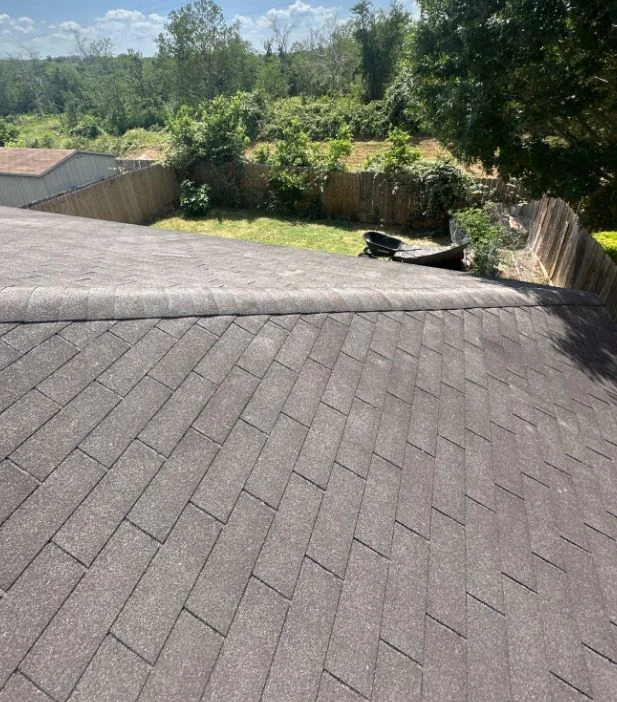
What "Builder Grade" Actually Means
Shingle manufacturers do not sell a product called "builder grade." It is a phrase homeowners, agents and contractors use for the materials a home was built with when the builder was choosing on price. On a shingle roof, it usually points to an entry-level line.
GAF describes the main asphalt types like this:
- 3-tab: single-layer shingles with "a uniform, flat appearance," each cut into three equal tabs. GAF calls this "the most economical roofing choice."
- Architectural (also called dimensional): "multiple layers of asphalt-coated fiberglass that are laminated together," with "a more three-dimensional look." GAF's Timberline HDZ is an example.
An entry-level roof is not a defective roof. The label matters less than two facts: how old the roof is, and what condition it is in now. For a full comparison of the two shingle types, see Dimensional vs. 3-Tab Shingles.
How to Tell If Your Roof Is the Original
Before you assume anything about the roof, find out whether it has ever been replaced:
- Look for a replacement invoice or warranty in your records or the previous owner's. If one exists, the roof is not original.
- Check the seller's disclosure from your purchase. The Texas form, TREC No. 55-1, asks for the roof type and "Age (approx.)." It is the seller's estimate, but it is a lead.
- Read your home inspection report. It may comment on the roof's apparent age or note past replacement.
- Search permits, with a caveat. Inside the City of Austin, asphalt shingles that replace asphalt shingles are generally permit-exempt (outside the wildfire-area 50% case), so a missing permit does not prove the roof is original.
If none of that turns up a replacement, and the roof looks uniform across every slope, it is reasonable to treat it as original until an inspection says otherwise.
3-Tab or Architectural? Identifying What You Have
You can often tell from the ground or from photos:
- 3-tab: flat, even rows with regular cutouts that line up into a repeating grid. Every shingle looks the same.
- Architectural: thicker, layered shingles with an irregular, shadowed pattern and no single repeating tab grid.
The type tells you what was installed, not when, and both types can wear out. What to look for on either type is wear spread across the whole roof:
- granule loss that shows as lighter or bare patches, or granules collecting in the gutters
- curling, cracking or brittle shingles
- lifted or missing shingles after wind
- worn ridge caps
Our guides to roof granule loss and why asphalt shingles fail explain what each sign means.
Why Age Brings These Roofs Into Question
A shingle's marketed life or warranty term is not a promise about how long it will last on a particular house. Driftwood's video "Why Advertised Thirty-Year Shingles Only Last 15-20 Years in Austin, TX?" explains why, in our experience, asphalt shingle roofs here often fall short of those labels: heat and UV, hail and wind over the years, attic ventilation, and installation quality all affect how long a roof actually lasts.
That is Driftwood's field experience, not a rule. Some roofs last longer, and some fail sooner. For lifespan ranges by material and what shortens or extends them, see How Long Does a Roof Last in Austin and Central Texas? The point for an original roof on a 1995 to 2010 home is simpler: it is old enough that its condition should be checked rather than assumed.
Replace Now, Repair, or Keep Watching?
An inspection usually lands an older roof in one of three places:
| What the inspection finds | What it usually points to |
|---|---|
| Shingles still flexible and holding granules, with an isolated problem such as one damaged area or a failed vent boot | Repair, and keep monitoring |
| Moderate, even wear with no leaks | Monitor, recheck after major storms, and start budgeting |
| Widespread granule loss, brittle or cracking shingles on several slopes, or leaks in more than one place | Plan a replacement |
Replacing a worn roof before it fails gives you more control over scheduling, material choice and budget than waiting for an emergency leak, and it can help you avoid interior water damage. Insurance can also be a factor. In a September 29, 2026 release, the Texas Department of Insurance said insurers cannot decline or nonrenew a homeowners policy based solely on the age of the roof, but may consider its physical condition (28 TAC §21.1006). If your insurer has written to you about the roof, see Insurance Company Says You Need a New Roof?
For the full repair or replace checklist, see repair vs. replacement.
Two 18-Year-Old Austin Roofs
South Austin (78745). On this project, the homeowners replaced an 18-year-old asphalt shingle roof proactively, before a leak or failure. Tear-off exposed the deck, and five sheets of rotted decking were found and replaced before new architectural shingles were installed.
Creeks Edge Circle (78733). On this home, about 2,950 sq ft of 18-year-old shingle sections showed widespread granule loss across multiple slopes and ridge caps. They were replaced in one day with GAF Timberline HDZ, for a total of $15,328. The home's metal roof sections were still serviceable and were left in place, a reminder that replacement should follow condition, section by section.
Wondering about your original roof?
Driftwood Builders Roofing offers free roof inspections and estimates. We will tell you whether your roof needs a repair, a replacement, or just monitoring, and show you photos of what we found. Request a free roof inspection, or see roof replacement in Austin.
Sources: GAF, "Types of Roof Shingles for Houses" (RoofViews, June 26, 2026); Texas Real Estate Commission, TREC No. 55-1; City of Austin, Work Exempt from Building Permits; Texas Department of Insurance news release, September 29, 2026, and 28 TAC §21.1006; Driftwood YouTube video "Why Advertised Thirty-Year Shingles Only Last 15-20 Years in Austin, TX?"; Driftwood project pages for South Austin (78745) and Creeks Edge Circle (78733).
Frequently Asked Questions
What does builder grade mean for a roof?
It is an informal term, not a manufacturer category. It usually describes the entry-level shingle a builder chose. GAF describes 3-tab shingles as the most economical roofing choice, but an architectural shingle can also have been the builder's entry-level pick.
Should I replace my original roof before it leaks?
It depends on condition. If an inspection finds widespread wear, planning a replacement before it fails gives you more control over timing and budget. If the shingles are still sound with only isolated problems, a repair and monitoring may be enough.
How can I tell if my roof is the original?
Look for a replacement invoice or warranty, check the seller's disclosure and inspection report from your purchase, and search permits. Inside the City of Austin, many shingle replacements are permit-exempt, so a missing permit does not prove the roof is original.
Are 3-tab shingles bad?
No. They are a lighter, single-layer product. GAF still sells them. What matters on an older roof is its current condition.
Can my insurer drop me because my roof is original?
Under the TDI rule described in its September 29, 2026 release, insurers cannot decline or nonrenew based solely on the roof's age, but they may consider its physical condition. For questions about your policy, contact TDI at 800-252-3439.

Author: Driftwood Builders Roofing
Driftwood Builders Roofing is a family-owned residential roofing company headquartered in Manchaca, Texas, serving Austin and the surrounding Hill Country since 2005. The company has delivered 3,700 full roof replacements and 783 repairs across 3,559 different customers over 20 years in business, with 97 years of combined construction experience across the leadership team and 74 years specifically inside Driftwood Builders. The company holds the highest contractor certifications offered by the major shingle manufacturers, including GAF Master Elite Contractor (the top 3% of GAF contractors nationally), GAF Certified Green Roofer, Owens Corning certified, TAMKO Pro Certified Contractor, and a Berridge Roof Installation Seminar Certificate for standing-seam metal roofs. Driftwood is an NRCA member, holds an Angie's List Super Service Award, is BBB Accredited, and is a GuildQuality member for verified customer satisfaction data. James Hardie certification covers the siding side of the business. Services include residential roof replacement, leak and storm-damage repair, tile roof repair, metal roofing, TPO commercial roofing, roof inspections, hail and storm damage inspections with insurance claim assistance, gutter work, and James Hardie siding. The customer-protection policy is straightforward: Only Pay Upon Completion. The company serves 22 cities across the Hill Country and Greater Austin and holds a 5-star rating across Google, GuildQuality, Angi, Nextdoor, Facebook, Thumbtack, and Yelp.
