Soffit Material Guide: Fiber Cement vs. Aluminum vs. Vinyl
Vented or Solid — The Decision Before the Material Decision
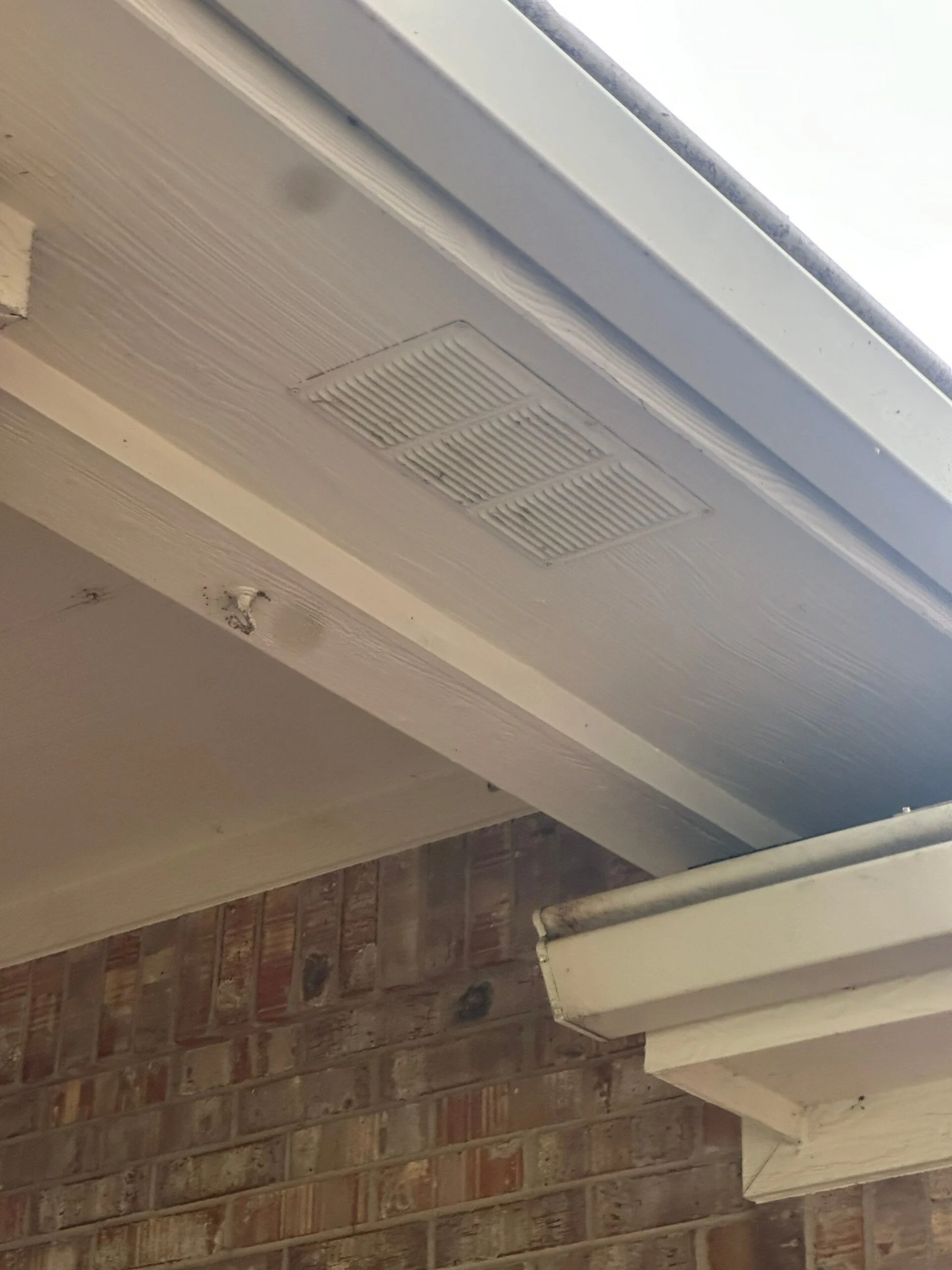
Before choosing a material, the more fundamental question is vented vs. solid. Vented soffit allows air to enter the attic space as part of a balanced ventilation system; solid soffit is used where ventilation isn't needed (porch ceilings, covered patios) or where intake air comes from elsewhere. Most homes need vented soffit at the main roof eaves. If you're unsure how much ventilation your attic needs, see Driftwood's existing guides on roof ventilation — that content covers the airflow question in depth; this page focuses on material choice once you know which type you need.
Fiber Cement Soffit

Fiber cement has a solid core, resists impact damage better than thin aluminum panels, holds paint color longer without the chalking that affects aluminum over time, and performs consistently across hot and humid conditions. It can be made solid or perforated (vented), and comes in a range of colors and textures.
The detail worth knowing: if fiber cement soffit is field-painted rather than factory-finished, and the vent perforations aren't masked carefully, paint can fill in the small holes — nearly eliminating the airflow the ventilation system depends on. This is a real installation-quality issue, not a flaw in the material itself, and it's exactly the kind of detail that separates a careful installer from one who isn't paying attention to what the vents are actually for.
Fiber cement is also heavier than aluminum or vinyl, which affects installation time and, in turn, cost.
Aluminum Soffit
Aluminum won't rot, warp, or attract pests, and it requires very little maintenance. It's a durable, practical upgrade over wood in humid or pest-prone conditions. The tradeoff is appearance over time — aluminum finishes can chalk and fade with sustained sun exposure, more visibly than fiber cement.
Vinyl Soffit
Vinyl is the least expensive option and is available in vented and solid panels. It's lighter and generally faster to install than fiber cement. In Central Texas specifically, sustained heat and direct sun are harder on vinyl than on fiber cement or aluminum — the same climate factor that affects vinyl siding generally, covered in Driftwood's fiber cement vs. vinyl siding comparison.
Side-by-Side
| Fiber Cement | Aluminum | Vinyl | |
|---|---|---|---|
| Durability | Highest — solid core, impact-resistant | High — won't rot or warp | Lowest of the three in sustained heat |
| Maintenance | Repaintable | Low — no repainting needed, but finish fades over time | Low, but can't be repainted once faded |
| Pest resistance | High | High | Moderate |
| Weight/install | Heavier, more labor | Lightest, fastest | Light, fast |
| Ventilation consideration | Field-painting can clog vent holes if done carelessly | N/A | N/A |
| Upfront cost | Highest | Mid | Lowest |
Matching Your Soffit to Your Siding
If you're already choosing or have James Hardie fiber cement siding, fiber cement soffit is the natural match for a consistent look and comparable long-term durability — see our James Hardie siding cost guide for pricing context.
When Repair Makes More Sense Than a Material Change
If your existing soffit is sound and just needs repair (rot at a specific section, a sagging run, storm damage), a material switch usually isn't necessary — see Driftwood's existing guide on soffit and fascia repair costs for that side of the decision.
Frequently Asked Questions
What's the best soffit material for Austin homes?
Fiber cement offers the best combination of durability and long-term appearance for Central Texas heat and sun, though it costs more upfront and installs more slowly than aluminum or vinyl. The right choice depends on your budget and how long you plan to own the home.
Does painting fiber cement soffit affect ventilation?
It can — if the vent perforations aren't masked carefully during field-painting, paint can fill the holes and significantly reduce airflow. This is an installation-quality issue, not a defect in the material.
Is aluminum or fiber cement soffit more durable?
Both resist rot and pests well. Fiber cement holds its paint finish longer without chalking; aluminum is lighter and needs less maintenance but its finish can fade and chalk with sustained sun exposure.
Should my soffit match my siding material?
It's not required, but if you have or are installing James Hardie fiber cement siding, matching fiber cement soffit gives a consistent look and comparable durability.
Do I need vented or solid soffit?
Most main roof eaves need vented soffit as part of a balanced attic ventilation system. See our roof ventilation guide for how much ventilation your specific attic needs.
My soffit just needs a repair, not a material change — where do I start?
See our guide on soffit and fascia repair costs — most repairs don't require switching materials.
Considering a soffit material change or replacement? Get a free estimate →
Author: Driftwood Builders Roofing
Driftwood Builders Roofing is a family-owned residential roofing company headquartered in Manchaca, Texas, serving Austin and the surrounding Hill Country since 2005. The company has delivered 3,700 full roof replacements and 783 repairs across 3,559 different customers over 20 years in business, with 97 years of combined construction experience across the leadership team and 74 years specifically inside Driftwood Builders. The company holds the highest contractor certifications offered by the major shingle manufacturers, including GAF Master Elite Contractor (the top 3% of GAF contractors nationally), GAF Certified Green Roofer, Owens Corning certified, TAMKO Pro Certified Contractor, and a Berridge Roof Installation Seminar Certificate for standing-seam metal roofs. Driftwood is an NRCA member, holds an Angie's List Super Service Award, is BBB Accredited, and is a GuildQuality member for verified customer satisfaction data. James Hardie certification covers the siding side of the business. Services include residential roof replacement, leak and storm-damage repair, tile roof repair, metal roofing, TPO commercial roofing, roof inspections, hail and storm damage inspections with insurance claim assistance, gutter work, and James Hardie siding. The customer-protection policy is straightforward: Only Pay Upon Completion. The company serves 22 cities across the Hill Country and Greater Austin and holds a 5-star rating across Google, GuildQuality, Angi, Nextdoor, Facebook, Thumbtack, and Yelp.